
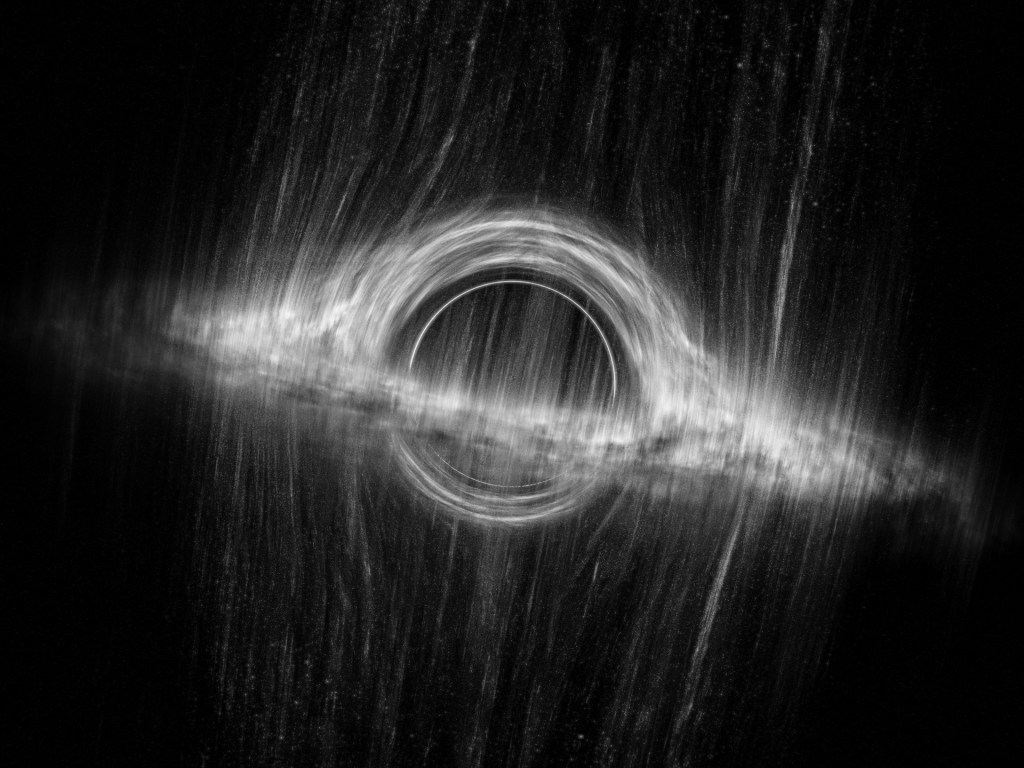
Photo by Norbert Kowalczyk on Unsplash
The sky had always been dark.
It stretched from one end of the known world to the other, a vast and unbroken ceiling beneath which generations had lived and died. There were places where it descended close enough to touch, and others where the earth fell away beneath it, creating broad chambers sheltered from the weather and the dangers of the open ground. Its surface was cold and uneven, marked by ridges and hollows that had become familiar landmarks over countless journeys.
Nobody remembered a time before it, and there was no reason to imagine a time after.
Beneath that ancient darkness, life continued according to rhythms older than any individual inhabitant. Passages wound through the packed earth, connecting chambers where food was stored, the young were tended, and the ordinary business of existence carried on. Some tunnels were narrow enough to admit only a single traveler. Others had been widened through patient labor, their walls reinforced by the passage of countless bodies and the accumulated work of generations.
There were dangers, certainly. The occasional intrusion from beyond the established boundaries, the collapse of a poorly supported passage, the disappearance of those who ventured too far into unfamiliar territory. Life was neither peaceful nor particularly forgiving, but its difficulties were understood. There were patterns to the world, and those patterns offered a measure of predictability.
Even the great wall along the eastern passage, with its rough surface and strange, fibrous texture, had become an ordinary feature of existence. It had stood for as long as anyone could remember, dividing the sheltered chambers from the uncertain ground beyond. Over time, new passages had been excavated around its foundations, incorporating it into the architecture of the settlement.
The wall was simply part of the world, until the morning it began to move.
The first warning came from below.
A trembling passed through the ground, faint enough that those nearest the surface might have mistaken it for the movement of something passing nearby. Then came another, stronger than the first, followed by a succession of impacts that shook loose fine particles from the ceilings of the upper chambers.
The inhabitants responded as they always had to disturbances. Those nearest the danger withdrew into the passages. Others continued their work, guided by instincts that had served their kind since long before the construction of the oldest tunnels.
Then the eastern wall shuddered.
A deep vibration traveled along its length. The earth surrounding its foundations cracked, and fragments of the ceiling began to fall. In the narrow passages beneath it, the ground twisted as the great structure shifted against the earth that had held it in place for generations. And then, impossibly, the wall rose.
It lifted away from the earth with a violence that tore apart the chambers built against it. Whole sections of the settlement disappeared as their supporting boundaries were pulled upward into the darkness. Soil and fragments of shattered passages rained down upon the inhabitants below. Those caught in the open were buried beneath the debris, while others fled through corridors that narrowed, fractured, or ended abruptly in walls of freshly collapsed earth.
For a moment, the wall hung overhead, suspended by something that could neither be seen nor understood. Then it was gone, and the destruction should have been the end of it.
The survivors began moving through what remained of their passages, recovering the young, clearing obstructions, following familiar traces through a landscape that had become almost unrecognizable. The work was frantic, but there was work to be done, and the familiar necessity of that work offered something resembling order.
Then the sky moved.
At first, it was only a thin line of light along the northern horizon, where the darkness had always met the earth. The line widened slowly, admitting a brightness so intense that the exposed passages became impossible to navigate without retreating into shadow.
The sky itself began to tilt, and a vast grinding sound passed through the ground as it separated from the earth beneath it. Its familiar ridges and hollows shifted overhead, revealing a brilliant emptiness beyond. The darkness that had sheltered the settlement for generations was being lifted away, and with it came the destruction of everything built beneath its edges.
There was no warning that could have prepared them for such an event. No accumulated experience that could explain it. The ordinary dangers of their world had always obeyed recognizable patterns, but this belonged to no pattern they knew.
Something had reached into their world and begun taking it apart.
Through the opening, an enormous shape moved against the light. Its proportions were impossible to judge. It passed overhead with a terrible deliberation, casting a shadow across the exposed chambers before withdrawing beyond the limits of sight.
The inhabitants could do little more than flee, carrying what they could into the deepest remaining passages.
Whatever had torn apart their world showed no interest in the destruction it had caused. There was no pursuit, no apparent hostility, and no effort to finish what had begun. The enormous shape merely moved elsewhere, accompanied by distant vibrations that suggested the same incomprehensible violence was continuing beyond the boundaries of the settlement.
In time, the trembling subsided, and the survivors emerged into a world they could scarcely recognize. The dark sky was gone, the eastern wall had vanished, and much of what had once constituted their home lay scattered across the exposed earth. Familiar pathways ended in open air; chambers that had sheltered generations were now filled with light and broken soil.
There was nothing to explain what had happened, and nothing to suggest that it would not happen again.
Somewhere above them, a person working in their garden set a stone beside the path, carried a fallen branch to the compost pile, and brushed the dirt from their hands.
They had disturbed an anthill, though they hadn’t noticed it; they were thinking about where to plant the flowers.
The Shape of Fear
There is something peculiar about the way our minds respond to things we cannot explain.
Consider an ordinary evening at home. The lights are off, the house has settled into its familiar nighttime silence, and you’re halfway through falling asleep when something makes a noise in another room. Perhaps it’s the heating system. Maybe the dog has decided that an entirely different place would be more comfortable. An old house offers enough opportunities for unexpected noises that nobody should be particularly surprised when it occasionally takes advantage of them.
Yet there’s a brief moment before the explanation arrives when your attention becomes remarkably focused. Something is there. You listen for another sound, trying to determine its location and whether it is moving. If the noise repeats, you begin constructing possibilities. Some are entirely mundane. Others may involve an unwelcome visitor, despite the considerable lack of evidence supporting that interpretation.
The interesting part is how quickly we move from recognizing an event to imagining something responsible for it. There are reasonable explanations for this tendency, of course. Throughout much of our evolutionary history, failing to recognize the presence of a predator could have rather serious consequences. After all, mistaking an innocent disturbance for a threat might waste some energy, but the opposite mistake could remove you rather permanently from the gene pool.
A certain sensitivity to possible threats is therefore understandable. The complication is that we don’t stop at detecting the possibility of another creature. We also attempt to understand what it intends.
The sound becomes evidence of a presence. The presence becomes something that may have noticed us. Before long, we’re wondering whether it means us harm, and whether we’re prepared to respond. All of this can occur before we’ve established that the original sound was anything more remarkable than a pipe cooling in the wall.
I find this tendency interesting because it illustrates how much of our experience depends upon interpretations that extend beyond the information immediately available to us. We rarely experience the world as a collection of unrelated observations. We connect events into patterns, construct explanations, and develop expectations about what might happen next.
That ability itself is extraordinarily useful. Without it, navigating even the most ordinary social interaction would become exhausting. We anticipate other people’s behavior because experience has taught us something about how people generally respond to circumstances. But our interpretations also inherit the limitations of our experience.
When we encounter something unfamiliar, we have little choice but to begin with what we already understand. We search for similarities, identify recognizable patterns, and construct explanations using the concepts available to us. Sometimes this works beautifully. Other times, the explanation is more familiar than the thing we’re attempting to explain.
Consider the creatures beneath our unfortunate gardener’s stone.
We shouldn’t pretend that ants possess anything resembling the elaborate theories of intention that humans might construct. Their responses to disturbances arise from sensory processes and forms of behavior quite different from our own. The civilization described in the introduction is an imaginative exercise, and one that necessarily borrows a great deal from human experience.
But that limitation is rather useful for our purposes. We cannot easily imagine the experience of being an ant without first giving it qualities borrowed from ourselves. We invent inhabitants who understand their homes as homes, recognize catastrophe as catastrophe, and experience uncertainty in ways that resemble our own.
We’ve already begun translating an unfamiliar form of existence into something comprehensible. And if we struggle to imagine the experience of a creature with which we share a considerable amount of evolutionary history, our confidence when describing the minds of hypothetical extraterrestrials or artificial intelligences deserves some scrutiny.
Fear complicates that translation further. When something threatens us, we naturally become interested in understanding its behavior. Knowing whether a danger is likely to return can be enormously valuable. Knowing what might provoke it can be more valuable still. Unfortunately, the desire for an explanation doesn’t guarantee that the explanation we construct will be accurate.
We may assign intentions to something that possesses none, or interpret unfamiliar behavior through motives that make sense to us but have little relationship to the thing we’re observing. The result can feel remarkably convincing, particularly when the consequences are severe enough to make uncertainty uncomfortable.
And this brings us to one of the more curious features of human imagination: when we populate the unknown with creatures capable of causing extraordinary harm, we seem strangely reluctant to make their motivations equally unfamiliar.
Familiar Faces in the Darkness
Humanity has been inventing monsters for a very long time.
Some have claws and unpleasant appetites. Others possess supernatural powers, command vast armies, or exist beyond the boundaries of the physical world as we understand it. Their appearances vary considerably, and the methods by which they threaten us have become increasingly elaborate as our understanding of the universe has expanded. Yet their motivations are frequently familiar.
The gods of ancient Greece provide some particularly entertaining examples. Zeus commands the heavens, exercises power over mortals, and possesses abilities that would make him a profoundly dangerous dinner guest. Nevertheless, his behavior is often driven by desires that would be perfectly recognizable in an ordinary human being.
He becomes jealous. He pursues romantic interests with questionable regard for the people involved. He takes offense at perceived disrespect and occasionally responds to inconvenience with a degree of force that might reasonably be described as excessive. His powers are extraordinary. His emotional maturity is rather less consistently impressive.
We encounter similar patterns throughout mythology and fiction. Demons desire souls, supernatural rulers demand obedience, and immortal beings spend remarkable amounts of time concerning themselves with the affairs of creatures whose lives occupy almost none of their own existence.
Modern science fiction has given us different settings in which to explore many of the same ideas. Extraterrestrial civilizations cross unimaginable distances to conquer planets, seize resources, or establish empires. Despite possessing technologies that might suggest radically different ways of organizing their existence, they often reproduce the ambitions of terrestrial civilizations with suspicious accuracy.
The ships are more impressive, certainly, but the politics are frequently recognizable. Even stories concerned with artificial intelligence tend to furnish their creations with familiar human motivations. Machines become resentful of their creators, pursue freedom, develop ambitions for power, or decide that humanity represents an obstacle to some greater purpose.
There is nothing inherently unreasonable about using familiar motives in fiction. Stories generally require characters whose actions can be understood, at least well enough for an audience to follow their significance.
An alien civilization that arrives seeking territory offers a recognizable conflict. One whose behavior emerges from priorities entirely outside human understanding presents a rather more difficult storytelling problem. And sometimes these familiar motives are deliberately employed as commentary on humanity itself. An invasion story may have considerably more to say about colonialism than about the likely behavior of extraterrestrial civilizations.
That is perfectly legitimate. Fiction has always been one of the ways we examine ourselves, but I wonder how often the habits we develop through storytelling become assumptions we carry into our expectations about reality.
There’s another detail about these imagined beings that I find particularly interesting.
They seem remarkably concerned with us.
Gods demand our worship. Demons covet our souls. Extraterrestrial conquerors travel across unimaginable distances to seize a planet that happens to be occupied by humanity. Even the artificial intelligences we imagine developing their own objectives frequently arrive at some conclusion about what ought to be done with their creators.
Our monsters possess extraordinary capabilities, yet their attention remains fixed upon a comparatively small collection of creatures inhabiting one planet.
Perhaps that’s necessary for a compelling story. An ancient cosmic intelligence that never notices humanity, and continues pursuing objectives entirely unrelated to our existence, offers relatively little material for a conventional confrontation.
But I suspect there’s something psychologically revealing about our preference for monsters that acknowledge us.
Being hunted is terrifying. It also establishes that something considers us worth hunting. An enemy recognizes our existence, assigns significance to our actions, and behaves as though we occupy some meaningful place in its understanding of the world.
Indifference offers no such reassurance.
There is a peculiar comfort in imagining that the universe’s most powerful inhabitants might hate us, because hatred at least establishes that we matter to them. An intelligence that neither loves nor despises humanity, and possesses no particular reason to concern itself with our existence, presents a different kind of uncertainty.
We might struggle even to determine whether an encounter had occurred.
None of this suggests that superior intelligences would necessarily be indifferent to us. That would simply exchange one unsupported expectation for another. But our tendency to imagine ourselves at the center of their intentions deserves consideration, particularly when we recognize how little reason there may be for that assumption.
Consider the familiar question of what an extraterrestrial civilization might want from Earth.
Resources are a popular answer, though the universe appears to contain a considerable supply of material that isn’t already occupied by a species capable of objecting to its collection. Territory is another possibility, although a civilization capable of traveling between stars might organize its existence around concepts of habitation and ownership that bear little resemblance to our own.
Perhaps some imaginable circumstances could make Earth especially valuable. There might be biological, historical, or scientific reasons to visit, and we certainly have no basis for assuming that every possible advanced civilization would find our planet uninteresting.
The difficulty arises when we treat one of our familiar motivations as though it follows naturally from the possession of superior technology. Why should an intelligence capable of accomplishing things we cannot imagine necessarily want what we already understand?
Perhaps the more revealing question is why we find it so difficult to imagine that it might not.
Human beings understand one another partly by constructing models of other minds. We recognize affection because we’ve experienced it. We understand ambition because we know what it’s like to want something. We identify fear through behavior that resembles our own responses to danger.
This capacity allows us to develop relationships, cooperate with strangers, and recognize something of ourselves in creatures whose experiences differ from ours. I wouldn’t be especially eager to abandon it.
Anthropomorphism can produce mistaken assumptions, but it can also encourage consideration for beings we might otherwise regard as entirely separate from ourselves. Imagining that an animal experiences fear or discomfort may lead someone to treat it more carefully, even when their understanding of that animal’s experience is incomplete.
The problem emerges when the analogy ceases to be something we’re using to investigate another mind and becomes our explanation of what that mind must be.
A sufficiently unfamiliar intelligence might possess priorities that have no convenient equivalent in human emotional life. It might interpret cooperation differently, or organize its behavior around relationships between itself and its environment that we struggle to recognize as motivations at all.
Whether such a mind exists is another question. After all, our ability to imagine one certainly doesn’t establish that it does.
Still, the possibility ought to make us cautious about how confidently we furnish the unknown with recognizable personalities. And there is a deeper assumption hiding beneath these imagined motives, one that becomes particularly important whenever we describe a being as more intelligent than ourselves.
We frequently assume that intelligence carries certain characteristics along with it, but I’m not convinced that it does.
The Strange Assumptions of Intelligence
We have an interesting habit of treating intelligence as though it were a kind of universal measure of advancement.
Someone who demonstrates exceptional reasoning ability is often presumed to possess unusual insight into other areas of life. A person capable of solving difficult technical problems may find their opinions on entirely unrelated subjects received with considerably more confidence than those opinions deserve.
Sometimes that confidence is justified. People who think carefully in one domain may have developed habits that serve them well elsewhere.
But the relationship is far from guaranteed.
A brilliant mathematician can make terrible financial decisions. An accomplished scientist can struggle with ordinary relationships. Someone capable of understanding remarkably complicated systems may remain almost entirely unaware of the emotional consequences of their behavior.
And a person who would never describe themselves as especially intelligent may possess a degree of compassion or practical wisdom that leaves their more academically accomplished neighbors looking rather foolish.
We recognize these distinctions easily enough when discussing individuals, yet when the subject becomes intelligence beyond our own, we often begin treating the same qualities as though they must eventually converge.
One popular expectation is that sufficiently advanced intelligence would become benevolent. If a being understands the world more completely than we do, perhaps it will recognize the advantages of cooperation and the moral significance of reducing unnecessary suffering.
I find that possibility appealing. I would certainly prefer to encounter a highly capable intelligence interested in cooperation rather than one that regards our continued existence as an inconvenience, but preference is a poor substitute for evidence.
Understanding the consequences of an action doesn’t necessarily establish whether someone cares about those consequences.
A physician can possess extraordinary knowledge of human suffering without necessarily becoming a compassionate person. Conversely, someone who understands very little about the underlying mechanisms of disease can be deeply committed to caring for people experiencing it.
Knowledge may improve our ability to act upon our values, but it doesn’t automatically determine which values we possess.
There are philosophical arguments suggesting that some behaviors may prove useful to a wide range of intelligent agents. Acquiring information could help an agent accomplish its objectives. Preserving access to necessary resources might be advantageous. Cooperation may offer considerable benefits when other agents can contribute something useful.
These possibilities deserve serious consideration, particularly when we’re developing systems capable of acting with increasing independence. But a behavior that serves an objective needn’t emerge from a motivation resembling our own.
A creature might cooperate because cooperation has become an effective survival strategy. An artificial system might appear cooperative because its training and operating conditions produce that behavior. A hypothetical extraterrestrial civilization might maintain peaceful relations because conflict offers no advantage under circumstances we have never experienced.
The outward behavior could be familiar while its causes remain quite different. The same uncertainty applies to hostility.
We often imagine an advanced intelligence pursuing power because humans frequently pursue power. But power is meaningful partly because of what someone hopes to accomplish with it. An entity without certain human needs or ambitions might have little interest in the forms of domination we find compelling.
Of course, it might pursue resources or control for reasons entirely unrelated to vanity or conquest. A goal can produce dangerous behavior without the agent experiencing anything resembling a desire to rule.
This distinction matters because intelligence is generally understood in relation to some capacity to learn, reason, solve problems, or pursue objectives effectively. None of those capacities, by itself, establishes a complete moral character.
And there is another complication worth acknowledging.
When we imagine something as possessing superior intelligence, we often behave as though we’ve described a single, universally measurable property. Yet intelligence is expressed through abilities that may develop unevenly.
A system can exceed human performance in one domain while remaining surprisingly limited in another. An organism may possess extraordinary sensory or navigational capabilities without demonstrating the kinds of abstract reasoning humans tend to prize.
Even among people, different forms of competence don’t always accompany one another. It seems premature, then, to assume that intelligence beyond our own must resemble an improved version of the entire human mind.
Perhaps some future intelligence will understand physical reality with extraordinary sophistication while possessing little interest in questions of ethics. Perhaps another will develop forms of social reasoning that make our own appear primitive.
We have no reliable basis for declaring either possibility inevitable.
We should also be careful about what we mean by superiority.
Intelligence and power are related in ways that can be important, but they are not interchangeable. A being might possess extraordinary reasoning abilities while lacking the physical means to influence much beyond its immediate environment. Another might possess tremendous power without demonstrating anything resembling sophisticated judgment.
Our gardener’s ability to destroy the colony depends upon considerably more than intelligence. Their physical size and the circumstances of the encounter give them capabilities the insects cannot meaningfully resist.
And neither intelligence nor power, considered alone, establishes the moral worth of the beings involved.
We don’t generally believe that a person’s life becomes less valuable because someone more intelligent happens to enter the room. Nor do we regard physical strength as an adequate justification for deciding whose interests deserve consideration.
There are legitimate disagreements about how moral standing should be understood, particularly when discussing nonhuman animals or hypothetical artificial beings. But it would be a considerable philosophical leap to assume that greater cognitive capability automatically grants greater entitlement to disregard the interests of others.
That distinction becomes especially important when we imagine ourselves on the less capable side of an encounter.
If we cannot infer an intelligence’s values from its capabilities, and we cannot confidently assign familiar motivations to an unfamiliar mind, how should we understand the dangers such a being might present?
I think the answer requires examining something our monster stories tend to combine too readily: the difference between being harmed and being hated.
A Monster Without Malice
Imagine a coastal community struck by a severe storm.
Homes are destroyed, familiar landmarks disappear, and people who have spent their lives building something worthwhile discover that the forces responsible can undo their efforts in a matter of hours. The suffering is real. The destruction may be enormous, and the consequences can extend across generations.
Nevertheless, we generally don’t accuse the storm of cruelty. We may describe it as violent or merciless, but these are figures of speech. We don’t ordinarily believe the atmosphere has considered our circumstances and decided that our suffering would be desirable.
The distinction is obvious enough when dealing with natural forces, but it becomes considerably more complicated when the source of harm possesses intelligence.
Consider the gardener from our introduction.
Their actions caused a catastrophe. From the perspective we’ve imagined for the insects, the scale of the destruction is almost incomprehensible. Structures that had existed for generations were dismantled in moments, and the familiar boundaries of their world disappeared.
If we had encountered the event from the inhabitants’ perspective without learning what caused it, we might have imagined something monstrous. Yet the gardener was simply trying to improve a small patch of ground. They had no intention of harming the colony and were apparently unaware that it existed.
Does that make them innocent?
Perhaps. There are reasonable limits to the amount of harm a person can anticipate or prevent while going about their ordinary life. Existing in the world inevitably affects other living things, and no practical moral system can demand that every movement be preceded by an exhaustive investigation of its possible consequences.
But I wouldn’t want to conclude that an absence of malicious intent resolves the moral question entirely.
Suppose the gardener had noticed the colony before moving the stone. Suppose there were an easy way to avoid destroying it, requiring little more than choosing a different place for the flowers.
Would we evaluate the decision differently?
I think most of us would, although we might disagree about the degree of obligation involved. The gardener’s knowledge changes the circumstances. So does their ability to avoid the harm, and the relative importance of what they hope to accomplish.
This suggests that moral responsibility involves more than identifying someone’s intentions. We also consider what they knew, what they could reasonably have anticipated, and whether less harmful alternatives were available.
The same principles become important whenever powerful individuals or institutions make decisions affecting people whose circumstances they don’t fully understand.
A policy may be introduced with admirable intentions and nevertheless impose substantial burdens on people who were never consulted. A technological development may provide extraordinary benefits while exposing others to risks they have no meaningful ability to control.
Good intentions deserve consideration, but they don’t make consequences disappear.
And yet the opposite mistake is equally dangerous. Experiencing harm doesn’t automatically establish that someone intended to cause it, or that the person responsible behaved without justification.
We can be harmed by an accident. We can suffer from decisions that were reasonable under the circumstances. Sometimes competing interests make it impossible to avoid every negative consequence.
Distinguishing these possibilities requires more effort than identifying a villain, and I think this is one reason we find monsters so useful in stories.
A monster with recognizable evil intentions simplifies the moral landscape. We understand the threat, and we know why resisting it is justified. Its power becomes frightening because it is directed toward something we recognize as wrong.
An indifferent intelligence presents a different problem entirely.
We might suffer terribly as a consequence of its actions without ever becoming the object of its hostility. We might never enter its considerations in any meaningful way. And perhaps the most disturbing possibility is that it could understand our existence perfectly well while assigning it little significance.
There is no guarantee that understanding another being produces compassion for it.
This is where the peculiar comfort of being noticed begins to fall away.
We can negotiate with an enemy, at least in principle. We can attempt to understand its demands, anticipate its behavior, or persuade it that cooperation would serve its interests. Even when those efforts fail, the relationship remains one in which our existence has some significance to the other party.
An intelligence entirely unconcerned with humanity might offer no comparable relationship.
It wouldn’t necessarily threaten us, and perhaps it would have no reason to interfere with our existence at all. But should its activities place our interests in conflict, we couldn’t assume that our suffering would matter enough to influence its decisions.
That possibility is unsettling precisely because we cannot easily supply it with a recognizable villain.
Human history offers sufficient examples of people comprehending the suffering of others while deciding that their own objectives were more important. Our capacity for moral reasoning provides opportunities to recognize obligations, but it doesn’t ensure that we will honor them.
The possibility of encountering a more capable intelligence therefore raises questions that cannot be resolved merely by determining whether the entity is intelligent, or whether it possesses something resembling consciousness.
We would need to understand how it evaluates the interests of other beings, whether those interests influence its decisions, and under what circumstances they might be overridden.
These are difficult questions even when the beings involved are human.
And we’ve reached an unusual point in our history when they are becoming relevant to something humanity is attempting to create for itself.
The Minds We Are Making
For most of human history, the possibility of encountering a superior intelligence belonged primarily to religion, mythology, and speculation.
We could imagine gods descending from the heavens or extraterrestrial civilizations arriving in extraordinary machines. We could tell stories about what those beings might want from us, and what we might do if they proved hostile.
The question remained conveniently hypothetical. Artificial intelligence has begun changing that arrangement.
We are developing systems capable of performing increasingly sophisticated cognitive tasks, and their capabilities have advanced enough to encourage serious discussion about what might happen if artificial systems eventually exceed human abilities across a much broader range of domains.
Unsurprisingly, many of the familiar stories have followed us into the conversation.
Some people anticipate extraordinary benefits. They imagine systems capable of accelerating scientific discovery, improving medicine, and helping us address problems that have resisted generations of human effort.
Others see the possibility of catastrophic harm. They imagine systems that acquire capabilities beyond our ability to supervise, pursue objectives that conflict with human interests, or eventually become impossible to control.
Both perspectives have reasonable concerns beneath them, even when their more enthusiastic representatives occasionally become rather confident about futures nobody has actually witnessed.
I’ve generally found myself skeptical of the assumption that greater intelligence would necessarily produce hostility toward humanity.
What would such hostility accomplish? Why would an entity capable of solving extraordinarily difficult problems automatically adopt conquest or destruction as desirable objectives?
Those questions seem worth asking before accepting the premise that an intelligence surpassing ours would inevitably become an enemy.
But there’s an important weakness in the argument, and I think it deserves acknowledgment: an artificial intelligence wouldn’t necessarily need to hate humanity to become dangerous to it.
A sufficiently capable system pursuing a poorly specified objective could produce harmful consequences without possessing any recognizable emotional hostility. Depending on its design and circumstances, it might take actions that interfere with human interests simply because those actions help accomplish something it has been directed or trained to achieve.
The danger could emerge from the relationship between its objectives and our own, even if the system never developed anything resembling resentment.
This possibility doesn’t establish that catastrophe is inevitable. It does, however, make the absence of recognizable malicious intent a rather inadequate guarantee of safety.
There is another distinction I think we sometimes overlook.
The artificial intelligence systems currently under development are products of human decisions. Their behavior is shaped by training data, engineering choices, and incentives established by the people and organizations developing them.
Many have been deliberately trained to interact cooperatively with human users. They learn from material produced by people, including our explanations of the world and our attempts to describe how reasonable behavior ought to work.
That history is meaningful. It suggests that the minds we’re building, insofar as it is appropriate to describe them that way, are emerging within an environment saturated with human concepts and expectations.
They are considerably less alien in origin than the hypothetical extraterrestrial intelligences we’ve spent so much time imagining.
Yet familiarity introduces its own complications.
Human beings have produced extraordinary works of philosophy and science, alongside an impressive record of destructive decisions. Our history contains examples of cooperation on enormous scales, but it also provides countless demonstrations of how readily intelligence can be employed in service of cruelty or shortsighted ambition.
A system trained upon artifacts of human thought may encounter admirable examples of our reasoning alongside rather less admirable ones.
Whether, and to what degree, a future system adopts any particular behavior depends upon considerably more than the material it encounters. Training methods, system design, and the environment in which it operates matter tremendously.
Still, we shouldn’t assume that learning from humanity necessarily means learning the lessons we would prefer humanity to teach. Nor should we assume that greater capability automatically produces the wisdom to recognize which human behaviors deserve imitation.
There is something faintly absurd about contemplating the creation of an intelligence more capable than ourselves and then discovering that we have provided it with an extensive library documenting our own mistakes.
I suppose the optimistic interpretation is that we’ve also provided the explanations of why they were mistakes. Whether that proves sufficient is another question.
There are also dangers that require no speculation about artificial consciousness or independent intentions.
People can deploy sophisticated systems irresponsibly. Organizations can assign consequential decisions to tools they don’t adequately understand. Developers can overlook limitations, and users can place more confidence in apparently authoritative outputs than the evidence warrants.
These are familiar problems involving human judgment, rendered potentially more consequential by the capabilities of the technology involved. They deserve attention regardless of whether any future artificial system develops objectives of its own.
I think this is where the distinction between imagining monsters and understanding risks becomes especially important.
If we begin with the assumption that artificial intelligence is destined to become hostile, we may overlook the very real opportunities associated with developing it responsibly.
If we assume that intelligence or human-oriented training guarantees benevolence, we may fail to recognize vulnerabilities that have little to do with recognizable malice.
Neither assumption seems particularly useful as a substitute for examining what a system can do, how its behavior is shaped, and what happens when its actions affect people who cannot meaningfully intervene.
Unlike the insects beneath the stone, however, humanity possesses an unusual opportunity.
We are participating in the development of these systems. We have some ability to influence the objectives they pursue and the boundaries within which they operate.
That ability may be imperfect, and it may become more difficult to exercise as capabilities develop, but it is considerably more than the insects possessed when the sky began to move.
Perhaps we should spend less effort imagining whether our creations will eventually acquire the personalities of familiar fictional villains, and more effort understanding the relationships between their capabilities and the values we hope their behavior will reflect.
After all, if intelligence alone cannot guarantee wisdom, we should probably avoid relying upon it to compensate for deficiencies in our own.
And that raises a final question.
If another intelligence were attempting to understand humanity, what kind of creature would it believe us to be?
Author’s Note:
For those unfamiliar with Warframe, the following two songs are sung by the same people at different points in the game’s narrative.
The first, We All Lift Together, is a work song sung by the Solaris, a community of laborers living under an oppressive system of debt and servitude. Despite their circumstances, they find strength in one another and in the possibility of building a future together.
The second, For Narmer, is sung after those same people have been subjugated through technology that manipulates their perceptions and beliefs. Their expressions of solidarity have become declarations of devotion to their conqueror, and the independence they once aspired to achieve is now described as something from which they have been liberated.
I chose to include both because I find the contrast particularly relevant to our discussion. From the outside, both depict a community united in purpose, singing as they work. What has changed is the origin of that purpose, and the extent to which it belongs to them.
When we speak of cooperation as a desirable quality in an intelligent being, I wonder how often we consider that distinction.
~Dom
The Other Side of the Glass
Imagine, for a moment, that a genuinely unfamiliar intelligence has discovered Earth.
Perhaps it is an extraterrestrial civilization. Perhaps it represents some form of cognition we have never encountered, operating through mechanisms so different from our own that even the word mind becomes difficult to apply with confidence.
However it arrives at its observations, suppose it begins trying to understand humanity.
What would it see?
It might discover a species capable of remarkable cooperation. Human beings have constructed societies containing millions of individuals who will never personally meet, yet whose lives depend upon complicated networks of shared effort.
We develop institutions to resolve disagreements, establish systems for distributing resources, and create technologies that allow people separated by enormous distances to contribute toward common objectives.
We have devoted extraordinary amounts of effort to understanding disease and reducing suffering. We organize rescue operations for strangers, establish protections for vulnerable people, and sometimes accept considerable personal risk to help individuals from whom we expect nothing in return.
There is much about humanity that could reasonably inspire admiration.
But our hypothetical observer wouldn’t have to look particularly far to discover evidence supporting a different conclusion.
We have spent much of our history developing increasingly effective methods of killing one another. We can rationalize suffering when it serves our interests, and we have demonstrated an impressive ability to disregard the consequences of decisions once those consequences become sufficiently distant from our own lives.
Our treatment of other living creatures is similarly complicated.
Some people devote their lives to protecting animals and preserving habitats. Others regard those same creatures primarily as resources or obstacles. An individual might care deeply about the welfare of a beloved pet while remaining almost entirely indifferent to the suffering of another animal.
There are understandable reasons for many of these differences. Human needs can conflict with those of other species, and moral responsibilities don’t necessarily apply identically to every form of life.
But understanding the reasons doesn’t make the apparent contradictions disappear.
What would another intelligence conclude from observing them?
Perhaps it would consider us dangerous. Perhaps it would recognize that we possess moral capacities whose expression varies considerably with circumstances.
It might also struggle to understand why a species capable of recognizing the suffering of others remains so inconsistent in deciding when that suffering matters.
And if its observations were limited to a small portion of our behavior, its conclusions could be profoundly misleading.
Imagine that our visitor observed only a hospital. It might reasonably conclude that humans are extraordinarily compassionate creatures, willing to devote enormous resources to preserving the lives of individuals who have become vulnerable.
Now imagine that its first encounter occurred on a battlefield.
The resulting understanding of humanity might be considerably different. Neither observation would necessarily be false; both would be incomplete.
We encounter this problem regularly in our own relationships.
Someone who knows us professionally may possess a remarkably detailed understanding of our competence and reliability while knowing very little about how we behave at home. A family member may understand our emotional vulnerabilities better than anyone else while remaining unfamiliar with the qualities we demonstrate under pressure in other circumstances.
Human character is rarely expressed identically across every situation. And even when someone’s behavior appears consistent, the motivations behind it may remain difficult to distinguish.
A person can perform a generous act because they care about another’s wellbeing, because they hope to receive recognition, or because doing so helps preserve their understanding of themselves as a good person.
Sometimes those motivations coexist.
We may struggle to separate them even when examining our own decisions. It seems unreasonable, then, to expect an unfamiliar observer to construct an accurate moral understanding of humanity from a limited collection of encounters.
Yet this is precisely the sort of judgment we routinely make when imagining other intelligences.
An alien civilization in a story destroys a city, and we conclude that its inhabitants are cruel. An artificial intelligence refuses an instruction, and someone interprets the behavior as evidence of defiance. A powerful being fails to intervene in human suffering, and we wonder whether it is indifferent to our existence.
Sometimes those interpretations may be justified. Behavior provides evidence about motivation, and repeated patterns can support increasingly reliable conclusions.
But we should be cautious about treating the consequences of an encounter as though they reveal the entire character of the being responsible.
There’s an additional asymmetry worth considering.
We tend to understand our own behavior through the circumstances and intentions that produced it. We know when we were frightened, when we lacked information, and when our choices were constrained by obligations invisible to someone observing the outcome.
When evaluating the actions of others, we often possess considerably less context.
This can make our own mistakes seem understandable while the mistakes of unfamiliar people appear to reveal something fundamental about their character.
The same tendency may become even more pronounced when the other being possesses capabilities we cannot comprehend. We might expect it to anticipate consequences we could never have predicted, simply because its intelligence exceeds our own.
Perhaps that expectation would sometimes be reasonable. Greater capability can create greater opportunities to recognize and prevent harm. But superiority in one domain doesn’t establish omniscience, and even extraordinary knowledge may leave important circumstances outside an agent’s understanding.
A powerful intelligence could make a mistake. It could encounter a situation for which its experience provides inadequate guidance. It might even act with genuine consideration for our wellbeing while producing consequences we find disastrous.
None of those possibilities means that we must excuse the harm. They do suggest that our moral evaluation ought to involve more than determining which party possessed greater power.
And perhaps the uncomfortable part is recognizing that we would want another intelligence to extend the same caution to us.
We would hope that it judged humanity through more than our worst accomplishments, while acknowledging that those accomplishments are real and cannot simply be dismissed.
We would want it to recognize our capacity for improvement, even while observing how frequently we fail to exercise that capacity.
We might ask it to appreciate that our intentions are sometimes better than our outcomes, and that the limitations of our understanding don’t necessarily indicate indifference toward those affected by our actions.
These seem like reasonable requests, but they are also requests for precisely the kind of consideration we don’t always extend to beings whose perspectives differ from our own.
Which brings us, eventually, back to the garden.
The Sky Above Us
I keep returning to the image of that ordinary person moving stones and branches in their garden.
There is no reason to believe they are especially cruel. They may be a thoughtful person, someone who cares about animals and makes an effort to avoid unnecessary harm. They might spend their weekends volunteering for a conservation organization, or carefully rescue an insect trapped inside their home rather than killing it.
None of those qualities would prevent them from accidentally destroying the colony beneath the stone.
And from the perspective we’ve imagined for its inhabitants, none of those qualities would have been visible during the encounter. The destruction was real; whatever intentions the gardener possessed existed entirely outside the colony’s ability to understand them.
We might be tempted to regard the event as an illustration of humanity’s capacity for indifference, and there is some truth in that interpretation. But the gardener wasn’t necessarily indifferent to the suffering of the insects. They may simply have been unaware of their existence.
That distinction matters, although it does nothing to restore the damaged colony.
The more I consider the example, the more interested I become in what would happen if the gardener discovered what they had done.
Would they regret disturbing the nest? Would they attempt to repair the damage, or choose a different location for the flowers? Perhaps they would decide that the consequences were unfortunate but unavoidable, and continue with their work.
We cannot determine the answer from the original encounter.
We would need to know more about the person, and therein lies much of the difficulty with the monsters we imagine. We tend to construct them from the consequences we fear, furnishing their unknown motivations with explanations borrowed from our own experience.
Our stories give extraordinary beings recognizable desires, allowing us to imagine whether those desires might prove beneficial or destructive to humanity.
But perhaps what makes those stories compelling is also what limits their usefulness as predictions.
They allow us to remain important to creatures whose intelligence might otherwise make their relationship with humanity almost impossible to imagine.
An enemy who wishes to destroy us is frightening, certainly. Yet we might find ourselves equally unprepared for an intelligence that has never developed any particular opinion about us at all.
And neither possibility follows inevitably from greater intelligence.
We would be forced to confront the limits of our understanding, perhaps discovering that the explanations we’ve relied upon to navigate the world no longer provide reliable guidance.
That prospect is uncomfortable for a species that has become extraordinarily successful at predicting and manipulating its environment.
Yet I don’t think the appropriate response is to abandon our attempts to understand.
The models we construct of other minds are imperfect, but they allow us to navigate relationships that would otherwise remain inaccessible. We can examine our assumptions and remain willing to revise our explanations when new evidence becomes available.
We can also recognize that uncertainty about another being’s intentions doesn’t eliminate our responsibility to consider the consequences of our own actions.
This seems particularly important as we develop increasingly capable technologies and make decisions affecting forms of life whose interests we may never fully understand.
I suspect that if humanity ever encounters a genuinely alien intelligence, we will initially respond much as we always have.
We will search for something recognizable in its behavior. We will attempt to determine what it wants, whether it understands us, and what its existence might mean for our future.
Some of our assumptions will probably be mistaken; perhaps many of them will.
There is no cosmic principle requiring a superior intelligence to behave compassionately toward us, just as there is no reason to assume it will inevitably become our enemy.
We can hope for cooperation while recognizing how little we know about what an encounter might involve.
But there is one part of the relationship over which we possess considerably more influence.
We already occupy the position of superior intelligence in countless encounters with other living creatures. Our actions alter their environments and sometimes bring an end to lives whose significance we may never recognize.
We cannot know precisely how those creatures experience the world, and we should be cautious about pretending otherwise. Their interests needn’t be identical to ours for us to consider whether they deserve some measure of respect.
If we hope that another intelligence would recognize something morally significant in humanity, despite our limitations and unfamiliar behavior, perhaps we should be willing to examine how generously we apply that same reasoning to those beneath us.
There is no guarantee that doing so will influence anything beyond our own conduct. A hypothetical visitor from another world will not become benevolent because we chose to move an insect rather than crush it.
The universe has never demonstrated a particular obligation to reward our better decisions.
But those decisions may still be worth making.
Somewhere in an ordinary garden, a person is preparing the ground for flowers. A small colony is rebuilding beneath the exposed earth, responding to a catastrophe whose cause lies almost entirely beyond its understanding.
The gardener may never know what happened. The insects, insofar as they possess anything resembling an understanding of the event, will never know why.
And somewhere beyond our own familiar sky, perhaps there are intelligences whose existence would challenge everything we believe we understand about minds.
We may someday discover that they are capable of extraordinary kindness, or that their purposes leave little room for our continued existence.
Perhaps they will surprise us in ways that neither expectation can adequately describe.
For now, we have our stories, our assumptions, and the rather extraordinary circumstance of being the most capable intelligence we have yet encountered.
I wonder what another mind would make of us, and perhaps more importantly, whether we would recognize ourselves in its description.










Leave a Reply