
Photo by Shadow Frames Photography on Unsplash
It begins, as these things so often do, with something perfectly ordinary: a request, or perhaps a proposal, enthusiastically presented by someone who has spent considerable time finding a way to accomplish something worthwhile. There is optimism in the exchange. A problem has been identified, a solution proposed, and the path forward appears refreshingly straightforward. The people involved are competent and well-intentioned, and there is the unmistakable satisfaction that comes from discovering how something difficult might finally be made possible.
And then you notice it. Not an obvious catastrophe, or some dramatic violation that would make everyone in the room recoil, but a detail. Perhaps a permission that seems broader than necessary, or an assumption about what is allowed rather than merely what is possible. Whatever its form, it is small enough to pass unnoticed in a conversation principally concerned with getting something done.
Perhaps the proposed solution involves sending information to an external service. Technically, the connection is straightforward, and the service promises to accomplish exactly what everyone hopes it will. But nobody appears to have established whether the information is authorized to leave the organization, or who has accepted responsibility for where it goes once it does. The ability to access the information has quietly become an assumption that it may be shared. It’s an important distinction, though not one that makes the proposed solution seem particularly exciting anymore.
You read it again; perhaps you’ve misunderstood. That happens, after all, and experience has taught you that the first explanation to occur to you is not always the correct one. There may be context you haven’t seen, or an approval already granted that resolves the concern entirely. So you look. You trace the detail back to its source and follow the proposed process a little farther than the conversation originally intended, asking what would happen if the assumption proved incorrect. Gradually, the shape of the problem becomes clearer. It isn’t necessarily a disaster waiting to happen, and perhaps not even a particularly likely one, but it is a risk with consequences substantial enough that someone ought to understand them before proceeding.
For a moment, you consider saying nothing. Not because you doubt that the concern deserves consideration, but because you know what comes next. You’ve been here before. You know the peculiar change in atmosphere when a conversation about possibilities becomes a conversation about consequences, and how quickly enthusiasm turns into frustration when someone introduces a question nobody particularly wanted to answer. You can almost hear the responses already: surely that was already considered, is this really necessary? And beneath them, rarely spoken quite so directly, the most exhausting question of all: why do you always have to make things complicated?
There is a temptation, in moments like these, to reconsider the significance of what you’ve found. Perhaps the risk is remote enough, or the responsible parties already know, and it would be better to let the project move forward and trust that the safeguards exist somewhere beyond your immediate visibility. Nobody has asked you to make their afternoon more difficult, and there is something deeply appealing about simply closing the window and letting the matter become someone else’s problem. But the difficulty with noticing something is that you cannot entirely return to the moment before you noticed it. The possibility now exists in your understanding of the world. You may be mistaken about it, and the eventual decision may reasonably be to proceed anyway, but those are arguments for examining the issue rather than for pretending you never encountered it.
So you begin to write, carefully, with the kind of attention that would seem excessive to anyone unfamiliar with the situation. You distinguish what is known from what is suspected. You acknowledge the legitimate objective and explain that the concern is not an objection to accomplishing it. You describe the potential consequences and make clear that the decision belongs to whoever has the authority to accept the risk. Then you read the message again. You remove a sentence that sounds too accusatory and soften another that might be taken as questioning someone’s competence. You add a qualification because certainty would be dishonest, then remove one because too much ambiguity might undermine the seriousness of the concern. The irony is not lost on you: you are spending considerable effort ensuring that someone else’s solution can proceed responsibly, while trying desperately not to sound like the person preventing it from proceeding at all.
Eventually there is nothing more to revise. You send the message and wait.
Perhaps the reply arrives quickly; perhaps the conversation falls silent for a while, leaving you to wonder whether the concern is being investigated or merely resented. When it comes, it is professional enough. Nobody openly questions your integrity or suggests that oversight is unnecessary, and the concern may even be acknowledged as technically valid. But the warmth has disappeared. The conversation has acquired a formality that wasn’t there before. Explanations become defenses, and the emphasis shifts from what the proposed action might expose to why it should be allowed to continue. Somewhere within that exchange, you recognize the uncomfortable inversion.
You identified a risk. But to the person whose plans you’ve interrupted, you have become the risk.
You are the possible delay, the person who might require another meeting or another uncomfortable conversation with someone who has the authority to say no. Before you arrived, the path appeared clear; now it isn’t, and regardless of whether your concerns are justified, you are the visible cause of that change.
There is no particular pleasure in this realization. Contrary to what some might imagine, raising an inconvenient concern does not come with a satisfying sense of moral superiority, and there is no quiet triumph in watching someone’s enthusiasm falter. You wanted the solution to work, too. You would have preferred to discover that everything had already been considered and that the people involved could proceed without hesitation; you would have been delighted to be wrong. Instead, you find yourself explaining why a concern deserves attention, knowing that every additional explanation may make you appear more obstructive, and every attempt to withdraw may leave something important unresolved.
It is exhausting in a way that being technically correct does remarkably little to alleviate. Correctness does not soften the awkward silence after a warning, and it does not guarantee that the eventual decision will be sensible, or that anyone will remember the concern if the anticipated harm never occurs. Even when the issue is acknowledged and appropriately addressed, there is rarely a moment of celebration. The project simply continues, and nothing terrible happens. Which, of course, was rather the point.
Yet the experience leaves something behind. Not resentment, and certainly not regret, but a familiar weariness: the knowledge that you have once again spent part of your day making yourself inconvenient in service of a possibility that may never have become a problem, and that, should you notice something similar tomorrow, the entire process may begin again.
It would be comforting to conclude that the right thing becomes easier with practice, and sometimes it does. Experience sharpens our judgment and teaches us to raise difficult concerns without unnecessary confrontation. But it does not make the human cost disappear. You can understand why someone resents the interruption, and even find their frustration partly justified, while still believing the concern needed to be raised. You can learn to anticipate the resistance without becoming immune to it, and you can know with considerable confidence that you acted responsibly without feeling particularly good about having done so.
Perhaps that is among the less frequently discussed difficulties of conscientiousness. We tend to imagine moral courage in moments of obvious significance: the dramatic refusal, the principled stand against an unmistakable injustice. But much of the responsibility we encounter in ordinary life is considerably less theatrical. It arrives as a question nobody thought to ask, or as a document that seems complete until someone reads it carefully and finds a small inconsistency between what we believe is happening and what the evidence actually supports. There is no audience waiting to applaud, and there may not even be agreement that the concern matters. The person who raises it cannot know whether the eventual outcome will justify the disruption. They must decide with the information available, accepting both the possibility of being mistaken and the possibility that remaining silent would be worse.
Which brings us to a question more difficult than whether we should do the right thing when we recognize it: what responsibility do we have to go looking for things that might oblige us to act?
There is a meaningful difference between responding to a danger that announces itself and deliberately searching for vulnerabilities that might otherwise remain comfortably invisible. The first is a circumstance we encounter; the second is a choice we make, and it carries costs long before anything actually goes wrong. Perhaps that is why so much of the world prefers to wait until something does.
The Comfortable Darkness
There is a particular kind of comfort in not knowing, and most of it is innocent. The world is extraordinarily complicated, and our ability to function within it depends on trusting things we have neither the time nor the expertise to investigate. We trust that the electricity will keep flowing when we turn on a light, and that someone, somewhere, has considered the dangers hidden in the ordinary processes our lives depend upon. Civilization would be impossibly exhausting if every person were expected to verify the safety of every bridge before crossing it. We delegate because we must.
But there is a distinction between accepting the necessary limits of our knowledge and protecting ourselves from information we have reason to believe might matter. That second habit is common enough to have a name, information avoidance, and what makes it unflattering is how ordinary it is. People put off the doctor’s appointment because bad news feels more threatening than not knowing. They leave the irregularity alone because finding a genuine problem would mean starting an uncomfortable conversation. Sometimes nothing comes of it. The symptom proves harmless, the irregularity has a reasonable explanation, and the decision not to look appears, in retrospect, to have cost nothing at all.
The trouble is that we cannot reliably distinguish a danger that never existed from one that simply has not yet produced a consequence. A bridge does not announce that its structural integrity has become unacceptable by politely collapsing in stages that allow everyone to reconsider their travel arrangements, and a fragile system can run successfully for years, right up until the moment it doesn’t. The absence of failure may be evidence of reliability, or it may only mean that the conditions required to expose a weakness have not arrived yet. From the outside, the two look identical.
None of this would matter much if everyone stood in the same relationship to the danger. They don’t. A traveler who knows nothing of structural engineering is not morally deficient for failing to inspect the bridge; the engineer responsible for it occupies a very different position. A customer cannot be expected to understand every control protecting their information, but the person who designed those controls accepted obligations the customer never did. What we are responsible for knowing depends on what we have undertaken to do.
The difficult question is not whether we should know everything, but whether we are willing to acquire the knowledge our responsibilities demand, and whether we can tell the difference between an unavoidable blind spot and a darkness we have chosen to preserve.
What Knowing Changes
Philosophers have long wrestled with the relationship between knowledge and moral responsibility. It is one thing to cause harm without knowing your actions could produce it, and another to recognize a foreseeable danger and proceed anyway. The person who suspects that something is wrong and chooses not to investigate occupies the uncomfortable space between. Their ignorance is real, but it is not entirely innocent. Ignorance becomes culpable when someone had reasonable grounds to suspect and a fair opportunity to find out, because it is not always something that happens to us. Often it follows from choices about where we direct our attention, and which questions we decline to ask.
Consider a physician who prescribes a medication without checking whether it interacts dangerously with another treatment. If the information was readily available, and checking was part of their job, we would not accept their ignorance as a defense. The failure did not begin when the prescription was written; it began when a necessary question went unasked. Now imagine the same physician confronted with a rare complication that no available evidence would have led anyone to anticipate. The outcome may be equally tragic, but our judgment changes. In the first case, an obligation existed before anything went wrong. In the second, there was no reasonable opportunity to see the danger at all.
Discovering a problem does not always create a responsibility. Sometimes it reveals a responsibility that was already there.
That is why the question of whether to go looking is less optional than it first appears. The obligation to exercise reasonable care can exist long before we encounter the circumstances that make it necessary. It is also why responsibility cannot be judged by outcomes alone. The same careless choice is condemned when it ends badly and forgotten when it doesn’t, though nothing about the choice itself has changed. What matters is what was knowable at the time, and whether the person exercised the judgment their responsibilities demanded. That standard is less satisfying than simply identifying who was right, and it rarely produces a hero, but it is the only one that holds up.
Knowledge, then, does not merely inform our choices. It changes which choices remain available in good conscience. Before we recognize a meaningful danger, we can proceed without hesitation. Afterward, we have to decide what the danger asks of us. Investigation may show that the concern was unfounded, or that the risk is real but remote enough to accept. Or it may show that proceeding without further thought would be irresponsible. Whatever the conclusion, the situation has changed, and the question is now whether to proceed in light of what we know.
None of this means every discovered problem must be solved by the person who discovers it. Knowledge does not confer authority or unlimited obligation. A warning may belong with someone better positioned to evaluate it, and a decision may properly belong to whoever is empowered to accept its consequences. Sometimes the responsible act is not intervention but disclosure, and sometimes it is recognizing that a matter has been adequately considered, and letting a decision proceed that we would have made differently. The responsibility is proportionate, not infinite.
But foresight carries a peculiar cost all the same. The person who habitually looks will meet this discomfort far more often than the person who waits for circumstances to demand attention, and becomes answerable for possibilities that, without that looking, would never have entered the present at all.
The Unwelcome Messenger
Discovering a problem is rarely the end of the matter. Someone must be told, and the person who has to hear it deserves more consideration than the messenger usually gives them.
Imagine that you have spent weeks building a solution to a difficult problem. You have consulted colleagues and weighed alternatives, and you are finally close to showing that the effort produced something useful. Then someone arrives with a concern. They ask whether a particular safeguard exists, or whether anyone with the authority to accept the risk has actually accepted it. Whatever their intentions, your progress has stopped. You were not trying to circumvent anything; you were trying to get something done. It is hardly surprising that the interruption feels personal, and it would be strange if it didn’t.
I have not always been generous about this. In more tired seasons, I have written as though the cold reply were evidence of something rotten, as though the systems that frown at the person raising a concern were built to punish conscience, and every flicker of resistance proved it. Some systems are. But the builder whose plans I interrupt is usually not a system. They are a person who did difficult work in good faith, and who is now being asked to absorb a delay they did not cause. Their frustration is not proof that I am right. It is the ordinary cost of what I am asking of them.
The organizational picture is real enough. Projects are launched and successes announced, and the people who move things forward are easily recognized. The value of the person who asks them to pause is harder to see, because a vulnerability corrected before anyone exploits it never becomes an incident. Over time, an organization can teach its members that raising concerns is admirable in principle and inconvenient in practice, and the silence that follows is easily mistaken for consensus. When people at work choose silence over voice, the reasons are rarely dramatic. They expect to be dismissed, or have quietly concluded that the cost of speaking outweighs whatever good it is likely to do. A room full of conscientious people can stay silent without any one of them deciding to behave irresponsibly.
That is why the systems through which concerns are raised matter, and why they should let a concern be investigated without automatically becoming an accusation. But no system removes the moment itself. Sometimes moral courage looks like nothing more than asking an inconvenient question in a room where everyone would rather move on, and doing it without needing the room to be wrong.
Before It Was a Choice
Away from the meeting rooms, the world becomes smaller. A house settles into the evening. There is the familiar sound of someone moving in another room, and the dog has found a comfortable place to sleep, apparently unconcerned with the impressive number of things that must keep working for his existence to remain uninterrupted. The lights are on and the house is warm. It is an unremarkable evening, which, considered carefully, is rather remarkable indeed.
I would like to say that the person who notices the overbroad permission at work and the person who checks the reserves at home are two different people, one professional and one private. They aren’t. It is the same habit, and it is older than either the job or the house. Some people learn to look because their work requires it. Others learn much earlier, in rooms where reassurance and reality did not always match, and where a child could become very good at telling the difference between what was said and what was actually happening. That kind of attention is not chosen. It is installed, and by the time it can be examined, it has already become the way the world is seen.
So the question of what responsibility we have to go looking has a quieter twin. For some of us, looking was never the decision. Stopping is.
Most of what that habit built is worth keeping. A household that loses power but keeps its essential services, or a reserve that turns a significant disruption into an inconvenience, rarely makes a compelling story. Nobody gathers around the dinner table to celebrate the backup that has once again spent the afternoon doing absolutely nothing. These things exist so that ordinary life can continue without extraordinary intervention, and so that the people inside it do not have to be afraid. I have called that a form of love, and I still believe it is. Care that works this way is architectural. It is measured less by what it says than by how little anyone else has to worry about.
But honesty requires an admission. I have written that I built my life around fear, as something to be managed rather than fled. I have also written that I do not live this way because I am afraid. Both were true when I wrote them, and I am no longer sure they were ever separate. The outward behaviors of fear and care are identical; both save and plan, and both look closely at the dependencies a family would struggle to live without. The difference lives only in the relationship with the preparation. For one, each precaution reduces the consequences of a foreseeable disruption and leaves more room to enjoy the life being protected. For the other, each precaution buys only temporary relief before the next imagined catastrophe demands attention. On a good night, I know which one is reinforcing the walls. On other nights, I genuinely don’t.
That uncertainty is the hinge. The more deeply we care, the harder it becomes to accept that our preparations have limits. If another safeguard could add some protection, why decline it? If another dependency could be removed, why leave it in place? The questions are reasonable right up until we stop asking what they cost, and then the architecture of care becomes something else: a vault so devoted to preserving what is inside it that it removes the air.
The Danger of Being Right
There is a peculiar hazard in developing a reliable ability to recognize problems: eventually, you begin to trust it. Within reasonable limits, you should. Someone who has repeatedly found genuine weaknesses in complex systems, and seen the consequences of overlooked dependencies, has accumulated knowledge that ought to inform their judgment. But experience does not confer immunity from error, and the person who has been right many times is especially vulnerable to mistaking familiarity for certainty. There is always another possible failure. Imagining a danger does not establish its probability, and it does not prove that preventing it is worth what prevention would cost.
Consider a system designed to detect threats. If it raises an alarm at the slightest irregularity, it will catch dangers a less sensitive system would miss, and it will also produce an extraordinary number of false alarms. This is the oldest trade in signal detection: lower the threshold and more genuine dangers are caught, but more harmless situations are treated as dangerous. Each warning still has to be investigated, and each investigation costs time and attention. As the false alarms accumulate, the willingness to take the next one seriously quietly erodes, until a system designed to ensure every warning receives attention has made attention harder to sustain. The boy who cried wolf was lying; a sensitive alarm isn’t, but the village eventually responds to both the same way.
Human vigilance has the same limit, and a subtler one besides. Scanning feels like work. It produces the sensation of effort, the hum of something spinning very fast, without necessarily moving anything. A watch that never ends can feel like protection while adding almost nothing to safety, the way a gyroscope can whirl for hours without traveling an inch. Meanwhile, the vigilant person creates friction with people whose objectives are reasonable and whose decisions are more defensible than the first warning suggested. If they are unwilling to reconsider their own conclusions, they begin treating disagreement as proof that others fail to appreciate the danger. That is a serious mistake.
The willingness to challenge others is no substitute for the willingness to challenge ourselves, and being unpopular is not evidence of being right.
For Aristotle, virtue was never simply a matter of good intentions. It was a disposition shaped by practical wisdom: the ability to recognize what a particular situation demands, and to meet it without tipping into excess or falling short. Caution without proportion becomes paralysis, and conscientiousness without humility becomes an exhausting insistence that every conceivable concern deserves the same attention. The opposite error is just as available. In our desire to avoid unnecessary alarms, we can set thresholds so demanding that meaningful concerns are dismissed until their consequences are unavoidable.
The answer is not to stop looking, nor to look everywhere. It is to develop the judgment needed to distinguish possibilities worth investigating from dangers worth addressing, and both from the uncertainties we must accept. That is considerably harder to practice than to describe. It means accepting that a decision can be responsible without being certain, and that a risk can be genuine without requiring intervention. Sometimes it means letting someone proceed with a decision we would not have made, knowing the consequences might one day prove us right. An unfavorable outcome does not, by itself, demonstrate that a judgment was irresponsible.
We are accountable for the care with which we make our decisions, and for the consequences we could reasonably have foreseen. But responsibility for an outcome is not the same as the power to guarantee it.
When the Watchman Becomes the Watchtower
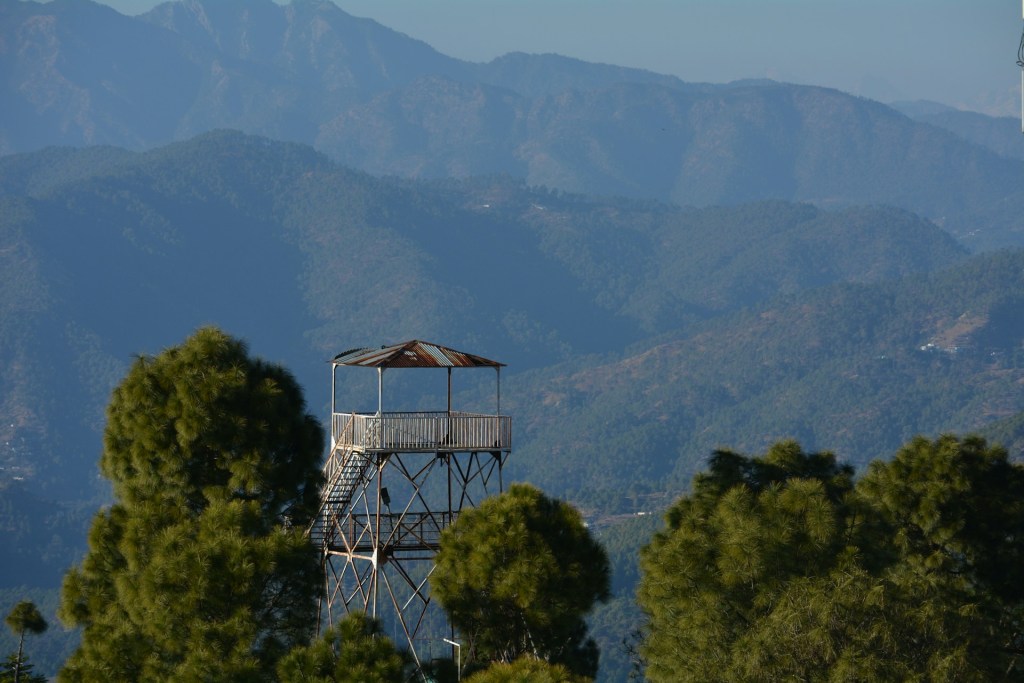
There is an old and familiar image of responsibility. A watchman stands upon a tower, looking out into the darkness while the village sleeps beneath him. His task is to stay attentive and to raise the alarm when something requires the village’s attention. It is an honorable occupation and, when performed well, a lonely one. The people below do not wake to congratulate him on another uneventful night, and his reward is largely the knowledge that he has fulfilled his responsibility.
But imagine that, over time, he becomes convinced that nobody else can be trusted to see what he sees. He extends his watch and refuses to rest. He examines every movement beyond the walls and every shadow that might conceal a threat, until he believes his attention is the only thing standing between the village and catastrophe. Some of his concerns may be justified, and his experience may give him a genuine advantage in recognizing danger. But he has also created a new vulnerability. The safety of the village now depends on one exhausted man who will not leave his post. His conscientiousness has become a single point of failure, and the more indispensable he believes himself to be, the less willing he becomes to build the arrangements that would let someone else take the watch.
There is a difference between suppression and architecture. Suppression waits for the spark and fights it; architecture denies the fire the conditions it needs to spread. The watchman who will not come down has become suppression with a pulse, tireless and reactive, and dependent on never once looking away. A village with relief schedules and clear procedures for danger is architecture. The old question asks who watches the watchmen. The more useful question may be who relieves them.
The same holds for institutions. A responsible organization should not depend indefinitely on one conscientious employee remembering every safeguard and stepping in whenever a process proves inadequate. Those responsibilities belong in the system, clearly assigned and able to survive changes in personnel and attention, and where a decision involves accepting risk, the authority to accept it should be explicit. Otherwise, the organization has not managed the risk. It has merely found someone willing to carry it.
There is also a cost the watchman rarely counts, because it is not paid on the tower. Every hour of vigilance is an hour taken from something else. Triage always carries a missing clause: whatever we save first, something else waits. For the watchman, what waits is the village, the lit windows and the people inside them whose wellbeing gave his watch its purpose. He believes he is spending only his own rest. He is also spending their time with him.
The objective was never to become an ever more vigilant watchman. It was to build a village that does not require one. But the metaphor hides one more difficulty. Even when the safeguards are built, someone must decide whether they are sufficient, and someone must eventually decide when to come down from the tower.
The Right to Stop Looking
Even when we have done everything reasonably expected of us, uncertainty remains. The safeguards are in place, and the concern has reached the people with the authority to decide. Still, something might go wrong. The risk may have been underestimated, or circumstances may change in ways nobody anticipated. And if we keep investigating, we will find another possibility that deserves attention, because there is always another possibility. We cannot build a life entirely insulated from uncertainty, and if we make its elimination our condition for peace, we have set a condition life will never satisfy.
This is the particular challenge for the person who has made a habit of looking. The question is no longer whether they have the courage to investigate an uncomfortable possibility, or whether they can endure the social cost of raising it; experience has answered both. It is whether they can recognize the point at which their responsibility has been reasonably discharged, and then let the remaining uncertainty exist without treating it as an unfinished obligation. That means trusting an informed person to make a decision without assuming personal responsibility for everything that follows, and accepting that another safeguard might add some protection without concluding that its absence is negligence.
It also means recognizing that the capacity to do more is not, by itself, evidence that more must be done.
There is no universal formula for when enough has been done. Different responsibilities justify different levels of attention, and a minor inconvenience deserves less than a low-probability event with catastrophic and irreversible consequences. The Stoics offered an image that remains useful here. An archer does everything in his power to aim well, and he genuinely intends to hit the mark; without that intention, his care would have no purpose. But once the arrow leaves the string, its flight is no longer entirely his, and a miss does not by itself prove the aim was careless. What measures the archer is how he aimed. We remain accountable for the evidence we weighed and the consequences we chose to accept, but certainty cannot be the standard by which every responsible action is judged.
A person can raise a justified concern without persuading everyone who hears it, and prepare responsibly without eliminating the possibility of loss. There is no particular virtue in exhaustion for its own sake, and no moral accomplishment in carrying a burden merely because we are capable of carrying it. Calm, after all, is not the same as peace. A surface can stay perfectly level while everything beneath it runs hot, and a person can look composed for years while organized entirely around the next emergency.
Still, recognizing those limits intellectually is one thing. Living comfortably within them is another, especially when the uncertainty concerns something we love.
So That Nothing Has to Happen
It is late, and the house is quiet. Somewhere nearby, the dog has settled into the particular arrangement of limbs and blankets that suggests he has never considered the possibility of anything troubling his existence. He does not concern himself with the household’s resilience, or wonder whether an unexpected disruption could be weathered. He simply trusts that the people responsible for his world will keep making it a place where he can sleep, and there is something both humbling and rather wonderful about that arrangement.
We cannot promise that his trust will never be disappointed, or that our preparations will prove sufficient for circumstances we have not imagined. But we can take the obligation seriously, addressing vulnerabilities where the effort is proportionate to the danger and building the reserves that keep unexpected difficulties from becoming disasters. And then, perhaps, we can allow ourselves to enjoy the ordinary evening those preparations were meant to protect.
The work of prevention will rarely be glamorous. It asks for uncomfortable conversations and a willingness to become an unwelcome interruption in someone else’s productive day, and even when we are right, it offers little satisfaction. The disaster we prevented never becomes more than a possibility, and the people whose lives are made more secure may never fully understand what was undertaken on their behalf. That is not a failure of recognition. It is the nature of the work. Most of the time, success looks like nothing happened, and that is the point. We do not need certainty that a disaster would have happened to justify a reasonable precaution, nor should we mistake the absence of disaster for proof that every precaution was necessary. The future will never provide a complete accounting of the paths we did not take.
Perhaps there is some peace in that. Not in refusing to look, or pretending the dangers are absent, but in understanding that the purpose of looking was never to stay forever occupied with what might happen. It was to make room for what is happening: the ordinary comforts that rarely seem important until something threatens them, and the people whose lives we hope to make a little less vulnerable to circumstances none of us control. We look and we prepare because those things matter, and if we are fortunate, we occasionally remember that they matter even when nothing threatens them.
The lights are still on, and someone we love is nearby. Somewhere there is undoubtedly another assumption that deserves examination, and tomorrow, perhaps, we will be the ones to notice it. We may find ourselves once again explaining an uncomfortable truth to someone who would rather not hear it, and we may turn out to be right, or discover that we were mistaken. Either way, once the conversation is over, we will likely carry some small portion of its uncertainty home, despite knowing the decision no longer belongs to us.
But for now, the dog is asleep and the house is quiet. The watchman, standing somewhere between the tower and the village below, considers whether there is anything more that needs to be done. He cannot see everything beyond the walls. He never could. He learned to keep watch long before anyone gave him a tower, and the darkness offers no reassurance that the night will remain uneventful. But neither does it give him reason to believe that every shadow deserves another hour of his attention.
For a moment, he looks back toward the village, toward the lights in the windows and the people whose wellbeing has given his vigilance its purpose. Then he looks once more toward the darkness.
And considers what it would mean to leave the tower unattended.
Author’s Note
I almost didn’t write this one.
It sits a little closer to the mundane world of work, responsibilities, and everyday decisions than the broader philosophical reflections I usually pursue here. It also revisits territory I’ve explored before: the weight of responsibility, the peculiar burdens of competence, and the difficulty of distinguishing what we can carry from what we ought to.
I wondered whether I had anything new to say, or whether I was simply walking familiar paths from another direction. Perhaps both.
But after three attempts to write something else this week, each of which felt less honest than the last, I kept returning to this. To the uncomfortable conversations, the quiet preparations, and the question of why some of us find it so difficult to stop looking.
And eventually, I decided that perhaps the distinction between the ordinary and the philosophical was less meaningful than I’d been treating it.
After all, our philosophies aren’t merely things we contemplate in quiet moments. They’re also the principles we carry into meetings, the choices we make when nobody is watching, and the habits that shape the lives we build for those we love.
I still don’t know that this article offers anything resembling an answer. But it was the one that, despite three attempts otherwise, wanted to be written.
So here it is.
~Dom









Leave a Reply