
Photo by Md. Hasanuzzaman Himel on Unsplash
Anubis waits beside the scales.
At least, that’s how we remember him.
The dead arrive having already surrendered everything that once allowed them to bargain with the world. Their titles have been abandoned with their bodies. Wealth has become somebody else’s inheritance. Beauty is useless, and while reputation may have survived among the living, it has no weight that matters in this room.
Whatever excuses once seemed persuasive have followed the flesh into the grave. All that remains is the heart.
In the Egyptian imagination, it is placed against the feather of Ma’at, an emblem of truth, balance, and the order by which a life might be measured. Thoth waits to record the judgment. Nearby, Ammit waits for a heart that proves too heavy. There is something wonderfully severe about the image.
The dead are not asked to present the strongest argument for themselves. Nor do they select their finest moment as evidence.
The scale receives what they have become.
Later traditions gave us different furniture for roughly the same anxiety. Saint Peter acquired his place beside the gates of Heaven, sometimes holding keys and sometimes, in popular imagination, something resembling the records of a celestial bureaucracy. Somewhere beyond death, we seem to hope or fear that there is an accountant.
Surely someone kept the books.
Surely the kindness we performed when nobody was watching matters somewhere, and the cruelty nobody punished has not simply vanished because time moved on. Surely every promise kept and abandoned, every burden carried and transferred, every moment in which we made another person’s life easier or harder has accumulated in some place beyond memory.
We have imagined elaborate architectures around this hope. Halls of judgement. Gates. Scales. Books of life. Courts beyond the edge of the mortal world.
Perhaps we need them because the alternative is difficult to tolerate.
Perhaps nobody is keeping score.
And yet, even if nobody waits for us at the end, I have increasingly come to suspect that the accounting happens anyway.
Rain and Salt
A field knows little about virtue.
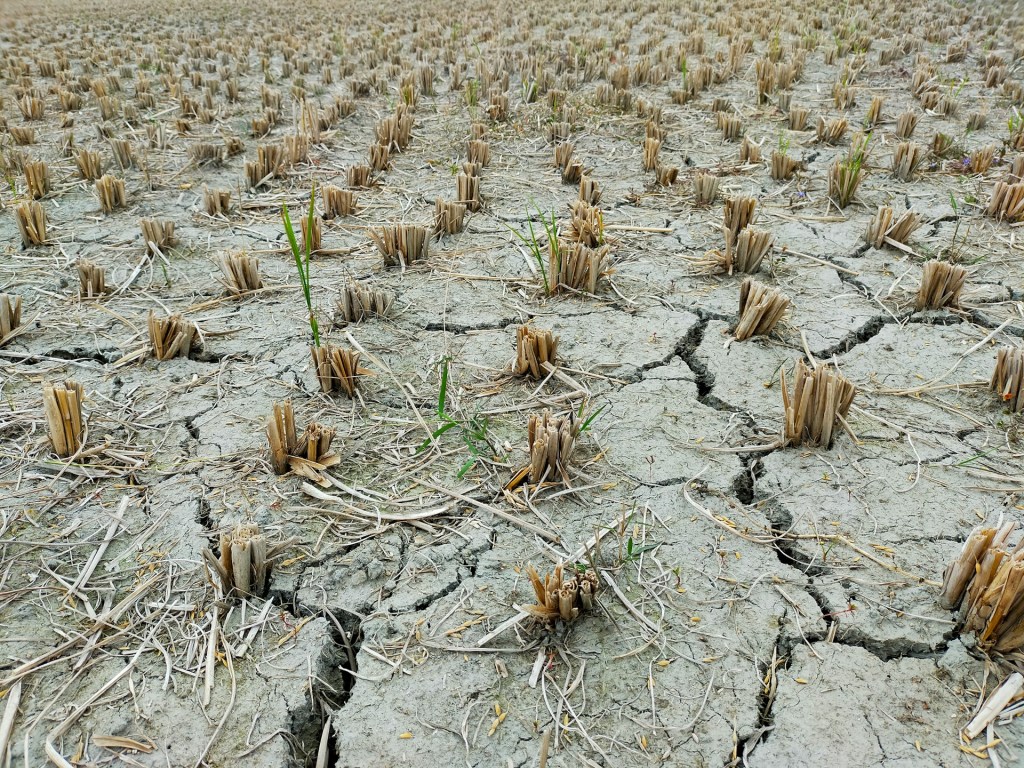
When its soil has cracked beneath a merciless summer, rain is a blessing. The first drops darken the earth, the dust settles, and the roots that had begun to curl inward find water again. Soon, something that looked almost dead remembers how to grow.
No farmer needs to construct a philosophy around this. The field tells him what the rain means.
There are other years when the clouds refuse to leave. Rivers lash upward along their banks, and seedlings drown where they stand. Roads disappear under brown water. The same rain that once answered prayer becomes one more thing to fear.
Salt behaves much the same way. A little preserves food, seasons a meal, and replenishes a body. Enough of it worked into good soil can make a field barren.
Fire gives warmth until the walls catch.
The world is filled with things whose value becomes visible through what happens around them.
People are more complicated than weather because we possess some ability to choose what follows us. We can reflect on the damage we cause, and we can change direction. We can learn what the places around us require and decide whether we care enough to provide it.
All of this makes the question harder, because it points to a less obvious consequence.
Every one of us forms part of the world inhabited by other people.
Through our choices, actions, and circumstances, we become conditions within marriages and families, offices and friendships, communities that existed before us and will often continue after we leave. Our moods alter rooms, just as our reliability changes what others are able to attempt. Even our private failures have a habit of becoming public expenses when another person eventually has to absorb the consequences.
We spend enormous amounts of time asking whether the world has treated us well, and we catalogue the injuries done to us with impressive precision. We remember who failed to show up, who took more than they gave, and who made a difficult season heavier than it needed to be.
I am less certain that we ask the inverse question with anything resembling the same enthusiasm.
What has it been like for the world to have us in it?
The Weather We Carry
There are people whose names appear on a phone and cause something in us to loosen.
We know, before answering, that whatever follows will probably remain proportionate to the problem. Perhaps they need something, or maybe, this time, they simply want to talk. They may even be calling with bad news, but experience has taught us that the bad news will not expand unnecessarily merely because they are involved.
Other names produce a different response.
Nothing terrible has happened yet. The phone has barely vibrated. Still, the body seems to know something the conscious mind has not finished articulating.
Here we go again.
The distinction can feel unfair because very few people wake in the morning and consciously decide to become exhausting. Most of the damage human beings create enters the world through ordinary doors: fear, pride, laziness, avoidance, or appetite, often accompanied by the small relief gained from pushing a consequence into tomorrow, particularly when tomorrow’s version of ourselves can rely on someone else to help clean it up.
None of this requires villainy. That may be why it becomes so difficult to discuss.
We are comfortable condemning monsters because monsters require nothing from us beyond condemnation. The abusive tyrant, the remorseless murderer, the cartoonishly selfish billionaire consuming villages from a penthouse office – all of these allow moral reasoning to remain comfortably distant from ordinary life.
The harder question concerns the person who is simply, repeatedly, expensive to everyone around them.
Not financially, necessarily. I mean the kind of person who consumes patience faster than they replenish it. Their emergencies somehow become shared emergencies, while their responsibilities slide away from them and accumulate around people who are more dependable.
The car broke down. Work became overwhelming. Someone misunderstood them. They forgot. They had a difficult childhood. Their manager is incompetent. Their partner is cruel. They were angry. They were scared.
Any of those things may be true, and sometimes all of them are.
Still, after enough years, there is a peculiar dishonesty in examining each incident as though it arrived without ancestry. Patterns have parents.
A person can encounter extraordinary amounts of bad luck. I have known people for whom life seemed determined to test the limits of statistical plausibility, one loss arriving before the previous one had even settled into memory.
Sometimes a human being needs to be carried for a while. Sometimes they need to be carried much farther than anyone expected. There is no shame inherent in that.
We enter the world helpless and, if fortune gives us enough years, many of us will leave it in much the same condition. Between those points are illnesses, griefs, layoffs, accidents, betrayals, disasters, and long winters of the mind that no amount of discipline can completely prevent. Civilization itself is partly an agreement that nobody should have to survive every season alone.
Being a burden for a time tells me very little about someone’s character, but how they relate to the people carrying them tells me considerably more.
Gratitude matters, as do effort and awareness. A willingness to eventually place one’s shoulder beneath somebody else’s weight matters; often more. Most of us can tolerate enormous demands from a person who is clearly trying to climb with us.
The experience changes when someone appears to have built a home on your back.
The Mercy of the Single Event
I distrust moral judgments built from isolated moments, and I’ll freely admit that the position is partly philosophical and partly self-preservation.
There are days in my own life that I would prefer never be entered as the sole exhibit in a trial concerning my character. I have spoken too sharply, withdrawn when I should have remained, and I have mistaken certainty for wisdom and exhaustion for justification more times than I could probably explain. There are people I could have treated better and situations I understood only after the opportunity to behave differently had passed.
Anyone who demands perfection from others eventually constructs a gallows with room for themselves.
The question cannot be whether someone has ever harmed another person. That scale condemns everyone before the first argument begins, so we require something wider.
A life has texture; character emerges through repetition. The apology followed by altered behavior means something different from the apology used as a reset button. The person who fails spectacularly and spends the next decade becoming someone who would not make the same choice again should not remain trapped forever inside the worst hour of their life.
Likewise, a person who periodically performs some magnificent kindness does not erase the landscape created by everything surrounding it.
The ledger has to be large enough for both.
This is where I think we become vulnerable to our own desire for simple stories. We want people to be good or bad because those categories are efficient. They relieve us from having to examine direction, frequency, context, or effort, and once assigned, they ask little else from us.
A single betrayal can become proof of eternal corruption. A single act of generosity can become evidence that years of selfishness were misunderstood.
Life rarely offers such convenient arithmetic, and personally, I care more about trajectories. What happens after the mistake, particularly once someone understands that their behavior has caused pain? What do they do when the same circumstances eventually return?
If the explanation changes while the result remains constant, there comes a point when the result deserves more attention.
Eventually, the trend becomes more honest than the explanation.
That judgment still makes me uncomfortable, as I think it should. Anyone who becomes too comfortable evaluating the moral weight of other people is likely preparing themselves for some impressive hypocrisy.
Still, refusing to judge anything is also, itself, a judgment. It grants every pattern indefinite credit and asks everyone affected by it to continue pretending that tomorrow contains no information from yesterday.
There has to be some point at which observation becomes knowledge.
Qualis Est Homo?
For years, I have carried a question with me.
Qualis est homo qui non facit mundum meliorem?
What kind of man is he who does not make the world better?
I have mostly understood it as an aspiration – a reminder that existence should leave something behind besides consumption. If you possess the ability to repair something, fix it. If you can make a system work better, improve it. If someone has entrusted you with responsibility, leave it stronger than when it entered your hands.
It is an exhausting motto if taken too literally, which is probably one reason I like it.
Lately, however, I have become more interested in the question than the command hidden inside it.
What kind of man is he?
For most of my life, I suspect I treated the question as rhetorical because the moral lesson was obvious enough. He should do better, try harder, and look beyond himself. That answer has begun to feel incomplete.
There are people I have known whose impact on those around them became sufficiently consistent that I stopped expecting another investment of patience, attention, or trust to produce a different result. I did not begin hating them; in some cases I continued caring about them quite deeply, and if they were in genuine danger, I would probably still help.
Something nevertheless changed. I stopped thinking of them as projects awaiting the right conversation because, at some point, their behavior had become information.
That admission sounds colder on paper than it feels in practice, and perhaps it should. There is something severe about deciding that you have enough evidence to stop extending credit to another human being.
Yet our lives are finite, and almost every meaningful thing we can offer another person is finite as well. Time does not replenish. Trust may recover, but rarely without scar tissue. Attention spent in one direction disappears from another.
There are people whose presence in your life asks those resources to circulate. You invest in them and, somehow, more becomes possible. Perhaps they teach you something, or they challenge you. Maybe they occasionally need far more than they give, but the imbalance belongs to a season rather than the entire architecture of the relationship.
Then there are those for whom every investment becomes one more surface upon which the same pattern can repeat.
I am not claiming that moral failure diminishes someone’s humanity. Humanity is not an award I possess the authority to revoke. They retain whatever dignity belongs inherently to another conscious being, including the right to be treated without cruelty.
But dignity and access are different questions.
Someone can deserve food without deserving a place at your table. They can deserve compassion without receiving another advance of trust. They can deserve help when bleeding beside the road without being invited to choose the destination of your life afterward.
I have become increasingly comfortable with that distinction.
Perhaps maturity includes learning that kindness does not require pretending the ledger is blank.
The Cost of Keeping the Door Open
We often talk about boundaries as though they are fundamentally statements about the other person.
You may not treat me this way, speak to me like that, or continue doing this and expect me to remain.
Those formulations are useful, though I think they obscure something. A boundary is also an admission about ourselves. It says: I have limits.
My patience and time are both finite, as is the number of evenings I am willing to spend repairing a crisis I did not create. There will only ever be so many times I can loan credibility to someone before their choices begin damaging mine.
Seen that way, withdrawing from someone is not necessarily an act of judgment delivered from above. Sometimes it is simply an honest accounting of what continued proximity costs.
This matters because compassion itself can become strangely narcissistic; we like being the person who understands. We enjoy imagining ourselves more patient than everyone who walked away before us. Perhaps they gave up too soon, or perhaps they lacked empathy. Maybe our insight will finally reach the place their anger could not.
Occasionally that is true; everyone else really did misunderstand.
There are also times when we are standing in a long line of people who all learned the same lesson separately, congratulating ourselves for being the first clever enough to ignore it.
No virtue exists in remaining available forever to someone determined to make availability expensive.
That idea creates tension with another principle I believe just as strongly: people can change. I have, and you probably have too.
The person someone was at twenty-five should not become a prison from which their forty-five-year-old self can never escape. Human beings are capable of extraordinary revision. The difficulty is that change has evidence.
It appears in choices, and it persists when nobody is applauding. Eventually the people around us stop having to take our word for it.
That is one reason I dislike demands for forgiveness that arrive before repair. Forgiveness can be offered freely, but trust is built inside the world. It has to survive contact with reality.
You can release resentment toward someone and still know better than to give them your keys.
The Heart Returns to the Scale
This is where I find myself returning to Anubis. The image becomes more interesting to me because the thing placed upon the scale is not a written list of the events that made a life. It is the heart.
Whatever theological complexity has been flattened through thousands of years of retelling, there remains something profound in the symbolism. A list invites argument over individual entries, but a heart suggests accumulation.
Imagine standing beside the scale and watching yours descend.
There would be explanations; of course there would be.
That year was terrible. You were afraid. You did not understand what was happening. They hurt you first. You were trying to survive. Nobody taught you better. You apologized.
You meant well.
Some of those explanations might genuinely matter; context belongs in any moral accounting worth the name. A frightened child and a calculating adult cannot be judged by identical measures, ignorance differs from malice, and harm discovered and repaired carries a different meaning than harm defended.
The scale can contain all of that, but it can also contain the consequence.
This is where intention sometimes becomes too comfortable a refuge. We know ourselves primarily through motives, while other people encounter us primarily through effects.
I may remember how hard I tried to avoid disappointing someone, while they remember being disappointed.
I may know that the cruel thing I said emerged from grief rather than hatred, but they still heard it.
My internal explanation matters because it tells us something about the likelihood of repetition and the possibility of growth, but it cannot travel backward through time and prevent the injury from occurring.
A mature moral accounting has to hold both realities without forcing one to erase the other. Perhaps this is why the heart makes such an effective symbol.
Everything ends up there. The injury and the apology. The weakness and the attempt to overcome it. The circumstances we never chose and the decisions we made once they arrived anyway. Even the person we hoped we were and the person others repeatedly experienced.
What, then, would it mean for the heart to be light?
I doubt perfection would have much to do with it.
Perhaps lightness comes from having carried more than we displaced. Perhaps it comes from leaving enough places more fertile than we found them that the damaged ground can be mourned without defining the entire landscape.
I do not know. I am suspicious of anyone who claims to know exactly how the gods calculate.
Nobody at the Gate
There is, of course, another possibility.
Anubis may not be waiting. Saint Peter may possess no gate, no keys, and no ledger.
The dead may never discover whether the metaphors humanity built around judgment pointed toward anything beyond our own terror of unfinished accounts.
Perhaps consciousness ends with the body. The final electrical activity dissipates, and the machinery simply stops. The person who spent decades wondering what eternity might hold never experiences enough of eternity to discover the answer. Nothing follows.
I do not find this possibility as frightening as I once did.
What unsettles me more is what it does to the ledger. If nobody waits beyond death, then nobody repairs the imbalance afterward.
There is no cosmic reimbursement for kindness, and no later compensation arrives for the person who absorbed years of another’s cruelty.
There is no final court in which the liar is forced to experience the damage produced by the lie, no grand ceremony at which unnoticed sacrifices are finally recognized.
There is simply what happened.
For some people, I suspect that sounds like liberation. If there is no judge, why care?
I arrive at the opposite conclusion. If there is no later accounting, then this one becomes more important.
The people around us are not supporting characters placed here to refine our souls before the main story begins. Their pain does not become acceptable because eternity will eventually make them whole, and their happiness is not rehearsal.
Their time is being spent at exactly the same irreversible rate as ours. Every hour we make miserable is an hour taken from the only life they are guaranteed to possess.
Every kindness matters for the same reason.
There is a peculiar purity in goodness that expects no supernatural return. Help someone and the event may simply end there. Teach them something useful and perhaps they carry it into rooms you will never enter. Offer patience at the right moment and you may never know whether it changed anything.
You receive no points, and no angel writes your name in gold. The world is merely, for one moment and perhaps for longer, different because you were there.
That may be enough, and it brings me back to the question I have carried for years.
Qualis est homo qui non facit mundum meliorem?
What kind of man is he who does not make the world better?
I am less interested now in constructing a universal answer. Lives are too strange, circumstances too uneven, and human beings too capable of becoming things they never intended.
But I think the question deserves to be asked without assuming it must be rhetorical. When you pass through a place, what tends to grow afterward? Do the people who love you become freer to become themselves, or do they gradually reorganize their lives around managing you?
When circumstances reveal some ugly part of you, what happens once you can see it? If you were required to examine the whole pattern without the privilege of narrating every individual exception, what would you recognize?
These questions make me uncomfortable, which, I think, is a good enough reason to keep them.
If Anubis exists, perhaps one day I will discover how much my heart weighs. If Saint Peter waits, perhaps I will learn whether the books contain anything resembling the accounts I imagined. Maybe there is a God who understands every motive perfectly and can somehow reconcile justice with mercy in a way human beings never managed.
Or perhaps death simply annihilates the thing I spent a lifetime calling me.
In that case, there will be no final answer. There will only be whatever remains in the world that I no longer inhabit: people I strengthened or diminished, problems I solved and others that someone else inherited, memories that warm a room for a moment alongside scars whose origin eventually becomes irrelevant to the person carrying them.
The good and the harm will continue moving through lives I can no longer touch.
Perhaps that is the only judgment available.
If everything supernatural were removed from the equation – if there were no heaven to earn, no punishment to fear, no immortal soul whose preservation might turn morality into an act of self-interest –
I would still want to believe that my presence here was worth what it cost.
That seems, increasingly, like the question beneath the question. Not whether I can prove myself good, but whether the world received enough in exchange for having to bear the weight of me.
Perhaps there was never a price on the soul.
Perhaps the soul was the price.






Leave a comment