
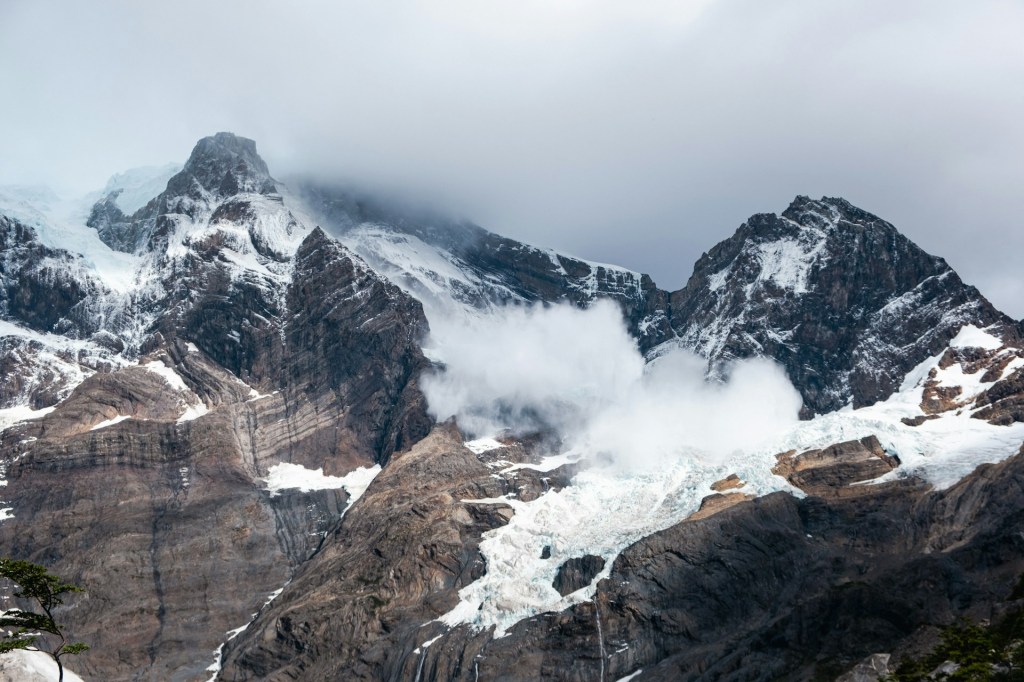
Photo by Olga Iacovlenco on Unsplash
The war was already over when they brought Atlas before Zeus.
There was little ceremony left in it. Ceremony belongs to uncertainty: to trials whose verdicts might still change, or negotiations where words retain some power over what comes next.
The Titans had lost. Their strongholds were broken, their armies scattered or buried, and the old world had learned with considerable violence that being ancient was not the same thing as being permanent.
Atlas stood among the ruins with blood dried black across one side of his face. He had expected death. Perhaps he had even hoped for it.
Instead, Zeus turned his head to the horizon. “Watch.”
At first, Atlas saw nothing. Then the stars moved, though not across the heavens, as stars are meant to move, but downward. The change was almost imperceptible. A slight distortion at the edge of the world. A pressure in the air. Clouds flattened against something unseen above them. Birds dropped from the sky, confused by wind that no longer behaved as it had the day before.
Then came the sound. Stone does not scream, exactly, but mountains possess their own language when enough weight is placed upon them. The first ridge broke somewhere beyond sight, and another answered. The horizon bent.
Far below, men and women who knew nothing of Titans or divine wars looked upward as daylight narrowed above them. Roof beams cracked. The sea withdrew from one shore and climbed another.
Atlas understood before anyone spoke. The heavens were falling. He moved without permission, his arms having decided his course before the choice was recognized.
Atlas raised his arms, and his palms met the sky, even as the impact drove one knee into the earth.
In that moment, bone protested and tendons stretched. His shoulders buckled beneath a weight no body, mortal or otherwise, had been designed to bear. When the ground opened beneath his feet, he believed his spine would simply come apart inside him.
But the descent stopped. In moments, the mountains ceased their breaking, and the sea fell back. Somewhere beneath him, a child who would never know his name began crying.
Atlas drew one breath. Then another. He looked over his shoulder, though the movement sent fire through his neck. “You will hold it,” he said.
Zeus shook his head. “No.”
Atlas did not understand.
“You may lower your arms whenever you wish.”
And for the first time since the war began, there was no anger in the god’s voice. That made the sentence worse.
Atlas looked down, where he could see villages between the mountains, occupied by tiny things that built fires in the distance, moving along roads, and working in fields. People moving through lives too small to know that, for the moment, they existed only between his hands and his decision.
He tried to imagine lowering his arms, and the heavens descended half an inch. Somewhere far away, stone cracked. Atlas pushed again as Zeus turned to leave.
“No chains?” Atlas asked.
The god stopped. Perhaps there was something almost like pity in the way he looked back. “What would be the point?”
And with that, the gods departed.
Atlas remained. His muscles shook, and the world beneath him slowly returned to whatever it had been doing before it nearly ended. Evening came, and night replaced it. For hours, Atlas told himself that he would endure until morning. When morning came, he told himself he would endure until evening.
And so, somewhere between one impossible breath and the next, he discovered what his punishment actually was.
There were crueller things than being given no choice.
The First Morning
By sunrise, Atlas had learned the geography of pain. There was the bright tearing across his shoulders, the deeper ache along his spine, and numbness in two fingers of his left hand. His right knee had stopped bleeding where the stone had opened it, though he could no longer tell whether that meant it was healing.
He had learned, also, that suffering changes when it ceases to be a surprise. At first every new pain demanded attention, and later they merged into something ignorable. Eventually, though, the weight was all that remained.
Below him, smoke rose from cooking fires, and people stepped from their homes. The sun appeared as it had every previous day, and life continued.
Atlas watched a farmer walk into a field and begin repairing a fence. That, more than anything, offended him. He had held the world together through the night, and somewhere beneath him a man was annoyed about a fence.
For a moment, Atlas hated him.
Then he understood that the farmer did not know. How could he? Morning had arrived the way it always does, and the sky was where it belonged. Nothing in the farmer’s world suggested that these things had become achievements.
Atlas adjusted his grip, and the farmer kept working.
Responsibility often begins this way. Not with a title, or authority. Not even with obligation. Sometimes, it begins when capability encounters consequence.
Something is falling, and you can see it. You believe you can stop it, so you put your hands beneath it.
Most of the burdens that eventually become part of our identity probably do not begin with the same description. A child needs something, so a parent provides it. A system fails, and someone who understands it stays late to fix it. A family loses the person around whom much of its stability had quietly organized itself, and someone else begins making the calls, remembering the appointments, answering the questions, and filling whatever spaces cannot safely remain empty. A friend calls at an inconvenient hour. A team becomes uncertain during a crisis, and someone starts organizing the uncertainty into decisions.
There is no tragedy in this; often there is something admirable in the decision to step in. This is one of the reasons I distrust philosophies that become suspicious of responsibility merely because responsibility can become unhealthy. Almost anything valuable can be distorted in the absence of judgement.
I find that to be a better argument for judgment than an argument against the value.
The first time we carry something difficult for someone else may be one of the better things we do. Love carries, as does friendship. Parenthood is, among many other things, an extended negotiation with weight, and most forms of leadership that never absorb risk from the people beneath them are little more than administration wearing better clothes.
I have benefited from people doing this for me, and I have tried to do it for others. I would not want to become so sophisticated in my understanding of boundaries that I forgot the ordinary goodness of saying, Give me that. I can hold it.
The complication, however, begins later – when the choice the person made, and kept making, becomes a trap they are not yet in a position to recognize.
They do not need chains. They need imagination.
If I know the system will fail when I leave, then leaving can not be experienced merely as a departure. If I know a person will suffer when I say no, then saying no holds their suffering inside the decision. If I know the work will land on someone less prepared, then declining the work feels less like protecting my capacity and more like transferring pain.
Whether that interpretation is accurate is a separate question, and I want to mark it now rather than pretend it resolves later. The mind does not always wait for that question; often, it acts on the forecast.
Atlas was free to lower his arms at any time, and that is exactly what made the punishment work. Some burdens require coercion. Others require only that the person carrying them understands what happens when they stop.
And if you are competent enough, responsible enough, or simply anxious enough to imagine consequences vividly, freedom can become strangely theoretical. You could put it down. Doing so only requires that you tolerate what you believe will happen next.
There is a difference between responsibility and compulsion, but from inside the body they can feel remarkably similar. The danger is not necessarily that someone forced the weight into your hands. Sometimes you simply noticed something had begun to fall, and you caught it.
Then morning came. Everyone saw the sky where it had always been. And you kept holding.
The Road at His Feet
Years passed before anyone found Atlas.
The first travelers approached carefully. They had seen him from a distance and mistaken him for some formation thrown upward when the mountains cracked: a dark figure at the edge of a broken plain, too large to be human and too still to be alive.
Then one of them saw his eyes move.
Stories followed quickly. For a while, Atlas became famous. Pilgrims came. Some brought food he could barely lower a hand to accept. Poets composed songs about the Titan whose strength separated the living world from annihilation. Children were lifted onto shoulders so they could see him, and warriors traveled great distances merely to stand nearby and imagine that strength might somehow transfer through proximity.
A trail became a road where people walked. Then stalls appeared along the road, then inns. Atlas watched a village grow around the fact of him.
He learned their language through repetition, and they, in turn, learned his name. When they called upward to thank him, Atlas sometimes answered. At first he found their gratitude embarrassing.
Later, on difficult nights, he waited for it.
There is a version of this argument that places all moral responsibility on the people beneath Atlas. They take him for granted, and exploit his strength. They build their lives around his sacrifice and eventually forget that a sacrifice is being made at all.
That version is comfortable for the person doing the carrying. It may even be true sometimes, but it is not true enough. The indispensable person often participates in becoming indispensable. Competence feels good.
I do not mean that cynically; there is a legitimate satisfaction in being useful, and dignity in knowing that another person can hand you something difficult and trust that you will not casually drop it. There is also meaning in developing enough skill that confusion becomes navigable when it reaches you.
Being needed in this way can be an expression of relationship. It can also become evidence that I matter, or that I am capable, and that I belong here. Each again becoming evidence that the sacrifices I made to become competent were worth making.
There is nothing particularly shameful about enjoying any of that. The problem appears when usefulness stops being something I offer and becomes the architecture through which I understand my own value.
At that point, delegation acquires an emotional cost it did not have before. Teaching someone else is slower than doing the work myself. Explaining the system takes longer than fixing it. Watching someone struggle with a task I could complete easily feels inefficient, and inefficiency is remarkably good at disguising control as responsibility. Sometimes the easiest way to protect everyone from short-term inconvenience is to remain the only person capable of preventing it.
Every individual decision makes sense. I’ll handle this one. I’ll document it later. It will take too long to explain. They’re already overwhelmed. I know where the edge cases are. Just send it to me.
Again, and again, and again.
Eventually a strange reciprocal arrangement forms. Other people learn that you will catch the thing, and you do not dispute it. Eventually, they stop preparing to catch it, and you stop expecting them to.
No conspiracy is required, and no villain needs to enter the room. A system can become unhealthy through nothing more dramatic than everyone repeatedly making the locally reasonable choice.
This is one of the more uncomfortable things I have learned about responsibility: Sometimes the burden I resent is one I taught other people to give me.
That does not mean their expectations are fair, any more than it means exploitation becomes acceptable because the person being exploited once volunteered. But honest examination requires more than asking who placed the weight on my shoulders. Sometimes I have to ask how many times I reached for it before anyone asked.
How often did I conceal the effort because I wanted the result to look effortless? How often did I solve the immediate problem without creating the capacity that would prevent the next one? How often did I silently believe that the safest place for responsibility was with me?
And beneath some of those answers is a still less flattering question: how much did I enjoy being the one everyone trusted to carry it?
Songs about his strength drifted to Atlas through the windows of the inns left open in summer. I suspect he hated some of them.
I suspect he needed some of them too.
I should say here that I have also stood in that crowd. I have looked up at someone holding something enormous and felt the entirely pleasant sensation of safety. Most of us have. I will come back to it, because it turns out to be the harder half of this essay, and I would rather not arrive there by accident.
For now: virtue is rarely corrupted by something entirely foreign to it. More often the distortion grows inside the virtue itself. Responsibility becomes control because control feels responsible. Service becomes identity because identity makes service sustainable. Endurance becomes pride because pride helps us endure.
And for a long time, the results can remain excellent. The sky stays up.
That is what makes the problem difficult to see.
The Dunes
The songs lasted longer than the singers; Atlas noticed this, too, because the words changed.
The earliest songs named battles he remembered, but later songs kept his name and lost the war. Later still, he became a giant born beneath the mountain, and then a mountain that had once been a giant.
The village at his feet became a city. Eventually, the city burned, and another rose nearby. Languages changed, the road moved, and sand collected around his ankles.
Atlas stopped measuring time. The dunes rose slowly enough that no single season seemed important. First they covered his feet; then his calves. Centuries later, only the upper half of his body remained visible from the plains below.
Travelers no longer brought offerings. Instead, they climbed. The exposed part of his shoulder made an excellent place from which to look out upon the desert. Someone carved steps into the stone beside him.
Atlas felt every strike of the chisel.
Eventually the maps stopped using his name. The place became simply a ridge; caravans navigated by it, and children dared one another to climb to the highest point. Once, a boy sat directly against Atlas’s neck and complained that the stone was too warm.
Atlas almost laughed, but the sound had nowhere to go.
Beneath the sand, his hands remained against the heavens. Above him, the sky stayed exactly where everyone expected it to be.
The most dangerous consequence of reliable effort may not be ingratitude, as that at least still recognizes a gift. If someone says, You have done this for me a hundred times and I do not appreciate it, there is at least enough perception left to identify that something has been done.
The more complete disappearance happens when effort becomes environment, and the thing simply occurs. The lights turn on, bills get paid, an appointment is remembered.
The family gathers, the crisis ends, and the sky stays up.
Reliability changes the perceived nature of an event. The first time someone accomplishes something extraordinary, we notice the accomplishment. The tenth time, we notice competence. The hundredth time, though? Too often we may notice only the exception. Why isn’t it done yet? Why did this fail? Why didn’t you catch that?
This is not always malice; human beings build expectations out of repeated experience because that is one of the main ways we navigate reality. I do not wake every morning grateful that the floor remains beneath my bed, any more than I congratulate each wall for standing. The mind economizes, and stable things disappear into the category of how the world works.
That is enormously useful when the stable thing is concrete, but it becomes more dangerous when the stable thing is a person. A person can perform reliably enough to be cognitively reclassified as infrastructure, and once that happens, ordinary human limits begin to resemble defects.
Infrastructure is not supposed to grieve. Infrastructure does not become exhausted because its father died, its marriage is strained, its body hurts, or it has spent three months absorbing everyone else’s uncertainty. Infrastructure does not wake up with less capacity than yesterday. Infrastructure does not need reassurance, and it does not resent the fact that people only notice it when it breaks.
People do.
Yet there is a particular praise we sometimes offer highly capable people that reveals how close the transformation has come: I never have to worry about you.
We mean it kindly, but taken far enough, it contains a strange absence. The most dependable person receives less support precisely because they have demonstrated they can survive without it. The calm person is not checked on because they are calm. The competent person receives the impossible assignment because they have survived other impossible assignments.
The person becomes evidence for their own infinite capacity. And because they often take pride in that capacity, they may cooperate with the illusion.
From Inside the Stone
Here is the thing the story usually gets wrong about Atlas, and the thing I got wrong about myself.
We imagine that he watched the sand rise, that he counted the centuries, understood exactly what was happening to him, and endured it with his eyes open. But a man with his arms above his head cannot easily look down. He can feel his hands and he can feel the weight, but he cannot see his own outline. Whatever has risen around him has risen at a rate too slow to register as an event, and the only way he would ever learn how much of him had disappeared is if someone else stood on the plain and told him.
I did not discover my own version of this by introspection. I had to be shown a measurement.
What it showed was not what I expected, initially. I was not working longer. The hours were essentially unchanged, and the edges of the day were where they had always been; no nights, no weekends, the perimeter remained intact. By every measure I had been using to reassure myself, I was fine.
What had changed was the granularity – the same day was cut into more pieces. More distinct things, more transitions between them, and a steady erosion of the long uninterrupted stretches where the difficult thinking actually happens. Most of what arrived was novel. Problems that appeared once and did not repeat, each individually reasonable, each requiring a fresh start. And the day had closed to the point that there was no unclaimed space left anywhere inside it.
That last detail is the one I keep returning to, because it corrects something I believed about refusal.
The usual advice assumes that saying no protects a reserve. It assumes there is slack, and that the disciplined person guards it. But a day with no gap in it offers nothing to decline with. New weight cannot fall into unused capacity when there is none. Instead, it displaces something already held; every refusal becomes a reallocation, and every acceptance becomes a theft from work that had already been promised somewhere else.
That is what the trap actually feels like from inside. Not chains, or even the vivid imagination of consequences I described earlier, though that is real. It is the simple arithmetic of a life with no unassigned hour in it, arranged that way one perfectly sensible agreement at a time.
And it had looked, from where I was standing, like efficiency. It looked like competence. The discipline that kept my evenings and weekends intact is the same discipline that made the problem invisible, because the measures I was checking were the ones that stayed healthy.
I think, had anyone asked, that Atlas would have said he was fine, too. His arms were up, and the sky had not moved. What else was there to report?
This is why I no longer think the language of boundaries is sufficient, though it remains necessary. You can set a boundary around a task. It is harder to set a boundary around an identity that has become structural to the people around you. If everyone knows you as the person who holds the family together, what exactly does it mean to take a week off from being that person? If an organization has allowed critical knowledge to collect inside one person for years, “delegate more” is not a wellness strategy.
It is an architectural correction.
At some point we have to stop treating structural dependency as a personality problem. Someone may have participated in creating the structure, but that does not make the structure imaginary.
The dunes still rose around Atlas. Perhaps he should have taught someone else sooner. Perhaps the people beneath him should have looked upward. I think both can be true.
By the time a shoulder has become a lookout point on the map, blame is less useful than archaeology. We have to uncover the person again. Sometimes that begins with someone else describing what they can see.
The Children of Atlas
Long before his name disappeared entirely, the story escaped him. That was the part Atlas could not see.
A mother told it to a child during a storm. A soldier repeated it beside a fire. A mason carved a crude figure beneath the arch of a temple that was later forgotten. Over time, the details changed; in one telling Atlas was a god, and in another he was a man who angered one. Sometimes he carried the heavens as punishment, sometimes as penance, sometimes simply because no one else was strong enough.
Centuries later, far from the desert, a house caught fire. A timber cracked across its center, raining plaster into the smoke, and a man standing beneath it put both hands against the beam. He could not hold a house forever, but he did not need to. He held it long enough for three people to crawl beneath him.
Years later, one of those children told his own son about a man who had held up a roof. The boy heard something familiar in it. A Titan, a beam, and a falling world.
The stories began to resemble one another. No one believed a person could hold the sky, but they knew of one who had held up a roof, and they understood the movement.
There is a danger in spending too much time examining the pathology of responsibility. We can become so alert to martyrdom, exploitation, burnout, poor boundaries, and unhealthy attachment to usefulness that we accidentally make detachment sound like the highest form of wisdom.
I do not believe that; there are things worth carrying, and moments when a person should carry more than their share. Fairness is not always arithmetic. If I am strong today and you are broken, the correct distribution of weight may not be the equal one. If I understand the problem and the stakes are high, insisting that everyone participate equally before I act may simply be ego wearing the mask of principle.
If someone I love cannot stand for a while, I hope I am capable of carrying enough for both of us.
The fact that responsibility can become unhealthy does not absolve us of responsibility. Atlas should have caught the sky, at least at first. If we rewrite the myth so carefully that his wisdom would have been allowing the world to collapse beneath him, we have learned the wrong lesson.
The interesting question is what happens afterward.
Civilization may be understood, at least partly, as distributed burden. Very little of the world any of us inhabit is self-sustaining. Water arrives because people maintain systems most of us never have to think about. Buildings remain safe because someone inspects them before the rest of us enter. Knowledge survives because somebody writes it down, and children reach adulthood because adults surrender astonishing amounts of time, sleep, money, attention, and freedom to people initially incapable of understanding any of those sacrifices.
The world is held up by people; not one person.
That distinction may be the entire moral argument.
The lineage of Atlas is not a bloodline. It is an inheritance of movement: something is falling, and I am here. I can bear some of its weight, so I do.
There is nobility in that reflex when it remains attached to judgment. I would rather live among people susceptible to responsibility than people who have perfected explanations for why every falling thing belongs to someone else. The person who never overextends may simply have excellent boundaries. But they may also have constructed a philosophy elaborate enough to avoid every inconvenience. There is no virtue in exhaustion for its own sake, just as there is also no virtue in being impossible to depend upon.
Somewhere between self-erasure and indifference is a form of stewardship that I suspect cannot be reduced to a rule. Sometimes I should carry it, and others I should let another person struggle. Sometimes declining is selfish, and others it is the only way to prevent the system from building another dependency around me.
Ethical life rarely provides the labels in advance. We discover which situation we were in partly by paying attention to what our choices produce.
That is why I increasingly distrust moral principles that point only inward. How much can I handle? What do I owe? Where are my boundaries? These are necessary questions, but a system containing more than one person creates another: what is my effort teaching everyone else to do?
If I solve every problem, perhaps I am teaching people that problems travel toward me. If I absorb every consequence, perhaps I am teaching people that consequences belong to no one. If I make every difficult thing look easy, perhaps I am teaching people that it costs nothing.
If I always hold up the roof, perhaps no one else learns where the beams are.
That is the difference between a hero and a lineage.
The Lesson Atlas Never Learned
Atlas noticed the change as an absence.
For so long, the weight had been total that he no longer experienced it as an object separate from himself. There was no Atlas and sky, only the eternal act of holding.
Then, one day, the pressure shifted. Barely. He thought at first that one of his hands had moved. It happened again years later. Then again. Each, only a small change; a moment when a weight he had carried so long seemed to distribute part of itself somewhere beyond his reach.
He did not know about the mason who held an arch long enough for workers to escape. He did not know about the woman who carried her sister’s children across a flooded river one at a time. He did not know about the old man who spent a winter teaching younger hands how to maintain the aqueduct because he had become frightened by how much only he knew.
He did not know about any of them, and they did not know about one another. Most did not think of Atlas, and some had never heard the name.
Still, everywhere beneath the heavens, people were placing their shoulders beneath small portions of a world that threatened, periodically, to fall. No one could hold the sky, but together, they changed its weight.
Atlas lowered one hand. Nothing happened. He stared at it, and the arm trembled uselessly beside him.
For the first time since the gods departed, he was afraid of freedom.
There is a final temptation for the competent person, and it may be harder than learning to say no.
You have to allow other people to carry badly.
Anyone who has become genuinely skilled at something knows how uncomfortable this is. You watch someone take too long, and you see the mistake forming before they do. You know the answer, and your hands almost move by themselves.
If the stakes are low enough, the intervention may be unnecessary. If the stakes are high enough, it may be essential. Wisdom is partly learning which is which. But there are capacities that cannot be transferred without allowing someone else to feel the weight. No explanation of responsibility creates responsibility, and no documentation of judgment creates judgment.
No amount of telling another person that they are capable substitutes for the moment when something real depends upon them and they discover whether they can bear it.
If Atlas never lowers one hand, no one ever learns what happens when he does.
This is where succession becomes moral rather than merely organizational: The purpose of strength cannot be only to carry; eventually it must make other carriers.
Parents understand this in a particularly cruel form. Success initially means doing almost everything for someone who can do almost nothing. Then, slowly, success reverses. The child feeds himself badly. She ties her own shoes slowly. He makes choices you would not make. She struggles with responsibilities you could manage more efficiently.
The gradual surrender of usefulness is not a failure of parenthood. It is one of its purposes.
Something similar is true anywhere stewardship is healthy. A good teacher is always building toward being unnecessary. A good leader should be disturbed by systems that function well only in their presence. A good friend helps another person stand, but should be cautious about becoming the only ground beneath their feet.
This does not mean we should make ourselves replaceable in every sentimental sense. Human beings are not interchangeable components. There are people whose absence creates wounds no succession plan can solve. My father cannot be replaced. Neither can the particular people I love be reduced to functions someone else could perform.
But I want to be precise about something, because the essay would be dishonest without it.
When my father died, there was work to be done – the ordinary, unglamorous administration that death leaves behind, and the harder work of keeping a road smooth for someone walking it beside me. Some of it could have been divided. I did not. I decided, deliberately and in advance, that I would carry the cost of it, and I processed what it cost me out loud rather than quietly, because I did not want the carrying to become a debt anyone owed me later.
I still think that was right, and I would choose it again.
But I notice that I never asked. I made a decision about someone else’s capacity without consulting them, and I have described that decision to myself ever since as generosity, and it may have been.
But it was also, unmistakably, a decision to remain the person holding the beam. Those two things are not opposites, and I have stopped pretending I can cleanly separate them.
Roles can be distributed even when relationships cannot. Knowledge can be transferred. Skills can be taught. Responsibility can be shared. Others can be allowed to become strong in ways our constant intervention would prevent.
Perhaps Atlas’s deepest tragedy was not the weight. Perhaps it was that he became so good at holding the heavens that the world, for an age, lost any reason to learn.
If so, the answer is not contempt for Atlas. He saved them time and again each day, and the act still mattered. But gratitude toward the person holding everything together eventually has to become more demanding than gratitude.
Thank you is not succession.
Recognition is not relief.
Praise does not redistribute weight.
If someone around us has become infrastructure, the kind thing is not merely to tell them how extraordinary they are. Sometimes the kind thing is to learn the system, make the call, remember the date, or take the shift. Others, it’s to ask the question before the crisis, or accept responsibility before it becomes an emergency. Become dependable enough that the dependable person can occasionally fail without the world failing with them.
The Story We Remembered
I should probably admit the obvious before ending: I do not believe any of this happened. I do not believe a Titan knelt at the edge of the ancient world while some celestial dome collapsed toward the earth, or that the dunes rose around him until travelers mistook his shoulder for stone, or that Zeus constructed a punishment from the knowledge that Atlas could walk away whenever he chose.
The story I have told here is not even the old story exactly. I changed it because myths have survived being changed before, and because I wanted to ask a different question of this one.
But I believe we remembered Atlas for a reason.
There is a tendency to treat myth as failed explanation. Ancient people did not understand the sky, so they imagined someone holding it. There is truth in that account, but it, too, is incomplete.
We no longer need Atlas to explain why the heavens do not fall, and yet we kept him anyway. We kept Icarus after learning that the sun does not melt wax through divine offense alone, and we kept Sisyphus despite having no practical need for an immortal man and a badly placed boulder. Myths endure not because they describe the mechanics of the world, but because they describe recognizable arrangements inside us.
We know Atlas because nearly everyone eventually encounters someone carrying more of the world than one person seems designed to bear. Sometimes it is a parent, others, a spouse. Sometimes the friend who always answers. Sometimes the person at work everyone calls when nobody knows what to do. Sometimes it is the quiet one in a family whose competence has allowed everyone else to remain less competent.
Sometimes, if we are not careful, it is us.
But this is where I have to return to what I set aside earlier, because the easy version of this essay ends with sympathy for Atlas, and leaves everyone beneath him unexamined.
It is easy to identify with him; most of us prefer the mythology in which we are carrying something difficult, because it flatters the self. The harder question is where I have been standing while somebody else held the sky. Whose reliability have I mistaken for nature? Whose competence have I converted into expectation? Who have I praised for strength when I should have been learning how to carry something?
Where have I enjoyed the view from a shoulder I no longer recognized as anything other than terrain?
I have answers to those. They are less comfortable than the essay I set out to write. And there is one more, which I think is the real ending.
When Atlas lowers his hand and nothing happens, we want to read it as relief. The burden was shared all along, and the world was never his alone. Knowing this, he can rest.
Read it again. Nothing happened.
He was no longer as necessary as he had believed, and he had built a self out of the belief. The centuries of holding were real, as was the pain of doing so. The world did need someone to catch the heavens, once. But somewhere in there the necessity ended and the holding continued, and he had no instrument that could have told him which year that was.
That is what the fear is. Not freedom, but the possibility that the weight had been redistributing itself for a long time. That the sand rose while he was not looking, and that the thing he will have to survive is not the falling sky but the ordinary question of who he is when the world no longer needs him in quite the way it once did.
I do not think that possibility is an argument for dropping anything. Instead, it is an argument for looking, and for accepting that the answer may cost more than carrying the weight did.
So lower one hand, carefully, and not as a test of the world.
The sky was never supposed to stay up by itself, but neither was any of this supposed to become the only proof that we were here.






Leave a comment