
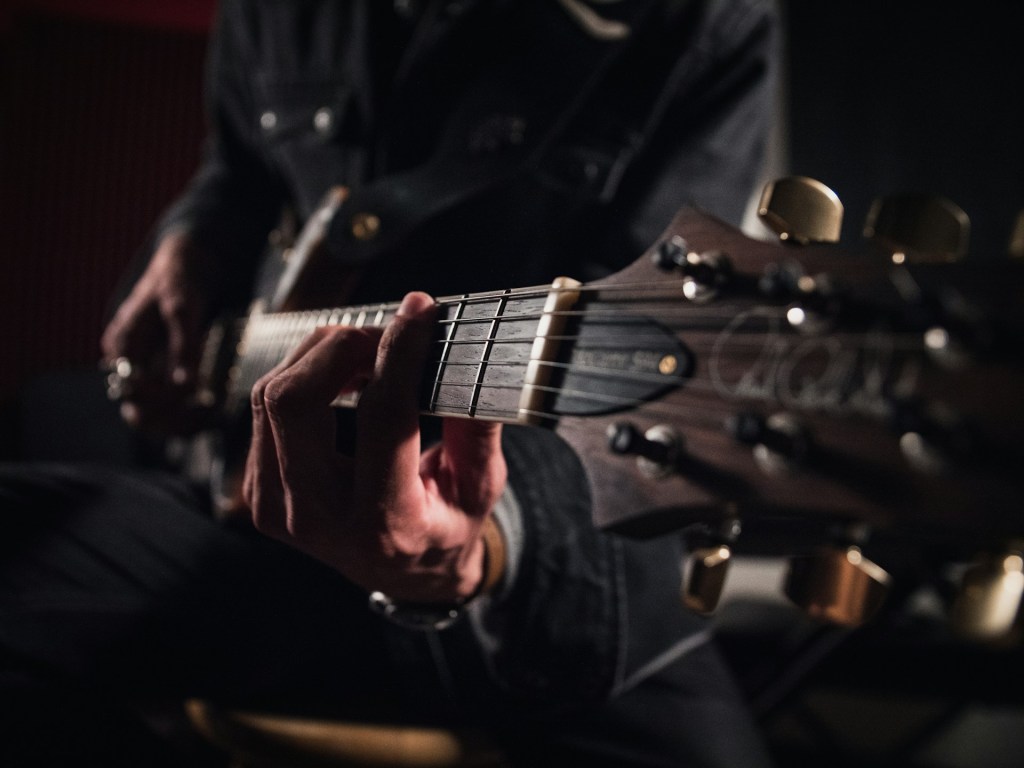
Photo by Joey Nicotra on Unsplash
People said Niccolò Paganini had made a deal with the devil, and they meant it literally.
They said no human hands could move that way, no ordinary mind could hold that precision, speed, and control without something unnatural behind it. The explanation, once spoken, settled easily: a bargain had been struck. Talent that extreme must have been purchased.
The story persisted because it solved a problem. It gave form to something otherwise uncomfortable; that mastery might not be magic, but cost.
Over time, the setting changed, but the structure remained. The stage became a roadside intersection. The violin gave way to a guitar. And in the story of Robert Johnson, the myth reached its most distilled form: a man goes to the crossroads, meets the devil, and returns with something no one can explain.
We tell these stories because it is easier to believe that greatness arrives through a single, dramatic exchange than to consider what it might actually require. What it consistently demands, over time, without witness or ceremony.
Because if the myth is not true, then the cost was not hidden. It was paid, deliberately, line by line.
Leonardo da Vinci never made such a bargain.
There is no story of a crossroads, no whispered debt, no shadow standing just outside the frame of his legacy. There is only the work – volumes of it, studies without end, and journals filled with fragments of a mind that refused to settle.
And there is the medium. Silverpoint.
A stylus drawn across a prepared surface, leaving behind a mark that cannot be erased. There is no possibility of correction, or revision. Only accumulation. Each line placed with the understanding that it will remain, whether it was worthy of the page or not.
To draw in silverpoint is to accept that nothing will be taken back. That every mark is final, and the act itself is a form of commitment.
We prefer the story of the crossroads because it isolates the moment. A single choice. A single price, in a clean exchange. Silverpoint offers no such comfort. It suggests something quieter, and far less forgiving.
Not everyone becomes Paganini. Few bury their wish at the crossroads. But everyone draws.
And nothing we draw is ever erased, and most of it wasn’t drawn on purpose.
The Market
In stories like these, the soul is the thing being sold.
It is treated as an object; something that can be weighed, named, and exchanged. A discrete possession, signed over in return for fame, power, or escape. The transaction works because it is contained: one thing given, one thing received, a closed exchange between two parties.
But that is not what we spend.
What we spend, day to day, is less dramatic and far less abstract. We spend time, in hours that do not return. We spend attention, which is the only mechanism by which anything in our lives becomes real. And we spend possibility – the narrowing that follows every decision, the quiet closing of paths we no longer choose.
This is the currency.
A life is not made up of a single wager, but of continuous expenditure. What we call a “soul” is not a thing that can be handed over; it is a finite account composed of three elements: how long you have, what you notice, and what you become.
And it is always being spent; there is no exemption, and whether you notice or not is not part of the exchange. There is no position from which you can observe the exchange without participating in it. To be alive is to transact.
The myth frames the bargain as exceptional – something entered into by the desperate or the brilliant. They suggest that ordinary lives remain untouched, that the rest of us are somehow outside the exchange.
We are not.
The market is not a place you go. It is the medium you exist within. The question is whether you will notice that you are already participating. The crossroads, then, is no longer a location. It is the act of waking up to the fact that something is being spent.
In the old stories, the devil is almost honest. He names the price. He presents terms. He waits for agreement. What we have built is more subtle. It does not announce the transaction. It does not ask for consent.
It simply continues to take, and allows us the comfort of believing that nothing was ever signed.
The Quiet Transactions
The stories we tell about extraordinary cost are easier to face than the ones we live.
The pact attributed to Niccolò Paganini is dramatic. The crossroads of Robert Johnson is dramatic. Even the familiar image of the obsessive artist, isolated, consumed, and reduced to the work, carries a kind of mythic clarity.
In these stories, the exchange is visible: something is given, something is received. However severe the cost, it can be pointed to. What is harder to see is the transaction with no visible counterparty.
An hour spent scrolling that leaves no memory and no rest, or decade given to a role chosen for stability and continued through inertia. Relationships maintained because ending them would require more effort than enduring them. Opinions held because questioning them would mean admitting they were never chosen.
A version of the self set aside – quietly, somewhere in the mid-twenties – because becoming it seemed more difficult than becoming something else.
It didn’t feel like losing anything at the time.
None of these announce themselves as decisions. That is the point. They do not arrive as choices, or present terms. They feel less like exchanges, and more like the default shape of a life.
But the mark does not depend on intention. The line is drawn whether it was meant to be or not.
I recognize this most clearly when I look at my own ledger, which is unremarkable in exactly the way that matters. There have been hours spent on things I cannot recall at times, and attention given to what returned nothing at others.
There have also been possibilities closed through the failure to choose before the window narrowed on its own.
In every case, the mark remained. The page accumulated, with or without direction. This is not a confession, but it is an accounting. And it is not unique to me. It is a property of the medium.
Some costs only become visible after they’re irreversible.
Those come with a particular kind of grief that arrives late; the recognition of a transaction long after it has cleared. The job that took a decade before disappearing as if it had always been temporary. The friendships that thinned out through neglect rather than conflict. The skills once within reach, now out of practice. The body assumed to be constant, until it was not.
None of these required temptation. None required a devil, or a crossroads, or a moment that could be named as the point of decision. They required only time passing, and a market that remained open whether or not attention was paid to it.
The cruelest aspect of these constant transactions is not that they cost us. It is that they are often made in exchange for nothing in particular.
The artist who burns out in pursuit of the work has, at least, the work. The obsessive who narrows their life has, at least, chosen the narrowing. But the quieter trades, the ones made by drift rather than decision, produce nothing worth the cost.
Not even the clarity of a loss chosen on purpose.
The figures we treat as warnings, whether Paganini, Johnson, Vincent van Gogh, or any of the myriad others, if the stories hold, at least knew what they were paying for.
The tragedy is not theirs. It lives in the larger, quieter ledger: lives spent without intention, on terms never examined, for outcomes never clearly chosen.
The Ledger
There is no version of a life that is not written in silverpoint.
You cannot step outside the medium. You cannot stand apart from your own time, any more than you can withdraw your attention without that withdrawal becoming a mark itself.
Even refusal is a line. Even waiting. Even the careful avoidance of commitment is, in its own way, a fully committed act.
The ledger is already open. It has been since you began. What can change is not whether the entries are made, but whether they are seen.
Awareness does not guarantee better decisions, or more satisfying exchanges. The artist who chooses the narrowing may still regret it.
The parent who gives years to the slow, uncelebrated work of raising a child may still wonder, late at night, what else might have been drawn.
Awareness does not reduce the cost, it simply makes the cost visible, and removes the excuse of not knowing.
There is a difference, over any stretch of time, between a person who can name what they spent and what they received, and a person who can name neither. The first has lived a life that, whatever its outcomes, was recognizably their own. The second has lived a life that unfolded in their direction.
Both ledgers are full. Both are permanent. Only one has been read by the person who wrote it.
Only one contains any record of why.
The myths we tell about sold souls are not warnings. They are displacements. They locate the dangerous transaction somewhere else; at a crossroads, in a candlelit room, in the lives of the rare and the exceptional.
And in doing so, they offer a quiet reassurance: that ordinary lives are untouched.
They are not; there is no exemption. Only the question the myths avoid and the medium insists on: not whether the trade was made, but whether it was made knowingly.
No refunds. No erased lines.
Only whatever you’re still willing to draw next.







Leave a comment