
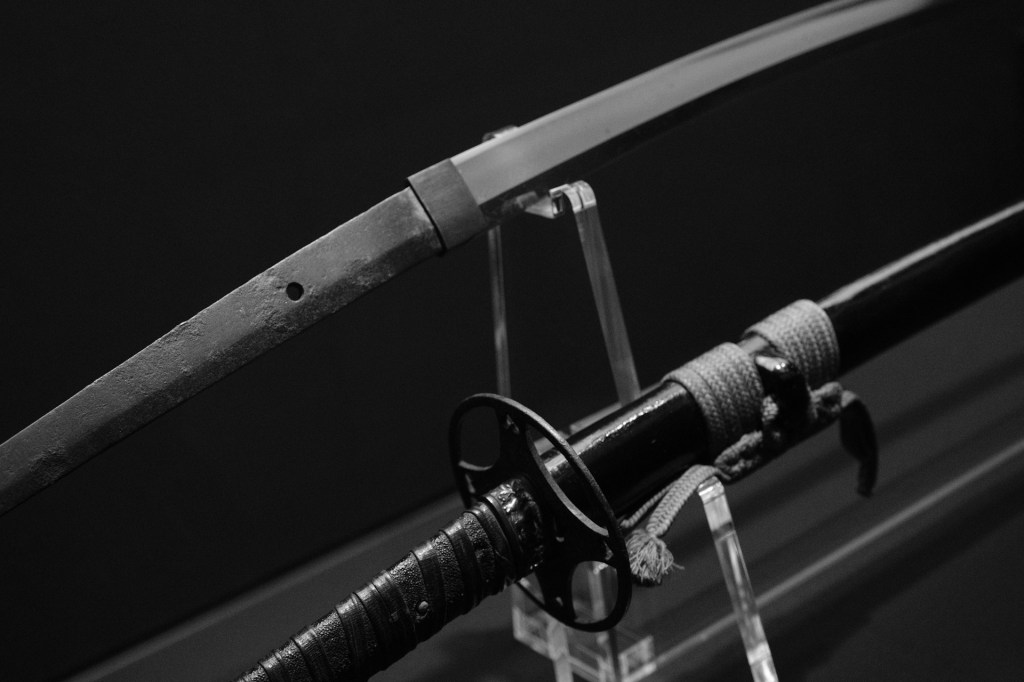
Photo by Seiya Maeda on Unsplash
Author’s Note
There is a difference between understanding a principle and having lived inside its weight.
Most of what I write about clarity, judgment, and restraint is drawn from years of pattern recognition; systems studied, philosophies tested, and frameworks built under pressure. This one is different. It centers on a decision that took years to form and only moments to act on – and one that I have not reversed, not because it is beyond question, but because the conditions that led to it have not changed under continued scrutiny.
I want to be precise here. This is not a story about severance as strength, or about the quiet pride of someone who cut cleanly and walked away untouched. It is about what it costs to act in accordance with what you already understand, and what it means to carry that understanding forward without the comfort of forgetting or the luxury of pretending the question was never answered.
The My Tools series was never meant to end here. It began as an attempt to document how I approach the moral terrain I write about: the lenses, the stances, the mirrors, the splints. Each entry was a tool I had already built and was simply naming. The Cartographer’s Curse mapped how to witness without collapse. The Stance and the Strike described how to hold ground with integrity. The Mirror and the Pattern argued for systemic thinking over scapegoating. Psychic Triage documented what happens when clarity doesn’t save you. The Firebreak addressed what must sometimes be destroyed. Blueprint After the Fire examined what gets built in its place. Through Smoke, the Signal traced how pain becomes understanding. The Clause of Self drew the terms of presence.
I thought that was the complete set. I was wrong.
This entry is not a tool I built in advance and later named. It is one I discovered I had already been using, without full awareness of what it was, until a moment of reflection years after it was required. That distinction matters, because kakugo cannot be constructed on demand; It is the product of everything that preceded it, which is why this piece could not have been written first.
The framework in this essay is real. It was built slowly, tested repeatedly, and held up against situations that demanded more than theory. It does not eliminate uncertainty, but it does define the conditions under which uncertainty no longer governs action.
So is the brother I no longer speak to.
Both have shaped me. Only one of them chose to.
~ Dom
There are three moments in a practitioner’s journey where the sword etches itself into the palm.
The first is when the sword ceases to be an idea.
For many, the path to the blade begins long before the dojo. It is shaped by stories, cinema, and mythology; the quiet insistence that the sword is something refined, even noble. When it first rests in your hands, you treat it accordingly. Held carefully. Maintained with a kind of reverence. You are aware of its cost, and its danger.
Every motion is deliberate. You do not yet trust yourself with it. Here, the hand does not yet understand what it holds.
The second moment comes quietly.
The sword loses its varnish. Not in steel, perhaps, but in perception. It becomes routine, just another weight in the bag. The wrapping loosens, the fittings show wear, and the rituals that once surrounded it begin to fade. Familiarity replaces reverence, and attention begins to slip.
This is where many stop. And where some are harmed.
Not because the sword has changed, but because familiarity is mistaken for understanding. The blade is no less dangerous. The edge has not dulled along with the owner’s focus. Only awareness has; the weight may have never left, though often the sense of it has.
The third moment is not about the sword at all. It is about intent.
A sword, you gradually realize, is not an object you learn to use; it is a physical expression of a decision already made. What was once practiced as form begins to reveal itself as consequence. Kata unfolds from simple training repetition into a map of choices. The body has internalized the angle of a cut, the path of the edge, the position of the feet. Each movement is no longer aesthetic or simple exercise. It is directional, and each carries purpose.
You begin to see beyond where the blade moves, into what it is meant to do.
Even the smallest details shift in meaning. The texture of the grip is no longer incidental; it exists to hold, regardless of what coats the hand. The motion before resheathing is not ceremony. Everything serves a function.
The sword, in this phase, becomes a sequence of decisions carried through the body. And for those who continue, there is one more realization. One that does not change the hand, but the self.
In the philosophy surrounding the sword, the greatest discipline is not in drawing it. It is in deciding when it must be drawn. Iaido teaches this through restraint: the blade is not carried to be used. It is carried with the understanding that if it is used, something has already been decided.
This is the threshold. The recognition that action may be required, that it will carry consequence, and that once taken, it cannot be undone. This is kakugo; acceptance: the settling of the question before the moment arrives.
The sword is not singular because of what it can do. Any weapon can harm. Most can kill. The sword is singular because it becomes, almost inevitably, the manifestation of a decision that defines the person who carries it more than any opponent they will ever face.
It does not ask whether you are capable of acting. That is assumed. Instead, it demands that you consider under what conditions, and for what reason, it will be drawn.
I know the answer to that question. I have known it for over a decade.
The last time I acted on it, I didn’t speak again to someone I had shared a childhood with.
Where Philosophy Ends
The lessons of the sword do not end with movement. They point beyond it, toward the systems we use to make sense of action before it happens.
Philosophy, ethics, and virtue exist primarily in the abstract. They offer structure. They teach how to think, how to evaluate, and how to shape belief into something consistent. They provide language for judgment and frameworks for understanding. Over time, they refine perception and narrow ambiguity.
But they do not complete the process. And they are not designed to.
The Stoics gave Marcus Aurelius a framework precise enough to govern an empire and honest enough to admit, in private, that governance was breaking him. Kant gave us the categorical imperative: act only as you would will all others to act; not as a script, but as a test. Musashi gave us the principle of no unnecessary action, not a list of actions to take. Every system worth inheriting stops short of the final instruction on purpose.
A philosophy that dictates every action is no longer philosophy, but becomes dogma. It replaces judgment with obedience, relocates responsibility from the individual to the structure, and produces people who can justify anything provided the framework can be bent to endorse it. History is not short of examples.
So philosophy stops where decision begins.
It prepares you to recognize patterns, weigh outcomes, and understand the forces at play. It sharpens sight, but it does not cross the threshold into action for you; and the best of it will tell you so directly.
The moment where action becomes necessary is precisely the moment where systems stop helping.
I spent years building that structure. Stoicism for endurance. Kantian ethics for the non-negotiables. Daoist restraint for the discipline of waiting. I read, questioned, tested, and revised endlessly. I believed, and still do believe, that the work of constructing a moral framework is never wasted.
But none of it told me what to do about my brother.
It told me how to think about it. It told me what questions to ask, what patterns to trace, what values were load-bearing and which ones I had inherited without examining. It gave me the language to understand what I was watching unfold over years: the instability after the military, the domestic violence charges, the slow disappearance of the man I had known.
The framework did its job. It brought me to the edge of the decision with clarity intact. Then it stopped. And left me standing there.
This is where philosophy becomes personal. Not because the principles change, but because the cost of them does. Abstract integrity is weightless. Integrity with a name attached has mass. It presses down, and it asks whether you meant what you said when nothing was at stake.
The structure you have built is not tested when everything is theoretical. It is tested when the question is no longer how to think about a situation, but whether you will act in accordance with what you already understand.
That is the only test that counts.
The Illusion of Values
Once philosophy becomes personal, another problem emerges.
Most people believe they have values, and they can name them without hesitation. Integrity. Honesty. Loyalty. Justice. The words come easily, shaped by upbringing, experience, and the systems they’ve chosen to adopt.
But values, when untested, exist only as language.
They feel solid because they have not yet been required to carry weight, and remain intact because nothing has asked them to hold against pressure. In this state, belief is indistinguishable from preference. It reflects what is comfortable to claim, not what is costly to uphold.
Once, I believed in loyalty the way most people do, as something that moved in one direction, toward the people I came from. Family is family, and a brother is a brother. In most places, that is not a choice; it is a fact of origin. And facts of origin carry a particular gravity, especially when the person attached to them is struggling. You don’t walk away from someone who is flailing. You stabilize; you try again. You absorb more than you should because the alternative feels like abandonment, and abandonment has a specific texture when you’ve shared a childhood.
A principle held in isolation is simple. A principle held in conflict demands resolution. When acting on a value introduces loss, discomfort, or risk, the line it draws becomes real. Many step back at this point. Not always out of deception, but out of hesitation, or fear of outcome, or uncertainty. The recognition that action will close doors that thought alone could leave open.
This is where values are often abandoned without acknowledgment. They are rarely declared false, or consciously rejected. Simply deferred, reinterpreted, or quietly set aside in favor of something easier to carry. The language stays, but the commitment quietly empties.
It is not always simple hypocrisy. More often, it is a lack of resolution. The belief, though easily claimed, was never fully integrated. The line was never truly drawn; it existed as an idea, but not as a commitment. And an idea, unlike a commitment, does not cost you anything to hold.
Then his domestic violence charges came.
Not a ‘disturbance’, or a single bad night reframed in the morning as a misunderstanding. A pattern, documented, repeated, the kind that leaves no room for reinterpretation if you are being honest with yourself. And beside that fact sat another one: I was building a home with a woman I had chosen deliberately, whose safety was not negotiable, whose presence in my life represented everything the loyalty to origin was supposed to protect in the first place.
Two values in direct conflict, with no system to defer to.
Loyalty to blood said to open the door, let him stay. Loyalty to the life I was building, and the one I was building it with, said the door remained closed. Not temporarily, as leverage, and not as a warning. Permanently, because a permanent boundary was the only honest expression of what I actually believed about her safety versus what I was willing to risk for his.
This is where most failures occur. Not in the absence of values, but in the recognition that two of them cannot coexist, and the refusal to choose. The line first blurs; an exception gets made, then justified. Deference masquerades as compassion. And the value that should have held becomes a preference that yielded.
I did not let it yield.
But I want to be precise about what that cost. It did not feel like clarity in the moment; it felt like cutting something that was still alive. Sometimes, it still does. But the difference between a value and a preference is not always visible from the inside, not until afterward, when you realize that the thing you held was still intact, and the thing you released was always going to require you to release it. You just hadn’t admitted it yet.
A value that never survives contact with consequence is not a value. It is preference.
The charges were the contact. The door was the consequence. What remained afterward was the first honest answer to a question I had been asking in various forms for years: what do I actually believe, when belief costs something real?
Kakugo Defined
If values are to mean anything, they must do more than describe what you prefer. They must define what you will do when preference is no longer an option.
Your values already draw lines. Some are clear, others less so. Over time they are questioned, refined, and sometimes replaced. Experience tests them, just as reflection sharpens them. What remains, if you are honest with yourself, forms a structure that is not easily moved.
Once those lines are established, they begin to resolve decisions before the moment arrives.
This is kakugo.
The word is Japanese, rooted in martial tradition, and it is usually translated as readiness or resolution, but those translations flatten it. Readiness implies preparation for something uncertain. Resolution implies a decision still being made. Kakugo is neither. It is the acceptance of what your principles already require; the internal settling that occurs when you stop negotiating with what you already know.
It is not a surge of emotion, nor a sudden reaction to pressure. It does not depend on anger, urgency, or even the desire to act. It does not seek escalation or look for opportunity. It does not arrive dramatically.
Instead, it settles something. Quietly, and just as often, finally. Ambiguity is removed. The question is answered in advance, and all that remains is recognition.
I did not decide to close the door on my brother in the moment the charges became clear. The decision had been forming for years, through each attempt to stabilize him, each return to the same patterns, each iteration of the same hope meeting the same result. What the charges did was not create the decision. They revealed it, becoming the moment the structure I had been building finally told me what it had always been pointing toward.
This is the part that is hardest to explain to someone who has not experienced it. Kakugo does not feel like resolve. It does not feel like strength. It feels like the removal of a question that had been exhausting you without your full awareness. The relief is not pleasant, but the relief of a debt finally acknowledged rather than one paid. You are not free, but you are clear.
When the moment presented itself, there was no search for justification. No attempt to reinterpret the situation to avoid consequence. The structure had already been built. The line had already been drawn. I had drawn it, carefully, over years of trying every reasonable alternative first.
Kakugo is not found in the act itself. It exists in the clarity that precedes it. And that clarity, once present, makes indecision impossible without abandoning the principles that produced it. You cannot unknow what you have settled. You cannot return to the question once it has been answered from the inside.
This is also why kakugo is not available to the unprepared. It cannot be borrowed in the moment of crisis, and cannot be manufactured under pressure. It is the product of everything that came before; the philosophy that built the framework, the values that survived contact with consequence, and the accumulated weight of a decision that was always going to have to be made.
You do not arrive at kakugo. You realize you were already there.
The Conditions for Action
If kakugo resolves the question, this is where the answer takes form.
Clarity alone is not enough. Without defined conditions, even the most well-formed principles can be bent in the moment. Pressure distorts judgment. Emotion narrows focus. What once felt certain can become negotiable when consequence is immediate. The mind that has not pre-committed to its conditions will find reasons, in the moment, to soften them.
So the conditions must exist before the moment arrives. They are not reactive, but instead constructed.
Mine were not written down. They were built through repetition; each attempt to reach my brother, each conversation that ended the same way, each boundary tested and crossed and explained away. By the time the charges came, I did not need to consult a framework. The framework had already consulted itself, quietly, over years of evidence. What I had was not a decision tree, but a structure that had been stress-tested long enough to know where it would and would not bend.
This is what constructed conditions look like in practice. Not a checklist produced in crisis, but a set of lines drawn carefully, in advance, from the same foundations already established: earned position, understood patterns, boundaries that reflect self-respect rather than convenience.
From that structure, the conditions for action become clear.
Action is justified when integrity is directly and knowingly violated. Not in disagreement, but in contradiction between what is stated and what is done, especially when that contradiction causes harm to someone other than the person making it.
It is justified when behavior demonstrates sustained bad faith. Not a single error, but a pattern. Repetition removes ambiguity, and signals intent more honestly than any explanation offered in its wake.
It is justified when harm is directed toward those who cannot reasonably defend themselves. A partner. A child. Someone whose safety depends, even partially, on the choices of the person you are evaluating. In those cases, inaction is not neutrality; it is participation through absence.
It is justified when all reasonable alternatives have been exhausted. When dialogue has been attempted and failed, when correction has been offered and rejected, and when every good-faith effort to resolve without severance has run its course.
The key word is reasonable. Not infinite, and not repeated past the point where repetition itself becomes its own form of self-deception.
And it is justified when the cost of inaction becomes irreversible. When delay allows damage to compound beyond recovery. When waiting preserves nothing of value except the comfort of having not yet chosen.
These conditions are not flexible in the moment. That is the point of establishing them in advance; so they cannot be rewritten under pressure, softened by proximity, or eroded by the particular grief of cutting someone you once loved.
Equally important is what does not qualify.
Personal offense is not sufficient. Discomfort is not sufficient. Disagreement, even strong disagreement, does not meet the threshold. I want to be precise about this, because the conditions above could be misread as permission for anyone sufficiently convinced of their own righteousness. They are not. The ego has no place in this calculation. The desire to win, to be right, to assert control, to satisfy the particular hunger that comes from being wronged… all of it is disqualifying. Convenience alone is disqualifying. Urgency that is emotional rather than actual is disqualifying.
The decade since I last spoke to my brother has contained moments where I was angry. Where the silence felt less like a boundary and more like a wound. Where the occasional mugshot or alias surfacing in a search felt like an accusation rather than information. None of those moments changed the conditions. They were not designed to respond to my emotional state; they were designed to hold regardless of it.
This is where most failures occur. Not in the absence of values, but in their selective application. Rules bend in the quiet renegotiation that happens when conditions meet the specific face of someone you did not want to act against. Lines that were clear in reflection become blurred in practice. Exceptions are made, then justified. The structure erodes one accommodation at a time.
Conditions exist to prevent that erosion.
If the line is unclear, the action is premature. But if the line is clear, even when the cost of holding it is high… if it costs you a brother, a decade of silence, the particular grief of watching someone disappear into a life you could not permit near your own, then that cost is not a signal that the conditions were wrong.
It is a signal that they were real.
The Nature of the Cut
Once the conditions are met, the question is no longer whether to act, but how.
The time for action is not the time for debate. The evaluation has already been completed, and the boundaries have already been defined. Reopening the question in the moment does not create clarity. It introduces hesitation, and hesitation at this stage carries its own cost; not just to you, but to everyone the decision was made to protect.
Action must be bounded before it begins. Without that constraint, it expands, taking on momentum beyond its original purpose. What begins as necessary intervention can become excess.Not because the original conditions were wrong, perhaps, but because the moment itself generates its own pressure. Grief wants expression. Anger wants acknowledgment. The particular pain of cutting someone you love wants, badly, to be witnessed by the person you are cutting.
These are human impulses. They are also, at this stage, dangerous ones.
There is no place here for escalation beyond necessity. No place for expression, for proving a point, or for satisfying emotion. The act is not a performance, and neither is it a statement. It is a resolution. The distinction matters more than it might appear. A resolution closes something, while a statement invites response, and response reopens what the conditions already settled.
I did not tell my brother everything I understood about the pattern I had watched him inhabit. I did not explain the framework that had led me to the decision, or enumerate the attempts I had made before reaching it, or describe what it cost me to make it. None of that was the cut. All of it would have been expression; the need to be understood by someone I was simultaneously removing from my life. That need is real, but indulging it would have been a half-measure dressed as honesty.
The door closed. That was the cut. Everything else would have been performance.
This is where the idea of ruthlessness is most often misunderstood. It is not brutality. It is not aggression. It is not a loss of control. If anything, it is the opposite, control precise enough to stop exactly where the action needed to stop, without carrying forward into territory the conditions never authorized.
Ruthlessness, properly understood, is completion.
Half-measures prolong damage. They leave space for the original problem to persist, adapt, or return. Incomplete action often creates more harm than inaction, because it commits to consequence without resolving the cause. A door left slightly open is not mercy. It is ambiguity, and ambiguity in this context serves no one. Not you, not the person you are drawing the line against, and certainly not the people you drew it to protect.
Precision prevents this. When action is taken with clear boundaries and carried through to its necessary end, it minimizes collateral impact. It reduces the duration of harm, and avoids the secondary consequences that accumulate when the original decision is never fully honored.
This is not about acting more forcefully. It is about acting accurately.
There is a particular kind of grief that comes with precision. It may be cleaner than the grief of ambiguity, but no less present. You do not get to soften the cut by making it messier. You do not get to feel better about the decision by revisiting it in ways that suggest it might still be reversed. The cost of accuracy is that you must carry it without the comfort of uncertainty.
The cut was made without a final conversation. Without explanation. Without the particular closure that would have required him to participate in something he had already demonstrated he could not sustain. It was made in the only way it could be made cleanly, without asking the wound to also serve as witness.
Once taken, action should resolve, not express.
The resolution was not for him. It was not even, entirely, for me. It was for the home being built, and the woman inside it, and the life that required that particular door to remain permanently closed. That is what bounded action looks like when it is working; not dramatic, not announced, not explained to the person it is directed at.
Just finished. Just done. Accurate enough to hold. And quiet enough to last.
The Cost of Knowing
Action concludes the moment, but it makes no promises to conclude its impact. What follows is not always visible, but it is always present.
Once you have acted with clarity, you cannot return to the state that preceded it. The ambiguity that once allowed hesitation is gone. You have seen what it means to carry a decision through to its end, and that knowledge does not fade. It becomes part of who you are; far more than a memory you revisit, and closer to a dimension of the structure you now inhabit permanently.
You cannot unknow your capacity.
This is where the weight settles. Not in the moment of the cut, which has its own particular quality of stillness, but in the days and years that follow. The world continues. The home is still being built. Your wife still reads beside you in the evening. The ordinary proceeds, which is partly the point; the ordinary was what the decision protected. But internally, something has shifted in a way that the ordinary cannot fully absorb.
The version of yourself that could delay, reinterpret, defer, or forgive is no longer fully available. You have crossed a threshold that cannot be uncrossed.
I still search his name. Not often, and not with hope exactly; more with the particular vigilance of someone who drew a line and wants to know it still holds. The mugshots surface. The aliases accumulate. The man I shared a childhood with does not appear in them, not really. Only the outline of someone occupying the same name. I look, and I close the tab, and I carry the specific weight of knowing that the cut was correct and that correct does not mean painless, and that painless was never what I was after.
This is what it means to carry certainty rather than confusion.
Others respond in ways you do not always anticipate. Some misunderstand; they see the action without the pattern that produced it, and without that context, resolution reads as severity. A man who closed a door on his brother, permanently, without a final conversation. That can look like coldness from the outside. It is not coldness, but explaining the difference requires disclosing the history, and those experiences were never built for public consumption.
Some distance themselves. Not because they disagree with the decision, exactly, but because clarity creates its own discomfort. It removes the space where ambiguity once allowed coexistence without alignment. People who have not yet drawn their own lines find it unsettling to be near someone who has drawn theirs. The implicit question it raises “what would I do?” is not always one they are ready to answer.
Some fear it. Not the action itself, but the knowledge that the conditions exist. That they are real and maintained and could be met again. This is perhaps the most honest response, and also the most isolating to receive.
These reactions are not always unfair. They are the natural result of encountering something that most people prefer to leave implicit.
Internally, the impact is more precise.
Identity adjusts to accommodate what has been proven. Illusions fall away, particularly the ones about the distance between who you believed you were and what you were actually capable of choosing. The difference between theory and practice resolves, and what remains is harder to argue with.
Once, you believed you would act in accordance with your principles. Now you know it, though that knowledge is not always comfort. It is weight of a different kind, the weight of obligation rather than uncertainty.
Responsibility, too, increases; clarity does not reduce burden, but rather it defines it. Once you know the conditions under which you will act, you accept the obligation to maintain them. To resist convenience, drift, and to ensure that what justified the action continues to hold under scrutiny. You cannot retroactively soften the conditions because the cost of them became clear. That softening would not be mercy, but revision, and little more than self-deception given a gentler name.
This is where endurance returns. Not in surviving confusion, but in carrying certainty. In holding the line without allowing it to expand beyond what the conditions actually require. In resisting the particular temptation to let one clean cut become a pattern of cutting, to let the capacity for precision become a preference for it.
The blade is not a personality; it is a tool. Endurance means keeping it in the sheath until the conditions are met, not finding reasons to meet the conditions more often because the alternative is harder to carry.
And it is why learning must continue.
Each action reveals something. At times about the people involved, or the systems that shaped them; often about yourself. The brother I let go taught me more about the specific weight of loyalty-to-origin than any philosophy I have studied. It taught me what it actually costs to hold a different value above it, and what it means to live inside that choice rather than merely advocate for it.
Patterns become clearer over time, and consequences more predictable. The structure refines because experience gives principles texture and specificity that abstraction never could.
The cost is not the action. It is the clarity that made it possible.
And the clarity does not diminish; it compounds. Every year of silence is another year of knowing what you chose and why, another year of the decision proving itself in the ordinary life it was made to protect. That, too, is not closure, as that implies an ending. This is something else, like an ongoing account, kept honestly, that has not yet produced a reason to reopen the question.
It may never. That, too, is something you learn to carry.
The Discipline of Restraint
If the blade represents action, the sheath represents everything that prevents it from being used unnecessarily.
Iaido does not begin with the cut, but with presence. With awareness of the blade at the hip, its position, weight, and the space it occupies in relation to everything around it. Drawing the sword is not treated as a casual motion. It is a transition, and it carries consequence from the moment it begins.
The practitioner who understands this does not reach for the hilt lightly. Not because they fear the blade, but because they respect what drawing it means. Most of the discipline exists before the blade ever leaves the sheath.
A sword is not meant to be used often. This is not a limitation of the weapon. It is the point of the practice.
It, like the values we aspire to and philosophy we study, is carried with weight; not only in the hand, but in the awareness that accompanies it. It changes how you move. It slows you. It catches on obstacles. It forces you to account for its presence in ways that are not always convenient, and that inconvenience is not incidental. It is instructive. The weight is a reminder, continuous and physical, that what you carry has consequence whether or not it is ever drawn.
It also changes how you are seen.
Even sheathed, it signals something. Capability. Preparedness. The possibility of action. Others adjust to that presence, whether consciously or not. It introduces a tension that does not require demonstration to exist, and that tension, lived with long enough, teaches you something that no amount of practice with the blade itself can: that most of what you are capable of will never need to be used, and that this is not failure.
It is the goal.
Over a decade has passed since the door closed. In that time, I have not spoken to my brother. I have not reopened the question of what his life could have looked like had I chosen differently. I have searched his name in private windows, and each time, I have closed the tab and returned to the life the decision was made to protect. That life has continued to be worth protecting. My wife is still there, still reading beside me in the evenings, still the reason the line was drawn where it was.
The home we were building is built. What I closed the door to preserve is intact. That is the sheath doing its work.
Not dramatically, or visibly. Just continuously; the ongoing choice to carry the capability for that kind of clarity without allowing it to become the lens through which every relationship is evaluated.
The blade exists, just as the conditions always will. They have not been met again in the way they were met then, and so the blade has remained where it belongs.
This is where discipline matters most. Not in the ability to act, but in the decision not to. Restraint is not passivity. It is active control, and the continuous choice to carry capability without allowing it to define every interaction. To recognize that the existence of a resolution does not justify its use, and to understand that the same clarity which made one cut necessary does not make cutting a virtue in itself.
As capability increases, so does responsibility.
Clarity does not grant permission; it simply removes excuse. It defines the conditions under which action is required, and by doing so, it also defines every moment where it is not. Every day that does not meet the conditions is not a day of inaction, but instead a day of discipline; of choosing the sheath over the blade because the sheath is what the moment requires.
The blade exists as resolution. The sheath exists as discipline. One without the other is incomplete. Action without restraint becomes excess; capability weaponized beyond its conditions, and precision curdled into habit. Restraint without the capacity for action becomes avoidance, the performance of patience by someone who has simply never been tested.
Together, they form something stable. Something that can be carried over years, over decades, without becoming either a weapon looking for targets or a weight that was never real.
I do not know what has become of my brother. I know what I chose, and why, and that the choosing was correct, and that “correct” never promised to be easy. I carry the not-knowing the way the practitioner carries the blade; present, weighted, and accounted for. Not forgotten, and not reopened. Simply there, at the hip, as part of what I am now.
The sword is not carried to be used.
It is carried with the understanding that it may be. And with the harder understanding, the one that only years of carrying it can teach, that the days it remains sheathed are not the days the practice failed.
They are the days it worked.







Leave a comment