

Photo by Wolfgang Hasselmann on Unsplash
Ash falls before you understand that it is ash.
It arrives as something softer than it should be, settling along the shoulders, gathering in the fold of cloth, turning the air into something visible. You brush at it once, instinctively, and it smears, clings. It does not behave like dust.
A sound follows that does not belong to anything you can name.
Not thunder. Not wind. A pressure that seems to come from everywhere at once, rolling through stone and bone alike. The ground answers it with a tremor that is too deliberate to be mistaken for chance.
Someone says your name.
Or maybe they are saying someone else’s. The syllables are familiar, but the tone is wrong, too sharp, too immediate, stripped of everything except the need to be heard.
There is another sound.
Distant, but not distant enough. A concussive thud that arrives a second after itself, as though the world needs time to catch up to what has already happened. The windows rattle. Something falls in the next room. The air shifts, pulled inward and then pushed back out again.
You turn toward it without deciding to.
Ash continues to fall.
It thickens. It coats the ground in a way that suggests permanence, even as it is still in motion. The sky above has lost its shape. There is no edge to it, no depth; only a uniform gray that presses downward.
Another impact.
Closer this time. The sound is sharper, more defined. It carries with it a fragment of something, metal, stone, glass… it does not matter, striking somewhere out of sight. The echo lingers longer than it should, as if the space itself has been altered.
Someone is moving through the room.
Bare feet against tile. Too fast, then not at all. A pause that stretches longer than it should. Breathing that cannot quite settle into a rhythm.
You look at them. They look back. Neither of you speaks.
The ash is in your mouth now. You can taste it. It is finer than sand, but heavier somehow, carrying with it something bitter, something that does not belong inside a body.
Another tremor. Not enough to knock you down, but enough to remind you that it could.
A voice again, closer now, or maybe just louder. Calling. Urgent. Repeating itself, as though repetition might change what is already in motion.
There is a moment, brief, almost imperceptible, where you expect something else to happen. A break in the pattern. A pause long enough to think.
Instructions. Direction. A sense that this is still unfolding in a way that can be understood.
It does not come. Instead, everything continues.
The ash does not stop falling.
The impacts do not space themselves into something predictable. The room does not return to what it was a moment ago. You realize, not all at once but in pieces, that there is no transition between what was and what is now.
There is no point at which this becomes something you can step outside of. The future does not feel like an extension anymore. It feels like a narrowing.
Options collapse without announcing themselves. Paths that existed a moment ago are no longer visible, simply because they no longer occur to you as possibilities.
You are not deciding between outcomes. You are inside one.
Another sound. Too close to distinguish from the last.
The air shifts again. The pressure builds and releases. Something cracks. Not loudly, just enough to be noticed, and enough to register that the structure you are standing in is no longer what it was.
You do not move. Or maybe you do, but only slightly. A shift of weight. A hand reaching for something, or someone, that is already there.
The past is still present, but it is no longer flexible. Everything that led here has already happened, and nothing within it can be adjusted, reframed, or undone.
The future, whatever it is, has already begun to take shape without you.
There is a sensation, subtle at first, then unmistakable, of something closing.
Not a door or a path, or anything so literal; something broader than that.
The sense that the space in which decisions are made is shrinking, compressing inward, leaving behind only what has already been carried inside.
The noise continues.
The ash continues.
The voice calls out again, and this time you know exactly who it belongs to. You turn toward it.
And in that movement, or in the moment just before it, something settles into place.
Not a thought, or a conclusion. A condition. The moment has locked.
Whatever happens next will not be chosen in the way you once understood choice.
It will be met.
The Illusion We Maintain
We live as though time is elastic.
As though it can be stretched to accommodate what we have not yet decided, what we have not yet become. Days extend forward with the implicit promise that there will be another chance to say the thing more clearly, to choose more carefully, to correct what feels unfinished.
This is not a flaw, just the structure that allows ordinary life to function at all.
We make plans that assume revision. We hold beliefs that have not yet been tested. We defer difficult questions because there appears to be space in which to answer them later. The future is treated less like a fixed destination and more like a reserve; something we can draw from when we need it.
Most of what we call preparation lives inside that assumption.
We outline possibilities, imagine alternate paths, and tell ourselves that if something truly mattered, we would rise to meet it when the time came. There is comfort in that idea. It allows us to move through the present without carrying the full weight of every potential outcome.
We do not decide everything now because we believe we will be able to decide it then. And most of the time, that belief holds.
Conversations can be revisited, and mistakes can be reframed. Priorities can shift as new information arrives. The distance between who we are and who we intend to be feels navigable because it is rarely compressed into a single point. So we live within that space.
We speak as though there will be time to clarify and we act as though there will be time to reconsider. We carry unresolved things forward because they do not yet demand resolution.
Even our sense of identity is shaped by this elasticity.
We allow for growth and expect change. We account for the idea that we are still in motion, forever in the process of becoming something more aligned, more deliberate, and more complete. There is a subtle faith in that progression, even when it is not named.
It is what makes patience and forgiveness possible, just as it allows us to believe that what has not yet been made clear can still be made clear in time.
We do not experience this as illusion, but instead as normal. For most of our lives, it is.
The days do continue. The opportunities to adjust do reappear. The future does remain open long enough for us to feel that we are participating in its shape.
And so we build around that expectation. We construct lives that assume continuation and carry beliefs that have not been fully tested. We rely on the idea that when something finally demands a decision, we will have both the clarity and the capacity to meet it.
There is no accusation in this; only recognition. This is how most of us move through the world.
Not with certainty itself, but always with the expectation it can still be reached if needed, and that values don’t have to be resolved in advance; resolution can always be achieved if it becomes necessary.
We live as though there will be time. And for a while, there is.
When the Architecture Fails
Then there are moments that do not allow for that structure.
These do not come about gradually, with warning that can be interpreted in time. They arrive already in motion, already narrowing, already removing the space in which deliberation normally occurs.
And in those moments, something becomes visible that is usually hidden by time. The difference between what you can explain… and what you can do without thinking.
Only one of those survives this moment.
Frameworks do not disappear. Beliefs do not vanish. But they require something the moment no longer provides: Time to interpret, prioritize, and translate principle into action.
Without that time, they do not guide; they stall.
This is not a failure of character, exactly, but a failure of internalization. The difference is irrelevant in most moments; here, it is definitive.
To know something is to be able to articulate it, to defend it, to recognize its place within a larger system of thought. It can be examined, discussed, refined.
To have made something your own is different. It is no longer something you consult, but something you enact. There is no gap between recognition and response, and no intermediate step where you must decide whether the belief applies here, now, under these conditions.
It is already present at the level of behavior.
Most of the time, the distinction does not matter. Life allows for translation, hesitation, and reconsideration. You can pause long enough in a quiet moment to align what you do with what you say you believe.
But when the architecture fails and the reality of the moment locks everything else in place… the space for that alignment is no longer available.
What has not already been made real remains conceptual. What has not already been decided remains undecided. Reality does not wait for a well-considered decision; events move according to what has already been resolved.
This is not dramatic, and even more rarely heroic. It is simply the removal of delay.
The systems that depend on it, whether ethical, cultural, or personal, are not disproven in moments like this; they are revealed at their point of contact with reality.
Some hold. Some require more time than they are given. And in that difference, something becomes clear without needing to be stated.
Not what you believe in theory, but what you have already made usable: what can pass, without interruption, from recognition into action.
What does not need to be explained before it is done.
Borrowed Conviction
There is a quieter problem beneath this. Not the absence of belief, but the presence of belief that has never been made one’s own.
We inherit frameworks before we examine them. Family, culture, institution… they arrive early, when structure is needed, and they give language to what is right, what is worth protecting, what a person ought to do. There is nothing inherently false in that. External systems can shape genuine belief.
But shaped is not the same as owned.
Most of the time, the difference is invisible. When time is available, borrowed conviction functions well enough. You can consult it, align yourself with it, adjust behavior to match what you recognize as correct. The gap between principle and action can be bridged because there is space to bridge it.
When that space disappears, the gap remains. And nothing crosses it.
This is not a moral failure. It is a structural one. A belief that still requires consultation — still needs to be retrieved, interpreted, and applied — is a dependency. It relies on conditions the moment may not provide. And when those conditions are gone, the dependency doesn’t hold. Not because it was wrong, but because it was never finished.
The origin of a belief is less important than what has been done with it. A value shaped by something external can still become fully yours — but only through the kind of examination that moves it from principle to instinct. From something you intend to follow to something you inevitably enact.
That work is slow, and it is never finished cleanly. But it is the only thing that survives when the architecture fails.
Not what you believe.
What you have already become.
What Actually Moves
Someone stays. Not out of calculation, or because they have determined that staying is the correct response within a framework.
They do not look for confirmation, and they do not hesitate long enough to name the reason. They remain where they are, or move closer, as though there was never another option.
Someone leaves, and the movement is immediate. Not frantic, and not necessarily panicked; just directed. A turning away that does not pause to consider what is being left behind.
There is no visible decision point. Only motion.
Someone freezes, perhaps not in fear alone, but in suspension. As though waiting for something to arrive that will make the next action clear. Some signal or instruction, a confirmation that this is the moment when something must be done.
It does not come.
And so they remain, held in place by the absence of it.
Someone speaks, a name or a word. Not loud enough to command, or structured enough to explain. Just enough to reach the person it is meant for. Their voice does not waver. It does not search for what to say next. It says what it has already decided matters.
There is no pattern that can be generalized cleanly, no clear division between the right response and the wrong one. Only the presence or absence of hesitation.
The difference between movement that begins immediately, and movement that waits for permission.
None of this is framed as heroism; there is no audience here to carry the story of the moment. No time to interpret the act, no space to assign meaning to it while it is happening.
All that remains is behavior. What occurs when there is no delay between recognition and response. And in that, something becomes visible without explanation.
Not intention or belief as it would be commonly described, but what was already settled before this moment arrived.
The choice that does not need to be consulted or justified.
What moves.
The Only Available Choice
Control is gone.
Outcome is no longer something that can be influenced in the way it was a moment ago. It is already in motion, already narrowing toward whatever it will become.
What remains is smaller than decision. Closer than belief, it does not exist at the level of abstraction; it exists in direction.
Toward. Or away.
With. Or without.
Present. Or absent.
There is no time to construct meaning around these movements, no space to interpret them while they are happening. They do not resolve into something larger, and they do not justify themselves.
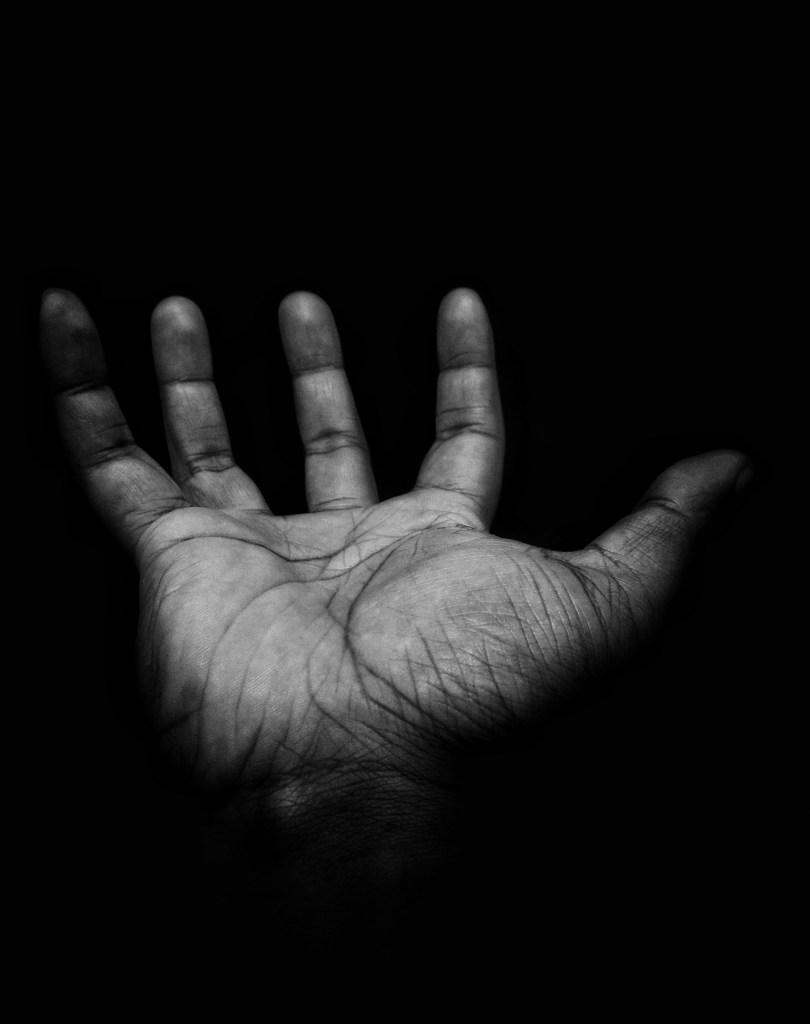
They simply occur: A hand reaches. Or it does not. A step is taken closer. Or it is taken back. A voice answers. Or remains silent.
There is no explanation inside the moment; no narrative that frames the act as right or wrong, brave or fearful. Only orientation, or position. Only the direction in which you are already inclined to move when nothing remains to mediate that movement.
This is not meaning in any cosmic sense. It does not resolve the question of why any of this exists, and it does not balance anything. It does not endure beyond the moment in any guaranteed way.
It is smaller than that, and far less negotiable. But it does not wait. It does not ask, and it does not allow for revision.
It is simply what remains when everything else has already fallen away.
The Question Left Standing
Ash continues to fall, gathering where it was not before. It settles into the lines of the face, into the corners of the room, into the spaces that once felt separate and defined.
The air is thicker now, harder to move through. Harder to ignore.
Another impact. Closer. No longer something that can be mistaken for distance.
The sound does not echo the way it did before; there is less space for it to travel.
A voice, closer now. Calling again. Not louder, just closer. You know it without needing to think about it.
You turn. Or you don’t.
A hand reaches. Or it doesn’t.
A step closes the distance. Or it creates it.
The ash continues to fall. The sound comes again.
There is no time left to decide what any of it means. No space to gather what you believe and apply it here. There is no longer space between recognition and response.
The moment does not ask who you intend to be.
It has already found out.


Leave a comment