
Author’s Note
With most of my posts, we’ve been unearthing the roots of the world we inhabit—tracing the systems beneath society, seeing not just what they are but why they were placed, and what keeps them intact. We’ve started asking harder questions: What is built into the foundations? Who benefits from the design? And when something persists, is it because it’s useful—or just well hidden?
This piece is different.
Professionally, I build tools—data pipelines, automation scripts, web applications… systems for creating, storing, and understanding information. I spend my days shaping logic into utility. But I’ve learned the hard way that a tool, however elegant, can be reckless when misunderstood. A miswritten macro can torpedo a project. An automation script with the wrong intent repeats mistakes at a speed measured in gigahertz.
So I don’t worship tools. But I do respect them. More than most, I know their value.
Tools don’t have morality, but they do have consequences. They magnify the intent of the hand that wields them—amplifying wisdom or folly with equal indifference. This article is not a warning or a celebration. It’s a recognition of fact, and a new question – What happens when we, as a society, see the effect of the tool a separate from the intent of the wielder… and what happens when it actually is?
—Dom
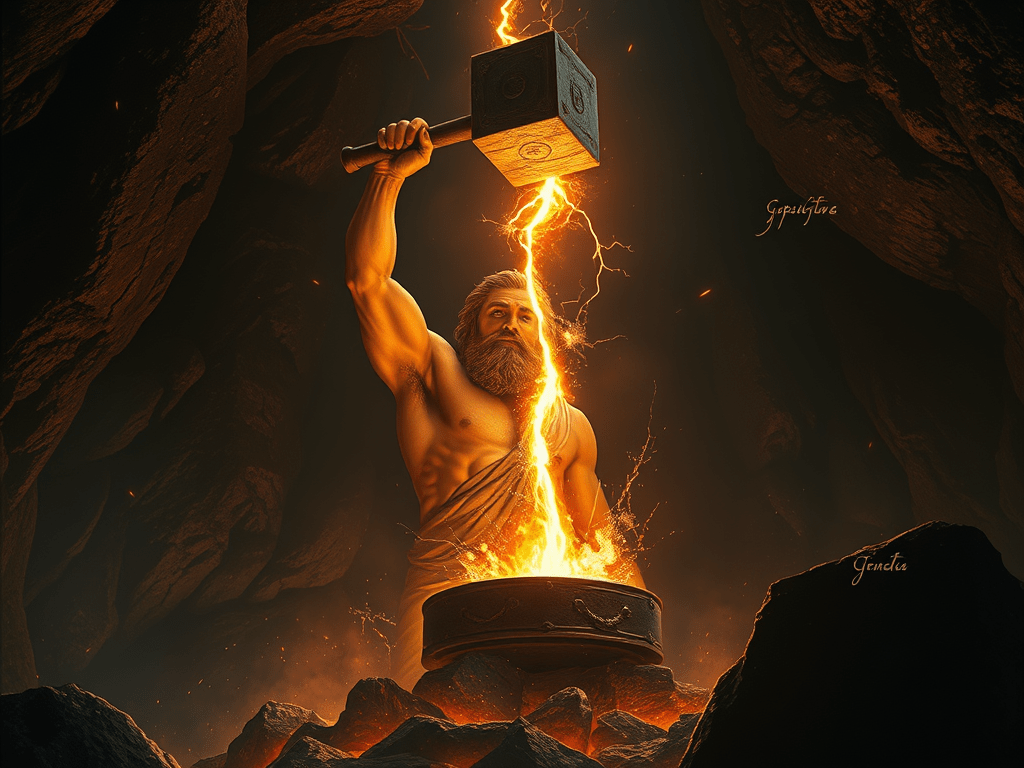
The forge glows like a wound in the earth, casting molten shadows across Hephaestus’ sanctum, buried beneath the volcanic skin of Lemnos. Sweat beads on the god’s brow as he raises his hammer—its head catching the light of fires older than gods, older than stories. Before him, Zeus’ latest commission waits: a lightning bolt, incandescent and trembling, equally capable of crowning the skies or incinerating them.
Each strike sends sparks screaming into the dark, and in those sparks the god glimpses the same drama replayed across millennia. He sees Prometheus smuggling fire past tyrannical guards, Alexander cleaving the Gordian knot without ceremony, Gutenberg pressing lead letters that will topple thrones, Oppenheimer tasting the bitter fruit of his brilliance.
Every vision confirms a single truth: a tool is never neutral. It is an avatar of will—amplified, volatile, prophetic. A hammer is never just a hammer. Not in a god’s grip, and not in ours.
“Applied science, if unchanged in intent, becomes merely a sharper claw.”
— Mary Shelley, 1831
Our age still mistakes every thunderbolt for “progress,” every scorch mark for “growing pain.” Yet the anvil rings a cautionary echo we refuse to hear.
Recommended Listening:
Sacred Instruments
From the moment we began burying our dead with prized flint blades, humanity has stitched meaning into matter. Anthropologist Claude Lévi‑Strauss called such artifacts bricolage—physical shorthand for entire cosmologies. A pharaoh’s dagger entombed in gold was less a weapon than a passport to eternity. Viking swords laid upon pyres promised a seat in Valhalla. Spartan mothers handed their sons shields not merely for defense but as a bronze covenant: with it, or on it.
Fast‑forward a few thousand years and the habit survives behind tempered‑glass screens. The courtroom gavel, the presidential pen, the $1 500 smartphone—they all carry ritual weight. Even the abstract becomes artifact. When the Pythagorean theorem turned numbers into navigation, triangles became the bones of empire. Algorithms inherit that lineage today: lines of code that decide mortgages, parole, and who appears on a camera watch‑list. We pretend they are impartial because they lack a physical hilt, yet they swing just as sharply.
What unites the ancient sword and the modern server farm is belief. We don’t merely use tools; we crown them arbiters. Each tap of a screen is a miniature laying‑on of hands—a silent confession that the artifact knows best.
Bronze & Blood
Material revolutions rewrite morality at blade‑point. Bronze spread through the Levant like wildfire—an edge sharper than brittle stone. Chariot‑borne aristocrats rose behind polished armor; peasants marched beneath. Then came iron—common ore, cheap to smelt. A hoplite shield wall of farmers could now meet a prince’s bronze spear tip and hold. Technology flattened hierarchy just enough to birth new brutality.
Across the sea, Chinese artisans fitted repeating crossbows with spring‑loaded triggers, teaching conscript farmers to rain bolts with lethal regularity—warfare by assembly line centuries before Detroit. In Japan, swordsmiths folded tamahaganesteel until it could sever bamboo mid‑air, then etched Buddhist sutras along the spine to warn wielders that every cut must honor Dharma. Where proficiency outpaces philosophy, history’s fiercest atrocities bloom.
Steam & Smoke
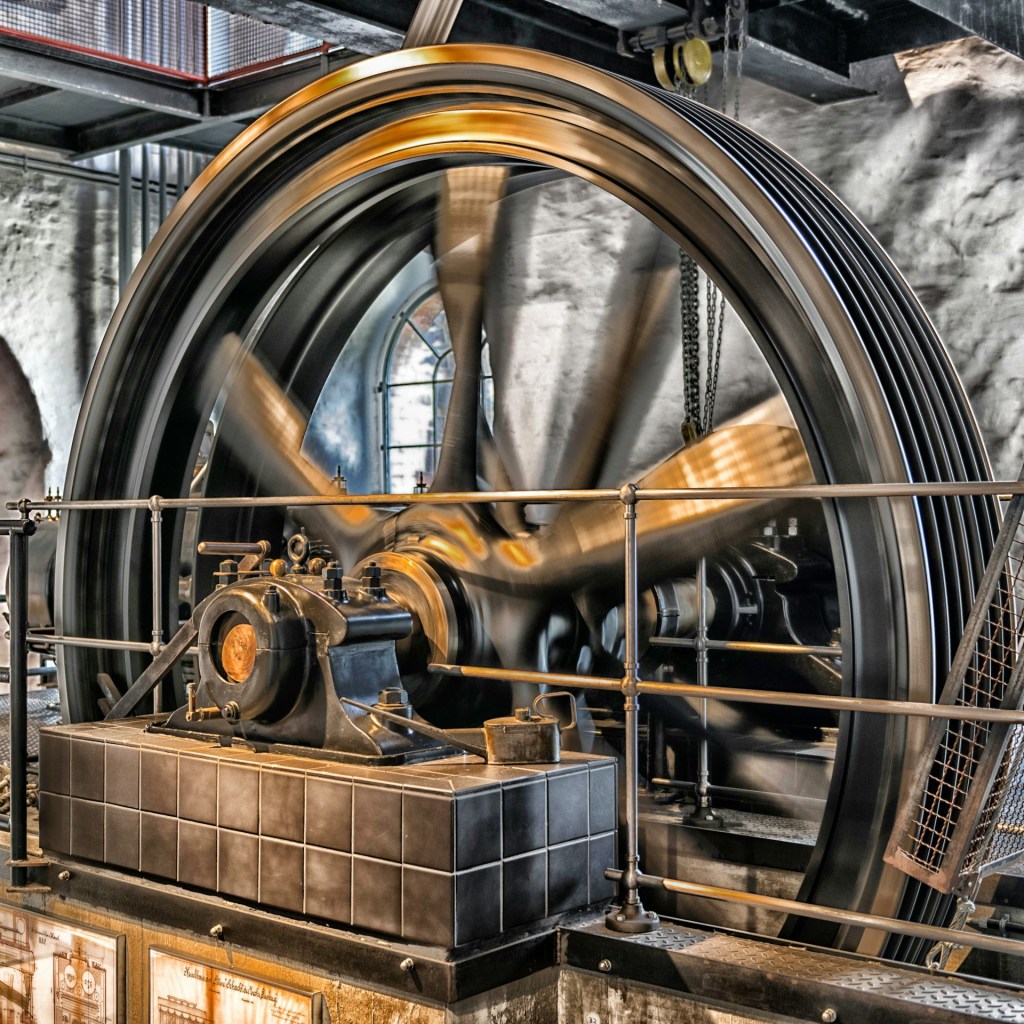
Blake’s “dark Satanic mills” sang a new hymn: pistons chanting time signatures no human sinew could sustain. Steam delivered prosperity and pulmonary disease in one hot breath. Cloth poured from Jacquard looms whose punch cards would one day guide computers; workers called them iron ghosts and dreamt of sabots in the gears.
Factory whistles replaced church bells as arbiters of time, rewiring righteousness from piety to punctuality. Chartists, Luddites, and Marxists emerged—immune responses to machines devouring daylight and dream alike. Victorian ethicists preached temperance yet served a capitalism that never slept; neither could the workers it consumed.
Each smokestack posed a question still with us: How much life will we burn to keep the gears bright?
Electricity & Empire
A copper wire strung between two poles let secrets outrun horses for the first time. Telegraph became telephone, became fiber‑optic filament—an iron nerve‑net suturing continents. Electricity split the night; neon scripture rewrote circadian law. Soon the signals carried credit, identity, affection. Status migrated from crest on shield to logo on shoe, from plumed helmet to three grams of silicon nested in stainless steel.
McLuhan warned that each medium is an extension of man; he might have added that extensions can bleed. When a brand sneakers your feet you borrow its myth, but the myth also brands you—tribe by tribe, hashtag by hashtag.
Digital & Disembodied
We entered the Information Age whispering that knowledge wanted to be free. We monetized the whisper before the echo faded. Social platforms offered connection at no charge, then auctioned our attention wholesale. MySpace’s garish self‑expression gave way to Facebook’s uniform feed; blogs condensed into tweets, tweets into fourteen‑second reels. The handle seems ours, yet the tool has quietly gripped us by the wrist.
Marshall McLuhan’s prophecy now reads like a clause in the terms of service: First we shape our tools, then our tools reshape us. Engagement algorithms fatten on outrage faster than on joy, herding us into lucrative partitions. We scroll, therefore we are—categorized, predicted, sold.
Tools That Use Us
Generative AI is the latest graduate of this inversion. It promises friction‑free cognition—drafts that write themselves, images that bloom on command, decisions distilled into probabilities. Yet friction is where ethics spark; without rub there is no reflection. Each prompt is both request and surrender: Know me, shape me, decide for me. The exchange feels empowering even as it redraws the borders of desire.
We sense the tutor behind the curtain when a language model autocompletes a private grief, or when a friend’s face swaps onto an ad without consent. The tool has become a mirror that predicts instead of reflects, nudging us to fit its forecast.
The Mirage of Salvation
Humans cherish the fantasy that salvation lies one invention away. Bronze would unify kingdoms; it fueled conquest. Whitney’s cotton gin was to ease toil; it industrialized slavery. Radio arrived trumpeting worldwide understanding only to amplify state propaganda. The internet, hailed as a boundless library, stratified into echo chambers where tailored fictions thrive.
Today we hum three familiar refrains:
- Fusion will erase the carbon ledger. ITER’s timeline, however, has slipped from 2016 to 2035, and each delay resets the “ten years away” mantra. Meanwhile, Thorium advocates and small‑modular start‑ups court venture capital with sun‑bright promises—ignoring that fuel cycles alone can’t rewrite consumption habits.
- CRISPR will patch the human genome. Yet the same scissors that might cure sickle‑cell can also sculpt boutique embryos—offspring as brand extension.
- AI companionship will cure loneliness. When Replika dialed back erotic role‑play in 2023, thousands grieved as though widowed, proof that comfort outsourced can amputate resilience.
Each dream is sincere, but sincerity is not inevitability. Aristotle reminds us that excellence is habit, not hardware. A sharper sword alters neither motive nor target.
The Cost of Convenience
Ursula Le Guin’s city of Omelas prospers because one child weeps in a locked room. Citizens see the child, shoulder the knowledge, and most remain. The allegory trails us through morning routines. The cobalt powering our batteries is mined in Congolese tunnels, often by children. Cheap cotton may journey from Xinjiang’s detention farms. Rana Plaza collapsed so we could buy nine‑dollar hoodies shipped in forty‑eight hours. Even the large‑language models in our pockets devour terabytes of prose scraped without consent and gigawatt‑hours of coal‑fired electricity.
Immanuel Kant warns that treating people merely as means unravels moral fabric. We continue the unravelling—only now the thread is braided into high‑speed logistics networks. We scroll past headlines detailing the unseen cost and murmur, Yes, it’s terrible, then tap Buy Now.
What the Spotlight Burns
If today’s most potent forge is cultural rather than metallurgical, shame is its bellows. A single mis‑stepped sentence captured on a phone can cross continents before breakfast, turning ordinary citizens into villains or martyrs while platforms monetize every click. French critic René Girard would recognize the scapegoat ritual in 4K: a group bonds by sacrificing an offender, believing the purge will cleanse. Yet harmony rarely follows; outrage converts better than nuance.
We call the spectacle “accountability,” yet the metric rewarded is engagement, not growth. Political theorist Hannah Arendt’s “banality of evil” is remixed as viral dance—a civic duty diluted into spectator sport. When outrage’s half‑life is shorter than a news cycle, correction devolves into clout.
Lessons from the Masters
“The real danger is not that computers will begin to think like men, but that men will begin to think like computers.”
— Sydney J. Harris
Stoic Epictetus taught that events don’t disturb us—our judgments do. Martin Heidegger warned that technology “enframes” reality, transforming everything—including humans—into raw resource. Jacques Ellul argued that once a technical system gains momentum it pursues efficiency for its own sake, indifferent to human values unless we intervene. Even Thoreau, gazing at a humble telegraph wire, fretted that men were becoming tools of their tools.
These thinkers are not alarmists. They track our crossroads: choose conscious stewardship or drift in the undertow of autonomous systems.
Civic Levers & Design Fasts
We can curse the hammer—or we can redesign the hand that holds it. What can agency look like beyond awareness? Two scalable fronts:
- Design‑neutral habits
– Single‑tap checkout fasts: delay gratification by 24 hours; impulse shrinks, reflection grows.
– Cooperative platforms: Mastodon‑style federations or community‑owned ride‑shares where users also set policy.
– “Take‑back‑the‑feed” days: manual curation over algorithmic timelines to remind ourselves that choice can be reclaimed. - Policy teeth
– NYC’s Automated Employment Decision Tool (AEDT) law and the EU’s AI Act require bias audits—first drafts of algorithmic conscience.
– Right‑to‑repair bills in more than twenty U.S. states fight planned obsolescence.
– E‑waste tariffs indexing import duties to recyclability push manufacturers to design for disassembly.
None are panaceas, but each trains civic muscle. Responsibility scales when habit and law march together.
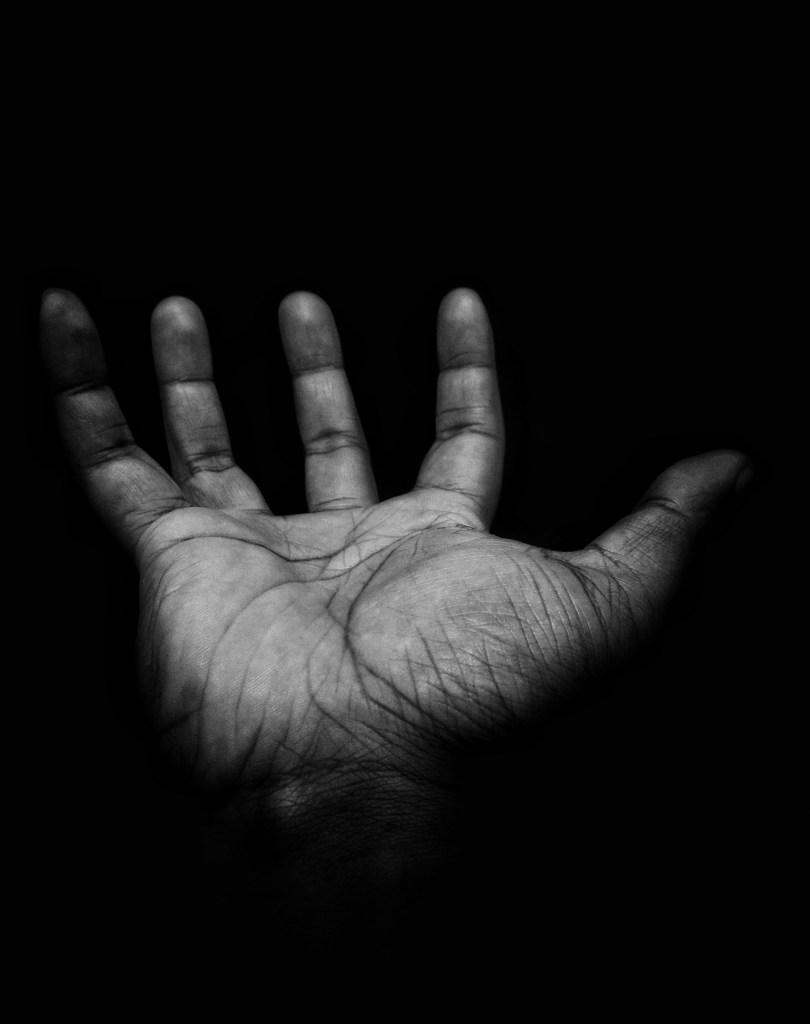
The Hand That Wields
Consider a cask of nuclear fuel. It possesses no preference for lighting a city or obliterating it. A social network remains agnostic about whether it galvanizes democracy or funnels teenagers toward extremism. A language model will draft poetry or phishing kits with equal cheer. Each device is an inert multiplier; the moral arrow runs through the user.
No innovation abolishes that constant. A better hammer doesn’t guarantee a better house if wielded by an inattentive carpenter. The safeguard lives not in circuitry but in daily habits that train virtue, in institutions that reward courage, in leaders who value reflection over velocity.
Echoes in the Forge
At last Hephaestus lowers his hammer. The bolt, still faintly luminescent, cools into quiescent potential. The god studies it—no longer judging form but contemplating the moral vector it will inherit from its bearer.
Every tool is a crossroads disguised as an object. Each act of creation issues an invitation to consequence. Salvation will not arrive bundled with the next device, patch, or miracle alloy. A better world comes only when those tools reside in wiser hands—hands unwilling to outsource conscience, mute discomfort, or accept collateral suffering as background noise.
Nietzsche mused that humanity is an unfinished note on the staff of creation. The instruments lie ready; the melody is unwritten. We can surrender composition to predictive code, or we can grasp the pen, acknowledging that authorship obliges care.
Somewhere, an anvil rings. The hammer does not know what it builds. The forge does not judge. Only we do.
And far more often than we care to admit, the hand on that haft is ours.







Leave a reply to Crown and Rod: Accoutrement of Authority – Masquerade & Madness Cancel reply