
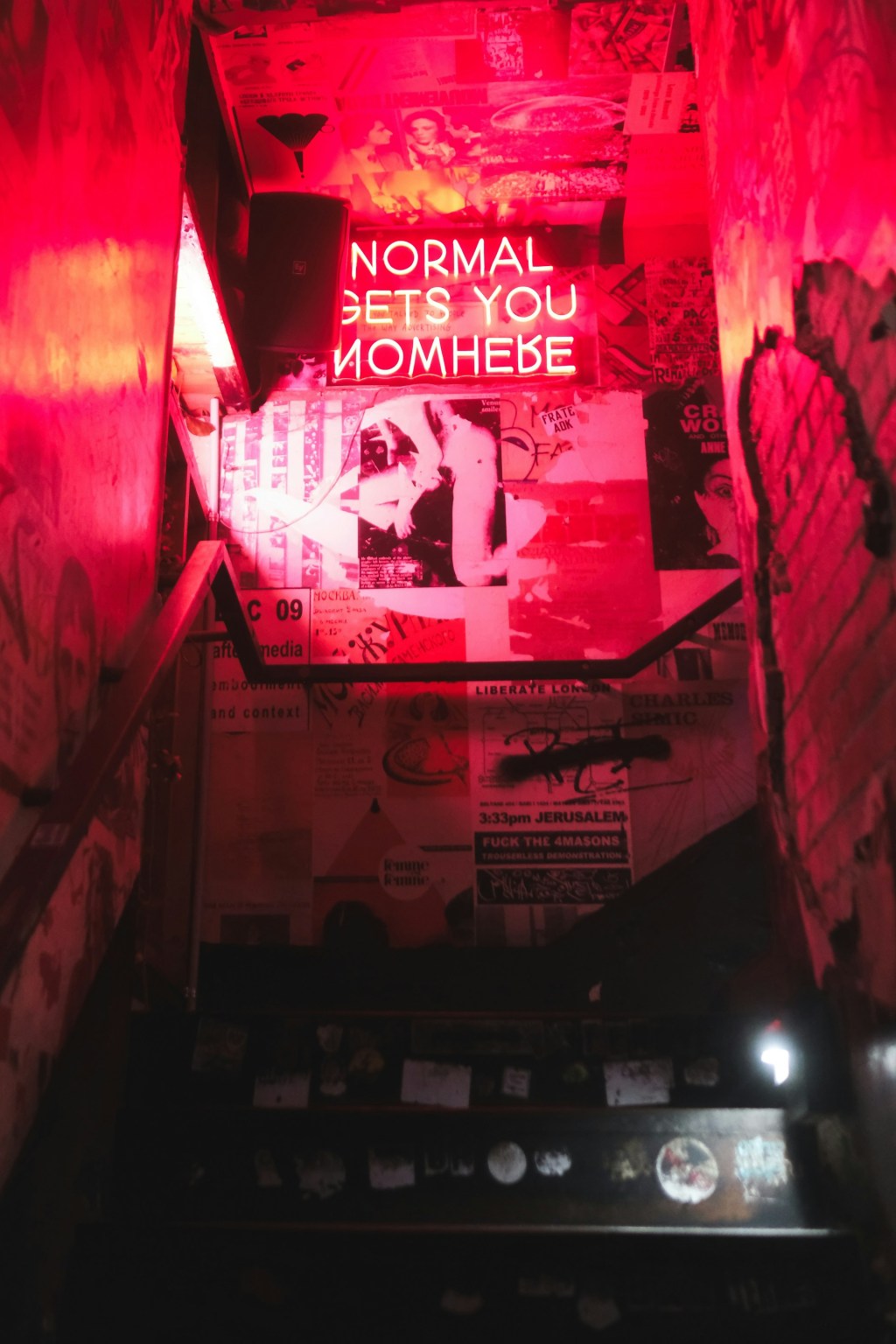
Photo by Chaz McGregor on Unsplash
“He is a man of focus, commitment, and sheer fucking will.”
The line is delivered with a kind of reverence. Not admiration, exactly, but perhaps something closer to recognition. The kind reserved for something dangerous that has proven, repeatedly, that it will do exactly what it was made to do.
And it lands, because by the time it is spoken, you have already been prepared to accept it. You’ve been shown the dog. The quiet life. The attempt, however brief, to step away.
You’ve been given just enough context to understand John Wick as something other than what he is, if defined only by the actions that follow. Because without that framing, the sentence reads differently.
Strip away the introduction, and what remains is not a man to be admired, but one to be feared. A professional killer moving through the world with mechanical precision, leaving bodies behind him with a consistency that borders on physical law.
No hesitation. No deviation. No uncertainty.
In another story, he is not the protagonist. He is a mechanism of consequence.
But that’s not what makes him interesting. What makes him interesting is not the violence, or even the skill. It’s the predictability.
Every action he takes feels less like a decision and more like the continuation of something already set in motion. He does not deliberate or pause to reconsider. He executes. Cleanly, efficiently, and without visible friction between thought and action.
It looks like willpower; the ultimate expression of the version we’ve all been told to aspire to. But I see something different: structure.
Every movement has been practiced. Every scenario rehearsed, if not in exact detail, then in shape. How to enter. Where to look. What to prioritize. What to ignore. What to do when something goes wrong. The decisions that would slow someone else down have already been made, encoded into habit, reinforced until they no longer require conscious thought.
Every response is an echo of years of training. Every movement is the thousandth repetition of an intentionally reinforced pattern. He may make decisions, but the execution is the deployment of conditioned responses layered so deeply that the space between stimulus and action has all but disappeared.
By the time he pulls the trigger, the outcome is no longer in question. It was decided long before the moment arrived.
And that is the part we recognize. Not the violence itself, but the shape of it.
The Illusion of Choice
What we tend to call a “decision” is usually just the final step; the visible surface of something deeper. Beneath it, there are patterns that are easier to miss.
At the top is execution. The moment itself. What someone says, does, or chooses when the situation is already in motion. This is the part we see, the part we react to, and often the part we judge.
Just beneath that are tactics. The options that feel available in the moment. Not every possible action, but the ones that appear viable given time, pressure, and perception.
And below that lies strategy. Not in the formal sense of plans written down or goals articulated clearly, but in the quiet structure of how someone has learned to see the world. What they expect, the events they prepare for. The patterns they have reinforced over time, often without realizing they were building anything at all.
By the time someone reaches execution, most of the work of deciding has already been done.
The situation presents itself, but it does not arrive in a vacuum. It is filtered through expectation, shaped by habit, constrained by what has been practiced, and narrowed by what feels familiar. What looks like a choice is often just the only option that fits within that structure.
This is why certain outcomes become predictable, even when they are described as mistakes. Not because the person lacked intelligence or awareness in the moment, but because the range of viable responses had already been reduced. The path forward was constrained long before the decision point was visible.
We tend to look at execution and imagine alternatives in hindsight. “They should have handled that differently.” “They could have made a better choice.”
And in a strictly technical sense, that’s true. Other options existed. But possibility is not the same as viability.
What someone can do in theory is often very different from what they are actually prepared to do in practice.
In the same way that Wick does not hesitate when the situation turns, most people do not hesitate when they reach a familiar pattern. They follow it, nearly automatically, because while they are capable of deviation, the structure they operate within makes the familiar path feel like the correct one.
This is where the illusion settles in. We see the final action and assume it was freely chosen. But the closer you look, the more it begins to resemble something else entirely: the natural outcome of a system already in motion.
The Precision of Compassion
Once you start to see decisions as the surface of a deeper structure, the way you evaluate them begins to change.
Consider someone you know well, well enough to have watched them repeat themselves. The same financial stress, cycled through again. The same complaint surfacing in a different month but landing in the same place. And alongside it, without apparent contradiction, the planning: the trip booked, the dinner reservation made, the future imagined in vivid detail while the present problem remains untouched.
The easy response is frustration. And frustration is not wrong, exactly… it is accurate about the outcome. What it misses is the structure underneath it.
Because the trip is not a failure of discipline. It is a success of a different system. One built, over many years, around the prioritization of immediate experience over future security. Around the belief, practiced until it no longer feels like blind faith, that the future will resolve itself. That something will come through. That this time is not so different from last time, and last time was fine.
That structure did not appear suddenly. It was built slowly, reinforced quietly, until it became the shape of how the world is expected to work.
What passes for compassion in these moments is often just softening. A refusal to name what is actually happening in order to preserve comfort on both sides of the conversation. It feels humane. It is almost universally imprecise.
A more careful view doesn’t dissolve responsibility. It locates it more accurately.
It begins with the willingness to look past the moment of execution and see the structure that produced it. And then, without contradiction, to say clearly: this is yours to change.
Those two statements feel mutually exclusive. They are not.
Blame tends to assume open freedom, as if the person stood at the moment with equal access to all alternatives and chose poorly. But if the range of viable options was already constrained, the problem is not simply the choice. It is the structure that made that choice feel like the only reasonable one.
Seeing that doesn’t remove accountability. It relocates it. The question shifts from why did you do that to something more useful: what have you built that keeps producing this?
That is a harder standard. It asks for less perfect performance in the moment, and more honesty about what is producing the moment at all.
The Subtle Rebuild
This is where the conversation usually softens when it shouldn’t.
Virtues are often framed as ideals: things to aspire to, or identities to claim. But that framing doesn’t hold under pressure. In the moment of execution, identity doesn’t decide. What does is what has been built deeply enough to operate without effort.
If you want different outcomes, the work cannot happen at the moment of pressure. Habits, expectations, rehearsed responses; these do not disappear when the stakes rise. They take over. And trying to outthink that in real time rarely works.
The change has to happen earlier. In what you repeat when nothing is at stake. In what you allow, what you ignore, and what you reinforce without noticing. In the small adjustments that alter what becomes familiar, and therefore what becomes available.
Remove paths you don’t want to take by making them harder to access, rather than by resisting them each time they appear. Reinforce the ones you want not by hoping to choose them under pressure, but by practicing them until they no longer feel like choices.
Over time, this changes the shape of your decisions; not because you have become more disciplined in the moment, but because the moment itself has changed. What once required effort now feels natural. What once felt automatic is no longer an acceptable alternative.
From the outside, it looks like improvement. From the inside, it feels simpler than that.
Less negotiation. Less friction. Less need to convince yourself to do what you already know should be done.
The system behind you carries more of the weight. And when the moment arrives, it no longer feels like a test.
The Hard Truth
Return to the image: a man moves through a room, and nothing in it meaningfully alters what happens next. Not because the room lacks variables, but because the system he carries into it has already accounted for them.
He is not improvising a life in real time. He is executing one.
The same structure exists in quieter forms, in every life.
People do not wake up intending to repeat the same outcomes. They do not set out to recreate the same patterns they claim to want to escape. And yet, they do. Rarely because they are weak. More often because they are consistent.
Consistency builds systems. It reinforces expectations, stabilizes responses, and narrows what feels viable when the moment arrives. Over time, it creates a kind of gravity, one that pulls decisions along familiar paths even when those paths are no longer desired.
From the outside, it looks like choice. From the inside, it often feels like there was none.
It is easier to believe that a better decision could have been made in the moment than to accept that the moment was shaped long before it appeared. It is easier to argue with execution than to examine the structure that produced it.
But if the structure remains unchanged, the outcome will return.
That is the cost of consistency, and it is the way out.
The same consistency that built the system is the only thing that can dismantle it. Not through a single decision, or a moment of revelation, or an act of will at the point of pressure. Through repetition, adjustment, and the unremarkable work of changing what is practiced when nothing is at stake.
The moment still comes. It always will. But what happens next is no longer being decided for the first time.
It has already been decided… just, this time, differently.






Leave a comment