
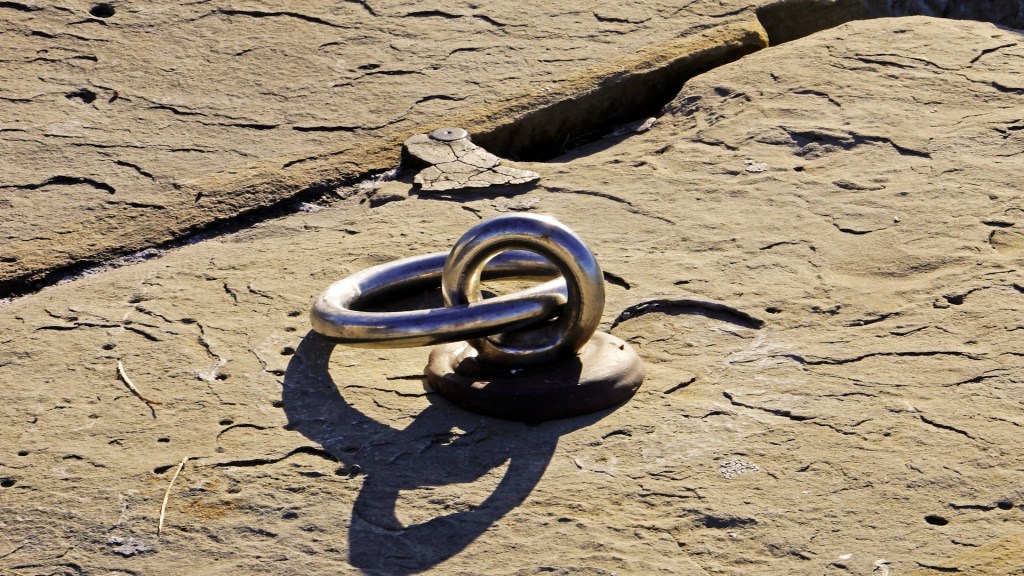
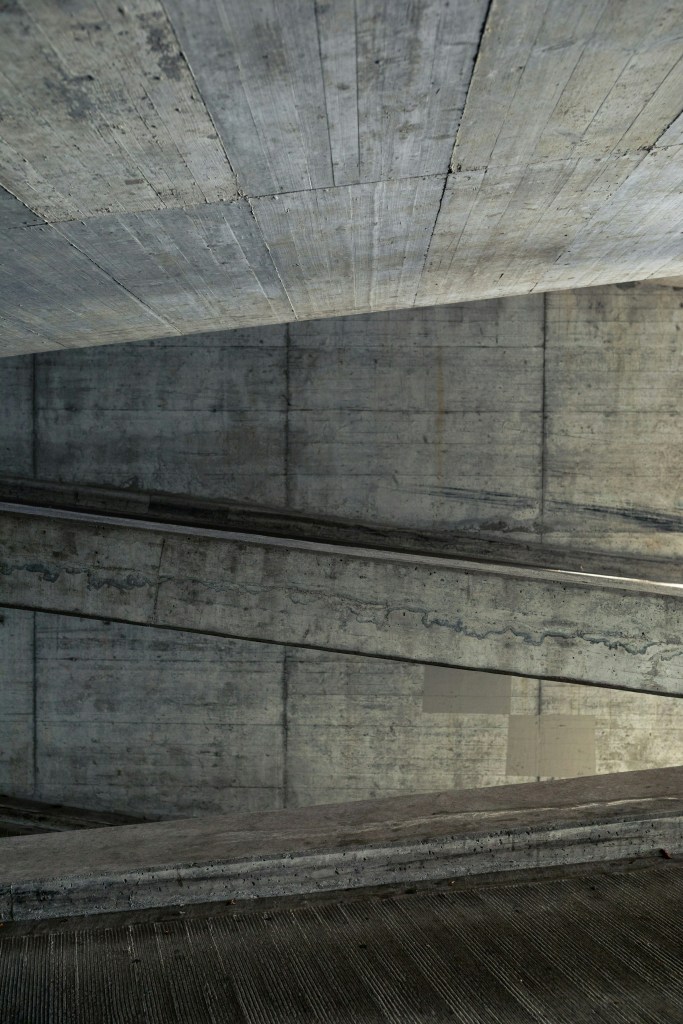
Photo by boris misevic on Unsplash
Most systems of exploration are built on things you rarely notice.
A ledge that appears exactly where it’s needed. A handhold that feels almost accidental. A route that unfolds just enough ahead of you to suggest that forward movement is possible.
In some games, it’s more explicit. An ancient grappling hook that catches where nothing should hold, yet proves perfectly suited for navigating a time-worn temple. A traversable line already anchored across a gap. A path that only exists because something, or someone, made it traversable before you arrived.
Even in systems built around failure, something carries forward. You fall, you restart, but the next attempt is not strictly identical to the last. A door remains open. A shortcut persists. An enemy no longer has the element of surprise. The world remembers, or you do, in small and subtle ways, that you have been there before.
None of this announces itself. It presents as environment, or design. As the natural state of things.
But it isn’t.
Every point of progress rests on something placed. Something secured. Something that did not need to exist, except that without it, movement would stop. The temple would remain sealed. The gap would remain a boundary instead of a crossing. The path forward would not be hidden; it would be absent.
The hero sees the puzzle as the climber sees the wall. As a route. As a sequence of possible moves. What they don’t see is what made those moves possible.
The road that carries you across states. The rail lines that cut through distance. The dam that holds back water and releases it in measured control. The codebase no one wants to touch, still running systems no one remembers building. Systems large enough that no single person could claim them, and stable enough that most people never question them.
They present the same way: as given conditions. As if they were always there. As if movement itself were a property of the world, rather than something made possible.
They weren’t. They were placed.
Driven into stone by people who would never stand where you stand now. Maintained by people whose names are not attached to the structures they preserve. Extended by those who accepted that the work would outlast any recognition it might bring.
Placed in advance of need. Maintained without visibility. Trusted without acknowledgment.
These weren’t features. They were placements. Someone put them there so the next move would be possible. Most people never notice the structure at all; only whether movement feels easy.
We don’t think of them that way anymore.
The Logic of Inherited Progress
A piton does not create the climb; it simply makes a specific movement possible where none existed before.
It is placed into a surface that does not yield easily. It is driven in with force, secured against failure, and, ultimately, left behind. Once placed, it becomes part of the route, quietly bearing weight it was never meant to benefit from.
It does not move. It does not adapt. It does not follow the climber upward. It holds.
Placing one requires stopping where it would be easier to keep moving, and accepting that forward progress may slow because of it. The climber, though, uses it for a moment. Their weight transfers, their position changes, and then they move on. The piton remains, fixed in place, carrying none of the progress it enabled.
This is not an act of generosity, though many ascents are only possible due to their presence. It is a property of the system.
Movement across a vertical surface requires points of stability. Where none exist naturally, they must be created. Each placement extends the range of possible motion, converting an impassable surface into a sequence of reachable steps.
The sequence matters.
A piton only functions if it is placed before it is needed. It cannot be driven in mid-fall. It cannot be secured after the weight has already shifted beyond control. Its value exists entirely in its position relative to what comes next.
You cannot place a piton retroactively. This constraint is not philosophical; it is the reality of a tool prepared, with difficulty, to support a future need. Each one is an answer to a problem that has not yet fully appeared. The climber who places it may never be the one who depends on it. The system does not require that they are.
What it requires is continuity.
One placement makes the next possible. The wall itself hardly changes, but each additional hold ensures that the set of available movements does. Over time, the route becomes something that can be followed, not because it was always there, but because enough points of stability have been introduced to make it so.
Most routes fail not because no one could place them, but because no one was willing to interrupt momentum long enough to try. Remove those points, and the route does not degrade gradually. It disappears.
It may not go all at once, and not always visibly, but inevitably, the options narrow. The system depends on what has already been placed.
The climber experiences this as progression. As a path. As something that can be navigated. The system itself experiences it as accumulated placement.
Nothing more, and nothing less.
Who Places Them
If the system itself is mechanical, the act of placement is nearly the opposite.
A piton does not place itself any more than it grows naturally from the stone. It is driven in by someone who pauses on the wall long enough to do the work before the work is needed. The pause interrupts movement. It redirects effort away from ascent and toward something that will not carry the climber upward; not directly, and not yet.
Under certain conditions, people make that trade.
They accept a slower climb in exchange for a more reliable one. They spend effort on something that offers no immediate return. They act as though the route matters beyond their current position on it.
Those conditions are not mysterious. They require margin; enough stability to allow for work that does not immediately convert into progress. They require a shared understanding that the route will be used again, that what is placed will not disappear into the surface without purpose. They require that maintenance be treated as part of the climb, rather than a interruption of it.
Where those conditions hold, placement becomes unremarkable. It happens without announcement. It becomes simply part of how the wall gets navigated.
Where they do not, the climber who pauses stands out. The pause looks like delay. The effort spent on something that does not produce visible upward movement looks, from a distance, indistinguishable from stopping.
Most people, faced with that visibility, keep moving.
Not because they are indifferent to the route. Because the wall, as they experience it, is a sequence of immediate problems. The next hold. The next stable position. The next move that keeps them on the surface.
This is not a failure of character. It is what the climb asks of them.
Placement asks something different. It asks the climber to hold position on an unstable surface, in the middle of an active ascent, and spend effort on a future move that may not be theirs to make.
That is a different kind of ask. And it is one the system must make possible before any individual can answer it.
So the question is not why people stopped placing them. It is what made it possible for them to do so at all.
When We Stopped Looking at the Wall
At some point, the climber stops looking at the wall in the same way.
Not as a decision. The route becomes familiar, and familiarity does what it always does; it converts attention into assumption. The next hold is expected to be there. The last placement is trusted without inspection. The structure recedes behind the sequence.
Hand, foot, reach, pull.
The climb continues, and from within it, nothing has changed. Movement is still possible. Progress is still measurable. The wall still presents itself as a series of problems with solutions.
What shifts is harder to see from inside the ascent.
A clean run has a shape. It can be observed, measured, followed from below. Placement has none of that. It happens in pauses; in the moments where upward movement stops entirely and effort goes sideways into the surface instead. It leaves something behind, but the act disappears the moment it’s done.
From a distance, the climber who keeps moving looks like progress. The one who stops looks like delay. The difference between securing the route and abandoning it is not visible at speed.
So the climb begins to reward what can be seen. Speed over stability. Visibility over continuity. The clean run over the secured route.
The climber who moves quickly covers more wall. The one who pauses to place something becomes, briefly, indistinguishable from someone who has stopped. Watched long enough, the pause becomes something to avoid rather than something to make.
The wall didn’t change. Our attention did.
And when those who watched from below begin their own ascent, they climb the way they learned to. Not because placement is no longer needed. Because it was never part of what they were shown.
Visibility replaced placement; not because it was better, but because it was easier to reward.
Continuity Without Integrity
Nothing has stopped; the climb continues. Movement is still possible so long as the sequence still resolves into something that can be followed.
From within it, the experience is unchanged. Hand, foot, reach, pull… progress. The difference is not found in what the climber feels.
It is in what the structure no longer guarantees.
A placement that holds today may not have been checked in years. A line that spans a gap may rely on anchors no one has inspected this season. Points of stability remain in place, but their condition is no longer part of the climb.
A bridge rated years ago. A system patched but not understood. A foundation assumed, not inspected.
In short, they are assumed.
The route persists because enough of what was placed before is still carrying weight, but the system is no longer being actively secured at the same rate it is being used.
This does not produce immediate failure. It produces a gap; a growing distance between what is relied upon and what is maintained, or between what exists and what is reinforced.
For a long time, that distance is survivable, and the climb continues.
Until it doesn’t.
This doesn’t change everywhere, not all at once. Not in a way that announces itself in advance. It arrives often as a surprise, at the point where something that was assumed to hold no longer does.
You can still climb. You just can’t trust the wall. And the absence, too, isn’t obvious… until it is.
The Next Climber
The wall is still being climbed.
The route holds, in part, because enough of what was placed before is still carrying weight. Movement continues not because the surface changed, but because the accumulated work of previous ascents has not yet fully failed.
From within the climb, that inheritance is invisible. Each step assumes stability. Each reach carries an expectation that something will hold; an expectation built not in the moment, but across every placement that came before it.
The climber experiences this as the natural condition of the wall.
It isn’t.
Every point of progress rests on something placed. The route was not discovered; it was constructed, incrementally, by people who paused when pausing was costly and left something behind when leaving something behind offered them nothing.
Most of them never finished the climb.
A placement left in place. A line secured before a fall. A pause long enough to do the work, even without the certainty of going further.
The climb does not require completion. It requires that the next move remain possible.
You do not get to decide whether the system holds. What matters is whether it does — because you were here.


Leave a comment