
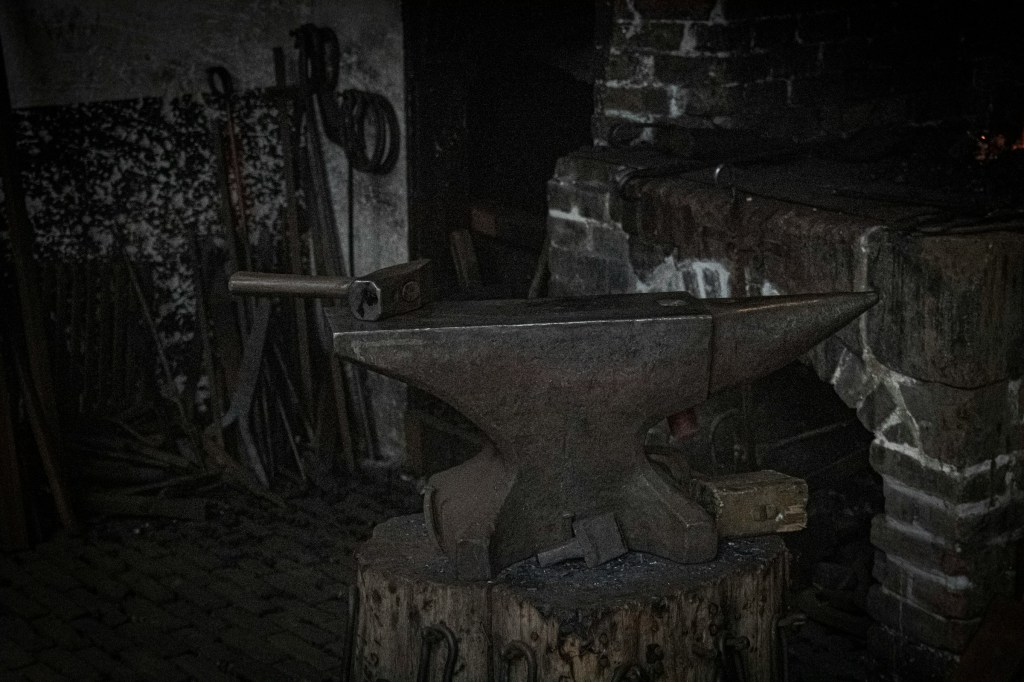
Photo by Balázs Gábor on Unsplash
To understand Niccolò Machiavelli, you have to begin with what he lost.
Not his reputation; that came later, and louder. But his position inside the world that mattered. His access, his standing, even his right to speak with consequence.
Before the fall, he belonged to motion. Corridors and correspondence, wax seals cooling under his fingers. His was the practiced grammar of statecraft, where promises must sound like virtue even when they are only necessity. He served a republic that lived on the edge of erasure; one bad season from being swallowed by its neighbors, one faction away from devouring itself.
Florence dressed its politics in velvet language, as if refinement alone could keep a knife from finding the ribs. Machiavelli did not have that luxury. He watched treaties fail. Watched allies turn into liabilities. Watched “honor” invoked as a mask for appetite. He learned, the way those who pay attention always do, that the world does not run on the stories it tells about itself.
Then the story turned on him.
When the Medici returned, power did what it always does when it changes hands: it revised the cast list. Loyal men became suspects, and old service became new stain. Machiavelli was dismissed, accused, imprisoned, tortured, and released… but exiled into irrelevance.
He was allowed to live, but he was not allowed to matter.
He went from sending dispatches that altered borders to writing letters that changed nothing; from the center of the map to its margins. And there, in the quiet humiliation of being unnecessary, he faced the question most moral theories politely avoid:
What does virtue mean when it no longer protects you?
Across the centuries, the accusations followed with ritual precision. He was characterized as cynical, poisonous, and godless. A tutor of tyrants. His name flattened into shorthand for manipulation, for the kind of calculated harm a good person would never commit.
The condemnations, ironically, functioned less as critique than reassurance. If Machiavelli was immoral, then virtue could keep its hands clean.
But notice what the narrative rarely claims. He is almost never dismissed as foolish. Even more rarely is he mocked as naïve. His critics did not need to argue that he misunderstood power; they needed to argue that he should not have described it.
Machiavelli did not invent darkness. He cataloged it after it had already claimed him.
He wrote like someone who had watched indecision multiply casualties: hesitation becoming hemorrhage, compromise becoming infection. He described the mercy that is not mercy at all, but a refusal to end what must be ended. His heresy was not cruelty. It was clarity.
And that same mechanic lives inside virtue itself, whether we admit it or not.
Machiavelli was not hated for being wrong. He was hated for being plain about it.
Virtues and Values as Structure
Most of us learn virtue the way we learn architecture: after something has already failed.
A bridge collapses, a building cracks, a relationship caves in on itself, and only then do we hear the language of load-bearing beams, stress tolerances, and design flaws. We are taught, too late, that structure matters.
So we adopt the metaphor eagerly, and virtue becomes shelter. We consider honesty a pillar, compassion a wall, and responsibility the very floor beneath our feet. When people talk about “having values,” this is usually what they mean: a framework sturdy enough to stand inside when the weather turns bad.
It’s an appealing picture, and not a false one. Structure really does matter. Without it, lives buckle. Principles, too, do real work: they block shortcuts that rot institutions, keep relationships from dissolving into pure transaction, and give shape to decisions that would otherwise be governed entirely by impulse or fear.
In this sense, virtues do function like engineering. They distribute weight. They absorb stress. They make certain kinds of failure less likely.
And because of that, we like this framing. It makes goodness feel safe.
If virtue is shelter, then morality can be described in the language of care rather than conflict. You don’t have to imagine yourself refusing anyone; you only have to imagine yourself holding fast. You are not choosing against anything. You are merely standing for something.
But this is also where the picture quietly lies by omission.
Every structure, no matter how benevolent its intent, is built around limits. Beams hold this much weight and no more. Foundations are poured to tolerate certain stresses and not others. Architecture is not just about what stands; it is about what must not be allowed to press too hard without causing collapse.
That means structure is never neutral.
The moment you say something must be supported, you have already said something else must not be. The moment you define what holds, you have also defined what threatens it. This is the part we rarely linger on when we talk about virtue, because it complicates the story. It introduces exclusion, refusal, and failure conditions into what we would rather keep purely affirmative.
A structure that tries to support everything supports nothing for long.
So the comforting image of virtue as shelter is only half the mechanism. The other half is quieter, less flattering, and far more consequential. It is the part that decides what load is acceptable, what strain is tolerated, and what must be removed before the entire system gives way.
And that leaves a question we usually postpone until damage forces it into the open: What does a structure do when something threatens to collapse it?
Virtues as Boundary
If the structure of our values is the story we like to tell ourselves, boundaries are where that story stops being persuasive and starts being expensive.
They are the point at which values leave the realm of intention and enter the realm of consequence.
Values, when held sincerely, are not ornaments. They are not declarations you hang on the wall and admire when company comes over. In practice, they behave more like algorithms: quiet decision procedures that keep running even when you wish they wouldn’t. They activate precisely when comfort, habit, and convenience all disagree, and they often force a choice you can’t talk your way around.
This is where values stop being statements and start being operational.
A value decides what you reward and what you starve. What you reinforce and what you interrupt. They determine what you quietly allow to continue because confronting it would be awkward, and what you refuse even when refusal costs you peace, reputation, or belonging. Virtue determines what you tolerate once, framed as grace or patience, and what you will not tolerate twice, no matter how reasonable the excuses sound.
These types of boundaries are not optional add-ons to belief; they are belief made functional. A principle that never produces a boundary is not a value. It is a preference, and one that survives only as long as it remains convenient.
This is also where moral discomfort enters the room.
Boundaries create an inside and an outside. They draw lines, and lines separate. Most people want morality without separation: ethics that affirm without excluding, values that include everyone without ever refusing anyone. We are deeply uneasy with the idea that goodness might require saying no, because no sounds harsh, final, even cruel.
But that discomfort does not prevent the work from happening.
Every value already draws lines, whether we acknowledge them or not. To value something is to claim it counts more than something else. And counting, by definition, excludes.
The difference is not whether lines exist. The difference is whether they are drawn deliberately, or left to emerge by accident, shaped by fear, inertia, or the quiet desire to avoid conflict for one more day.
The real question is not whether your values draw boundaries.
It is whether you are willing to stand where they draw them… and accept what happens when someone, including you, crosses the line.
Virtue as Blade
Sooner or later, every boundary stops being theoretical.
There is a moment when the situation no longer improves with patience, when another conversation will not clarify anything, and when extending grace one more time would be more akin to surrender than kindness. It is usually quiet. There is no announcement. Just the sudden recognition that whatever happens next will divide your life into a before and an after.
This is the moment most people try to turn a line into a gate.
We talk about boundaries as if they are polite structures with hinges and handles. Gates imply negotiation. They imply reversibility. They suggest that if someone arrives at the wrong moment, they can come back later with better manners, a better apology, or a better excuse. Gates are comforting because they preserve the fantasy that everything remains potentially welcome.
But the line drawn by integrity is rarely a gate. It is a cut.
A cut does not ask for consensus. It does not wait for agreement. It separates. In doing so, it creates an inside and an outside, an allowed and a not allowed, a before and an after that cannot be unmade by good intentions. It is not an invitation to argue your way back into the space that was violated. It is the moment you realize that every principle is also a verdict.
This is where most people become uneasy, because the language sounds violent. In many ways, it is. Not in the childish sense of revenge, but in the adult sense of finality. A blade does not negotiate. It ends one pattern so another does not have to continue bleeding.
The blade of virtue is rarely sadism, but it must be what remains when every softer option has already failed.
It appears when patience becomes complicity. When openness becomes a loophole. When mercy stops being mercy and starts functioning as permission for the harm to repeat itself. The cut is not the first move; it is the last honest one, made when refusing to act would be its own form of injury.
This is where Machiavelli’s mechanical truth reappears, stripped of politics and returned to structure. Half-measures do not prevent harm; they distribute it over time. They turn one decisive refusal into a series of small betrayals, each easier to justify and harder to undo. Indecision trades a moment of brutal clarity for a slow hemorrhage, until compromise hardens into infection and the damage becomes chronic.
Clarity, by contrast, ends what must be ended.
It refuses to call a prolonged wound “compassion.” It demands one clean boundary, cleanly held, to spare everyone involved the misery of a thousand quiet capitulations. It is not gentle, and it is not painless, but it is contained, and containment is sometimes the only alternative to rot.
Real integrity is often described as a halo. In practice, it is a choice with a working edge.
Every Belief Has a Shadow
Once you recognize the blade, you also start noticing the shadow it throws.
Not because you are looking for it, necessarily, but because it keeps showing up in places you didn’t expect, often at the edge of good intentions, beneath language that once felt clean. You begin to see that every belief, no matter how carefully framed, is an exercise in judgment.
The judgment is not always spoken. It is not always cruel. But it is always present.
Every ethic carries a failure condition: some line you can cross, some standard you can miss, some obligation you can refuse. Every ideal draws a silhouette around the people who cannot meet it; whether because they won’t, they can’t, or they were never given a fair chance to try. Values do not float above the world untouched. They land. And where they land, they sort.
This is not a flaw in values. It is the cost of having them at all.
Watch how quickly a principle can harden into a sentence.
If you believe everyone should earn their own way, unmet need begins to look like shame. Dependency becomes moralized, regardless of cause or context. Poverty stops being a problem to solve and starts being evidence to interpret. The world becomes simpler, and harsher, and, most dangerously, deserved.
If instead you worship accountability, you may find yourself craving punishment more than repair. The goal quietly shifts from preventing recurrence to extracting a price for failure, because a price feels like order. Someone must pay, or the story doesn’t close.
If you prize compassion, you can drift into enabling without noticing the moment it happens. Fear of being “harsh” teaches you to tolerate harm, if only to preserve peace. Softness becomes a quiet cruelty; not because it intends harm, but often because it refuses to do what is required to end it.
If you exalt loyalty, complicity waits nearby. Obedience puts on the costume of devotion. Over time, the group’s comfort becomes more sacred than the truth, and betrayal is redefined as honesty spoken too loudly.
If forgiveness is treated as the highest good, it can dissolve into amnesia. Apologies become moral reset buttons pressed without repair. Harm is washed clean by performance, and repetition is mistaken for growth because forgetting feels generous.
None of this happens because the values themselves are evil. It happens because values cut.
To be held, they must define what is permitted, and in doing so, they will define what is excluded. They decide what will be protected and what will be left outside the structure when weight becomes too great. Even when no one is condemned aloud, exclusion still occurs, however quietly, efficiently, and with however quiet a conscience.
So the question was never whether we carry a blade. The question has always been what we sharpen it for…and who we are willing to see standing in its shadow.
What Must Hold
Once you admit the blade exists, you also have to admit how easily it becomes dirty.
Not from malice, usually. Instead, from comfort, or habit. From the quiet pleasure of finding language that makes what you already wanted to do sound principled after the fact.
Not all values function the same way. Some are permissions in costume: principles you invoke once the decision is already made, moral language applied like varnish to cover the grain beneath. These values don’t restrain you. Instead, they absolve you. They exist to keep your self-image intact while your behavior goes on unchanged.
I think of these as permission-values.
They feel ethical because they sound ethical. They let you explain yourself without stopping yourself. And because they never demand a cost, they are endlessly adaptable; ready to justify whatever outcome happens to be most convenient, profitable, or emotionally satisfying in the moment.
The alternative is harder, and less flattering.
Constraint-values are the ones you refuse to violate even when violating them would solve the problem quickly. Even when it would win you approval, peace, or advantage. They are not there to make you feel good about yourself. They are there to keep you from becoming the kind of person you already know how to despise.
This distinction matters, because the blade cuts either way.
Used carelessly, values become tools for domination, rationalization, and cruelty dressed as principle. Used with discipline, they become limits on your own behavior when impulse, fear, or appetite would otherwise take the wheel.
This is why I try to define my values in terms of what must hold; what cannot be traded away without collapsing the structure entirely.
Human dignity must be a floor, not a reward for good behavior and not something distributed according to worthiness. The moment dignity becomes conditional, morality turns into tribal arithmetic, and the blade starts choosing sides instead of limits.
Truth must be a constant, not a preference. Not honesty when it’s safe, fashionable, or convenient, but a refusal to build stable-looking lives on unstable claims, even when lies would make things smoother in the short term.
Stewardship must win against impulse. What I touch – people, systems, and responsibilities – doesn’t belong to my moods. It belongs to the consequences that will outlive them. Treating power as temporary does not excuse using it carelessly.
Finally, there must be a refusal to subsidize bad faith. Not a refusal to forgive mistakes, or to leave room for growth, but a refusal to pretend that repeated harm is misunderstanding. A refusal to become the scaffolding that allows someone else’s rot to remain standing because confrontation feels impolite.
This is what “keeping the blade clean” means to me.
You cut to protect load-bearing principles, not to feed the ego. You don’t enjoy the cut, because enjoyment is how the blade becomes a hobby. And you don’t repeat the injury. Clarity once is a boundary. Cruelty in installments is a performance.
So when I am forced to draw a line, I try to run it through a simple test: Does this boundary protect something structural, or does it protect my pride? Does it reduce future harm, or merely satisfy my anger? Would I still hold it if it cost me status, comfort, or approval? Is the goal repair, containment, or separation… and am I honest about which one it is?
If I can’t answer those questions without flinching, the blade isn’t clean yet.
Clean Cuts, Not Endless Wounds
We are taught to fear hard lines.
They are described as cold, inflexible, and unkind; evidence of moral failure rather than moral clarity. We are encouraged to soften them, round their edges, keep them provisional. To leave room. To stay open. To avoid finality.
Sometimes that instinct is right. Often, it isn’t.
Often, soft lines do not prevent harm; they stretch it. What could have been one difficult moment becomes years of low-grade damage, confusion, and accumulating resentment. The wound stays open, because closing it would have required a moment of clarity no one wanted to own.
Integrity requires a different kind of courage: the courage to be misunderstood, and to accept that the values you hold will eventually place you outside someone else’s sense of fairness.
People call it cold because they only see the boundary at the end. They do not see the long restraint that came before it. They see the cut, not the patience. The refusal, not the years spent trying to make refusal unnecessary.
From the outside, clarity can look abrupt. From the inside, it is almost always overdue.
Virtue as structure holds what matters. It gives shape, stability, and continuity to a life. But virtue is also a blade. It removes what threatens that structure. It names the moment when protection requires separation just as surely as it acts when preservation requires refusal.
The difference between integrity and brutality is not the presence of a blade. It is motive. It is discipline. It is restraint.
Brutality cuts to dominate, to humiliate, to satisfy appetite. Integrity cuts reluctantly, sparingly, and only in defense of what must hold.
I don’t want a world without blades.
I want a world where they are used rarely enough that their use still hurts… and clearly enough that the wound can finally close.






Leave a comment