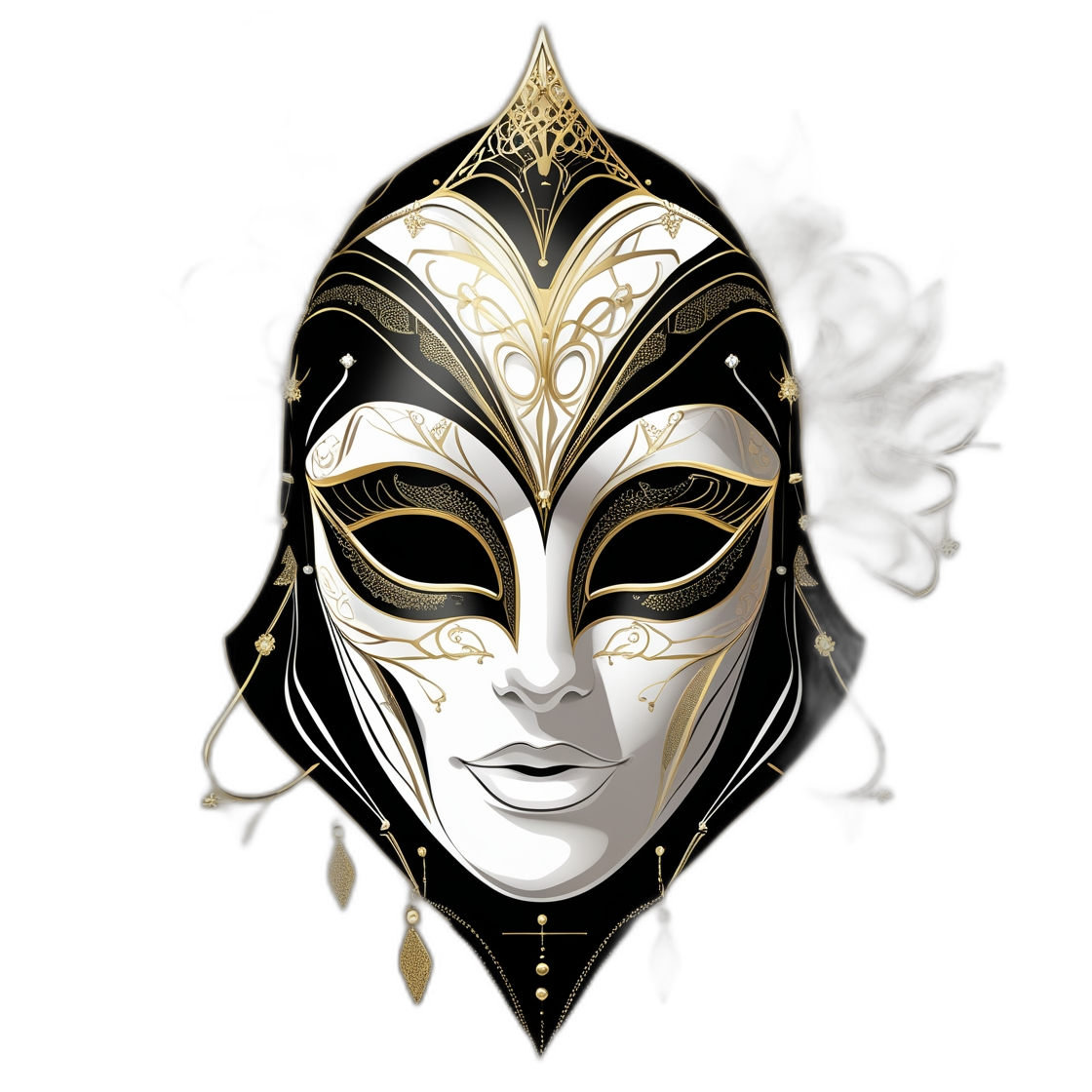
The hall seemed like a room designed to convince you that the world had always been safe.
It wasn’t safe like a fortress, in the way soldiers mean it, or like a sickroom, in the way doctors mean it; it was safe the way stories mean it. Safe as an assumption, a stable backdrop for everything else. Safe like a painted sky that never changes its weather unless the script calls for it.
The ceiling of the Grand Atrium was a dome of enchanted glass, a perpetual twilight pinned in place by a hundred thin runes that glowed like constellations. Light drifted through them the way music drifts through a ballroom; soft, aimless, and indulgent. It was the kind of architecture that didn’t merely impress you; it instructed you.
This is how the world works, it said. Beauty is stable. Order is permanent. We put gold on things because nothing truly bad can happen here.
The academy’s graduating class wore their ceremonial colors, and the air smelled like sugared fruit and polished wood and the faint ozone of harmless spellwork. Illusions drifted above the dancers, little animals made of light and laughter: foxes that bowed, swans that pirouetted, even a tiny dragon that chased its own tail across the chandeliers. Someone had persuaded the fountains to pour ribbons of liquid starlight for the evening, and the water sang quietly to itself in a language nobody had bothered to translate because it didn’t sound like warning.
I remember thinking it was too much. I wasn’t a cynic, but more like a child who has been offered a feast and can’t decide which sweetness to hold first. Every surface had been cleaned until it shone. Every corner had been warmed in preparation for our attendance. Every sharp line softened.
Even the guards looked like decorations, their armor etched with filigree and their helms unbroken by any visible expression.
And then, in the middle of that perfect, scripted safety, something misbehaved.
At first it was small. A hitch in a harp string. A candle-flame leaning the wrong way. An illusion pausing mid-flight as if it had forgotten what it was supposed to be. People laughed. That’s what you do in beautiful rooms: you assume the world’s errors are endearing.
The music and the dancers continued. A professor lifted a hand toward a wavering constellation in the ceiling and murmured a routine corrective phrase with the bored, gentle patience of someone fixing a smudge on a fresh painting. The runes brightened obediently. And for a breath, I believed the correction had worked.
Then the air thinned.
Not like a draft, but thinner in the way that makes your ears pop on a mountain pass, thinner in the way that makes you suddenly aware your lungs have been accepting an invisible contract. The smooth ululation of conversation faltered, and here and there, laughter came out wrong. Too loud and too sharp, as if it had been pushed through a crack in glass.
I turned because I felt it behind me.
On the far side of the hall, where the walls met a long corridor of portrait galleries, a shape stood half in shadow; someone too still to be staff and too quiet to be a guest. An old man, or a young man wearing oldness like a garment, his robe the color of ash and his hair tied back with a strip of black cloth as if he were attending a funeral no one else had noticed.
He had been there for minutes, maybe longer. That’s the curse of places like this: you learn not to see what doesn’t belong because your brain is trained by comfort to edit out the threat. His lips moved.
At first I thought he was praying, but soon realized he wasn’t speaking to any god I recognized. I couldn’t hear them clearly, but the words didn’t feel like language. They felt like mechanism. Like the last clicks of a lock turning, or like a key being seated into a door nobody remembered building.
The professors saw him a moment later. A dozen hands moved at once, so practiced it was almost graceful. Runes blooming in the air, bindings forming like lace. A ward flared above the old man’s head, translucent and iridescent violet, the academy’s favorite color: the color of competence.
And for a heartbeat… it worked.
You could feel the hall relax. People exhaled. The illusion-animals resumed their drifting dance. Someone clapped, as if that gesture alone could reassert the story’s genre.
The old man didn’t look at the ward. He didn’t strain against it. He smiled with relief, as if the academy had just done him a kindness by giving him time to finish what he had started.
His last word was not loud. It wasn’t shouted, it wasn’t cast, it wasn’t chanted. It was mumbled, like a tired person finishing a sentence they’ve been carrying for days.
And the wards, our beautiful proof of control, did not shatter. They simply… forgot what they were.
The runes in the air flickered as if someone had lowered the dimmer on reality itself. The enchanted ceiling, that perfect twilight pinned in place, went briefly darker; so brief it might have been a blink. Except it wasn’t my eyes. It was the sky.
A sound came next that I still don’t have a proper word for. It wasn’t an explosion. It was the sensation of a pressure drop in the soul of the room, the way a sealed jar sounds when you break the vacuum; only this vacuum was the thing holding us all inside the world.
People screamed, but not the way they do in plays. This was neither clean nor a chorus. The scream began in one throat and then ran through the room like fire through dry grass, each voice catching its own flavor of disbelief.
The starlight fountains sputtered. The illusions collapsed into ash. The chandeliers dimmed as if embarrassed. And then the first body hit the floor.
They didn’t fall as if struck, but instead… emptied. Like a puppet that had been cut free of its strings. It was a student I recognized, still wearing her graduation sash, her hands mid-gesture from a dance step she would never finish.
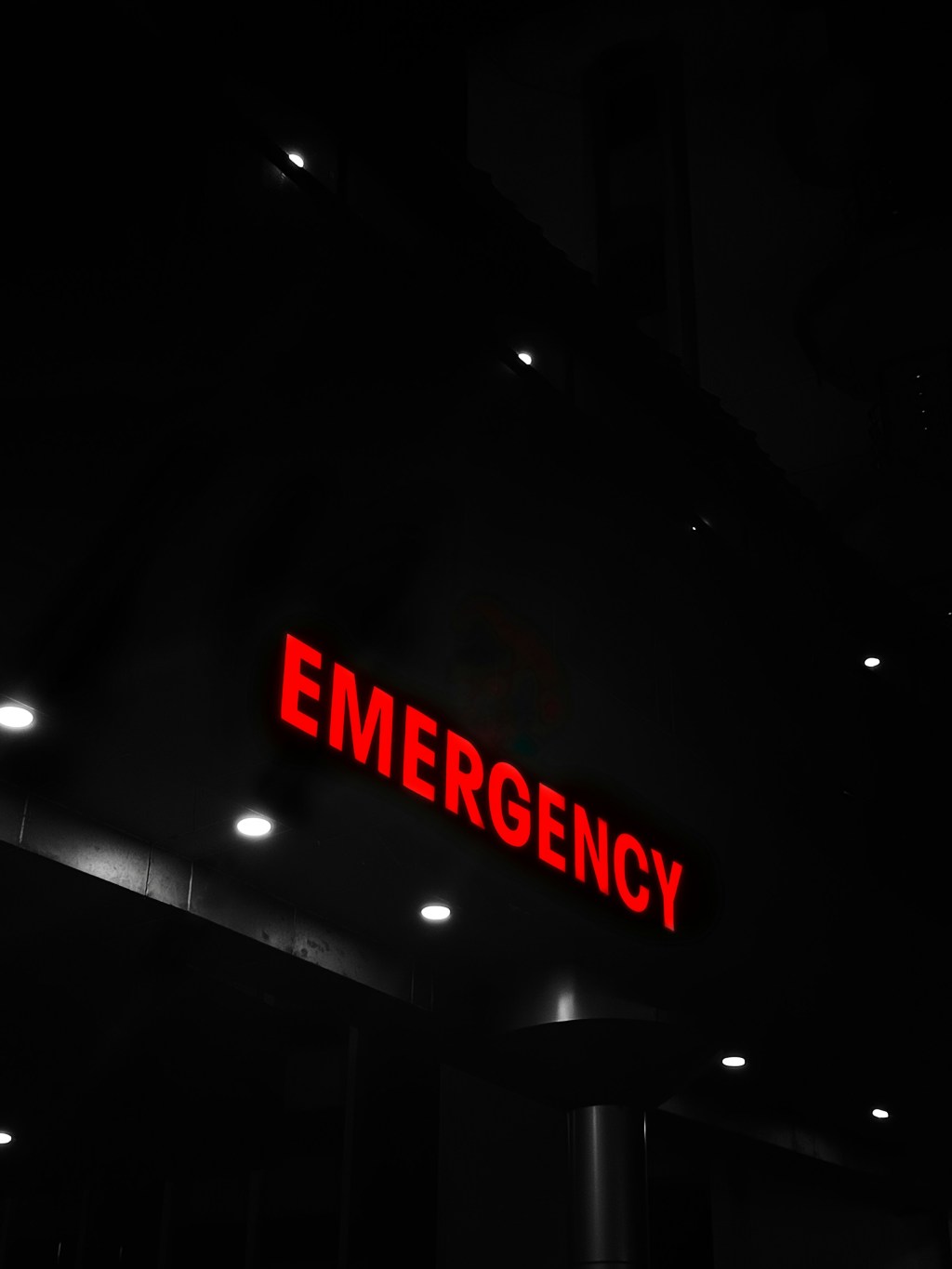
The professors moved fast; of course they did. They are trained for emergencies.
But the spells they cast did not land the way they should have. Wards that usually hummed like glass sang instead like bone. Healing cantrips slid off wounds as if the wounds themselves had decided they were no longer obligated to accept mercy.
Someone shouted that the structural bindings were failing. Someone else, one of the graduate researchers with ink-stained fingers and a voice too thin for authority, yelled words that made my stomach drop:
False vacuum.
As if that phrase explained anything to the people now bleeding on the marble. As if it mattered, in that moment, whether the world’s safety had been a physical state of reality or merely a cultural lie.
The professor nearest me, Master Kael, whose lectures were always about restraint and precision, grabbed my wrist hard enough to bruise and shoved me toward the fallen.
“Hold pressure,” he said, then corrected himself like it mattered: “Hold life.”
I dropped to my knees beside a boy whose name I didn’t know. His eyes were open, unfocused, as if he was looking through me at something farther away. The cut across his side was too clean to be an accident and too wrong to be a weapon; it looked like the world had decided his skin was no longer a contiguous thing. Blood spread across the marble in a bright, obscene fan; too vivid against the academy’s polished perfection.
My hands went to the wound before my mind had fully agreed this was real. Warmth. Slickness. The terrible intimacy of contact.
The sound of my own breath.
I pressed.
The blood came anyway, pulsing with every heartbeat like a protest against my insistence. Behind me, someone sobbed the name of a friend. Somewhere across the hall, a professor screamed an incantation and it tore out of him like an oath.
Master Kael moved from body to body with the expression of someone doing math while a building burns. He looked down at the boy under my hands. He looked at me. His gaze flicked once – quick, involuntary – to the next fallen figure, then to the next.
And then he made a choice.
He didn’t say it aloud. He didn’t have to. I saw it in the way his mouth tightened, in the way his attention slid past me.
He touched my shoulder briefly, whether as an apology, a benediction, or a dismissal, I’ll never know, and went to the next student whose chest still rose in a rhythm that suggested bargaining was possible.
It was only afterward, after the screaming, after the running, after the moment the far wall cracked as if the building itself was trying to decide whether it still believed in being a building… that I understood what that touch had meant.
It was not intended to comfort. He did not make time to show kindness.
The touch was a label, or a category.
A decision made under constraint, with eyes open, and without the luxury of sentiment. The kind of decision that leaves you wondering if the blood on your hands is temporary, if it washes away when the crisis ends, or if the universe has rendered it permanent by making it true.
The stories don’t prepare you for being the one still kneeling when the triage line passes you by.
I stayed kneeling long after the blood stopped coming. Not because I thought I could stop it, but because moving meant admitting what the touch on my shoulder had already decided. The world didn’t have enough hands. And now I knew what that meant.
As dawn broke after that first night, I didn’t have a name for what Master Kael was doing then. I only had the weight of it. Now, I know the word is Triage.
Triage
It’s not a word you hear in comfortable rooms.
In ordinary life we say busy, overwhelmed, I’ll get to it when I can. We use language that stretches, that promises time will be generous if we are. Backlogs are framed as temporary, attention as elastic, consequences as polite. Everything waits its turn because the world has taught us that it will.
But comfort has a boundary. And past it, another word starts to appear. Triage.
A term of the art. A word that arrives already wearing gloves. It surfaces when the fiction of “enough” collapses; when the system can no longer pretend that all needs can be met if everyone is patient.
In a hospital, triage is the moment your future stops being a story and becomes a category. A calm voice replaces reassurance. Survival is no longer a hope but a calculation. No one wants you to die; no one has the luxury of wanting anything at all. Constraint has entered the room. It looks like fluorescent lights, clipped syllables, and a chart that decides how fast the door opens for you.
Triage is the word that can quietly hand you a death date as a matter of arithmetic rather than punishment. A function of damage, capacity, and how many hands are already shaking as they try to hold other lives together.
In a server room, it’s the same decision wearing different clothes.
Fans scream as they outrun their bearings. Dashboards go red. A pager won’t stop. Conversations collapse into fragments because even language has become overhead. No one asks what should happen in an ideal world. They ask what must happen first so that anything survives long enough to matter.
And then there is the kind that doesn’t come with uniforms or dashboards.
The kind that shows up in a marriage, or a family. In a life where scarcity forces a choice between the person you love and the future you can’t bear to lose. A triage that doesn’t end when the bleeding stops, because the wound is the decision that kept you breathing.
That is the version people spend years trying to justify.
Because triage does not offer the comforts we prefer from ethics. It doesn’t arrive with clean hypotheticals or vows spoken from a safe distance. It doesn’t get a montage. It doesn’t get music that resolves the tension.
Triage is clarity that cuts.
And when that kind of clarity enters the room, the fairy tales go silent.
Triage as an ethical act
Most people who know the word triage never have to meet it.
It lives at a comfortable distance; something you encounter in a documentary, a training module, an office postmortem. A term you can examine briefly, then return to the shelf, filed under things that happen somewhere else.
And on the surface, the places it appears do look unrelated. Different rooms, different tools, different vocabularies. Sometimes the stakes are flesh and breath. Sometimes they’re money, uptime, reputation, or data. Sometimes they’re harder to name: trust, stability, the scaffolding of a life.
At its most neutral, it means assessing multiple demands and sorting them by urgency and survivability. That’s the definition you can print without offending anyone. Clean. Technical. Bloodless.
But beneath the surface, the shape is the same. Triage begins when the room becomes honest. It is the moment you stop looking for the best-case scenario and start looking for the least-worst one. Whether you are holding a scalpel, a terminal, or a broken relationship, the weight is the same because the choice is final: to decide what comes first is to admit that not everything is saved at once.
We prefer ethics that sound like infinity. Principles that imply our care is boundless, our attention elastic, our resources replenishing themselves somewhere offstage.
Triage does not allow that lie.
The Missing Clause
And that brings us to the missing clause, the part the definition carries quietly, by omission.
Triage is also the decision of who is not saved.
It is the recognition that some damage is too extensive, some systems too degraded, some lives too far gone for the resources available. It is the moment one casualty becomes a worse use of attention than another. That word, use, is where most people recoil. It sounds like spreadsheets and balance sheets, like logic you’d never want anywhere near someone you love.
But triage does not ask permission to exist.
It appears only after reality has already imposed constraint. It is not a philosophy invented to justify cruelty. It is a method for navigating the cruelty that is already present, when time and resources are running out faster than anything can be repaired.
When the system is failing, outcomes must be weighed. Allocation becomes unavoidable. And allocation, in any domain, is a moral act.
Triage demands hierarchy. Priorities. A scale that cuts wherever it intersects need, urgency, and capacity. You can name the criteria however you like: severity, impact, criticality, survivability, risk, expected value. The vocabulary shifts. The structure does not.
Somewhere, whether you acknowledge it or not, you are applying standards. And standards are never neutral. They encode values: what matters, what counts, what is worth saving, and which losses are considered tolerable.
In a hospital, the criteria might aim to maximize lives saved or likelihood of recovery, shaped by evidence, protocol, staffing, and the brutal truth that one doctor cannot be in three rooms at once.
In a server room, the priorities might favor integrity over convenience: preserve the database, protect the ledger, keep the system of record alive even if everything user-facing goes dark. Or they might favor something else entirely—optics, revenue, executive pressure. You can usually tell what an organization values by what it saves first.
And in personal life, the criteria are messier still.
Who gets the last of your patience? Which relationship receives your best hours, and which survives on what remains? Which problem is addressed now, and which is pushed into the fog with the promise of later? Which values become non-negotiable when scarcity arrives?
Everyone who has worked in medicine knows the arithmetic of survivability. Everyone who has stood on an incident bridge knows decisions are weighted by uptime and impact. Everyone who has faced a real personal crossroads knows the same thing, even if they never say it aloud:
Choices reveal priorities. And priorities, once enacted, change how you are seen.
The Cost of Clarity
This is why triage is so psychologically corrosive.
It doesn’t only demand action. It demands ownership of the consequences of action. Most of us can live with making choices. What we struggle to live with is admitting that we chose.
Afterward, it’s tempting to convert triage into fate. To call it inevitability, or to say, there was nothing I could do.
Sometimes that’s true in the narrowest sense. The resources really weren’t there. The clock really did run out. But even then, triage leaves fingerprints. You didn’t merely witness scarcity, you navigated it. You decided what urgent meant. You decided what too far gone described. You decided which losses were survivable.
That’s why the metaphor from the beginning matters.
It captures the moment when the world you thought you lived in reveals itself as provisional; held together by assumptions that can fail. And when they do, the ethical question stops being What is good? in the abstract.
It becomes simpler. And much harder.
Given what exists, what do I do first? And what am I willing to let bleed while I do it?
This is the quiet cruelty and the quiet mercy of triage. Clarity under constraint. It is not a virtue people applaud. But when clarity is required, applause is irrelevant. What matters is that ethics leave theory and enter the hands.
It is the moment you stop pretending all needs are equal.
It is the moment you accept that prioritization is not a scheduling problem, but a moral one.
And if you want to feel its weight, keep the missing clause in view.
Every time you save one thing first, something else waits.
Sometimes waiting is merely uncomfortable.
Sometimes it is the difference between recovery and collapse.
Sometimes waiting is a sentence.
…
That’s what Master Kael didn’t say when he touched my shoulder.
That he had already counted the bodies.
That I had already been sorted.
That the world was failing, and someone had to decide which edges could be held and which would fall.
I held pressure. It wasn’t enough. But triage doesn’t ask for enough.
It asks for whatever’s left.
Author’s Note:
Ethics that cannot be practiced under constraint are not principles; they are preferences.
The world does not fail politely. Neither should our moral frameworks.
~Dom



Leave a comment