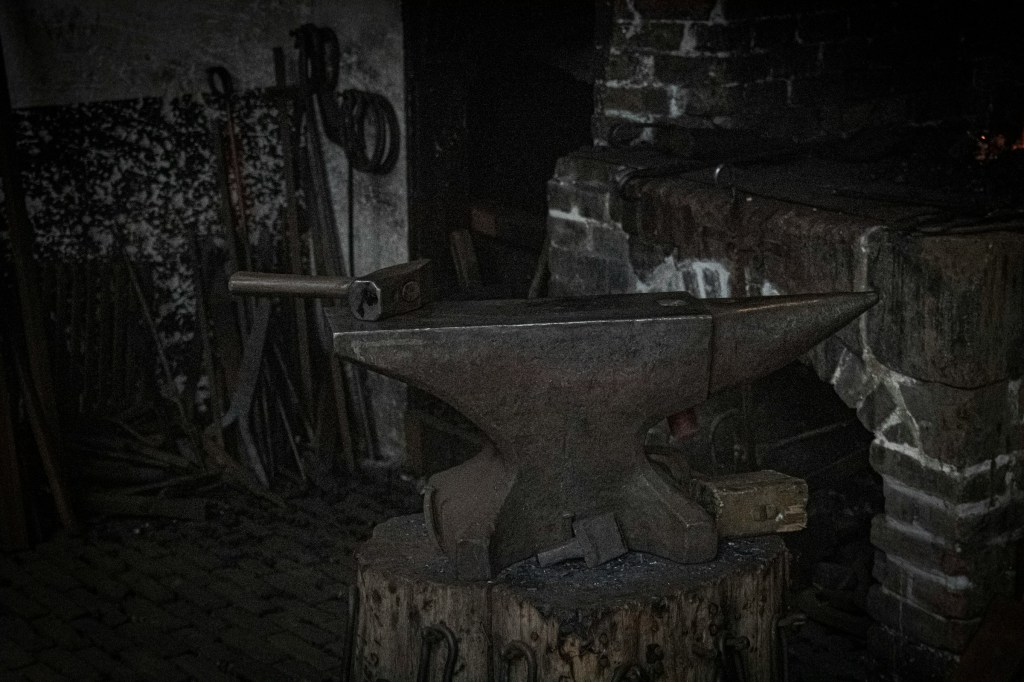
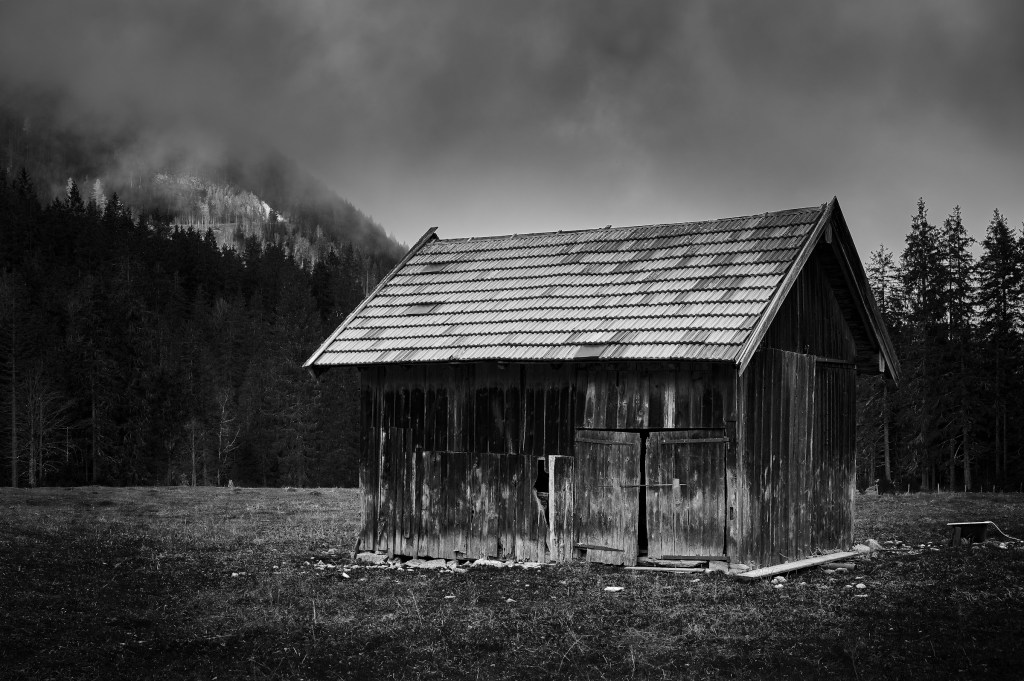
Photo by Pim de Boer on Unsplash
I was there when the order was spoken.
Not in the hall where the gods postured and argued about threats, but in the lower places, where metal is measured, where heat has a cost, and where every decision leaves a scar. The gods wanted a hammer. Not a symbol, not a tool, certainly not a lesson.
A hammer. One that could break mountains, shatter shields, and end arguments with a single stroke.
They spoke of outcomes. Victory. Safety. Finality. They spoke as patrons often do, certain of what they wanted, vague about what it would mean. They did not ask how such power should be carried.
The forge was already alive when the request reached us. Bellows breathing, crucibles glowing white, the sound of work that does not care about titles. Sindri set the form. Brokkr watched the heat. I kept the measures and the silence. You learn quickly that gods hear only what flatters them, but the metal hears everything.
The design was simple in their telling. Dense head. Perfect balance. A weapon that would answer strength with certainty. No mention of restraint. No thought given to misuse.
Why would there be? The gods believed themselves immune to consequence.
Then Loki arrived. He always did, though never with a hammer or a plan, only disruption. A fly’s bite at the wrong moment. A twitch of pain where focus was needed most.
Sindri flinched, just enough. The handle came out short.
Not broken or useless. Just… reduced. The kind of flaw you only notice when the piece is already cooling, when correcting it would mean starting again. Brokkr swore, and I said nothing. The hammer lay there, radiating heat and possibility, already heavier than most beings could lift.
The gods noticed immediately, and they called it a defect.
They complained that it would limit leverage, that it would demand more precision, more strength, more discipline. They spoke as if ease were a virtue and accessibility a right. They asked if it could be fixed.
It could have been, but we said no.
Out of recognition moreso than spite. The hammer, as it was, demanded something from its wielder. The shortened handle shifted the balance inward. It punished sloppy grip. It magnified poor posture. It refused momentum without control.
Anyone could swing a long-handled hammer. This one would not allow it.
Thor took it anyway, as he always did, and over time, he adjusted. He learned its weight, not just in his arms but in his stance, his breath, the way he set his feet before a strike. The hammer did not make him strong. It revealed whether he already was.
And here is the part the songs rarely tell. For centuries after, I watched battles that never happened. I watched kings who could not lift it. Warriors who could raise it once and never again. Fools who mistook desire for readiness.
The hammer did not judge them. It simply did not move. Cities were spared because a tyrant could not swing it. Wars ended early because power could not be borrowed.
The hammer struck only when the one holding it had the mass, balance, and restraint to survive the recoil.
The gods never thanked us for that. Oh, they celebrated the thunder, the broken giants, the victories… But we knew what the short handle had prevented. Power without formation. Strength without alignment. Catastrophe disguised as triumph.
The flaw was never a flaw; it was a filter.
We learned something that day in the forge, something the gods still struggle to accept. When you build something too easy to wield, you do not make it safer. You make it indiscriminate. And when power no longer asks who you are before it moves, it will eventually move through the wrong hands.
The hammer endured because it demanded a shaped wielder. Most things do not. And so most harm does not announce itself as evil. It arrives as convenience.
The Cult of Outcomes
The gods’ mistake wasn’t wanting power. It was obsessing over what the hammer would do, rather than what it would demand.
That pattern should feel familiar.
We live in a world obsessed with outcomes. Speed. Scale. Reach. Impact. We reward the finished product, the announced opinion, the shipped feature; rarely asking how they were made, or whether the process shaped anyone capable of sustaining them.
We choose speed over depth. Why learn a craft when a service delivers the result by morning? Why apprentice when automation offers the illusion of mastery without the scars? The result isn’t ignorance so much as it becomes hollowness: knowledge unweighted by experience.
We choose ease over effort. Friction is treated as failure. Anything that resists us, or requires training, reflection, or repetition, is labeled inefficient or unfair. So we strip it , away… and with it, the chance to be changed by what we build.
We choose image over integrity. It’s simpler to declare alignment than to develop character. Tribes offer borrowed weight: shared slogans, shared certainty, shared enemies. Like the long-handled hammer the gods wanted, these identities can be swung by anyone performing conviction in public; regardless of what they’ve earned in private.
The hammer we made wouldn’t allow that.
Its shortened handle meant leverage couldn’t be faked. The weight didn’t move because you wanted it to. It asked: what have you built…. in your stance, your grip, your balance… that can hold this force without collapsing?
Modern systems are built the opposite way. They prioritize scale, accessibility, ease. These aren’t evil goals, necessarily, but without constraint, they create tools that don’t care who’s holding them. Power becomes purchasable, and readiness becomes entirely optional.
And so, people arrive everywhere and stand nowhere. Opinions without footing. Influence without formation. When the ground shifts, as it always does, they move with it.
The cult of outcomes sells freedom by eliminating resistance. But what it delivers is weightlessness.
The forge taught us better: That arrival means nothing without the structure to remain upright. That function isn’t the same as durability. That a self untouched by effort will have no idea how to hold its ground when it matters.
The shortened handle refused to reward arrival alone. It still does.
The Cost of Skipping the Work
There is a cost to removing friction. It just doesn’t show up on the receipt.
Skip formation, and what you get isn’t freedom, it’s fragility. Systems may run. Institutions may scale. People may succeed. But without internal structure, they collapse the moment real pressure arrives. They hold… until they don’t.
You see it first in brittle institutions. When capability is endlessly outsourced, organizations lose memory. They know what gets done, but not how or why. So when conditions shift, when a vendor vanishes, a supply chain breaks, or something unexpected happens, there’s no one inside who can carry the weight. Power exists, but no one has the spine to hold it.
The same sort of failure plays out at the personal level. Convenience replaces competence. Meals without cooking. Goods without making. Answers without study. The environment no longer demands skill, so skill withers. The body stays upright, but it forgets how to stand.
Consumer culture accelerates the rot. Identity is now something you buy: wear this, post that, align here. Craftsmanship becomes aesthetic. Choice becomes illusion. The result is abundance without authorship, and lives that were assembled, but never really built.
From this come shallow convictions. Beliefs adopted without friction are abandoned just as easily. They sound bold, even righteous… until they encounter consequence. Then they flail. Or escalate. Or shatter.
This is how you get people who speak with volume but steer with panic. Certainty without understanding. Reaction without direction. Every obstacle eventually feels like betrayal because their sense of self has never had to endure resistance.
Loki ensured Mjolnir wouldn’t allow this kind of misuse. The shortened handle wasn’t cruelty, it was calibration. The hammer could only be wielded by someone strong enough to survive the recoil. We’ve stripped that safeguard from nearly everything else.
In our obsession with ease, we’ve confused access with readiness. Power now circulates freely, but the ability to bear it ethically, steadily, or repeatedly is rare. Because no one had to do the shaping first.
Skipping the work doesn’t save time. It just delays the bill. What you avoid in effort, you will pay in collapse.
The forge taught us this early: a tool that never resists you will never prepare you. And when resistance finally arrives, and it always does, you will learn exactly what you’re made of:
Something shaped to hold… or something that was merely carried, until now.
Ethics as Shape, Not Checklist
This is where most conversations about values quietly fall apart.
We treat ethics like instructions: rules to follow, slogans to memorize, debates to have when a decision arrives. As if morality is something you activate after the moment begins.
But that’s not how people move through the world.
A hammer doesn’t wait for a decision. It doesn’t ask what the wielder believes, or what they intended. It responds to grip, balance, and stance; properties established long before impact.
By the time it swings, the outcome is already shaped. Ethics work the same way.
Values aren’t choices repeated. They’re structures formed. Slowly. Under pressure. Through resistance, mistake, repair, and reflection. When the real moment hits, whether through fear, anger, power, or temptation, there’s no time to theorize. What moves isn’t principle. It’s form.
That’s why slogans collapse under scrutiny. Why performative certainty dissolves under pressure. Most people sound ethical in calm weather. But ethics that haven’t been shaped don’t hold when the terrain tilts.
A formed self behaves differently. Not because it’s pure, few things are, but because it’s weighted. It knows where it can bend, where it must yield, and where it applies force without breaking. These are not decisions made in the moment. They are consequences of formation.
The hammer made this literal. Mjolnir didn’t respond to identity or positional authority. It responded to stance. Thor couldn’t substitute enthusiasm for structure. The object revealed the work, or the lack of it.
So does character.
Integrity isn’t proven by having the right opinion. It’s revealed by how you move under force. Do you lash out? Do you collapse? Or do you follow a line you’ve already forged; slowly, intentionally, and under fire?
This is why personal ethics can’t be outsourced, automated, or borrowed from a tribe. A checklist might tell you what’s allowed, but it will not tell you who you’ll be when the pressure lands.
The forge teaches this best. Metal is not shaped by intention. It’s shaped by fire, hammer, and time, until its structure changes.
People aren’t that different. What you endure, resist, and refine becomes the shape you carry forward… And when the strike finally comes, the world will not ask what you believe.
It will show you what you’re built to do.
The Danger of Tribal Softness
Tribes offer relief.
They spare the individual from tension; from the slow, lonely work of refining a stance, holding conflicting truths, and standing long enough to learn where you actually balance. In a tribe, that labor is externalized. The answers are preloaded, the language is shared, the posture is supplied. Validation comes bundled with membership.
It’s sold as belonging. But what it often delivers is softness.
Consensus replaces conscience. Not with violence so much as ease. You no longer ask if a reaction is aligned with your values. You just check whether it matches the signal. Approval becomes the stand-in for integrity. Agreement replaces understanding. The result isn’t malice. It’s more akin to buoyancy.
A tribal self floats; Lifted by outrage, redirected by applause, carried by the momentum of whatever group it belongs to. But it does not stand.
When pressure arrives, it drifts. When the terrain slopes, it slides. That’s what softness is: an absence of form. A self that has never been forced to carry weight will not develop density. It stays smooth. Uniform. Shaped not by conviction, but by consensus.
The long-handled hammer the gods wanted would’ve allowed that kind of use. Anyone could swing it. No discipline or posture required. No consequences for the wielder. Power without preparation. Force without friction.
But Loki… or Mjolnir, or fate… refused that design.
The real hammer demanded solitude in its making. Practice in its use. A willingness to be shaped before being trusted with strength. It could not be wielded by committee. It could not be justified by majority vote. It answered to one hand, and only if that hand could hold its own weight.
Tribal systems reverse this entirely. They reward volume over ballast, alignment over integrity, and motion over direction. They produce confidence without coherence, and speed without the ability to steer once consequences appear.
This is why tribal certainty collapses under pressure. It doesn’t bend. It shatters. It escalates. The self inside it was never built to hold tension. It was intentionally built to avoid it.
Forging a self is slower. Lonelier. It doesn’t offer applause, only shape.
But it produces what no tribe can:
A person who can remain standing when the current shifts.
…Who can apply force without losing themselves.
…Who does not need consensus to know where they are placed.
Mjolnir did not float. Neither should we.
Becoming Load-Bearing
If Mjolnir taught us anything, it’s this: The smallest constraint can decide whether power refines or destroys.
A shortened handle; an ‘accident’, a refusal to fix it, and a decision to let difficulty remain. That single imperfection turned ease into discipline. It made power conditional; on readiness beyond simple desire.
It could not simply be lifted. It had to be earned. Self-determination works the same way.
It is not a feeling, nor a slogan. It’s not a performance of confidence when the stakes are low… It is a physical property. The ability to stay upright under strain. To resist the slope. To move with direction instead of drift.
A load-bearing self doesn’t need constant re-centering. It has mass. It has shape. And when fear intrudes or incentives shift, it does not spin toward applause or collapse into reaction. It holds.
Not simply because it is rigid, but because it is aligned.
The world will always offer long handles; tools that amplify, systems that simplify, identities that can be worn like uniforms. They’ll work, until they’re tested. In that moment, what matters isn’t how fast you arrived. It’s whether you stay standing.
Formation is quiet. Often invisible. It shows itself in what doesn’t happen; the escalation avoided, the silence held, the strike not taken. Like the wars Mjolnir prevented. Like the damage that never came. Like the power withheld until it could be carried.
That, too, is strength.
To become load-bearing is to welcome resistance as teacher. To let constraint shape discipline instead of resentment. To choose formation over fluency, so that when force finally arrives, your response is not borrowed… and not improvised.
The world does not care what you meant to be when the pressure comes. It cares what you can hold.
That perspective may feel outdated and unfair. In fairness, it is both. But it is also the only design that endures; the only one that prevents power from outpacing the person who holds it.
Mjolnir survived because it refused to be easy, because it demanded readiness before impact. And in the end, Loki never needed to lift the hammer.
His influence entered through interruption rather than authorship. Through what was bypassed, not what was built.





Leave a comment