
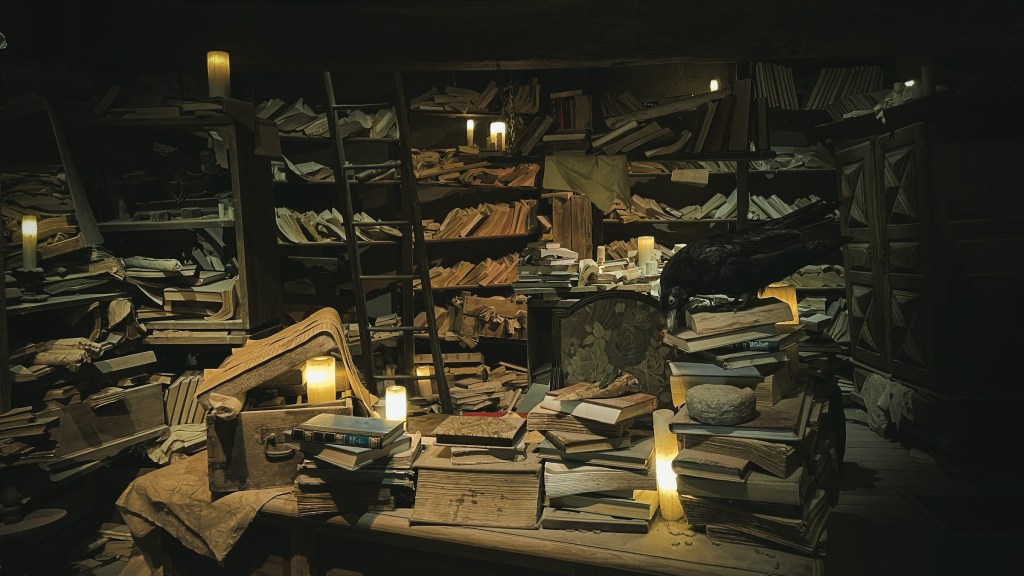
Photo by Steve Johnson on Unsplash
I stand where the light is strongest because this is where I was taught to stand.
Someone placed it here long before I arrived, angled just so, bright enough to make everything visible and nothing forgivable. I didn’t choose the illumination. I learned to work under it. I learned what could be seen from here, and what would be missed entirely if I never stepped aside.
The world before me isn’t finished. It never is. It’s paused in the way a held breath is paused, tense, temporary, and already leaning toward release. Cities hum at a distance, unaware of my attention. Roads carry the memory of people who moved on without asking permission. The air is thick with residue: arguments no one won, kindness no one noticed, damage no one stayed long enough to repair. I recognize it because I’ve added to it. I’ve learned its language by speaking it fluently when it suited me.
I’ve loved this world. Not innocently, and not without benefit. I’ve loved it the way you love something that rewards you for understanding its patterns.
And now I am asked to choose.
Not between good and evil. That’s a child’s framing, and I am no longer allowed it. This is a choice between continuities; between what is already in motion and what would have to stop for something else to survive.
On one side is the world as I know it. A dense accumulation of decisions layered over other decisions, some careful, some reckless, most never revisited once they hardened. I’ve watched what this world does to people when momentum replaces attention. I’ve seen revenge masquerade as balance and leave everyone emptier than before. I’ve seen love persist anyway, not loudly, not heroically, but stubbornly, in the spaces no one defended because they weren’t profitable or impressive.
I’ve told myself this persistence meant the system worked. That it was worth preserving as it was.
On the other side is one person. Neither symbol nor principle. Someone whose life has been shaped by the very continuities I’m being asked to protect. Someone so entangled in the structure that removing them would expose how fragile it actually is. The kind of presence you take for granted until the cost of doing so is placed directly in your hands. The kind that has already been altered by my inaction more than once.
This is the part no one prepares you for: knowing more doesn’t clarify the decision. It eliminates the places you used to hide.
I know too much to pretend neutrality. I know exactly how often I’ve called inevitability what was really convenience. I know how easily certainty can be mistaken for courage when it spares you from staying longer than is comfortable. The world taught me this slowly, without speeches. It taught me through repetition; through watching damage arrive quickly and repair stall indefinitely, and through seeing how often restraint would have mattered more than conviction.
And now it offers me no guidance. Only context, which is always worse.
Everything I’ve learned points in conflicting directions. Every triumph I can name came with a cost I didn’t pay personally. Every mercy I admire left something unresolved for someone else to carry. There is no accounting system here that closes cleanly. No scale that doesn’t tilt depending on where I choose to stand. The world has been honest about that, at least. It has never pretended to be fair. Only durable.
I am tired. Not of the world itself, but of pretending that understanding exempts me from consequence.
This choice doesn’t care what I want. It asks what I am willing to be responsible for once the moment passes and the surface sets.
If I preserve the world, I preserve all of it. The beauty, yes, but also the harm that has learned how to justify itself by pointing at scale. I choose continuation, knowing full well that it includes futures I will never witness and damage I will never be the one asked to explain.
If I choose the person, I accept erasure elsewhere. Not rhetorically. Actually. I choose fidelity over abundance and acknowledge that some losses cannot be redeemed by numbers, progress, or momentum. I accept that something I benefited from will not survive intact.
The cruel clarity is this: nothing about this is ambiguous anymore. I have been given memory instead of instruction, consequence instead of moral theater. Whatever I choose, I will not be able to claim innocence. And no outcome will allow me to pretend I was on the right side of history rather than simply on a side.
There is no answer waiting for me. Only my hand. Only the knowledge that whatever stroke I place will not belong to me alone once it dries.
I breathe. Not to steady myself, but to acknowledge that this is the last moment where not choosing still feels like an option.
The light doesn’t move.
Behind me, the rest of the canvas waits. It is already marked by what I failed to notice before, already shaped by hands that never asked my permission, unfinished, unforgiving, and unmistakably human.
The World Is Not a Painting… And Yet…
The world is not a painting.
It doesn’t wait for us to step back and admire it. It does not pause for interpretation. It resists. It pushes back. It bleeds when mishandled, fractures under pressure, heals unevenly if at all, and continues regardless of whether we understand what we’ve done to it.
And yet, despite our protests, it behaves like one in all the ways that matter.
Not as a metaphor meant to soften responsibility, but as a structure that remembers. What we do here accumulates. Actions don’t evaporate when the intention behind them fades. Words spoken casually stay lodged in rooms and relationships long after we’ve left them. Decisions made for speed or convenience don’t remain personal; they harden into norms. Systems built to move quickly become environments people must endure.
Like paint, these things set.
A painting is never encountered as a single gesture. It is read as a negotiation between layers: between strokes placed early and corrections made too late, between what was emphasized and what was allowed to disappear. Meaning emerges not from any one mark, but from how marks interact across time. Lived reality works the same way. No action arrives alone; every choice lands on a surface already shaped by other hands, altering not just the present moment, but the range of futures that remain possible.
This is why ethics cannot survive as abstraction.
We like to imagine it as a set of principles hovering above the mess, waiting to be applied cleanly. But ethics, like painting, is practical. It lives in sequence. In consequence. In the irreversible fact that something always comes after what we do. It is less concerned with what we meant, and far more attentive to what followed.
That’s why intention, while comforting, is never enough.
A painter can aim for harmony and still destroy a composition with a single careless stroke. A leader can promise progress and still flatten years of careful work by moving too fast. A person can mean well and still cause harm simply by failing to see what their action will cover, erase, or destabilize. Reality does not correct for sincerity. It records outcomes.
And it does not reset between our moments of reflection.
Each of us adds to the surface, whether we acknowledge that role or not. Sometimes with care. Sometimes bluntly. Sometimes while insisting we had no choice. Meaning does not emerge from isolated decisions, but from their accumulation: from how they reinforce or undermine what was already there, from how they shape the terrain others must navigate next.
Seen this way, the world is not asking us for purity or certainty. It is asking for attention. It does not require perfection, but it does not forgive carelessness simply because it was unintentional. Once a stroke is placed, it becomes part of the picture. It conditions what can be done afterward. It constrains the next hand that tries to act responsibly.
For better or worse, others will have to live with what we leave behind.
And that is the uncomfortable truth we spend so much energy trying not to notice:
the world may not be a painting, but it remembers us like one.
The Persona of the Brush
If the world behaves like a painting, then each of us moves through it as a brush.
Not the idealized brush we imagine ourselves holding; balanced, deliberate, guided by careful intention… but the one that actually makes contact. The world does not encounter our grip, our posture, our plan, or our reasons. It experiences only the bristles. The pressure. The marks left behind.
This distinction is easy to understand and difficult to accept.
We prefer to collapse identity and action into a single, comforting narrative: that who we are guarantees what we do. That a good heart produces good outcomes. That sincerity is a reliable proxy for care. But intention lives in the handle. Consequence lives at the tip. And the canvas has no access to what we meant.
Paint can be rich with conviction and still ruin the surface if the hand guiding it is careless. A steady, practiced stroke, by contrast, can produce coherence even with imperfect pigment. The difference is not moral purity, but control.
The world does not experience our reasons. It absorbs our actions.
That truth is unsettling because it relocates responsibility. It pulls it away from the private theater of motive and places it squarely in the public realm of effect. It asks not why we acted, but how. With what awareness of timing, pressure, and surface. With what sensitivity to what was already there before we arrived, convinced we were doing something necessary.
This is where accountability actually lives.
Not in declarations of character. Not in endless internal audits of intent. But in skill. In noticing patterns. In learning how our words consistently land, how our habits shape environments, how the same gesture leaves the same damage behind us no matter how earnestly we justify it. Repeated harm is not a misunderstanding.
Action is not a transmission of intent, but rather a translation.
And like any translation, it is vulnerable to loss. Tone slips. Context collapses. Meaning bends under assumptions we didn’t know we were making. What felt precise internally can arrive blunt, distorted, or violent on the other side. Fluency is not declared. It is earned, usually after error.
To treat the brush as the self and to insist that sincerity absolves incompetence is not authenticity. It is denial in self-help vestements. Separating who we believe ourselves to be from how we reliably affect the world is is respect for reality, not self-betrayal.
The work, then, is not to scrub our motives until they gleam. That is an infinite project with very little external consequence. The work is to attend to the instrument we actually use: the persona through which we speak, decide, and act. To refine it. To steady it. To let it be corrected when the stroke goes wide… instead of defending the purity of the paint.
Skill does not absolve us of harm. It binds us more tightly to it.
Once we understand that we are the brush, and not the ideals we carry inside ourselves, we lose the last comforting illusion: that good intentions will protect us from the marks we leave behind.
Put simply, they won’t. Only care will.
The State of the Canvas: Inheritance and Constraint
One of the most durable lies we tell ourselves is that we arrive at moments clean.
That each decision presents itself fresh, waiting patiently for our judgment. That when something goes wrong, it is because this action failed, rather than because it struck something already there. We narrate our lives as if the present were weightless, as if history politely stepped aside the moment we showed up with good intentions.
But no one paints on a blank canvas.
Every surface is already worked. Before we ever lifted a brush, layers were laid down by other hands. Some were deliberate, some careless, many unnamed. Some of these layers are obvious: laws, borders, languages, institutions, histories we can point to and argue about. Others are quieter and harder to see: habits of thought we mistake for common sense, fears inherited so early they feel like instinct, expectations absorbed long before we had the language to question them.
Together, they form the texture of the world we enter. And texture matters, because most conflict does not begin in malice. It begins in collision.
A stroke meant to clarify lands on a layer meant to protect. An attempt to simplify runs roughshod over detail that took generations to build. From the hand holding the brush, the movement feels decisive, even necessary. From the surface itself, it is an erasure.
This is how harm so often arrives without cruelty.
Ignorance of prior layers is not benign, it just doesn’t announce itself as violence. It presents as confidence. People see resistance and call it hostility. They encounter complexity and call it obstruction. What they fail to recognize is that they are painting over something load-bearing; something whose removal will not reveal clarity, but collapse.
History has inertia. Culture is sedimentary. And time does not ask our permission before it hardens what we lay down.
Once a layer has existed long enough, it stops feeling chosen and starts feeling inevitable. That doesn’t make it right. It does, however, make it consequential. Acting as if these layers don’t exist doesn’t free us from them. It simply ensures that whatever we do next will land badly.
This is where humility stops being a virtue and becomes a requirement.
To acknowledge constraint is not to surrender agency, but a call to stop abusing it. It means slowing down long enough to ask what the surface can actually bear. It means noticing where the canvas is already thin, where it has cracked under previous attempts at “fixing,” where old scars mark places others promised to improve and instead made worse.
Clean starts are comforting because they absolve us of history. They let us imagine ourselves as origin points rather than inheritors. But they are fantasies; we do not choose in a vacuum. We choose in a world shaped by other hands, other values, other mistakes… many of which benefited us more than we like to admit.
Our responsibility is not to deny those constraints, nor to romanticize them. It is to move within them honestly, without pretending they are optional when they become inconvenient.
Because once we see the canvas as it actually is – layered, uneven, inherited – we lose the luxury of innocence. In its place, we gain something heavier and far more durable: the obligation to act with care.
Accidental Damage Is Easier Than Casual Repair
Anyone who has tried to fix something they didn’t break knows this without needing it explained.
It takes remarkably little effort to disrupt a system, a relationship, or a moment of trust. One careless remark. One rushed decision. One change introduced with confidence and no patience. Damage rarely announces itself as damage. It arrives quietly, proportionate enough to ignore, often wrapped in the language of necessity.
And then it spreads. Disruption is fast. Repair is not. They do not operate on the same timeline, and they never have.
In painting, it is easy to erase detail with a single broad stroke. It takes almost no skill to flatten complexity. Restoring what was lost, however, is a different kind of work entirely. Once paint has dried, correction becomes negotiation rather than reversal. You don’t undo the damage; you work around it. You blend. You compensate. You adapt to what now exists instead of what you wish were still there.
Sometimes you succeed. Often, you only make the scar less obvious.
Social reality behaves the same way.
Trust is slow. It accrues through repetition, consistency, and attention. It fractures instantly. Institutions stabilize over decades and destabilize in moments. Relationships deepen incrementally and unravel when something essential is dismissed, minimized, or mishandled. This imbalance is not a design flaw. It is the design.
What makes this harder to accept is that even attempts at repair can cause further harm.
Corrections often arrive late and heavy-handed. In the rush to fix what went wrong, we introduce new pressures, overwrite what remained intact, or demand resolution before the surface is capable of holding it. The desire to “make it right” becomes another form of impatience, yet another careless stroke, when it is not paired with restraint.
This is why the fantasy of reversibility is so dangerous.
We like to believe that actions taken in good faith can be undone in the same spirit. That sincerity grants us a reset. But reality does not operate on goodwill; it keeps a ledger of outcomes. Once a stroke has altered the surface, the conditions have changed. There is no returning to the moment before the damage. There is only forward movement through what now exists.
Repair, then, is not futile. But it is never free.
It costs time. Attention. Humility. It requires accepting that some losses cannot be fully recovered, that some trust will not return in its original form, that some harm can only be mitigated rather than erased. Repair demands responsibility after the moment has passed… and a willingness to remain present when the satisfying part of acting is already over.
This understanding is not meant to paralyze us; it is meant to sober us.
If damage is easy and repair is hard, then care becomes a form of foresight. Slowing down is not hesitation; it is an ethical investment. Learning the surface before acting is not timidity; it is respect for the weight of what follows.
Because once a stroke has been placed, effort alone cannot remove it. Only patience determines whether what comes next heals, or merely hides the wound.
Simplicity as a Form of Violence
There is a reason simplicity becomes so seductive when things grow difficult.
It offers relief. It promises clarity. It shrinks a surface dense with layers, contradictions, and fine detail into something we can hold without trembling. Faced with complexity that demands time and attention, simplification feels not only reasonable, but virtuous. It lets us move again. It lets us decide.
That feeling is precisely why it’s dangerous: Simplicity is rarely neutral. It is almost always directional.
In painting, fine line work carries information. It records patience, history, constraint; the evidence of someone having stayed long enough to learn the surface. It takes time to place and even longer to read. A broad, impressionistic blur, by contrast, is fast. Confident. It resolves the image immediately. It also erases everything beneath it.
This is the simplification we reach for under pressure.
Binaries are not insights; they are shortcuts. They collapse lived complexity into something manageable: right or wrong, good or bad, us or them. They feel like clarity because they spare us the labor of sustained attention. They allow decisiveness without humility, motion without understanding. They remove ambiguity, and with it, responsibility.
But what they actually do is overwrite.
When we reduce a complex reality to a single axis, we paint over the work that made it intelligible in the first place. We discard context. We flatten motive. We treat accumulated meaning as noise rather than structure. The result may be legible, even elegant… but it is no longer faithful.
This is how oversimplification becomes a form of violence.
Not because it always announces itself with force, but because it erases. It removes the traces of prior effort. It devalues lived experience. It ignores hard-earned nuance in favor of something lighter to carry. It replaces fidelity with comfort and congratulates itself for calling the exchange progress.
Clarity that costs nothing is almost always counterfeit. Real understanding demands epistemic humility: the willingness to admit that the surface holds more than we can grasp at once, and that some details matter precisely because they resist summary. Honoring that complexity is slower work; heavier work. It requires staying present long after certainty has stopped rewarding us.
The alternative is always available: simplify, decide, move on. Let the blur stand in for comprehension. And every time we do, we make the same trade. We exchange accuracy for ease. We choose legibility over truth. The damage rarely registers for the person holding the brush, but it is immediately visible to those whose line work was erased to make room for the blur.
Simplicity feels safe because it asks almost nothing of us. Complexity asks for attention, restraint, and respect for what we did not create. When we choose the blur over the line, we are not choosing clarity.
We are choosing to stop looking.
…
… and some forms of clarify feel earned because they arrive when we’re tired enough to accept them.
Harmony, Discord, and Shared Authorship
Once we stop pretending the canvas is blank, and that our strokes exist in isolation, something uncomfortable becomes unavoidable: we are not solitary artists. We are co-authors, whether we consent to the role or not.
Every mark we make exists alongside marks made by others: past, present, and unseen. Some align. Others collide. Harmony, in this context, is less about agreement, and more a matter of awareness. It is the practiced recognition that another hand is already working the same surface, even when its direction conflicts with our own.
Discord, then, is not a failure, rather, it is the natural consequence of shared space.
Where multiple intentions operate at once, overlap is inevitable. Lines cross. Colors clash. Sometimes the tension sharpens the composition. Sometimes it exposes a flaw that demands adjustment. Conflict, viewed honestly, is not proof that something has gone wrong. It is proof that something real is being shared.
What cannot be justified is disregard.
The ethical failure is not disagreement, and it is not even harm; harm is sometimes unavoidable in shared systems. The failure is acting as though one’s stroke is the only one that matters. Painting as if the canvas were disposable. Moving as if others will simply absorb whatever we leave behind. This posture turns authorship into vandalism while insisting it is conviction.
Shared authorship carries a different kind of responsibility.
It does not grant control. No one gets to dictate the final image. What it demands instead is stewardship: the willingness to care for what we did not create, to work within constraints we did not choose, and to recognize that our agency operates inside a field of other agencies doing the same.
This is harder than solitary morality. It offers fewer clean victories and far less applause.
To act responsibly in a shared world is to accept partial influence rather than total authority. It is to contribute without certainty, to revise when discord reveals what we missed, and to remain accountable for our marks even after they are absorbed into something larger than us.
In the end, the realization is simple and deeply inconvenient: we do not own the canvas.
But we are answerable for how we treat it, and for how carefully we paint alongside others who must live with what we leave behind.
What Hardens
If there is a single thread running through all of this, it is responsibility for attention, not as an idea, but as a practice. Where we look determines where the light falls. Where the light falls determines where the brush goes. Attention is never neutral once the brush is in hand. It directs the stroke, whether we acknowledge that fact or hide behind distraction.
Time ensures the rest. What we illuminate today is what hardens tomorrow.
This is where mindfulness, ethics, and history quietly converge. A moment of focus becomes a habit. A habit settles into a pattern. A pattern solidifies into structure. Over time, the line between a choice and an environment disappears entirely.
We end up living inside what once felt optional.
In painting, there is a brief window when the surface remains workable. Colors can be blended. Edges softened, or corrections made without leaving evidence behind. But that window closes quickly. Once the paint dries, the gesture is fixed. Change becomes negotiation rather than erasure, carried out with blunt tools and imperfect results.
Human life follows the same logic.
Words spoken cannot be unheard. Policies enacted cannot be un-enacted in spirit. Norms established persist long after their origins are forgotten. Even violence, once normalized, reshapes what feels possible, reasonable, or permissible.
Time does not judge these strokes, but it does not care about motive either. It simply preserves them. That distinction matters, because it leaves responsibility exactly where it belongs.
Meaning will age and context will shift. What once seemed necessary may later appear cruel, naive, or incomplete. Time will strip away intention and leave only outcome. It will preserve the act while discarding the explanation. Authorship, however, remains intact.
We are rarely remembered for what we meant to do. We are remembered for what endured.
This does not demand perfection. Stewardship has never required flawless execution. It asks for fewer careless strokes. More patience. A greater willingness to observe before acting. The humility to recognize when restraint is the most ethical move available. In a culture that rewards immediacy, spectacle, and confidence, this kind of care rarely looks impressive… but over time, it proves more durable than brilliance.
The canvas is never finished. It remains open, layered, uneven. Heavier now for everything that has been placed upon it, but still responsive to attention. Still capable of being treated with care.
Eventually, the brush will be set down. We all step back, whether we intend to or not. Time stands beside us then, not as a judge, but as a collaborator. It will take whatever we have given it and make it last.
And so we arrive at the only question that survives all metaphor, all philosophy, all justification:
Knowing that every stroke endures, where will you choose to place the next one?
Author’s Note
This essay was shaped through many conversations about a game I loved: Clair Obscur: Expedition 33.
Despite its medium, it presented one of the most ethically unsettling conclusions I’ve encountered in years. After spending time inside its world, learning its rules, its histories, its injuries… it asks you to make a final decision. Not a test of skill. Not a puzzle. A choice.
For the first time in a long while, I couldn’t tell what the “good” ending was supposed to be.
Help and harm existed on both sides. Preservation carried a cost. Intervention carried a different one. No option felt clean. No justification survived contact with everything I’d already seen. And while I understand the appeal of a purely utilitarian calculus, I’m far too sentimental, and perhaps too implicated, to pretend that scale alone can settle every moral question.
The opening of this essay is modeled on that final moment. I won’t describe the exact decision the game asks you to make. That experience deserves to remain unspoiled.
But I will say this: I made my choice. And I don’t think I can play the game again.
Not because it failed me; but because the strokes have already been placed. The world I encountered has been altered by my hand, and whatever comfort repetition might offer would require pretending otherwise.
This essay is not about the game, but it would not exist without it.
~Dom; A writer admiring the painting.


Leave a comment