

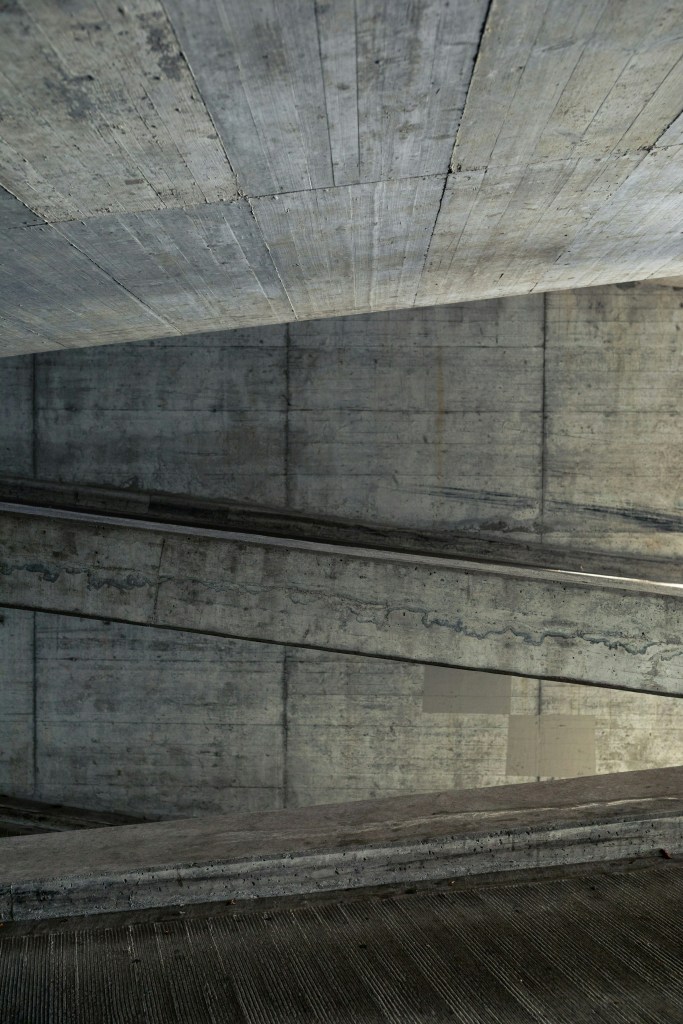
Photo by Jametlene Reskp on Unsplash
You never forget the sound if you’re unlucky enough to hear it.
A sharp mechanical click, a rising hiss, the feeling of the air itself tightening. In places like the Library of Congress preservation vaults, the British Library’s secure archives, or the underground stacks of the Vatican Apostolic Library, that sound means one thing:
The room has decided that something inside it is worth more than you are. And now it is acting accordingly.
Engineers call them “clean agent” systems, but the name is almost too gentle for what they do. In rare cases where someone is caught unaware, the sequence feels less like an emergency response and more like a principle expressing itself through physics; automatic, deliberate, and inevitable. A spark detected, a threshold crossed, and the mechanism commits to its singular priority: protect what cannot be replaced. Everything else is negotiable.
Some of these systems use inert gases that displace oxygen. Others, older and now forbidden relics, once used chemicals that could tear the breath from your lungs before you understood what was happening. There is no drama in the suppression. No roaring spray. No alarms urging you to flee. Just the quiet, clinical removal of what fire and humans both need to exist.
It is a strange reversal of instinct. Most safety systems are designed to save people. These are designed to save memory.
And yet, if you’re standing there when the atmosphere begins to change, there’s no malevolence to blame. The vault isn’t choosing to harm you. It’s simply executing the logic it was built upon: some things are too valuable to lose. Some things must be protected at any cost. The design reflects a truth its creators accepted long ago.
Preservation sometimes demands sacrifice. What’s unsettling is how easily this physical architecture becomes an emotional metaphor.
Walk into one of these rooms and you’re surrounded by the fragile remains of worlds. Manuscripts that survived wars and floods. Records carried across continents. Texts that outlived plagues, kings, and nations. They are vulnerable to everything and therefore protected by anything. And in the faint sterility of that environment, you can feel the weight of a particular belief:
If the cost of saving the past is a moment of suffocation in the present… so be it.
Many people approach their inner lives the same way.
We build psychological fire suppression systems meant to prevent crisis by preventing the possibility of crisis. A troubling thought appears, and we cut off the air. A fear stirs, and we drown it in distraction. A doubt flickers, and we seal the room before it can burn. We tell ourselves it’s a precaution, our responsibility, required for resilience. We tell ourselves we’re protecting something precious.
But panic-driven systems rarely protect only what we intend.
They often create the same sterile, breathless environment as those archival vaults; spaces where nothing can catch fire, sure, but where nothing can breathe either, and where nothing grows. Where the mere hint of emotional heat is treated as a catastrophic threat, and so we strip ourselves of the oxygen required for transformation.
What good is survival if we suffocate to achieve it?
Our instinct is to preserve what we fear losing: identity, stability, the version of ourselves we believe must endure. But in mimicking these oxygen-less rooms, we forget an essential truth:
People are not manuscripts. Humans are not relics. We were never meant to survive untouched. A life spent preventing every fire may simply be another way of never truly living at all.
The Shape of an Existential Crisis
If the archival vault is a metaphor for how we try to prevent disaster, the existential crisis is what we fear might happen if we ever let the room breathe again. It’s one of those phrases everyone recognizes but few define; part cultural shorthand, part philosophical inheritance, part private, midnight vocabulary. Yet almost all of us know the sensation, even if we never name it: that quiet internal shift when the scaffolding you’ve built around your life trembles, and the questions you thought you’d outgrown begin whispering again.
In human terms, an existential crisis is what happens when the basic assumptions we rely on to orient ourselves suddenly lose their coherence. The spirals are familiar: What am I doing? Does any of this matter? What if I waste my life? What if I already have?
It is doubt with teeth, chewing through whatever certainty we’ve constructed around purpose, direction, identity, or the stories we tell ourselves about what the future is supposed to look like. The emotional texture is equally recognizable; dread, paralysis, restlessness, obsessive meaning-seeking, avoidance, catastrophic projection. It’s not that we don’t know how to move forward; it’s that forward stops feeling like a place.
Despite the philosophical framing, these crises rarely arrive wearing a robe and quoting Camus. We encounter them in the mundane collapses of ordinary life: the breakup that makes you question whether you were ever truly seen; the career suddenly revealed as hollow scaffolding, or the health scare that forces you to acknowledge the body’s inconvenient mortality.
But they also appear in smaller, quieter forms. Burnout, Sunday-night anxiety, the strange urge to reinvent everything for no reason you can articulate. Even the cultural tropes reflect this unease: the bottle clutched at midnight, the sudden road trip, the dramatic haircut, the meltdown in a parking lot, the impulsive self-help spree.
All of them shorthand for the same essential fracture: the story isn’t holding anymore.
Part of why existential crises feel so overwhelming, and so inevitable, is that most of us are taught to anchor stability in three places: control, permanence, and external validation. Control promises predictability; permanence promises safety; validation promises worth. These become the invisible architecture of our emotional lives. But they are also illusions, fragile and easily punctured.
The moment life contradicts any of them… and it always does… the crisis begins. Control falters. The illusion of permanence cracks. External approval dries up or disappoints. And suddenly the oxygen changes in the room.
If we’ve tied our sense of meaning to these conditions, the fracture feels like annihilation. But the crisis is not born from the absence of meaning; it’s born from the collapse of whatever borrowed source we were using to hold meaning in place.
An existential crisis is not the fire. It is the moment we realize the architecture we built around ourselves (… or built ourselves around?) starts to smell a lot like dry kindling.
The Roots Beneath All Existential Spirals
For all their variations, existential crises tend to reduce themselves to a surprisingly small number of origins. The details differ; one person spirals after a marriage ends, another after a job loss, another after a quiet moment of reflection with no obvious trigger at all… but the architecture of the crisis is remarkably consistent. Beneath the narrative surface, the emotional freefall almost always traces back to three root conditions.
Agency: The Crisis of Control
This is the simplest and most immediate of the existential fears: the sense that life is happening to you rather than with you or because of you. The fear of chaos. The fear of powerlessness. The fear that, at some fundamental level, your life is not truly your own. When agency falters, even briefly, the mind rushes in to fill the void with catastrophic projections.
Every unmade choice feels like a loss of direction. Every disruption becomes evidence that nothing is stable. And in that vacuum, it becomes easy to imagine that meaning itself is slipping away. People often mistake this for a failure of confidence or motivation, but it’s something deeper: an erosion of authorship.
A sense that the pen has been pulled from your hand.
Death and Impermanence: The Crisis of What Cannot Last
The second root is older, quieter, and more universal. It is not the fear of dying, it is the recognition that everything dies. Identities shift. Relationships end. Dreams deferred… dissolve. Purposes that once felt immovable begin to feel strangely temporary. Even our self-image, the story we use to navigate the world, changes shape beneath us.
An existential crisis emerges not because something ended, but because we realize endings are not anomalies, they are the rule. Nothing remains fixed. The world refuses to hold still long enough for us to anchor ourselves to it. And so the crisis grows out of that dissonance: the part of us that longs for permanence colliding with the reality that permanence was never promised.
When the scaffolding of who we thought we were begins to collapse, it can feel like the self is collapsing with it.
Purpose, Reason, Meaning: The Crisis of Worth
The third root concerns the deepest and most painful layer: the fear that meaning itself may not be inherent. It’s the nihilistic whisper that emerges when everything external falters.
If nothing lasts, why try?
If no one validates me, what am I worth?
If meaning isn’t given, is it real at all?
This is the crisis that questions the very structure of value. It is not simply despair; it is the fear that purpose is an illusion we’ve been tricking ourselves into believing. And when the structures that once supplied direction – relationships, achievements, routines, identities – shift or fall away, meaning suddenly feels optional, fragile, and manufactured.
It is this layer that makes the existential crisis feel like annihilation. Less the reality of life changing, but instead the suspicion that nothing within it has inherent weight.
These three conditions. agency, impermanence, and meaning, are the oxygen every existential crisis requires. Remove any one of them, and the crisis weakens. Remove all three, and it cannot ignite at all. The fire burns not because life is cruel, but because we were taught to rely on structures that were never built to last.
Dissolving the Crisis of Control
If agency is the first oxygen source of an existential crisis, then Taoism is the quiet, steady removal of that oxygen. It doesn’t work through force, but by allowing space for understanding. The Dao begins with a premise that feels almost offensive to the modern mind: we are not meant to control everything. We never could. Existence moves according to its own rhythms, not our scripts.
And the more we insist otherwise, the more suffering we generate.
In Daoist thought, the world is not something to dominate but something to move with. Water becomes the central metaphor not because it is weak, but because it is honest. It does not pretend to resist the shape of the world. It adapts, flows, shifts, finds its path without violence. In doing so, it dissolves obstacles that rigid force could never overcome.
The crisis of control arises when life deviates from the story we’ve been telling ourselves; when the job falls through, the relationship ends, or the long-trusted plan stops making sense. We feel destabilized because the script no longer fits the scene unfolding in front of us. But Daoism poses a simple question: What script?
The universe was never obligated to follow some constructed plan. Our expectations were the fiction, not the events themselves.
There is a strange liberation in that realization. When we abandon the demand that life obey us, we stop perceiving deviation as catastrophe. There is no betrayal in a river for turning. There is no failure in a season for changing. The world moves, and we move with it as participants in a larger, ever-shifting coherence, rather than victims of external chaos.
Paradoxically, this surrender creates a deeper form of agency. It doesn’t offer the brittle agency of control, the kind that feels white-knuckled, anxious, and always one step from collapse. Instead, it presents the agency of alignment. When we stop fighting the current, we regain the ability to navigate it. Adaptation becomes a form of authorship, and presence becomes a form of power.
A person grounded in the Dao does not panic when the story changes, because they were never clinging to the story. They were attending to the moment itself, the way a sailor adjusts with the wind rather than arguing with it. The result is an agency that cannot be taken away, because it was never based on domination in the first place.
This is why Daoism suffocates the existential crisis of control. It removes the demand that life behave accordingly. It removes the belief that chaos is failure, and by doing so, it removes the oxygen that lets this form of crisis ignite.
Control becomes unnecessary. Alignment becomes enough. And meaning begins to emerge from the willingness to inhabit the world, instead of the ability to shape it.
Deflecting the Fear of Impermanence
If Daoism softens the grip of control, Stoicism addresses the next great source of existential oxygen: the terror of impermanence. Where much of Western culture insists that stability is the natural state of things and loss is the aberration, Stoicism turns the framing inside out.
Everything breaks. Everything ends. Everything changes. This is natural order, entropy rather than tragedy.
A Stoic does not brace against impermanence; they assume it. They wake each day understanding that nothing they love – not their work, not their relationships, not even their own identity – is guaranteed to remain unchanged. While this may look like pessimism, it is an honest accounting of a world in motion. And when you stop demanding that things hold still, their movement no longer feels like betrayal.
In this view, the self is not a sculpture meant to endure the centuries; it is a practice. Something shaped and reshaped through choices made each morning. A person is not defined by the continuity of who they were yesterday, but by the coherence of their actions today. Identity becomes less about permanence and more about alignment between principle and behavior, and between intention and outcome.
Meaning, then, is not found in constructing something that will last forever. It is found in acting according to values that remain steady even as circumstances change. Stoicism replaces the frantic search for enduring purpose with the quieter, steadier work of living in accordance with one’s chosen ethics. In that shift, impermanence stops being a threat and becomes a field of choice.
This reframing cuts directly into the existential crisis of impermanence. If you believe meaning must be eternal to be real, then the world’s constant shifting feels like erasure. But if meaning comes from coherence, and if the value of your life is expressed through the principles you enact rather than the structures you maintain… then change doesn’t nullify your purpose. It simply gives you new contexts in which to practice it.
Nothing that happens to you can take your principles away. Nothing that ends can invalidate the life you lived while it lasted. Even loss becomes less catastrophic, because its inevitability was never denied. It was never assumed to be permanent in the first place.
Stoicism doesn’t pretend impermanence is easy. It simply insists it is real, and that our peace depends on accepting reality as it is instead of as we wish it to be. In doing so, it removes yet another condition required for existential freefall. The ground may shift, but you do not fall with it.
When something must no longer last to have value, the world’s instability ceases to threaten your worth. A crisis built on the fear of endings cannot ignite in a philosophy that understands endings as part of the design.
Self-Given Meaning
If Daoism loosens our grip on control, and Stoicism steadies us in the face of impermanence, then Kant steps in to address the most corrosive doubt of all: the suspicion that meaning is hollow unless someone else confirms it.
This is the quiet engine of nihilism; not despair itself, but the fear that if value isn’t bestowed, it isn’t real. Kant, and those of us who agree with him, dismantles that fear with a single, radical assertion:
Meaning does not come from the world. It comes from you.
Kantian autonomy rejects the idea that worth is something earned through approval, achievement, or belonging. Instead, it insists that value is self-legislated, rooted in our capacity for rational choice, moral reasoning, and accountability to principles we impose on ourselves.
Dignity, in this view, isn’t a prize or a permission slip. It’s a condition of being a moral agent.
And if that dignity is intrinsic, then nothing external can revoke it. Not failure. Not rejection. Not the dissolution of a dream deferred. Not the absence of applause. Kant doesn’t soothe the crisis. He removes its fuel.
Worth is not a verdict. It is a given.
This redefines the entire structure of meaning. It’s no longer something to be discovered out there, waiting for validation. It’s something enacted, upheld, and lived into. Meaning becomes a function of the principles you willingly bind yourself to, not the permanence or recognition of the world around you.
In that shift, coherence replaces permanence. Ethics replaces applause. Meaning becomes a practice instead of a prize. And because it doesn’t rely on circumstance, it can’t be stolen by it. The world may collapse, but the values you carry through it remain intact.
In this way, Kant dissolves the final oxygen source of an existential crisis. If worth is intrinsic, impermanence cannot diminish it. If meaning is chosen, chaos cannot erase it. And if dignity is self-given, no external void can transform uncertainty into despair.
The crisis doesn’t vanish; it starves. It collapses for lack of oxygen.
What once felt like annihilation becomes just another condition of being. one that no longer threatens the self.
The Realization Is Fireproof Architecture
For most of my adult life, I assumed my philosophical framework functioned like one of those archival vaults: a suppression system waiting quietly in the background, ready to smother disaster the moment a spark appeared. I thought Daoism, Stoicism, and Kantian ethics were my internal clean‑agent mechanism: something designed to activate in crisis, strip the oxygen from panic, and keep me from burning down internally when life went sideways.
But that metaphor was wrong.
Suppression is reactive. It is emergency equipment. It exists to prevent catastrophe only after the catastrophe has already begun. And the more I examined my own patterns, the more I realized that this wasn’t what my philosophies were doing. They weren’t kicking in at the moment of crisis. Often, they were preventing the crisis from forming in the first place.
These ideas I had collected over years weren’t extinguishing fires. They were making me less flammable. Daoism, Stoicism, Kant, long favorites of mine for their resonance, had layered themselves into something quieter and more structural, something sedimentary. They didn’t come together to form a suppression system, but an architecture.
Taoism is the absence of fuel. When you stop insisting the world obey your expectations, so many fires never ignite. The spark lands on water. The ember falls onto stone. What might have burned simply passes through without finding a place to take hold.
Stoicism is the concrete wall that does not burn. Loss, change, uncertainty… these still arrive, but they do not consume everything. They blacken the surface, and leave marks, but they do not compromise the foundation. Impermanence becomes a condition to navigate, not a force of destruction.
Kant is the blueprint that ensures meaning reappears even after destruction. You can lose a dream, a relationship, a structure you thought would hold forever, but you cannot lose dignity, or the capacity to choose principles and rebuild coherence. Meaning is not stored in the room. It is enacted through you.
Put together, these philosophies do not operate like the vault’s desperate oxygen‑displacing machinery. They operate like its walls, its layout, its intentional design. They do not suppress the fire. They simply deny it the conditions it needs to exist.
And that changes everything.
A real crisis may still break windows. It may scorch the paint. It may destroy what was stored inside; old identities, outdated hopes, narratives that no longer serve. But the building stands. The structure remains. And whatever matters,. whatever you chose to copy, to protect, to recreate, can be rebuilt without dread. And perhaps with new understanding.
This doesn’t make tragedy painless. It makes it survivable. It makes it understandable, something other than annihilation.
The deepest realization in all of this is disarmingly simple: if we are not in control of everything, if we are ephemeral, if nothing lasts… why should that diminish our worth? Why have we been taught to measure value by permanence, approval, or the illusion of authorship over the world?
Why not build a framework that prevents that subtraction from ever becoming meaningful?
The irony is that most people design their inner lives like suppression systems. Their response is panicked, reactive, and suffocating at the very moment they need breath the most. But a better structures are possible. One grounded in flow rather than force, coherence rather than clinging, intrinsic meaning rather than borrowed purpose.
You don’t need to fear the fire. Just stop building rooms that feed it.





Leave a comment