

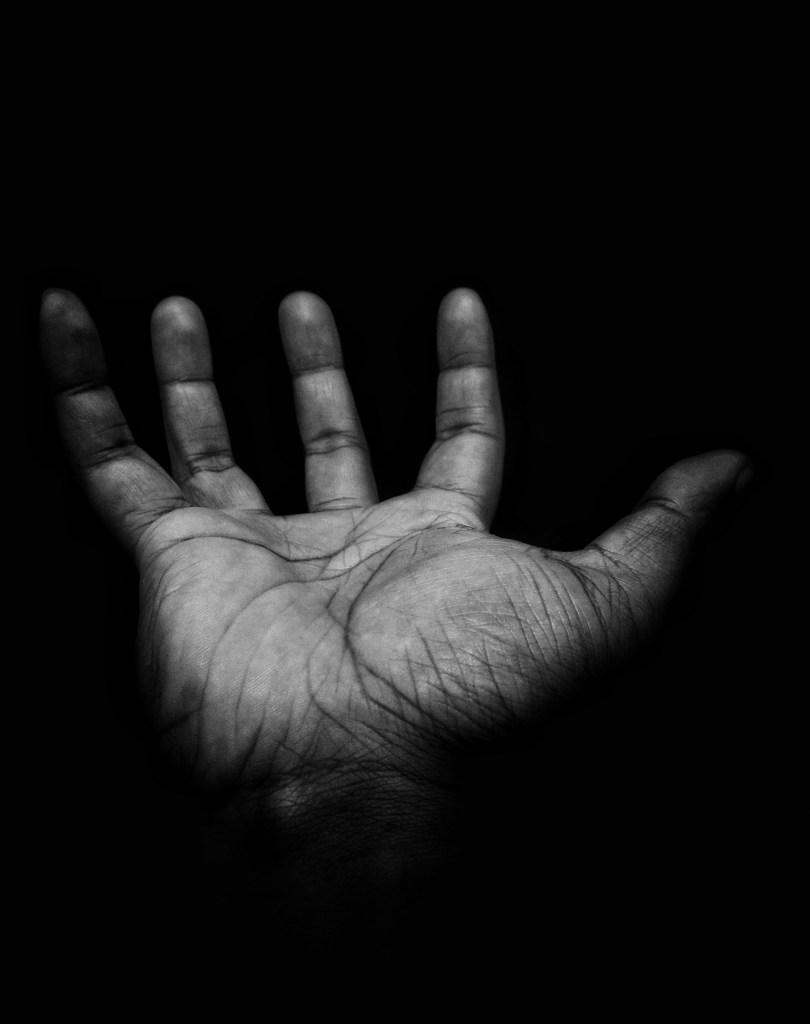
Photo by Vince Fleming on Unsplash
It always starts the same way.
A small room. A flickering desk lamp. A webcam just out of focus, softening everything it touches. You hit “Go Live,” and for a moment, there’s only silence—and a quiet hope you don’t say out loud: maybe tonight, someone will show up.
And someone does. Not many. But enough.
You remember their names, because there were only five. Regulars. People who showed up even when the game was weird and broken and unknown. People who laughed when you died in the first ten minutes and stayed anyway. People who liked you—not the version you’d later learn to shape.
Back then, nothing felt curated. You rambled. You joked. You played what you wanted and didn’t think about it. And when someone subscribed, your thank-you came out like someone had just handed you a gift you hadn’t known to expect.
But time doesn’t move normally when things go well.
One day you look up, and the overlay is polished. Your rig doesn’t wheeze anymore. The chat scrolls too fast to follow. You’ve perfected the cadence that keeps strangers from clicking away. You know what games trend. You know what to say. You know which parts of yourself to spotlight, and which to tuck quietly behind the scenes.
It’s not lying. Just… optimizing.
Then comes the anniversary. A milestone. A celebration.
So you do the sentimental thing. Watch old clips with chat. A little nostalgia. A “look how far we’ve come” moment. And there you are: slouched, grinning, narrating through loading screens, talking to five people like they were the entire world.
It’s charming. It’s real. And it hurts. Because somewhere between clips, as chat blurs past in your periphery, a thought slides in, quiet and sharp:
None of them are here. Not one of those first five names.
The games you play now? You didn’t even like them, not at first. The alerts, the emotes, the signature intro? All crafted by trend, suggestion, the unspoken demand to fit. And when another sub comes in, your mouth reflexively delivers the same practiced line you’ve said a thousand times…and for the first time, you notice the hollowness.
The room is cleaner now. Brighter. And somehow emptier.
You sit there, smiling at a chat too fast to follow, listening to a voice that sounds like yours but edited, smoother, more performative. And somewhere in your chest, something unfamiliar stirs:
You’re not entirely sure who the person on the screen is anymore.
The Self We Share
Most people never meet themselves. Not really.
They meet the version polished for other people; the one assembled from borrowed phrases, edited impulses, and whatever earns nods of approval in rooms that reward familiarity more than truth. A self built for visibility. A self designed to make sense to others.
We’re taught early that clarity is rewarded and ambiguity is punished. The world likes its categories tidy, its identities simple, its labels pre-approved. So we learn the language of legibility: “I’m a Marvel fan.” “I’m a dog person.” “I’m the eldest daughter.” “I’m INTP, or ENFJ, or whatever the quiz says this year.”
It feels harmless. Sometimes even helpful. A shorthand that makes us easier to hold.
But most of these identities aren’t chosen. They’re inherited, absorbed, guessed at by proximity. We build the self the way a streamer builds a layout: one tiny, invisible compromise at a time, adapting to what draws attention. What wins us safety. What doesn’t make things worse.
It’s not deceit. It’s survival. And it’s everywhere.
We wear these selves like armor. Brand-loyal, hobby-defined, title-driven… these aren’t identities so much as passports. A way to be allowed into rooms without having to explain too much. A way to say, “You don’t need to look closer. I come pre-labeled.”
You belong to a fandom, and your vocabulary changes. You join a profession, and your rhythms adjust. You fall into a political group, and some ideas become unthinkable. Belonging shapes behavior. Behavior reshapes identity. And over time, the self becomes a long negotiation between who you were and who your environment keeps asking you to be.
We call this growth. Progress. Adaptation. But most of the time, it’s just inertia in costume.
Everyone carries a script. Some scripts come from family. Others from culture. Others still from work, status, aspiration. “Mentor.” “Provider.” “Creative.” “Thought leader.” “Hustler.” “Girlboss.” “Alpha.”
They’re not always wrong. They’re just… incomplete.
Scripts simplify. But the more fluently we speak them, the harder it becomes to ask where the story ends and we begin.
Which brings us back to the streamer.
Because what disorients them on that anniversary stream isn’t the overlays, or the trending game, or the thousandth automatic thank-you. It’s the slow, dawning realization that none of those were real choices. Not entirely. They were echoes; shaped by suggestion, shaped by what seemed to work. The early supporters are gone not because they stopped caring, but because the self they cared about stopped going live. Not in some dramatic rupture, but through a hundred subtle edits. One small dilution at a time.
And most people live exactly that way. They shape their lives around approval, until one day they look around and realize they’re fluent in a self that was never consciously authored.
And because the mirrors are so bright, they never stop to wonder who built them.
I know this pattern well, not because I’m a streamer, but because I’ve lived it, watched it in others, and mapped the drift.
The Cracks in the Mirror Self
There’s a moment… quiet, rarely cinematic… when the reflection you’ve spent years polishing suddenly thins. Not enough to shatter, just enough to let the light through. And for the first time in a long time, you catch a glimpse of something underneath.
This is the part of the self most people never meet. Not because it’s hidden, but because it’s easier not to look. The problem with a self built from reflection is simple: mirrors are loyal to everything but the truth.
You don’t begin as yourself. You begin as someone else’s idea of you. The quiet one. The fixer. The problem child. The gifted kid. The cautionary tale. These identities attach early, long before you understand what they mean. And because children need to belong more than they need to be seen clearly, they adapt. They bend.
And like trees forced to grow around fences, they twist into shapes that later feel natural, even when they hurt.
Adulthood doesn’t always correct this. Most people keep living in those shapes. They wear inherited labels like heirlooms: “I’m always like this,” they say, never wondering who decided that or why. They aren’t lying. They’re remembering roles they never auditioned for.
Then comes belonging. modern social gravity. Politics, fandoms, ideologies, careers, communities, even love. These aren’t just affiliations. They are systems of pull. And gravity doesn’t yank. It waits. It persuades. You nod along at first because it’s easier. Then because it’s habit. Then because the nodding becomes belief.
Before long, the beliefs you wear weren’t chosen; they settled on you. Like costumes that fit well enough to stop questioning who picked them out. Layered. Familiar. Comfortable in public. Suffocating in silence.
Even success can sharpen the ache. Especially when it comes through adaptation. Our streamer sits in a cleaner, brighter room than they started with. The voice is polished now. The script, reflex. The games, algorithmic choices. The chat is lively, fast, loyal… but the names are different.
The ones who laughed with them in the early days are gone. Not because they drifted away, but because the version they connected with no longer exists. It wasn’t betrayal, just falling out of sync. One adjustment at a time. One game choice. One slogan. One silence. One performance.
And the unsettling realization hits: if the choices that built your identity were never fully yours, does the praise that follows still belong to you?
This is the hidden cost of becoming legible. To be understood by the crowd, you give them something easy to understand. And eventually, that version of you becomes the only one allowed to speak.
This is the trade no one warns you about: Belonging is not free. Sometimes you pay with small compromises. Sometimes with your name. Sometimes with your axis. And so we say things like “this is who I am” when what we really mean is “this is who I became to survive here.”
This is the tension beneath the streamer’s silence. Not grief for an audience. Grief for a self that was never fully authored. Grief for a drift that wasn’t noticed until it left something hollow behind. Most people live like this: fluent in a self built by mirrors, unsure what’s underneath. Not because there’s nothing there…
… but because they’ve never once been asked to live as if there is.
And the moment they do, even once, even in passing, the whole surface begins to crack.
I invite you to view those cracks as invitations, rather than punishment.
The Self I Choose
There’s a moment; not grand or ceremonial, but quiet, when the edges of your life grow thin enough to see through. A pause between performances. A silence wide enough to feel something shift. And if you’re paying attention, you notice: some of what you call “you” doesn’t quite fit.
Not the inherited titles. Not the learned preferences. Not the convenient beliefs repeated so often they calcify into certainty. Just the bare outline of something older, quieter, and irreducible. Something that does not wait for approval to exist.
For me, the self begins there.
Not in what others expect., or in what affiliation rewards, but in the act of authorship: the choice to decide what I value, and to move through the world in alignment with that decision.
This is where philosophy stops being abstract and becomes flesh. I think the solipsists are correct; we cannot see the world as it is, only as it appears to us through a lens shaped by perception, memory, and story. We live narrated lives. And while that makes objective truth elusive, it also makes agency sacred.
If everything is filtered, then the only honest self is the one that chooses its filter, and accepts responsibility for what comes through. That’s the foundation: values as blueprint. Conviction as structure. Action as proof. And integrity as the force that binds them all.
I do not refer to performance integrity, the kind that signals virtue to be seen. I mean the kind that exists whether or not anyone is watching. The kind that asks only one question: Are my actions consistent with what I claim to believe?
This type does not wonder whether the world will reward me for the answer. It usually won’t. But it is chosen because the cost of living misaligned is a kind of erosion I refuse to normalize.
I don’t think the self is what we feel, or think, or wish. I think the self is the one who selects the principles that matter and acts accordingly.
Those values, to be true, can not be inherited, adopted, or outsourced. They cannot be sustained by applause.
The self is not the mask. Not the label. Not the efficient persona shaped to survive contact with modern life. The self is the axis. The one the rest must orbit.
And this, I believe, is what the streamer feels in the stillness after the montage: not the ache of nostalgia, but the grief of distance. The discomfort is not from having changed, but from never stopping to choose the change.
Their evolution wasn’t wrong. It just wasn’t authored. And that’s the fracture.
The self I choose is built differently. It is designed from the inside out. It speaks quietly but moves decisively. It refuses to borrow bones. And it does not wait for permission to act in accordance with its values.
It is not optimized for belonging. It is shaped by alignment. Simply put:
This is who I will be. And I will act accordingly, whether or not anyone claps.
Untangling the Intrinsic Self
If the self is anchored to values – chosen, internal, enacted – then the next truth to face is this: it is never suspended in isolation. The world presses in. Other people shape us. Not always destructively, certainly, but undeniably.
The challenge isn’t avoiding influence. It’s discerning whether the changes we undergo are authored or inherited, chosen or simply absorbed. The line between being shaped and being claimed is subtle; often invisible until a boundary is crossed and something essential feels missing.
Real connection doesn’t erase identity. In fact, it’s often the proving ground. You can say your values are yours, but they’re only made real when tension tests them. It’s one thing to define the self alone in a room. It’s another to carry it intact into the chaos of love, need, pressure, and expectation.
Many people confuse transformation with surrender. They think: if love changes me, it must mean I’m losing myself. If I shift my priorities for someone else, it must be a sign of compromise. But I don’t believe that. Change is inevitable. What matters is the source of the movement. Did you drift, or did you decide?
When my wife and I first moved in together, she had a blanket full of holes. Not metaphorical ones; real ones. Cold air slipped through every tear. She never asked me to fix it. No societal role demanded it. But care is one of my chosen values, and her comfort was a place where that value could become tangible.
So I acted, not out of obligation, but out of the decision that a better world would not include her shivering when a draft crept through. The gesture wasn’t grand, even she thought I was silly for making it a mission. But it was mine. And in that, I learned something essential: the self doesn’t dissolve in devotion. It reveals itself through it.
A self can choose to love. A self can choose to protect. A self can choose to let intimacy shape the rhythm of its days. Not because it must, but because it wills. This is expansion, not collapse.
If intimacy unmoors your sense of self, it wasn’t anchored. It was floating already, tethered to roles or scripts or imagined expectations. But when connection meets a self built through values, carried through integrity, the result is not dilution. It is deepening.
Which brings us back, again, to our streamer. Sitting in that quiet room, watching an earlier version of themselves. There is pain, but also potential. They could keep drifting into a self optimized for applause. Or they could choose to recalibrate. To return to the parts of their identity that once felt aligned. To write themselves anew, not by rejection of influence, but by conscious authorship of what matters.
The intrinsic self isn’t untouched by others. But it isn’t ghostwritten by them either.
It is shaped with intention. Lived with alignment. And it carries within it the radical ability to say: I will define who I am. And I may choose to love you, too.
The Quiet Question
Every exploration of the self eventually arrives here: the moment when all the noise stops. When the performance falters. When the reflections lose their grip.
For our streamer, it comes in the bright, too-clean room, surrounded by success and applause and metrics that once meant everything… until they didn’t. A crowd they can entertain, but no longer relate to. A voice that hits every beat but doesn’t quite belong to them anymore. And a realization, slow and sharp at the same time: they’ve become fluent in a version of themselves built from responses instead of intentions.
It’s not just about the names that are gone. It’s the absence of the self who first earned them.
Most people never reach that moment clearly, or recognize it when they do. They gather identities the way shelves gather dust; gradually, quietly, without noticing. The self is buried under layers of convenience, mimicry, expectation. But if you’ve followed this far, then you’ve already stepped closer to a different kind of threshold.
One that doesn’t ask for allegiance. One that doesn’t care about your branding, your job title, your affiliations, or your curated interests. It asks for honesty.
Because the question, at its core, is unsettling in its simplicity: If everything external fell away… If the world stopped naming you… If no one reflected anything back… Who would remain?
Not the practiced voice. Not the polished identity. Not the social proof. Not the reflexive labels. Just you.
The you beneath the drift. The one behind the mirrors. The self that acts, not to conform, not to appease, but to align. The one defined not by inheritance or survival, but by chosen values lived out, day by day, without applause.
Would you recognize that person? Would you trust them? Would you let them speak?
Because that’s where identity begins; not in the noise, but in the quiet. You are the axis, the architect, and the author.
So ask yourself, clearly and without the cushioning of borrowed language: If no one could name you but you… who would you become?










Leave a comment