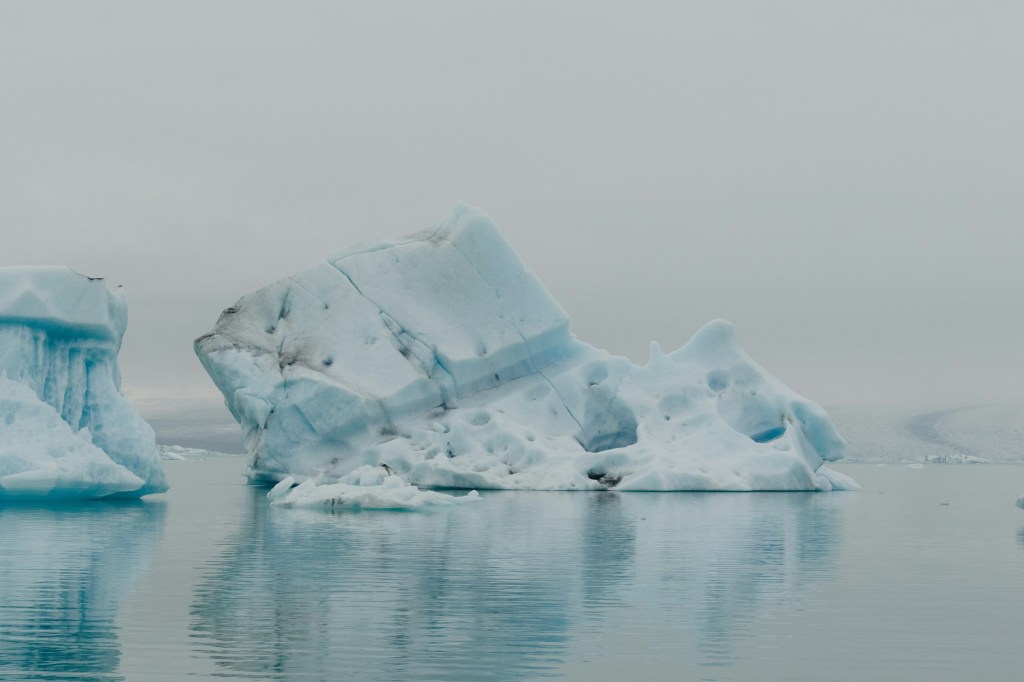
Photo by Ivan Aleksic on Unsplash
It starts with a sound you’ve heard a thousand times: they’re arguing in the next room again, voices sharp enough to make the air between them bleed.
You don’t go in at first. It’s not your fight. It shouldn’t be your fight. You’re tired, your day has been long, and every part of you wants to let the world sort itself out for once.
But then you hear something you can’t ignore. A tone beneath the words, a fractured inflection, the unmistakable pitch of someone about to break. And the doorframe suddenly feels like the edge of a cliff.
You step inside.
There are only three people in the room, but it feels crowded with emotion that has nowhere to go. Someone is crying too loudly, someone else is shouting too much, and the third person, the one who should be handling it, is staring at the floor like the problem might disappear if he refuses to look at it.
All of them see you at once. And then something happens: the arguing stops.
You don’t want their silence. You don’t want their expectation. But there it is, like always. All three of them waiting, hoping you will do something, decide something, be something that puts the moment back into a shape they can survive.
You feel your stomach tighten. There is no version of this that ends well for you.
Option one:
Agree with the shouter. Validate his anger, his certainty that he’s right. But you know the damage that will cause, the way it will make the quiet one collapse into herself like a building losing structural integrity.
Option two:
Defend the one crying. Tell her what she needs to hear to stay intact. But that will break the fragile thread holding the other two together, and you can already see the long-term fallout like a domino track stretching into the next four months.
Option three:
Say nothing. Walk out. Pretend you didn’t hear. Let someone else handle it. This is the one you want. This is the one anyone sane would choose.
But you know exactly what happens if you do: the weakest person here will pay the price for the strongest person’s failure, and everyone will tell themselves it was unavoidable. A mistake. Bad luck.
You stand in the doorway a little too long, and the silence turns from anticipation into pleading. The crying softens. The shouting falters. And the man staring at the floor finally lifts his eyes, not to you, but to the possibility that you might make this easier for him by stepping in.
And you realize, with something like nausea, that the choice is already yours.
You inhale. It tastes like the moment before a wound.
You don’t choose the side that will make you liked. You don’t choose the side that will make you safe. You choose the one that will stop the most harm, even though it means the anger will now turn toward you.
“Enough.” Just that one word. And the room shifts.
The shouter bristles, offended that you didn’t reinforce him. The quiet one looks like she can breathe again. The crier sags with relief. And the bastard who should have dealt with this sinks further into himself, grateful and ashamed in the same breath.
Then, the part no one ever remembers, you pay for it. For the next hour, the next day, sometimes the next year. You become the lightning rod, the pressure valve, the villain in someone’s private retelling. You absorb the resentment so the rest of them don’t have to destroy each other with it.
Not because you wanted to. Not because it was heroic. But because the world demanded a choice and refused to make one for you.
And when you’re finally alone, hands shaking, adrenaline cooling into something heavy in your chest, you tell yourself the same truth you’ve always known:
Agency isn’t freedom. Agency is the moment when you acknowledge that no one else is coming.
And you choose anyway.
The World’s Shallow Romance With Choice
You already know what it feels like.
That moment in the doorway: shoulders tight, stomach coiled, knowing that whatever you do next will become part of someone else’s story. That kind of moment doesn’t show up in motivational posters or TED Talks. It’s not captured in hashtags about empowerment or potential. But it’s the real face of choice.
We like to talk about choice as if it were the most abundant resource in the world. When skies are clear and life is moving in a predictable rhythm, the language comes easily: freedom, potential, limitless opportunity. These are the words that fill headlines, commencement speeches, corporate manifestos. They are the curated optimism of people who have not yet been asked to make a decision that costs them something real.
In fair weather, choice becomes a kind of shared daydream. We tell ourselves that every fork in the road offers a chance at redemption, that every misstep can be unmade with enough effort or optimism, that the future is pliable under the pressure of our desire. It’s a comforting fantasy: the idea that the story of your life is a choose-your-own-adventure, and that all paths eventually loop back to safety.
But abundance makes illusions easy. When life is comfortable, when bills are paid and relationships are stable and the consequences of error are mild, choice feels… infinite. The menu looks full. Every option seems reachable, even the ones we would never take.
From the outside, it feels like freedom.
Yet this is the lie we tell ourselves when the price of choosing is low. Because the moment life narrows – and, in my experience, it always does – the illusion fractures. Suddenly the world is reduced to choices no one wants to make: rent or food. Medication or electricity. Working two jobs or breaking a law to stay alive. These aren’t opportunities. They’re punishments, disguised as freedom.
They’re the kind of decisions that leave you shaking in a quiet room long after everyone else has moved on.
When the cost becomes unbearable, we stop pretending. We don’t say, They made the wrong choice. We say, They didn’t have a choice. It’s instinctive, a linguistic shift that happens without thinking. We understand, on a level deeper than reason, that agency doesn’t disappear in hard moments, it simply becomes too expensive to exercise in the way we wish people could.
And so we adjust. We soften our judgments. We forgive. We make allowances for the impossible circumstances other people face, because we recognize that some choices exist only in theory: philosophically interesting, but practically irrelevant. Even the harshest among us intuit that freedom is conditional, fragile, and often unequally distributed.
It’s strange, the way we hold both ideas at once: that choice is limitless, and that sometimes there is none at all. But this is the tension at the heart of modern life. We celebrate choice when it costs nothing. We excuse it when it costs everything.
The romance of choice thrives in ease. Its reality emerges only in constraint.
How We Use Choice to Manage Stress and Limit Responsibility
After the moment passes, after the shouting stops, the silence returns, and the room begins to rearrange itself around your decision… something quieter sets in.
Not peace. Not clarity. Something more like tremor. Even the right thing has a cost. It just moves inside you.
And so, we reach for stories that soften the blow. When life grows complicated, we often turn to the language of choice as a way to make the weight feel lighter. To make the aftermath survivable.
You can hear it woven through the entire self-help industry: focus on yourself, set boundaries, find balance. These phrases are offered as if they are simple adjustments, small shifts of attention that promise clarity and calm. And in a way, they work, because they give permission to reduce overwhelming realities into actions we can control.
Choice, under this light, becomes a kind of psychological pressure valve. Not a reflection of our full agency, but a coping mechanism. If the world is chaotic, we tell ourselves we can choose serenity. If relationships are strained, we can choose to “let go.” If expectations are unreasonable, we can choose to “prioritize ourselves.” There is value in this, undeniably so, but there’s also a sleight-of-hand buried within it.
Because often, what we are managing isn’t complexity. It’s aftermath. The invisible scar of having chosen something heavy, or the gnawing tension of knowing a choice is coming that we’re not ready to make.
Philosophy does this too, and often with greater sophistication. Stoicism, for example, draws a bright line between what we can influence and what we cannot. We are responsible for our response, not the world. And while that principle offers a kind of liberation, it also reframes responsibility in a way that can feel almost surgical. Marcus Aurelius wrote like a man fighting to keep his head above the tide, reminding himself again and again that the storms battering Rome were not his to command. His duty was to his own conduct, his own mind, his own integrity.
But when the cost of choice becomes too high, even philosophy retreats. We zoom out, widen the frame, minimize the importance of the moment by placing it against the vast backdrop of the cosmos. In the grand scheme, nothing matters. The strategy isn’t about truth. It’s about creating enough distance to make the present bearable.
There is a strange honesty in this maneuver, and an equally strange deception. On one hand, shifting perspective can save us from collapse. It allows the mind to breathe when the walls feel too close. On the other hand, it can obscure the fundamental reality that no matter how indifferent the universe may be, our decisions remain consequential. Our choices may not shift the stars, but they shape the ground beneath our feet.
We all shrink or stretch the frame not to find truth, but to make the weight bearable.
The Reality: Every Choice Carves a Path Into the World
That room never really leaves you.
Long after the moment has passed, after the voices calm, the door closes, and everyone walks away changed, you still feel the shape of what you did. Or didn’t do. The choice didn’t end when the room emptied. It echoed. It etched.
Because for all our talk of freedom, possibility, and open roads, the truth is far less generous. Every decision we make, large or small, narrows the world. It closes off versions of ourselves we will never again have the chance to become.
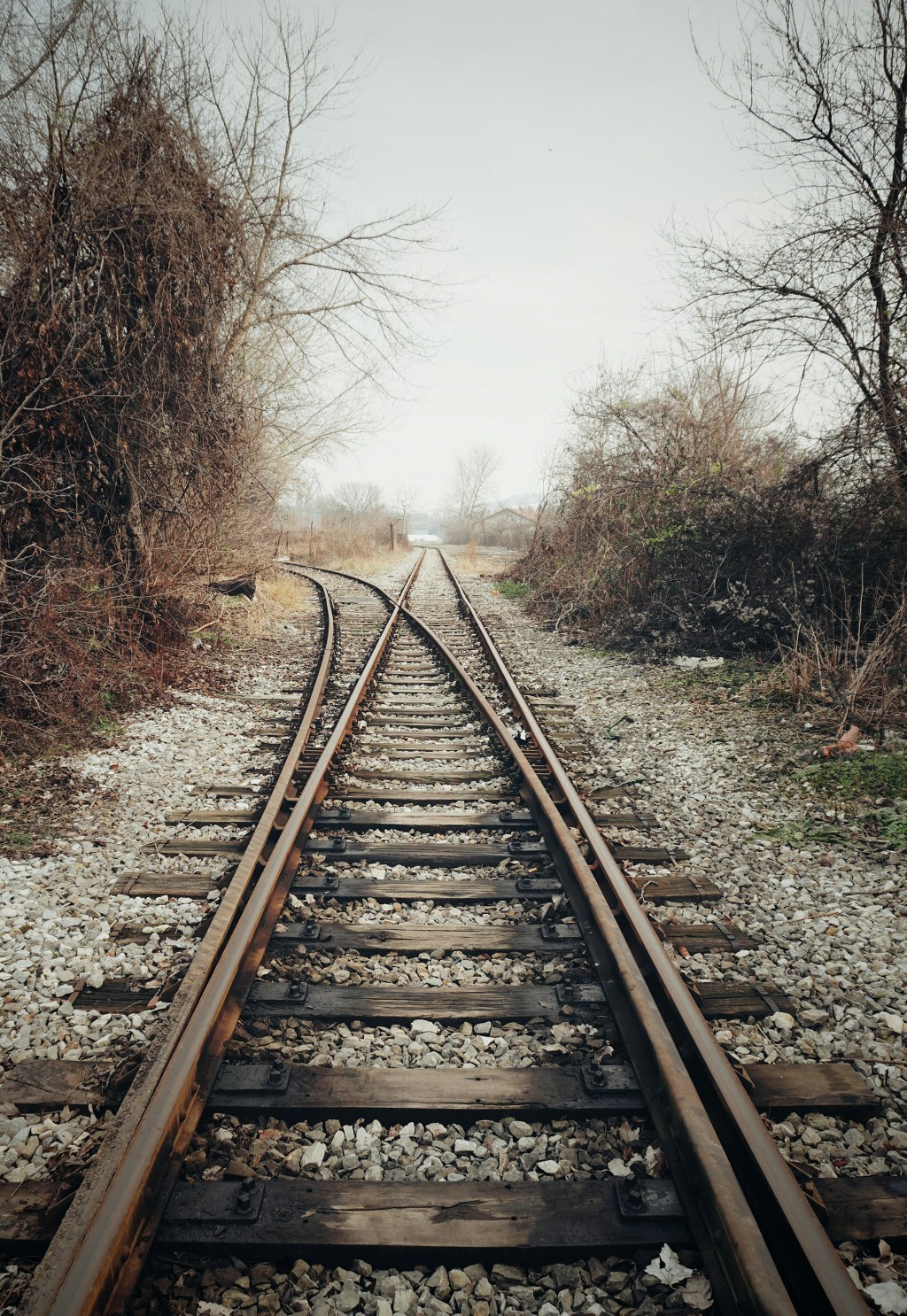
This is the geometry of choosing: each step forward collapses the infinity of other paths at our feet.
Every crossroads feels familiar, but none of them truly repeat. You will never return to the same moment with the same innocence, the same context, the same arrangement of hopes and fears. Even when life presents what looks like the same choice twice, you aren’t the same person you were the first time. The very act of deciding reshapes you.
Some choices can be repaired, yes. Relationships can be mended, careers redirected, mistakes acknowledged and corrected. But none of that un-makes the original decision. Nothing restores the untouched version of the world from before you acted. You cannot un-choose. You can only choose again.
And the world keeps its own kind of ledger; one without sentiment or forgiveness, though it may often seem otherwise. Time spent cannot be reclaimed. Trust lost does not regenerate on its own. Opportunities ignored rarely return in the same form. Even self-respect carries a cost when it is mortgaged for convenience or fear.
The accounting is constant, and the bill always comes due.
Even the so-called “correct” choices demand something from us. Doing the right thing can cost reputation, comfort, relationships, or stability. Standing your ground will often mean standing alone. Choosing integrity in a moment of pressure often carves a scar that no one else can see. But you feel it, like a line of raised flesh every time your fingertips cross your palm.
That’s what they don’t tell you when they talk about moral clarity. That even the cleanest choice can leave a mark.
These choices accumulate. They burn themselves into you, etching out the shape of your character over time. They teach you what you’re willing to tolerate, what you refuse to carry, what you are capable of walking away from. In this way, choice becomes a kind of template—one that defines not just your path, but your posture toward the world.
To choose is to carve your shape into the universe, knowing the stone will not soften for you.
The Paradox: Agency Is Both Burden and Liberation
If all of this sounds heavy, it’s because it is. Agency has weight. Real weight, the kind that sits in your chest after the room goes quiet, after the shouting ends, after everyone walks out and leaves you standing with the consequences of what you chose.
But the paradox is this: the very thing that makes agency so demanding is also what makes it clarifying. Responsibility, when approached honestly, can strip away illusion in a way comfort never will.
You learn something in that stillness. Not all at once. Not easily. But over time, you begin to recognize that your pain wasn’t just a cost. It was also a compass.
It begins with a kind of radical self-honesty. Before you can meaningfully choose anything, you have to know what you truly want, what you value, and what you refuse to offer yourself as a sacrifice to. Without that clarity, every choice feels like a trap. Every decision becomes an exercise in guesswork, followed by regret, followed by the slow erosion of confidence in your own judgment.
But when you understand the world you want to inhabit; the life you are trying to build, the person you are trying to become… something shifts. Choosing doesn’t get easier in the sense of becoming painless, but it becomes more coherent. Your values create a kind of internal topography. They sketch out a direction. Integrity becomes the compass that orients you toward that direction, even when the terrain is harsh.
Because the truth is this: you don’t control the options life gives you. The menu was never yours to design. The world presents the circumstances, the pressures, the deadlines, the limits. You don’t get to decide what appears in front of you.
You don’t control the world. You control the aim. The direction of your will within whatever the world sets before you.
And when you understand that, the weight begins to make a different kind of sense. Not lighter, never lighter. But intelligible. Measurable. You can look at the options in front of you and understand the cost of each without flinching away from it. Painful choices remain painful, but the right one becomes clearer. You stop chasing the fantasy of a perfect option and start choosing the one that aligns with the person you mean to be.
You remember what it felt like, the last time you acted from that place. Not with certainty, but from coherence. The shape of your decision, even if it hurt. The scar it left. The quiet afterward.
The weight never truly leaves. You just learn how to carry it without looking away.
Conclusion
In the end, we return to the moment we began with. Though not the room itself, not the shouting, or the dread in your gut, or the raw heat of being looked to. We return to the feeling underneath it.
The moment when someone who never wanted the responsibility stepped forward anyway. When a choice that should have belonged to someone else landed in his hands, and he understood with painful clarity that refusing to act would still be a choice. One that would shift the cost onto someone who couldn’t bear it.
He knew what it would take from him. And he made it anyway.
That is agency in its truest form. Not freedom. Not empowerment. Not the bright language we use when life is generous. Agency is the quiet, crushing demand that you choose, knowing the world will remain indifferent to the price you pay. It is the understanding that every decision, even the smallest, etches itself permanently into the lives it touches.
Four people walked out of that room altered. Their futures bent by yet another choice that could never be undone.
And that is the thread running through all we’ve explored:
The way society romanticizes choice when the stakes are low.
The way we use its language to soothe ourselves.
The way each decision narrows the world, piece by piece.
The way responsibility becomes both burden and compass.
The perspective is harsh. But it is honest. And from honesty, clarity. Because when you finally see agency without illusion, when you stop treating it as a gift and start recognizing it as a cost, it becomes something else entirely.
It becomes sacred. Not because it is easy, or noble. Instead, because it is the only thing that shapes you with your consent.
Every choice shapes you. Every action commits you. Every moment of honesty or avoidance, courage or cowardice, builds the quiet architecture of the person you are becoming.
Agency is the only honest currency. You pay for every choice with your life. And once paid, the price is no longer theoretical.
… a “gentle” reminder that agency is only gentle in the abstract. You’re welcome.
~Dom


Leave a comment