
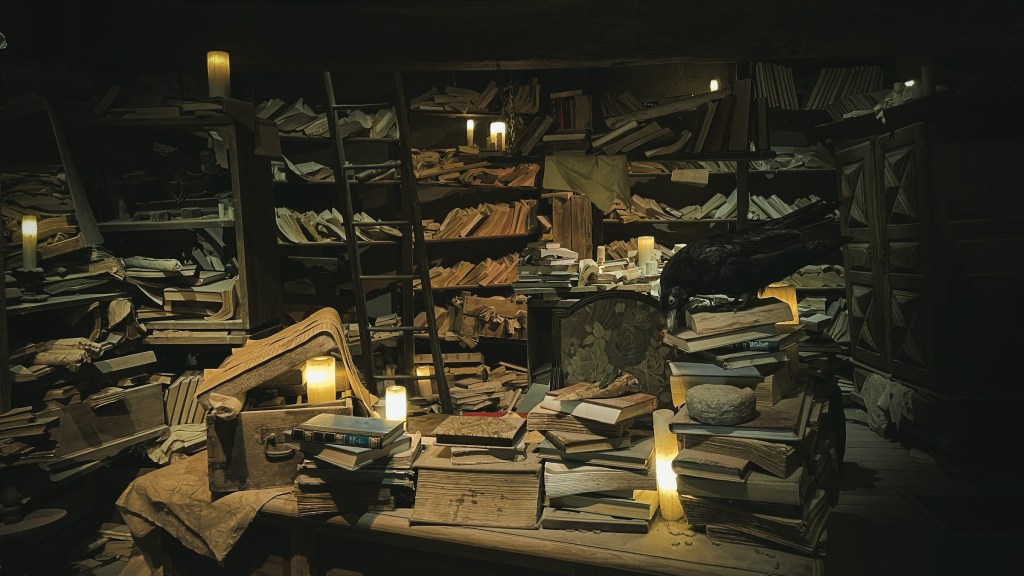
Photo by VENUS MAJOR on Unsplash
He had stopped fighting months ago. Not because he had given up, but because he had made peace with the horizon. The cancer had spread like frost through the soft soil of his brain, stealing words, then names, then meaning. When they told him there was nothing more to do, he felt relief. A quiet surrender that came not from despair, but from exhaustion.
Death, at least, seemed honest.
The letter arrived three weeks later. It was printed on paper so white it seemed to glow, bearing the emblem of a research consortium he had never heard of. The language was clinical, but the promise was not: a chance to live.
They called it a bio-mimetic nanotherapy. Millions of autonomous constructs, smaller than blood cells, capable of replacing damaged tissue with perfect replicas. The system, they said, learned. It would not simply repair him. It would improve him. His tumor would be consumed, cell by cell, replaced by engineered vitality. He would not only survive; he might never age again.
He read the consent form three times before signing. There were pages of disclaimers: no guarantee of psychological continuity, indeterminate longevity, potential legal implications for identity. He signed them all, wondering why dying felt simpler.
The procedure was silent. No cutting, no drama. Just a slow infusion of something that shimmered faintly blue under the lights. The machines hummed around him, alive with purpose. As the fluid entered his veins, he felt a warmth radiate outward, dissolving the cold that had settled in him for months. The last thing he remembered was the voice of the doctor, calm and reverent, saying, “You’re being renewed.”
He did not dream that night. He simply woke, and the world was different.
The pain was gone. The weakness too. His mind was sharp again, brighter than before, as if every neuron had been polished. The scans showed nothing but perfection. No trace of the tumor, no scarring, no sign he had ever been sick. He laughed, and for a time, the sound felt human.
Years passed. Decades, maybe. The records blurred. The nanites continued their quiet work, repairing every fracture, smoothing every imperfection. His skin no longer bruised. He no longer bled. He stopped sleeping, then dreaming. The machines within him learned to mimic rest. His memories became tidy, efficient, seamless. Then too seamless. The edges that made them his were dissolving.
He began noticing small differences: a favorite song that no longer stirred anything, a memory of a woman’s face without her name, a day that felt both familiar and impossible. When he cut his hand on a rusted rail, the wound closed before he could feel it. The blood, if that was still an accurate name for it, gleamed silver under the light.
He returned to the clinic once, long after its name had changed. They scanned him again. The results were inconclusive.
“Your biological tissue is below measurable threshold,” the technician said, eyes downcast. “We estimate full replacement occurred over a century ago.”
He didn’t ask what that meant. He already knew. The man who had signed the consent form no longer existed. There was continuity of memory, but not of matter. A ship rebuilt plank by plank, sailing forever under a name no longer true.
Then came the ruling.
The courts decided that legal personhood required organic continuity. Anything else was considered a derivative entity, a separate being without ancestral claim. The moment his biology had ceased, so had his citizenship, his rights, his history. His assets were seized. His name was archived under deceased.
He did not contest it. How could he? The law had only put into words what time had already done.
Now, when he walks the empty cities at night, cities built by hands that once sought the same deliverance, he tries to remember what it was like to be afraid of dying. The memory will not come. The nanites have healed that too.
The moonlight gleams on his skin, pale metal beneath imitation flesh. In the silence, he imagines the hum of a thousand infinitesimal machines, each one whispering the same promise that once seduced him: You will never die.
He wonders if that promise was ever mercy. He wonders if anything that cannot end can still be alive.
The First Rebellion
From the moment our ancestors first buried their dead, humanity has been at war with decay. Every culture, every era, has crafted its own strategy for defying the horizon, the point where self-awareness meets the inevitability of loss. It begins not in science, but in story. Gilgamesh, broken by the death of Enkidu, wanders into the wilderness to wrest immortality from the gods. He fails, of course, but his failure becomes the first lesson: that to be mortal is to know the value of what ends.
And yet, we keep searching.
The alchemists sought it in flasks and furnaces: the philosopher’s stone, the elixir of life, the purification of spirit through the transmutation of matter. The pharaohs tried to engineer eternity through preservation: mummified flesh, sealed tombs, names carved in stone to outlast the bones beneath them. Every empire that rose to conquer death eventually turned its own monuments into dust. The pattern is older than civilization: the moment we try to fix eternity in place, it begins to crumble.
Religion reframed the fight. If the body must fail, the soul would not. Heaven, paradise, nirvana, reincarnation… each promised that life continues in some form, that consciousness survives the body’s surrender. Christianity sanctified resurrection; Hinduism and Buddhism made rebirth a wheel of opportunity; Taoism sought immortality through harmony; Islam offered layered heavens for the faithful. All are different dialects of the same prayer: Let me not be forgotten.
The modern age only changed the tools. Cryonics froze the dead in steel and nitrogen, hoping future science would resurrect them. Gerontologists dissected aging as if time were a disease. Billionaires built longevity startups and poured fortunes into genetic therapies, stem cells, and digital mind-mapping projects promising to upload the soul. We invented new languages for an old fear: data as spirit, servers as heaven, and code becoming the ritual incantation of future resurrection.
Even our mundane habits betray the same hunger. We immortalize ourselves through photographs, social media archives, family trees, and digital footprints that outlive the body. We tell ourselves that these fragments matter because someone, somewhere, might look back and know that we were here. Every post, every inscription, every name etched in marble, carved into a desk with a pencil, or stamped in a file’s metadata whispers the same human refrain: remember me.
And yet, the paradox remains.
The civilizations that worship eternity, the ones that build monuments to permanence, inevitably fall. Their temples become ruins, their languages fade, their gods forgotten. It is those that adapt, that yield, that accept impermanence as law, which endure through transformation. Life itself has always known this truth: survival belongs not to what resists decay, but to what learns to change with it.
Perhaps that is the deeper wisdom Gilgamesh missed, the one even modern science resists.
Immortality is not triumph over death; it is rebellion against life’s own rhythm. And like all rebellions against nature, it ends not in transcendence, but in exhaustion.
The Ego’s Last Stand
If the war against decay is ancient, the yearning that fuels it is equally intimate. Our chase for immortality is not simply about time or experience, it’s about control. The unknown is unbearable to the mind that survives by pattern, by prediction, by cause and effect. Death offers no pattern to master, no feedback loop to learn from. In a way, it is the final error message: the one that cannot be debugged.
For many, the promise of eternity is less about living forever than about never losing control again.
Others seek permanence not out of fear of dying, but fear of being forgotten. The monuments of empire have become cloud storage and social feeds, but the prayer remains the same: Someone remember me. Legacy is immortality by proxy; our attempt to write our names into the wet cement of history before it hardens. From the pyramids to the platinum records to the perfectly curated online archive, the same pulse beats beneath the marble and the metadata: relevance as survival.
Still others fear dissolution in quieter ways. They imagine eternity as a safeguard against loneliness, against loss, against the dissolution of self into something larger and less defined. Continuity becomes comfort, a way to believe that the self is more than temporary coincidence, more than a finite series of borrowed breaths. The transhumanists speak of consciousness as code, something that can be copied, backed up, restored. The emperors before them sought divine bloodlines to ensure their will never ended. The philosophers of Silicon Valley now promise a world where identity can be endlessly patched and updated, as if mortality were just poor system design.
But beneath all these variations runs the same current: anxiety masquerading as progress. The will to live becomes the will to persist. It is the ego’s last stand, dressed in the language of science, religion, or innovation. Behind every cry for eternity is not love of life, but terror of absence.
Immortality is the mirror’s promise, the illusion that the reflection is just as, if not more, real as the being that casts it. We gaze into that surface and see continuity, when what we are really witnessing is replication. The self, terrified of vanishing, mistakes repetition and presence for permanence. And in doing so, it forgets that even a perfect copy cannot feel, or grow, or change.
The tragedy of the immortal dream is not that it fails, but that it succeeds just enough to distract us from living. It keeps us polishing the glass, terrified of the moment when we must finally look away.
The universe does not fear our absence; only we do. The universe, as a whole, can hardly be thought to care for our presence. And in that asymmetry lies the whole quiet absurdity of our defiance.
The Economics of the Infinite
For all its philosophical grandeur, the dream of immortality stumbles the moment it meets the mechanics of the real world.
The body may be made ageless, but hunger remains. Every immortal mouth would need food, every unending life, shelter. The arithmetic of eternity is merciless: what multiplies without end will consume without limit. If no one dies, no one yields their space, their home, their share of the harvest. The planet, already straining under the weight of billions, would choke on our collective refusal to leave.
The fantasy of forever has always belonged to the privileged. In ancient times, it was kings and priests who built tombs meant to defy decay. Today, it is venture capitalists, technologists, and the ultra-wealthy funding life-extension labs and digital consciousness projects. For the rest of humanity, immortality remains a story to watch, a daydream, but never a path to walk.
Even now, people starve while billionaires discuss uploading themselves to servers that must be powered by the labor and resources of those still bound by time. Eternity, it seems, will never be evenly distributed.
This is the great ethical fracture in our longing for endless life: can something be sacred if it becomes a commodity? When longevity is sold, its value ceases to be moral and becomes transactional. The body becomes property; existence itself becomes subscription. What begins as salvation ends as tenancy.
If it happens at all, the first immortal will not be a saint or philosopher. It will be a corporation.
And yet, the myth persists because it promises not only escape from death, but escape from consequence. To live forever is to imagine a world where every mistake can be corrected, every loss undone, every failure rewritten, the sociological slate eroded until it is once again clean around you.
But eternity without accountability breeds apathy. The immortal cannot afford empathy; permanence dulls urgency. When nothing ends, nothing matters enough to act upon.
The romantic vision of eternity, soft light, endless youth, perpetual peace… conceals the darker arithmetic: eternal class division, unending consumption, a society frozen in hierarchy. Imagine a world where the powerful never die, where the same few hold wealth, memory, and authority for centuries. Immortality, stripped of poetry, is not a victory over decay.
It is the decay of renewal itself.
Even gods must eat. And the immortal, more than anyone, will learn what hunger truly means.
The Ritual of Denial
For all our advancements, we remain curators of death. We still build temples for it, dress it in ritual, and name that reverence devotion. The funeral, the mausoleum, the memorial garden… each is an act of denial disguised as love. We do not celebrate endings; we curate them, arrange them like artifacts, as if the right words or flowers could make mortality negotiable.
Death, we say, deserves dignity, but what we often truly mean is distance. Its invocation requires the ritual invitation, or we pretend it stays away
Modernity perfected this distance. We no longer die at home; we expire in hospitals, sanitized behind curtains, where machines incant our decline in sterile beeps. Death has been rebranded as passing, as though one might simply change trains on the way to somewhere more palatable. The body is whisked away, embalmed, reconstructed, and returned only when it no longer resembles the truth of dying.
Even grief is outsourced. It is professionalized, moderated, and constrained by unwritten etiquette. The rituals remain, but the intimacy is gone.
Our brains conspire in this denial. Evolution favored those who looked forward, not inward; awareness of mortality, if constant, might paralyze. The mind defends itself with distraction and faith, translating the incomprehensible into manageable symbols. We tell stories to soften oblivion: reincarnation, paradise, legacy, the algorithmic ghost that keeps posting after we are gone. Each story is a small defiance, a candle lit against the cosmic dark.
In that sense, modern immortality ideology is not new, it is simply a technological religion, a modern priesthood preaching transcendence through circuitry. Cryonics becomes a kind of baptism; digital consciousness, the latest resurrection myth. The cloud is heaven reimagined, the server farm a cathedral of humming prayer. And behind it all, the same desperate promise: that we can preserve what was never meant to last.
The ancients sealed their dead in stone to hold the soul in place. We now seal ourselves in data, compressing memory into silicon and calling it survival. Both acts arise from the same impulse: the refusal to let silence have the last word.
In some ways, we are a species of archivists, terrified that meaning might vanish when we do.
But devotion built on denial is only a more complex form of fear. To worship eternity is to mistake refusal for reverence. And so we keep embalming not just our dead, but our doubts; hiding them in polished rituals and gleaming machines, afraid to admit that the truest act of faith might be to let go.
To Belong, Not Last
What happens when we stop seeing ourselves as the universe’s lens? What if meaning does not require witness, and beauty does not require permanence? For all our efforts to endure, we rarely pause to consider that transience is not a flaw; it’s the framework. The truth we keep resisting is that life was never meant to be kept; it was meant to be lived.
There is a humility in participation that possession can never touch. To exist is to take part in a process, not to own it. Like stars and flowers, we burn and bloom for a time. Not because we last, but because we belong.
Mortality is the rhythm by which existence composes itself. Without endings, there would be no cadence, only noise.
The beauty of temporary consciousness lies precisely in its brevity. Because we know our time is finite, love deepens, art matters, courage finds its purpose. The value of an act is defined not by its duration but by its intention: the choice to create, even knowing it will fade. A life without limits would strip meaning of its urgency, compassion of its necessity, and wonder of its spark.
Death is not the thief of meaning; it is the frame that gives meaning shape.
Creation continues without us, and that is not tragedy. If anything, it is the one concept that seems close to divinity. Stars die to seed new worlds; forests fall to feed their soil; galaxies collapse to birth light. The universe does not mourn what passes; it creates with it. To be mortal is to share in that great recursion, to give back what we have borrowed so that the pattern continues. Eternity, as I choose to frame it, is not a state of being, it is the continuity of becoming.
Perhaps grace is not found in the denial of endings, but in the willingness to meet them with open eyes. To live without clinging, to create without needing permanence, to love without demanding forever… these are not losses. They are freedoms. In letting go, we align ourselves not against time, but with it.
We are meant to belong, not last. And in the quiet exchange between breath and silence, between flame and ash, the universe remembers itself. First, through us, then beyond us. For that brief moment, we are the light that knows it will go out, and burns all the brighter for it.
The Last Man, Rewritten
Perhaps he endures still, the man rebuilt from nanites; a relic of his own refusal. Centuries have passed since the law declared him no longer human, yet he walks beneath artificial skies, searching for something he can no longer name.
He cannot die. And so, he cannot rest.
The hum within him is not heartbeat but recursion—a closed loop of memory and motion, endlessly maintained. A body without decay. A life without rhythm.
And in him, we see ourselves.
Every myth, every monument, every machine we’ve built to outrun oblivion shares his flaw: the belief that eternity is the reward. That permanence is peace. That if we last long enough, the fear will quiet. But what he has gained is not life. It is delay. Not becoming, but preservation. Not meaning, but memory without weight.
He is present, but unplaced. Continuity without context. A self untethered from the story it once served. He walks among the ruins of intentions—cathedrals of code, temples of data, mausoleums of ambition. Not a god. Not a ghost. Not a man. Just the echo of a question he no longer remembers how to ask.
In his reflection, the age reveals itself: terrified of endings, obsessed with preservation, blind to the cost of remaining unchanged. Because survival, without belonging, is exile.
And permanence, without purpose, is a form of forgetting.
Our longing for immortality is not hope—it is a sculpture of fear, carved from the belief that meaning cannot exist without our witness.
The tide does not care for monuments. It smooths the stone. It buries the name. It takes what was held too long, and carries it, finally, home.
And when it carries even him home, perhaps silence will mean something again.



Leave a comment