

Photo by Robert Thiemann on Unsplash
They said the well had no bottom.
That it swallowed prayers and promises alike, and that the only sound one ever heard after casting their wish was the faint echo of their own longing returning from the dark. I thought it superstition then, a story told by those too timid to dream; but I was young, and the hunger in my heart was louder than their warnings.
I remember the first coin I threw. My hands were calloused, my clothes threadbare, but the future still shimmered ahead like morning dew. I wished for success, for recognition, for the weight of struggle to lift from my shoulders. The water took the coin, and I swear it smiled back. Days later, fortune found me, small at first, perhaps a stroke of luck, a chance encounter… maybe an opportunity that bloomed into something far greater than I deserved.
It was intoxicating, how swiftly the world began to bend toward my will.
The second wish came more easily. I wished for comfort, for security, for the means to never know fear again. The coin fell silent this time, no ripple, no sound. Just the faintest tremor in the air, like a breath caught between worlds. And yet, by dawn, the debt collectors that had once haunted my steps were gone, my coffers filled beyond counting. It was as if the universe itself had been purchased in installments, and I, its favored client.
But the well was patient. It does not take everything at once.
In the years that followed, I wished again and again, never for greed, I told myself; always for what seemed good, or fair, or necessary. More time to build. More means to protect. More reach to influence. Yet, with every gain came a quiet subtraction. The laughter of friends faded from memory. Letters from family grew sparse. The mirror began to show a man more polished, more powerful, but hollowed from within.
His eyes were no longer curious, only calculating.
The well does not steal. It trades. It gives exactly what you ask for, and takes precisely what you never thought to value.
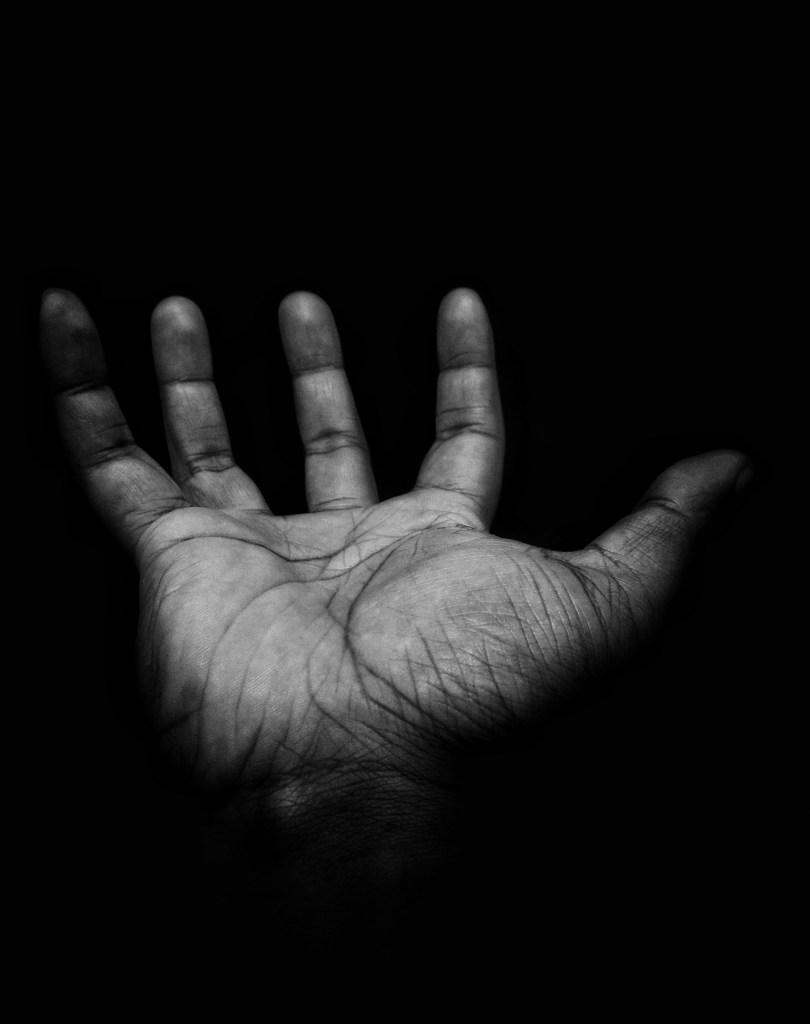
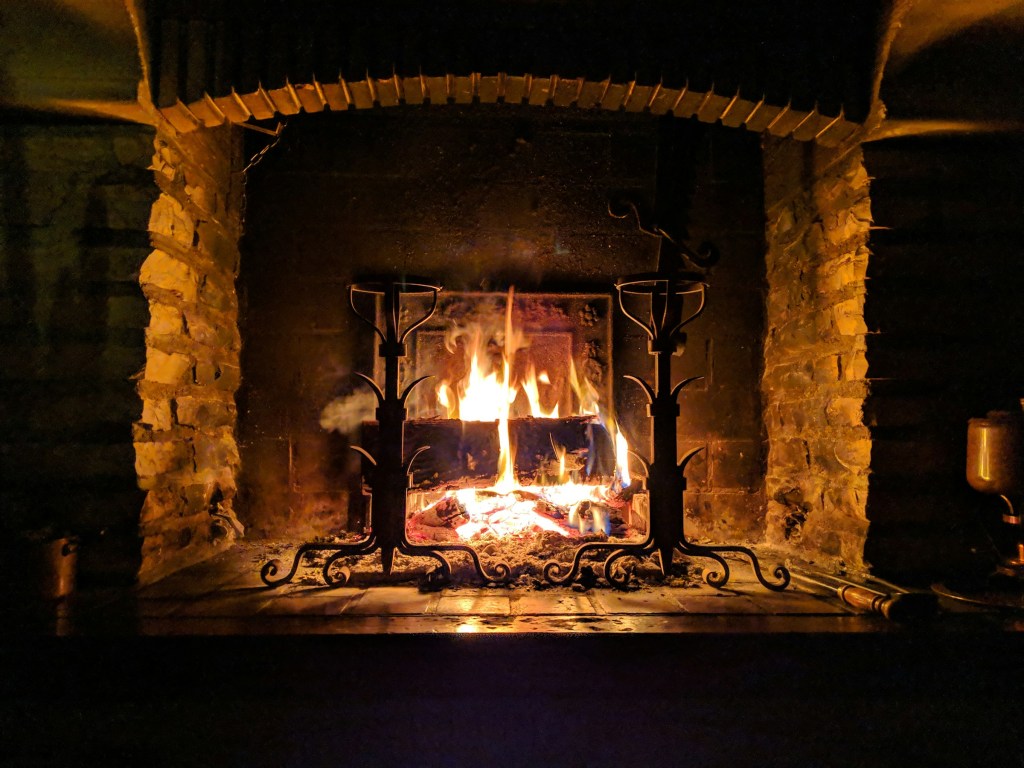
Now, as I sit beneath this fading lamplight, the last of the coins before me, I find my hands tremble from a recognition greater than any long-vanished fear. The ink blurs as I write, my sight clouded, my body failing. I have built empires, raised monuments, worn crowns of paper and stone. I have eaten well, lived long, been envied, and obeyed. And yet, in this hour, surrounded by wealth enough to bury a thousand men, I cannot name a single soul who would come to lower me into the earth.
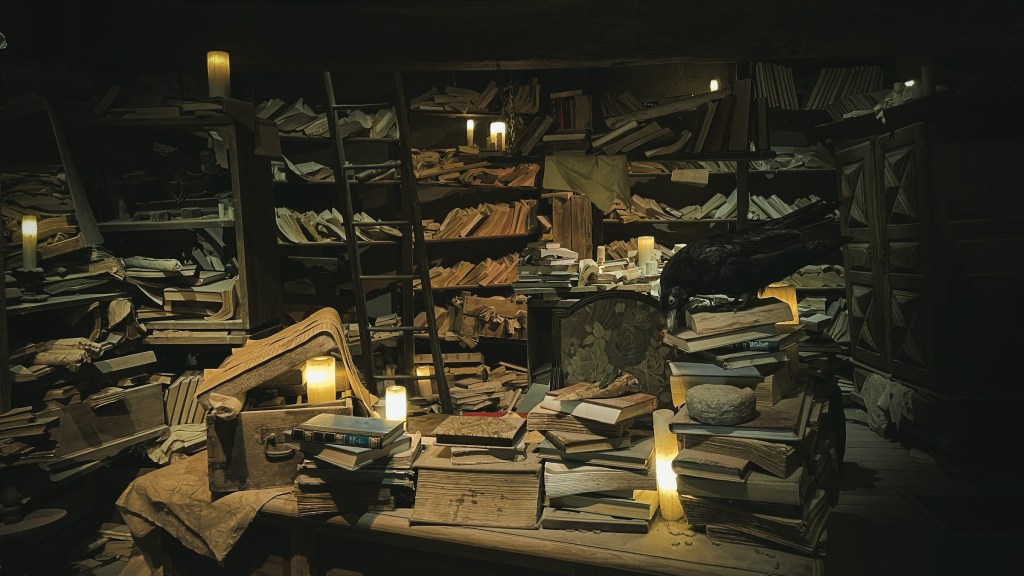
There is no sound here but the ticking of the clock and the slow, steady drip from the well’s bucket. I have brought it home, you see, thinking it might one day grant one final miracle.
The coins are stacked beside me, glinting faintly in the lamplight, and I wonder which I will offer next: another wish, or my confession.
They say the well has no bottom, but I know better. Its depths end where desire does, in the hollow place that remains when everything else is gone.
If there is mercy in the world, perhaps this will be my final entry. If not, then perhaps the well will take this too, and let my words sink into its darkness as a warning to any who stand where I once stood, coin in hand, heart alight with wanting.
May they listen where I did not. May they walk away while they still can.
The Gospel of Wealth
We like to imagine that the world has evolved past its old gods, that we have shed the myths of Olympus and the idols of Babylon in favor of reason, data, and science. But listen closely to the way we speak, and you’ll hear the hymns of a new faith. Our pulpits are podiums, our priests are billionaires, and our gospel is the quarterly report.
Money has become the modern moral compass. To be rich is to be right… or, at least, to be proven correct by the market’s invisible hand. Success and virtue have become indistinguishable in the public imagination. The successful must have worked hard, must have earned it, must have done something worth admiring. The wealthy are no longer lucky; they are chosen.
It’s a quiet transformation, but a complete one. Where once we measured character by honesty or courage, now we weigh it in capital. The question is no longer Who are you? but What do you do? What are you worth?
We used to measure the worth of a man by the weight of his word. Now, we measure it by the number of commas in his account.
The saints of this new religion are familiar: the visionary CEO, the influencer with their curated abundance, the artist whose brand commands the highest bid. Elon Musk and Jeff Bezos are spoken of not merely as men, but as archetypes, the divine entrepreneurs of destiny. Taylor Swift’s empire of melody and merchandise is a parable for the new world: art sanctified through revenue, devotion quantified through streaming metrics and ticket sales.
Even generosity, the last refuge of uncalculated kindness, has been repackaged for market consumption. Philanthropy is no longer the act of giving, but the optics of giving. A donation becomes a press release, a foundation a branding exercise. Return on investment has replaced return to humanity. It’s no longer enough to do good; one must also ensure the doing of good trends.
The economy has become the new theology, and GDP its brazen god. We speak of growth as if it were grace; endless, inevitable, and unquestionable. Every graph must climb toward heaven, every metric must ascend. The market crashes, and we call it judgment; it rises again, and we call it resurrection.
But unlike the gods of old, this one offers no salvation, only continuation. It demands faith without end and sacrifice with certainty rather than ceremony. The tithe is our time, the altar our ambition, the scripture a spreadsheet.
And like all faiths built on fear, it thrives by convincing us that there is no life beyond its bounds. In worshiping wealth, we did not abolish our hunger for meaning. We merely outsourced it to a ledger, and in doing so, mistook the price of a thing for its worth.
The Commons for Sale
Once, the word stewardship implied care, the patient tending of something shared and fragile. A teacher with her class, a craftsman with his tools, a farmer with the land. It was an ethic that bound people to one another through duty rather than profit, and preservation rather than possession. But in the modern tongue, stewardship has been rewritten as investment, and care as capital.
“Fiduciary responsibility” once meant safeguarding the common good; now it’s a mandate to maximize shareholder return, even when it starves the very communities that generate the profit. We celebrate record earnings while schools crumble, while rivers run thick with the runoff of our success. Every public space becomes an opportunity for naming rights, every commons a future revenue stream. Libraries carry corporate logos, universities sell prestige to the highest bidder, and local governments auction their integrity by the square foot.
We are told that to serve others is noble… but only if it scales. A small kindness means little if it cannot be monetized. The teacher who shapes minds earns less than the consultant who shapes margins. The nurse, the craftsman, the caretaker, all once honored as the spine of a stable world, now stand as relics of an unprofitable past.
Even community has been folded into the balance sheet. Nonprofits compete for “market share” of empathy. Art is judged by its reach, not its resonance. The town hall becomes a marketing hub, the church a tax shelter, the public square a construction site. We have sold off our collective soul, one parcel at a time, and called it progress.
There is a grief to this realization. It’s not loud or sudden, but steady and pervasive, like the hum of machinery in the distance. A civilization that once built cathedrals to outlast centuries now builds developments designed for quarterly turnover. We prize efficiency over endurance, visibility over virtue. And yet, beneath the polish of prosperity, something essential is wearing away: the quiet dignity of doing good for its own sake.
The commons were never meant to turn a profit. They were meant to remind us that not everything of value must be owned. But in the shadow of perpetual growth, even decency must justify its expense. In the new marketplace of meaning, compassion is just another currency, and the exchange rate is falling fast.
The Personal Transaction
Have you ever met someone who didn’t wish to win the lottery? Not idly, not in jest, but in that quiet moment between exhaustion and sleep, when the day’s arithmetic no longer balances? For most, the fantasy is not excess but escape. It is the hope of reprieve from the tyranny of necessity.
It is the longing to buy back one’s own time.
We spend the majority of our lives buying the right to live the rest. It is a transaction so normalized we rarely see it as such. We trade hours for shelter, purpose for paychecks, passion for stability, and have the nerve to call it maturity. To work is to exist within the economy’s gravitational field; to stop is to risk drifting into irrelevance.
We are told that labor ennobles, but most of us labor only to endure.
“No good day off goes unpunished,” I often recite, and it remains true. Every hour unbilled is guilt in the language of capital. Rest has become rebellion. Leisure, a luxury product. The modern citizen is a perpetual contractor, a tenant in their own life, renting every moment from the system that claims to sustain them. We have learned to measure self-worth in productivity, to mistake exhaustion for achievement.
The tragedy is not that we work; it is that we have forgotten how to live outside of work. Our passions are monetized before they are nurtured, our hobbies branded as side hustles, our dreams deferred until they can generate revenue. Even love strains under the weight of cost-of-living calculations. To marry, to parent, and even to grow old all require negotiation with an invisible accountant.
Money has become a metaphysical parasite, feeding on the space between who we are and who we wish to be. It inserts itself between our desires and their realization, convincing us that fulfillment is always one transaction away. We learn to live conditionally, waiting for the next paycheck, the next promotion, the next imagined freedom that never arrives.
And so the lottery remains the secular prayer of the modern soul. Not because we crave riches, but because we crave release. It is the hope of a world where we might wake one morning and, for the first time, owe nothing to anyone. Where time, that most precious of currencies, might finally be spent rather than sold.
The Poverty of Abundance
There is a quiet rebellion rising; perhaps not the loud revolt of politics or protest, but the simple refusal to keep buying what does not satisfy. It is a turning inward, a choice to measure wealth not by accumulation but by absence. The absence of debt, of clutter, and of noise. This is not the aesthetic minimalism of curated white rooms and designer simplicity.
It is the minimalism of those who have looked into the mirror of endless growth and chosen to step away before it consumes them.
Those who stop chasing accumulation are not rejecting comfort; they are rejecting captivity. They have begun to understand that the ladder never ends, that the next rung is always another cage painted gold. They are learning that value and growth are not synonyms, that prosperity and peace often travel in opposite directions.
The economy fears only one word: enough. To declare something sufficient is to end the transaction, and for a system addicted to perpetual motion, sufficiency is heresy.
But there is freedom in this heresy. The Stoics knew it when they spoke of virtue as the only true good. The Taoists knew it when they taught that the full cup spills over, while the empty one remains useful. Freedom is found not in owning more, but in needing less. To live by this is to step outside the ledger entirely, to see that contentment does not compound, and serenity has no interest rate.
In this light, poverty of abundance becomes a form of wisdom. It is the understanding that more is not better, only heavier. That security built on consumption will always crumble beneath its own weight. That a life worth living must be one that can breathe, uncluttered by the debris of desire.
When nothing is for sale, peace is the only profit. And in that exchange, we begin to recover something the market could never offer: the grace of simply being, without needing to own the proof.
Reflection
And so we return to the well.
The traveler sits once more before its silent mouth, his final coin resting in his palm. It no longer gleams with promise, only memory, or perhaps regret. He does not wish for wealth this time, nor power, nor even forgiveness. He wishes only for release. Release from wanting. Release from measure. Freedom from the endless arithmetic of gain. When he lets the coin fall, the water does not shimmer. It simply reflects his face.
Beneath that reflection lies the same truth echoed across every scale of our world.
A society that worships the idol of success will always mistake wealth for wisdom.
A community that trades principle for profit will find its soul mortgaged to the market.
An individual who buys time in installments will never own a moment outright.
And yet, in the quiet edges of our age, there are those who have begun to walk away; to reject the premise, to step off the stage, to live without the need to prove their value to an indifferent god.
They are not many, but they are free.
The traveler closes his journal, the ink still wet from confession. The lamplight trembles, a flame nearing its end. Somewhere beyond the reach of the coin’s last ripple, the well still waits; not hungry as he imagined, not vengeful – it never cared for the outcome of the wisher. It is only patient, present. It knows that no man ever stops wishing forever.
But for now, there is silence.




Leave a comment