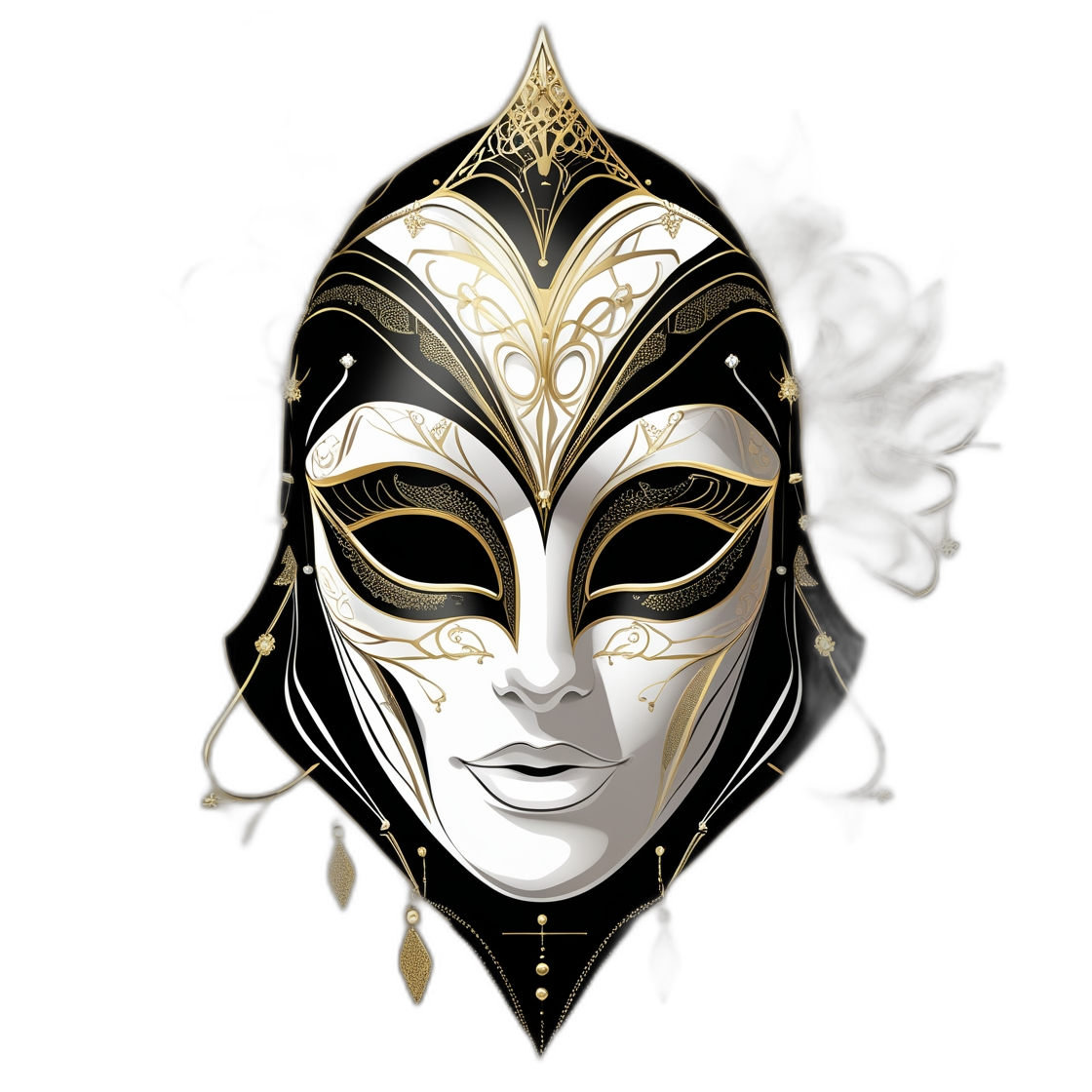

Photo by George Pagan III on Unsplash
They do not feel the walls closing in.
That is the trick of this new architecture. The trap isn’t built of stone or steel, nor the brutality of tyrants past. It’s light, motion, glass. A glow. A scroll. A feed. A glowing horizon of infinite possibility, resting in the palm of a hand. News, images, opinions; flowing endlessly. The user believes they are expanding. Learning. Connecting. Watching the world.
But the world is collapsing into them. Smaller with every scroll, narrower with every like, flatter with every share. The walls draw near, and still they feel nothing.
This isn’t the cage of force. It’s the cage of comfort. It works because it feels like freedom.
Pause, and the seams begin to show. The same faces. The same headlines rewritten. The same cycle of outrage, affirmation, distraction. Novelty becomes rhythm. Rhythm becomes habit. The trick is not in hiding the truth, but in drowning it beneath irrelevance. Whole continents burn, but the algorithm whispers: look here instead. This scandal. This meme. This clip your friend liked.
The trivial wrapped around the catastrophic, until no weight remains.
A medieval peasant knew little of the world, but at least their ignorance was honest. Their horizon was a field, a village, a church spire. They did not mistake it for the world entire. The modern scroller does. They carry the illusion of omniscience, staring into the globe through a rectangle of glass. And so they assume they see it all.
But what they see has already been chosen. Curated for engagement. Shaped for consumption.
It is not the world. It is a mirror; distorted, flattering, and always shrinking.
And as the view contracts, so does morality. You cannot act on what you cannot see. You cannot care for what you’ve been taught to ignore. The sky shrinks. The soul adjusts. It calls the narrowing normal.
They do not feel the walls closing in.
Why would they? The walls are painted in their favorite colors. The air smells like home. The soundtrack was chosen just for them.
The most effective prison is the one that feels like freedom. This is the architecture of the age: not a horizon bounded by chains, but engineered by comfort. Invisible hands. Joyful consumption.
But there is always a cost. What is unseen is soon unfelt. What is unfelt becomes unlived.
It’s one thing to be unaware. It is another to be made unaware, and to be guided step by step into the narrowing, until the horizon collapses to a pinhole.
And what happens when a people mistake that pinhole for the sun?
The Cultural Cage
Integrity requires awareness. Morality requires scope.
But neither arises in isolation. Both are mediated by culture. The culture we inherit defines what counts as vision, and what remains unseen. It draws the moral map long before we know we’re reading one.
Consider: a peasant in 1200 never wrestled with the ethics of child labor in factories. Factories didn’t exist. Their moral horizon was bounded by village paths, the church spire, the lord’s land. Their integrity lived within that frame. Ignorance wasn’t chosen. It was the given condition of their world. Limited, yes. But honest.
Today, the cage is built differently.
The modern citizen holds access to the world’s suffering and wonder — instantly, relentlessly. There are no natural limits. No excuse for small horizons. And yet: the paradox.
The more we can see, the less we do.
Awareness collapses inward. Pulled into distraction. Filtered by tribal reflex. Shrunk to the size of a comfortable feed.
This is how culture becomes cage. Not by erasing knowledge, but by shaping it. What we are shown. What we are told matters. What gets repeated. What disappears. These define the moral frame. And when the frame is tight, morality shrinks to fit it.
Integrity is expected only within sanctioned zones. Anything outside: distant suffering, unfamiliar injustice, war with the wrong narrative, even, becomes irrelevant.
The danger is subtle. People feel moral without ever leaving the loop. They donate. They protest. They speak up. But always in the arenas assigned to them. It looks like agency. It feels like virtue. But it’s a managed morality. The cage doesn’t forbid goodness. It curates it.
And yet history leaves us clues in figures who refused to play along. The reformer who questioned the obvious. The dissident who broke the silence. The thinker who insisted that awareness must grow even when culture said “enough.”
They saw the cage for what it was, and refused to call it home.
This cage is not ancient. It is alive, woven into headlines, baked into timelines, disguised as convenience. It rewards the easy virtue of staying inside the moral frame.
But the real work begins elsewhere: not in obeying the limits, but in pushing them. To expand what counts. To insist that morality cannot be confined to what fits on a screen… no matter how curated, how comforting, or how beautifully lit.
The Three Tools of Shrinkage
Culture does not enforce its cage by accident. It uses tools that are at once subtle, familiar, and effective. They are not hidden, though their effects are rarely acknowledged. To name them is to see how the horizon grow nearer without anyone noticing the walls being built.
Anti-Intellectualism
The first tool is the steady erosion of thought. Expertise becomes elitism. Complexity becomes conspiracy. To think deeply is to risk disloyalty, because complexity might challenge what the tribe wants affirmed. Mockery of intellect is not new, but the last few decades has seen it become industrialized. Schools teach answers rather than inquiry. Media rewards the fastest take, not the truest one. Social platforms compress entire realities into slogans that can fit in a headline. The result: the will to expand one’s horizon weakens.
Why wrestle with the difficult when the culture tells you that difficulty itself is a sign of betrayal?
Consumerism
The second tool is the substitution of hunger. Where there could be an appetite for truth, there is a craving for novelty. When morality feels heavy, pleasure offers relief.
Why wrestle with the unbearable when distraction is always on sale? Why ask hard questions when silence can be filled with noise; bright, fast, forgettable?
The market doesn’t need to censor. It only needs to entertain. We aren’t buried by propaganda. We are smothered by trivia. Not silenced, of course, just dulled. Not imprisoned… just pacified.
The cage is padded with comfort, and every purchase feels like liberation. Each choice appears freely made, when in truth the spirit narrows a little more with each indulgence.
Pleasure itself is not wrong, but it has been weaponized to make meaning feel exhausting.
Echo Chambers
The third tool is the mirror disguised as a window. Social media does not show you the world, it reflects you back to yourself. Your tribe. Your outrage. Your righteousness, amplified in a loop. What matters is not truth, but whether you remain loyal. Integrity collapses into group identity, and virtue becomes measured by how faithfully you defend the boundaries of your side. The horizon does not need to expand when it can simply fold inward, confirming you endlessly.
And so morality is collapsed into loyalty, awareness traded for affirmation, truth replaced by applause.
Each of these tools works well enough in isolation, but together they reinforce the cage: the scorn for thought removes the path to deeper awareness, the substitution of hunger keeps people docile, and the chamber of mirrors convinces them that the cage itself is the entire world.
The genius of the system is that no tyrant is required. The walls build themselves, and the prisoners thank the architects for their freedom.
The Inversion of Virtue
If the cage and its tools were the whole story, the tragedy would be enough. But culture does not stop at narrowing horizons; it goes further. It rewrites the very meaning of virtue.
In our present order, capitalism sanctifies greed by renaming it ambition. The relentless hunger for accumulation is praised as drive, as vision, as success. Exploitation, too, assumes the mantle of efficiency, as though the stripping of labor and the siphoning of resources were merely the neutral math of productivity.
To profit is to be vindicated. To lose is to be disgraced.
Empathy, in such a system, becomes a liability. Care slows the machine. Compassion threatens the bottom line. If profit is the highest good, then mercy is weakness, and solidarity is wasteful sentiment. What cannot be measured in quarterly reports is quietly dismissed as irrelevant. The moral compass points only toward return on investment.
Thus morality itself is not abolished. Worse, it is inverted. Good no longer means just, but profitable. Evil no longer means cruel, but wasteful. Justice is collapsed into legality, and legality is written by those most invested in profit’s protection. The inversion is so complete that to resist it seems irrational. Who would argue against what “works”? Who would dare defend what does not pay?
This is the genius and the horror: morality is not rebranded rather than being discarded. Words like virtue, justice, and responsibility are retained, their content drained and replaced with profit’s logic. A culture can then celebrate itself as moral while rewarding the very impulses that erode morality at its core.
In such an inverted world, the mask of virtue is always smiling. Behind it, the machinery consumes without end.
Conspiracy or Consensus
We don’t need a smoke-filled room. No hidden council, no secret architects narrowing the moral horizon. The more unsettling truth is that no conspiracy is required. Systems coordinate themselves. Incentives align without anyone needing to steer.
Politicians profit from division. Each fracture makes their base more loyal, each outrage more effective. Businesses profit from addiction, endless scrolling, endless buying, and endless distraction. Media profits from outrage, from speed over accuracy, from keeping eyes locked in place regardless of truth.
This doesn’t look like a design in the traditional sense. There’s no puppeteer behind the curtain. But the result functions like design, as surely as entropy does: A culture that rewards division, thrives on distraction, and punishes depth. A world where horizons don’t grow—they shrink.
And morality remains forever local.
The danger is that none of it feels dangerous. The path of least resistance doesn’t look like compromise, it feels like convenience. Conformity doesn’t feel like surrender, it feels like belonging.
People don’t scroll because they’ve abandoned responsibility. They scroll because real life is heavy, and the feed is light. A cousin’s post is irrelevant. A meme is harmless. A quick share takes no effort. Each choice feels too small to matter.
But these small choices accumulate. Each one taken for ease. Each one repeated because everyone else is doing it. Each one justified by the illusion of insignificance. Over time, they shape a trajectory. Not guided by malice, but by fatigue. Most people don’t intend to trade awareness for comfort.
They reach for what asks less of them.
And so the cage tightens. Not because it was built brick by brick, but because everyone added their stone, thinking they were only doing what made sense. The pattern emerges from the overlap, until the whole looks intentional.
Not conspiracy. Not design. But something that behaves like both.
The Masquerade and the Madness
The impact of this system is most visible not in policy or institution but in the individual. The narrowing and warping of perception reshapes morality itself to align with lived experience. People feel moral not because they have measured themselves against a wider horizon, but because they have never been asked to see beyond the bubble they inhabit.
Integrity becomes cheap when its price is nothing more than the defense of what everyone around them already believes. To hold the common line requires no sacrifice, yet it feels righteous. And so the masquerade is complete: citizens wear the mask of virtue while dancing to the music of distraction.
This is not villainy in the classic sense. It is far subtler, and therefore more dangerous. The danger isn’t only that people accept immoral actions. It’s that they celebrate them as righteous. They cheer policies that harm strangers, not because they are cruel, but because those strangers never enter their horizon of concern. They share outrage that reinforces loyalty, not because it is true, but because it is theirs. They mistake the comfort of consensus for the work of conscience.
But when multiplied across millions, the personal masquerade becomes a social one. The individual mask of virtue becomes a civic costume, worn by an entire culture that congratulates itself on its morality while quietly dismantling the very conditions in which morality grows. A society where empathy is weakness and profit is virtue cannot simply mislead individuals; it redefines the collective imagination. What people cannot see together, they cannot act upon together. What they refuse to name as wrong, they will defend as right.
Thus, the masquerade metastasizes into the fabric of public life. Politicians campaign on morality while gutting it of substance. Corporations market virtue while exploiting its absence. Communities reward loyalty while punishing dissent. The dance of distraction becomes the choreography of culture itself.
Here lies the madness: a society that engineers the ease of moral certainty while dismantling the very capacity for moral growth.
It does not produce monsters but loyalists who believe themselves saints. It does not need to enforce obedience when it can convince the obedient that their alignment is virtue. The narrowing is internalized until the mask feels natural on each face, until the dance feels like freedom… pay no mind to the strings.
Perhaps what is most terrifying is not only that this performance fools others, but that it fools the performers themselves, until a whole people mistake their masquerade for morality, and their certainty for truth.
Swipe Left
Return to the figure scrolling. The horizon has closed until it is no longer a window but a mirror. The person gazes, nods, and smiles into the glow. They feel informed. They feel righteous. They feel certain.
They wear the mask with conviction, never questioning who crafted it or what it hides.
They do not notice that their morality has been reduced to the defense of what already surrounds them. They do not see how the cage they inhabit was built by comfort, convenience, and consensus.
They believe themselves free because the dance is lively, because the colors are bright, because everyone else is moving in step.
And in that certainty lies their complicity. Not in a grand betrayal, not in some conscious abandonment of principle, but in the small, daily surrender to what is easy. The trivial accepted in place of the meaningful. The mirror mistaken for the horizon. The pinhole mistaken for the sun.
The curtain falls not with revelation, but with applause… an entire people convinced of their virtue while the walls draw ever closer.






Leave a comment