
Photo by Tj Holowaychuk on Unsplash
Author’s Note
For the past few months, my life has followed a tight, looping rhythm: wake, work, eat with my wife, work again, escape into YouTube, sleep, repeat. It’s not dramatic. It’s not even particularly unique. But it’s constant. Reliable. Predictable in that numbing way routines become when the world outside feels increasingly absurd.
Work has been stressful. The economy is a mess. Politics read more like rejected dystopian screenplays than anything grounded in reality… though somehow, the existential dread still manages to sneak in through every headline.
My escape, ironically, has been more work. When I feel threatened, I prepare. I build. I retreat into projects. Right now, that means studying AI orchestration, an oddly timely extension of my background in apps, data, and process architecture. My wife does the same, studying for certifications with the same quiet hope: that maybe, if we sharpen our skills enough, the future won’t hurt quite as much.
In this way, work becomes an escape from work. And both become an escape from everything else.
We try to protect our time together. That part matters. But it was her, stopping by for a hug as I sat to choose the topic of the evening, who reminded me that the question isn’t just how we escape. It’s whether we remember to come back.
This piece is about that return, and all of the things that help us forget that it exists.
~Dom
When Odysseus and his crew reached the land of the Lotus-Eaters, they found no monsters, no storms, no enemies in arms. Instead, they found peace; a sweetness so profound it tempted them to forget home. Those who ate the lotus felt no desire to return to the ship, no urgency to press on, only the bliss of staying where they were.
It was not violence that threatened the journey, but comfort. Odysseus had to drag his men away, bind them if necessary, so they would not dissolve into the dream.
I think often about that story. Not because I fear shipwrecks or great beasts, but because the quiet dangers are always closer at hand. A moment of relief, harmless in itself, can stretch into an hour, then a day, then a pattern. There is nothing wrong with seeking refuge from the weight of the world… until we forget that refuge is supposed to end.
Escapism has always been with us. Stories around the fire, rituals, games, even religion at times. We are creatures who need reprieve from the endless grind of survival. Today, the portals multiply: glowing screens in our hands, headphones that seal us from the world, companions conjured from code. At their best, they are sanctuaries. To laugh with friends in a game, let music carry us through a long night, or let a show remind us of beauty when life feels barren; these things restore us. We return with lighter hearts, more ready to face the work and struggle waiting outside.
But there is another edge. The sanctuary can harden into a barrier. What begins as rest becomes avoidance. A show delayed once becomes a backlog never faced. A scroll meant to distract us for minutes swallows hours. Even the noble-seeming escapes – another degree, another course, or another article to read – can become a way of stepping aside from the harder work of living, connecting, risking.
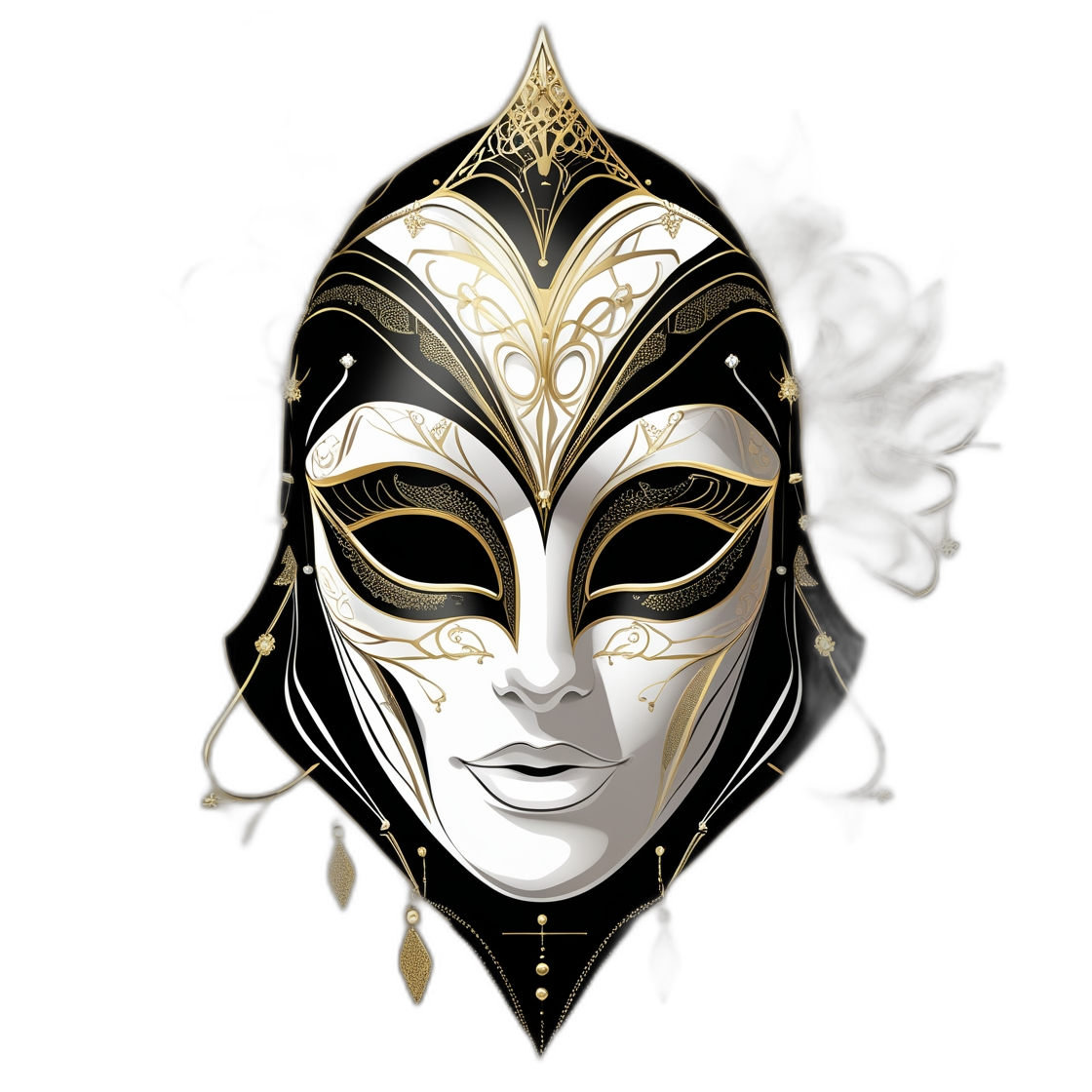
Not every distraction looks frivolous. Some wear the mask of progress.
And sometimes, escape ceases to be chosen at all. Social platforms, games, whole industries are built not to comfort us, but to capture us. They are not doors we step through but nets cast wide, designed to keep us struggling in their weave. In these spaces, our attention is no longer something we give, but instead something we are harvested for. The portal becomes a prison.
Pornography shows this with particular clarity. At its lightest, it is a simple outlet, a release of tension, no more destructive than a passing dream. At its heaviest, it becomes intimacy without connection, desire detached from touch, novelty without end. It whispers of connection but feeds loneliness, training the body to respond to ghosts while the heart grows less practiced at reaching for what is real. Here, escape is not just from the stresses of life, but from the very vulnerability of being human.
And yet, even here, I cannot condemn escape outright. To flee, to rest, and to distract ourselves are all human needs. The question is not whether we should step through the portals that call to us, but whether we remember to step back. Odysseus knew his men could taste the lotus, but not remain among the eaters. The journey mattered more.
So I ask myself, whenever I am tempted: do I emerge lighter, or emptier? Does the world feel more possible after I return, or heavier for the hours I surrendered? Escapism is not sin, nor salvation. It is a tool, and tools are judged by the hands that wield them.
The Sanctuary of Escape
Even Odysseus’ crew, for all their discipline and longing for home, were better for having tasted the lotus… at least for a time.
To shed responsibility, to rest, to taste bliss without consequence… this gave them a reprieve from the grinding hardship of their voyage. It was only when they lingered too long that the sweetness soured into danger. So it is with us. A pause, even one born of distraction, can be necessary for survival. The problem isn’t the bite of sweetness. It’s the forgetting of bitterness that makes the return possible.
Escapism has always been part of the human condition. Around the fires of early communities, stories and rituals gave rhythm to lives otherwise consumed by survival. Art, song, and games offered windows out of the ordinary and into something more bearable, more beautiful. These were not indulgences so much as lifelines; chances to breathe before plunging back beneath the waves.
Psychologically, we are not built to face constant strain without relief. A break gives us space to reorder our thoughts, to heal from the invisible bruises of daily stress. In this way, escapism is not cowardice but renewal. It is the sharpening of the blade, the drawing of breath before the next dive. Without it, the spirit grows brittle.
But here’s the danger: a blade left too long in its sheath will rust. And breath, when held forever, turns into suffocation.
Our world, though far less legendary than Odysseus’, is no less relentless. The demands of work, obligation, and a culture that prizes productivity above humanity can press until something within us begins to fray. Here too, escape offers sanctuary. A novel that draws us in, a film that moves us, a game that lets us laugh with friends; none of these are failures of will. They are necessary shelters. Even the glow of a VR headset, enclosing us in other worlds, can be today’s hearth fire. Not every portal is a trap; some simply warm us long enough to endure the cold outside.
But warmth without return becomes a slow burning. Comfort, unmeasured, can become another form of erasure. Certainly gentler than stress, but just as consuming.
To step aside from the weight of life for a time is not weakness. It is recognition of our limits. Like Odysseus’ men, we return better for it; rested, reminded, re-armed for the battles that remain. Escapism, in its purest form, is not an abandonment of the journey but a chance to gather strength to continue it.
The warning is simple, and easy to ignore: shelter saves us only when we remember to leave it.
The Barrier of Avoidance
But what happens when the pause no longer ends? When the sweetness that once restored us begins to dull the senses, lulling us into delay?
This is where escape hardens into avoidance and softness begins to rot.
Odysseus’ men, had they been left to their own longing, would never have lifted an oar again. The path home would have vanished into haze. That is the nature of avoidance: progress deferred, not by resistance, but by comfort. The warm fog of contentment does not stop us, it simply makes us forget to move.
And that’s the trap. “I’ll study tomorrow, after one more episode.” “I’ll make that call after one more scroll.” Harmless. Justifiable. Until it isn’t. These small concessions don’t announce themselves as failures. They accumulate like sediment, slowly burying the path beneath us.
The signs of imbalance are not always dramatic. They show first in friendships thinned by distance, where conversation is replaced by screen-mediated comfort. They appear again in ambitions postponed again and again under the guise of coping, where self-preservation quietly becomes self-erasure. What begins as a shield becomes a wall, keeping not only hardship out, but growth as well.
Psychologists often speak of procrastination as avoidance of pain, rather than laziness. Escapism, then, becomes its architecture. Each distraction is another brick. Each deferred decision, another layer of mortar. Until one day, we realize the light we see is only what flickers off our walls.
Doors that once opened to opportunity are bricked over by indulgence disguised as relief.
And here is the cruelty: the wall feels safe. It’s warm. Familiar. Padded with soft reasons and plush excuses. We tell ourselves we’ll step outside again tomorrow, as if there is always more time. But life does not pause to wait for us. The days we spend hiding do not bank themselves for later use.
They vanish. And the self we might have become vanishes with them.
Odysseus knew the cost of leaving his men in that field of flowers. He did not plead. He did not wait. He dragged them from it, because the dream, if left uninterrupted, would devour their names, their purpose, their very memory of the shore.
The same choice confronts us, over and over, in quieter ways. To pause is natural. But to linger is to decay in place.
Remember: To rest is human. But to linger too long is surrender by another name, and the world will not always send someone to pull you back.
The Addiction of Distraction
There is a darker turn still, where escape ceases even to resemble choice. When what once refreshed us begins to pull without permission. At its most corrosive, escape does not offer peace. It demands obedience.
The sweetness of the lotus is no longer tasted. It is swallowed blindly, compulsively, and habitually; no longer indulgence, just inertia.
We see it all around us: apps tuned like slot machines, social feeds engineered to burrow into attention spans and fracture them. Gaming economies that do not reward play, but extract time and presence. AI companions that whisper validation on demand, reflecting our desires so perfectly we forget the ache of being unseen. These are not passive distractions. They are designed weapons; refined tools of dependency.
Here, the portal is no longer a doorway. It is a trapdoor.
You believe you’re stepping away by choice. But the frame narrows. The walls tilt. The lights dim. Each ping a thread in the net, each scroll a coil tightening around your agency. The room still looks like yours, but the handle is on the outside…
…and you haven’t held it in a while.
The philosophical question grows urgent: when does choice end, if the very act of engagement has been engineered to bypass will?
The ancient myths offered temptations freely. Today’s distractions are architected with surgical precision. We do not fall into these traps. We are funneled. We are not seduced by sirens; we are mapped, nudged, and processed by algorithms that know our fears before we name them.
Odysseus’ men were lured by the flower. We are lured by the feed.
This is the new sea we sail: a place where the monsters are not storms or serpents, but soft-lit loops of pleasure, outrage, affirmation. Where nothing stops us but every line slows our leaving.
This is not escape. This is erosion.
The Intimacy of Escape
If distraction steals our hours, pornography reaches further. It does not just take time; it rewires us at the level of touch, longing, and trust. It offers intimacy without vulnerability, desire without risk, and stimulation without reciprocity. In its purest design, it is not simply an escape from stress, but an escape from the terrifying, necessary fragility of being known.
Its spectrum is wide. At one end, it can be a simple outlet – a harmless exhale, a stress valve no more consequential than a passing dream. But in the middle ground, it begins to shift expectations, teaching the mind to crave novelty and control, to expect bodies without complexity and connection without risk. And at its far edge, it becomes compulsion: a quiet training program that numbs the capacity for real intimacy and splices shame directly into the pathways where tenderness should live.
Porn is not merely a moral question but an existential one. A game takes your time. Porn takes your body’s most intimate circuitry and trains it toward digital ghosts. In distraction, we trade hours. In pornography, we risk trading identity itself; how we understand touch, desire, even love.
This is the deeper cost: when what should bring us closer instead isolates us; when what should awaken us instead numbs. In those moments, we must ask ourselves… what part of our humanity are we offering to the lotus?
Odysseus’ crew risked losing their voyage, forgetting their home, accepting a death with no funeral rite. We risk losing something even harder to name. From any other vantage, his men would have been lost to the sea, though no water touched them.
For the most addicted here, the price may be losing the language of intimacy itself, forgetting what it means to be human together, and misplacing the name of the ache that follows.
The Gray Space
Not all wasted time is fruitless. To taste sweetness, to step out of hardship into ease, is part of knowing what we value when we return. The danger lies not in the tasting, but in the forgetting – not in the pause, but in the drift.
Continuous learning may look like avoidance to one and cultivation to another. A scroll through art, music, or philosophy can seem like indulgence, yet serve as deep nourishment for a spirit nearing fracture. From the outside, all escapes can look the same. But on the inside, some build, some break, and some quietly erode us under the name of rest.
The difference lies not in the act, but in what follows. Do I return clearer, stronger, more prepared? Or do I return fogged, more fragile, more fragmented than before? Do I step back with steadied hands, or simply fewer hours left to claim?
This is the measure, and it demands more than honesty. It demands accountability. It requires the willingness to name when the comfort we reached for became a coffin lined with velvet.
The Stoics remind us: amor fati – to love one’s fate is to walk it fully, including the retreat. The pause is not a betrayal of the journey, but a rhythm within it. The Taoists would say: the river bends, it does not break. It flows around the stone, but always forward. To refuse rest is to shatter. But to rest without return is to drown slowly, face-up, whispering that we are floating.
Balance is not a state. It is a discipline. A blade to be walked.
Here lies the gray space. Not the safe middle, but a tightrope: escape as sanctuary, escape as prison, escape as tool of becoming. One misstep in either direction is enough to lose the thread.
To know the difference requires not just honesty, but courage. And not just courage alone, but courage with clarity.
The portal always opens both ways. But only the awake remember to return.
Onward
And so we return to Odysseus, dragging his men back to the ship, away from the field of flowers.
They wept.
They resisted.
They longed for the sweetness they had tasted.
But still… they rowed.
And in rowing, they remembered who they were… and why they had set sail at all.
Escape is not the enemy.
To rest, to retreat, to vanish for a time; these are not sins.
They are choices. Necessary, even.
But no escape is free.
A story, a screen, a body, a dream…
Each can heal.
Each can hollow.
Each, when clung to too long, becomes another way to vanish, first from the world, then from ourselves.
The danger isn’t in tasting the lotus.
It’s in planting roots where it grows.
In calling stillness a destination instead of a pause.
So the question remains; quiet, persistent, and deeply personal:
When you step into escape…do you return sharpened?
Or do you come back softer, slower, and just a little more lost than before?




Leave a comment