
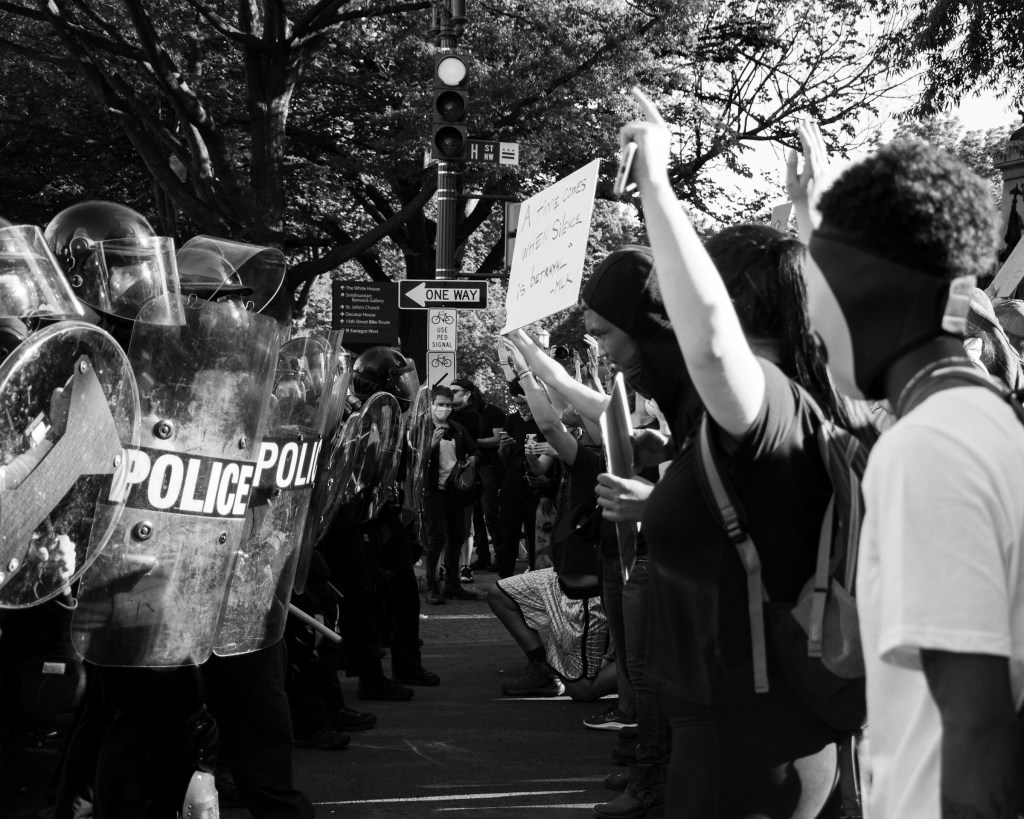
Photo by Koshu Kunii on Unsplash
They marched as if the streets belonged to them. Boots in rhythm, black armor gleaming beneath the brittle light of a city that had seen better days. Their faces were hidden, not by chance but by design, anonymity as power, facelessness as weapon. Children stopped at the curb to watch, their parents pulling them back with that half-hearted caution born of fear and futility. Everyone knew better than to be noticed.
The laws had shifted slowly, at first. What had once been unthinkable became permissible, then routine. Profiling was given sanction; phrased as protection, written into codes with language so careful that most people scarcely noticed the permission it carried. But the results were visible in the eyes that lingered on dark skin, on foreign accents, on the clothing of those who carried heritage in their fabric. The “other” had become not just suspect, but convenient.
Convenient to blame, convenient to fear, convenient to define as enemy.
The rallies were louder than the streets had ever been. Flags rose high, hands clapped in unison, voices swelling into chants rehearsed until they no longer needed prompting. Always the same refrains: blame for the economic collapse, for the decay of families, for the crime that surged as opportunities shrank and wages collapsed. The scapegoats shifted depending on the day – immigrants, intellectuals, those who prayed differently, those who loved differently – but the performance remained the same. Fury offered as unity, fear as common ground.
From the podiums, the speeches came polished, practiced, and venomous. The men behind them were flanked by banners, their words projected through steel and glass into the homes of millions. They promised toughness. They promised control. They promised to protect “the people,” though the definition of “people” narrowed with each broadcast. Their words were punctuated by applause, cheers swelling in the square, spilling through radios, screens, and papers the following morning.
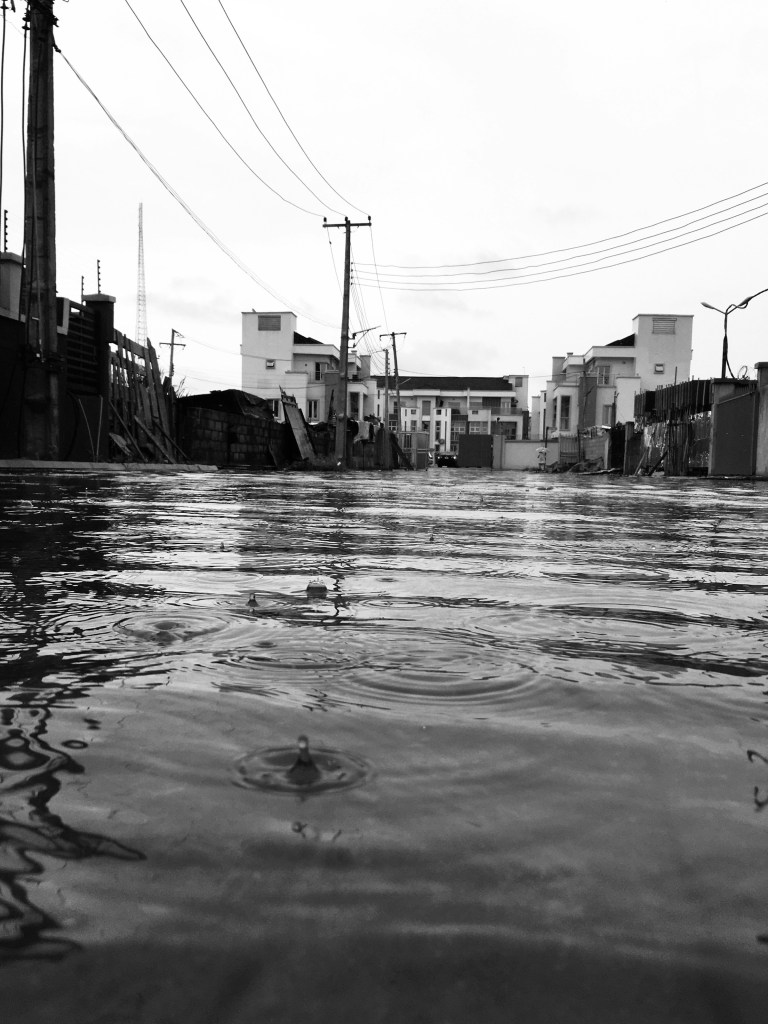
But outside the reach of those lights, bridges rotted. Roads cracked and gave way. The power grids, once marvels of engineering, faltered in storms that grew harsher each year. Schools closed classrooms for lack of teachers. Hospitals filled with more than they could bear, their halls echoing with fatigue and despair. The speeches rarely mentioned these things. They were distractions, inconveniences to be set aside until the “enemies within” were conquered. And so the decay spread, quiet and invisible to those who still believed the stagecraft.
Recall the way people stood straighter at those rallies, even as they carried heavier burdens home. Bread cost more. Work paid less. Violence spilled out in alleys and doorways, small and unremarked upon compared to the spectacle of official toughness. Yet the crowds kept gathering, not because they believed every word, but because to belong, even in fear, seemed better than to stand apart. Better to shout with the mob than to risk the silence of dissent.
There were those who questioned, of course. Teachers who whispered of history repeating itself. Clerics who spoke of compassion. Workers who wondered aloud whether the real enemies weren’t in the square at all, but in the polished halls where decisions were made. They were silenced in different ways: some with ridicule, some with laws, some with the blunt force of those boots on cobblestone. Each time, the crowd learned the same lesson; that safety came not in asking questions, but in playing along.
Years blur in memory, and so do borders. The images could belong to one nation or another, to one decade or the next. Perhaps it was before a war we already know. Perhaps it is before one still to come. What we remember most is not the certainty of place or time, but the feeling: the unease of watching a society cheer for its own unmaking, mistaking noise for strength, mistaking theater for power.
That is the part that will linger, long after the flags have faded and the podiums have been carried away.
The Strongman’s Theater
“Tough on crime.” “Tough on enemies.” “Tough on dissent.” The slogans change their target, but never their tune. They are crafted to be simple enough for a chant, sharp enough to wound, and expansive enough to hide what they cannot solve. In their repetition, they do not offer solutions so much as solidarity.
It works because fear is easy.
Fear offers the illusion of clarity. It reduces the mess of reality into a single image: a threat, a scapegoat, a face to despise. Anger thrives in such simplification. It is easier to hate than to build. Easier to roar at shadows than to mend what is breaking underfoot. Rage, when packaged and rehearsed, offers belonging to those who feel unmoored. Division, when sanctified, grants the comfort of categories: us or them, safe or unsafe, strong or weak. In its simplicity, the strongman’s rhetoric relieves people of the harder burden—thinking.
Strength, however, is not what is being sold. The strongman’s theater is not about bearing weight; it is about performing it. Anger is brandished as if it were resolve. Violence is promised as if it were justice. Control is claimed as if saying the word were the same as achieving it. The crowd, hungry for certainty, accepts the act because the alternative, facing the real work of responsibility, is too heavy to bear. It is easier to applaud the mask of power than to confront the absence of substance beneath it.
And the crowd is not innocent in this exchange. Complicity is part of the transaction. They cheer not only because they are deceived, but because the performance flatters them. It tells them they are strong by association, that their fear is courage, that their hatred is righteousness. Weakness, in this theater, is transformed into a collective identity of strength.
The applause is both endorsement and absolution.
This is the seduction: strength performed costs nothing in the moment. It does not require sacrifice, discipline, or accountability. It flatters insecurity, making weakness feel like might. It invites the spectator to believe that raising their voice is the same as raising their character.
And so the crowd cheers, mistaking noise for power, mistaking the velvet of rhetoric for the hammer hidden beneath.
But theater always has its curtain. And when it falls, the difference between performance and reality cannot be denied. The slogans vanish into silence. The promises dissipate in the face of broken roads, broken families, broken institutions. What remains is the reckoning; the recognition that the cheering did not summon strength, but only masked the absence of it.
That is when the velvet is stripped away, and the hammer lands, not in service of the crowd, but upon them.
The Rot Beneath the Noise
The strongman’s theater thrives on spectacle, but spectacle does not patch roads or mend roofs. It does not put bread on tables or keep the lights burning when the storm rolls in. It shouts about enemies and promises their defeat, all while the foundations of daily life quietly crumble.
Hollow victories are counted like trophies. A law passed to punish the outsider. A raid staged for the cameras. An enemy named and shamed until their image can be burned in effigy. Each performance convinces the faithful that something has been accomplished, though nothing real has changed. The potholes remain. The bridges continue to rust. The hospitals still overflow. Yet the crowd applauds, convinced that shouting “tough” is the same as building strong.
Meanwhile, the crises multiply. Infrastructure is neglected, deemed too costly or too boring to compete with the thrill of punishment. Social fabric frays as division becomes the binding thread, neighbors more suspicious of one another than supportive. Resources are wasted on symbolic battles; armored parades, hollow trials, walls built to nowhere… each demanding funds and attention that could have gone to repair and renewal. In this way, decay is not an accident of neglect but the direct product of misplaced priority.
The irony is almost unbearable. From behind podiums and bulletproof glass, leaders declare resilience and toughness, promising that they alone can keep the nation strong. But outside those secure walls, true resilience erodes. Communities grow brittle. Systems strain and falter. The toughness of the performance consumes the very strength it claims to defend.
Noise is easy. Noise is cheap.
And while the crowd is trained to cheer for noise, the silence of crumbling foundations grows louder with every passing year.
Pretenders and Their Costumes
The pageantry of the pretender is as carefully stitched as a uniform. Medals pinned to borrowed valor, banners waving over hollow ceremonies, parades choreographed to mimic the gravity of strength. These trappings are not strength itself but its costume, designed to dazzle the eye and silence the question.
The pretender’s traits are plain to see. Anger without direction, flaring wild and destructive but never disciplined. Authority claimed without the willingness to be accountable for its consequences. Loudness in place of substance, the empty roar of a drum with nothing inside. They wield power as performance, not as burden.
They cosplay war without ever carrying its weight.
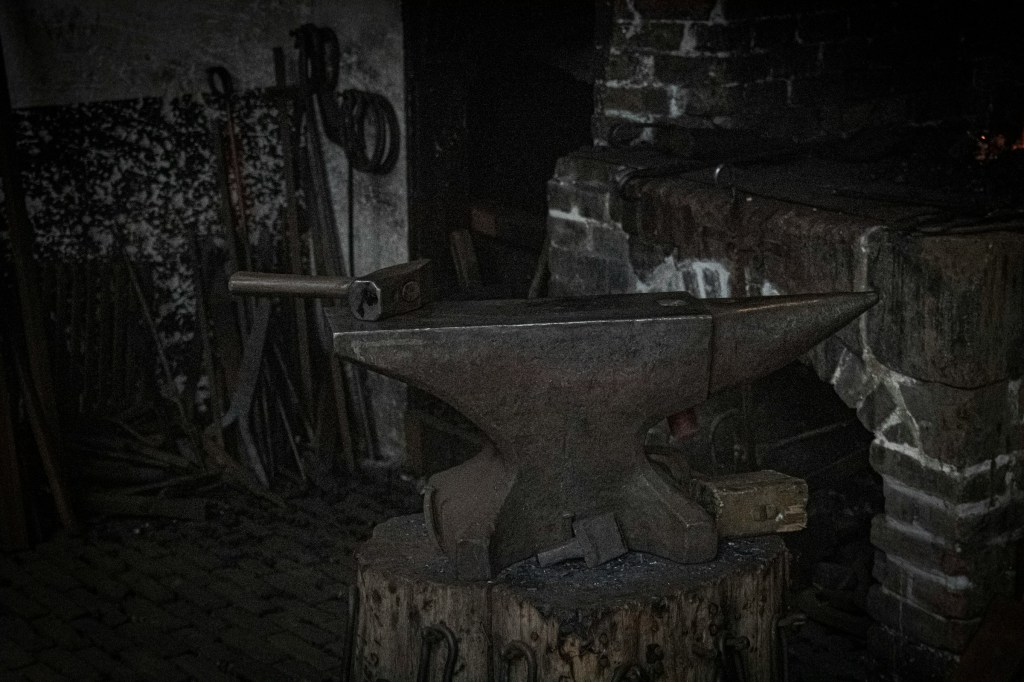
History and myth remind us of the difference. Ares raged as the embodiment of chaotic violence, feared but never truly respected. Athena, by contrast, ruled with disciplined wisdom, the embodiment of strategy, justice, clarity of purpose. In the north, Thor boasted and thundered with strength, but it was Tyr who placed his hand in the wolf’s mouth, who bore the cost of sacrifice. One shouts and postures. The other endures the weight.
And this is the fault line: pretenders imagine strength is measured in spectacle, in how loudly they can command attention. But the warrior knows strength is measured in silence, in responsibility carried, in the scars taken on quietly and borne without applause. The pretender reaches for symbols of war; the warrior shoulders its reality.
It is not hard to tell them apart, once you learn the signs. The costume always frays under scrutiny. The performance eventually slips. The anger burns itself out, leaving only ash. What endures is not the theater of power but the bearing of it; the quiet weight accepted, the consequence owned. This is the line between pretenders and warriors, between noise and strength.
The Bearing of Real Strength
True strength does not demand to be seen. It does not need parades or podiums or the applause of crowds. It is cultivated in silence, shaped in the crucible of discipline, and proven in the moments when no one is watching. The warrior’s bearing is not a matter of appearance but of substance; an inner foundation that remains steady even when the world around it shatters.
Discipline is its cornerstone. Musashi, in The Book of Five Rings, wrote that the warrior must understand not only the way of the sword but the way of all things. Focus, clarity, and adaptability were his tools. To win a hundred battles meant little if one could not govern the self. Bushido echoed this truth, teaching that the warrior’s honor was not measured in victory for its own sake but in service. Service to family, to community, and to principle.
The path was not dominance but duty.
The Stoics, too, knew this weight. Epictetus reminded his students that we control only our own mind and choices, never the events themselves. Marcus Aurelius, ruling an empire, wrote to himself that true power meant restraining anger, tempering desire, and placing reason above impulse. Their wisdom converges with Bushido and Musashi’s art: strength without self-control is chaos; strength with restraint is civilization’s safeguard.
True strength is tested not in the clash of weapons but in the willingness to carry responsibility. It is built in silence, forged in repetition and endurance. It appears not in how loudly one can command but in how steadily one can endure. To protect, not to dominate; to defend, not to destroy.
This is the warrior’s role. The strongest men and women are those who put themselves between danger and those unable to bear it, often without recognition, often at great cost.
Consider the hallmarks of this strength. A leader who shoulders blame rather than casting it. A parent who sacrifices comfort for their children’s safety. A soldier who restrains his hand when violence would be easy but unjust. These acts do not dazzle the crowd, but they hold societies together.
They are the quiet architecture of resilience.
Real strength is not spectacle. It is service. It is accountability. It is the acceptance of consequence when others look away. It is the steady hand in the storm, the voice that calms rather than inflames, the presence that reassures because it is grounded, not because it is loud.
This is what separates the warrior from the pretender: the bearing of weight without demand for reward, the discipline to master oneself before attempting to lead others, the choice to wield power for the sake of protection rather than performance.
It is not glamorous. It is not easy. But it is the only foundation upon which anything lasting can be built.
How to Recognize (and Live) Strength
Strength reveals itself not in costume but in conduct. The difference can be seen in the smallest of actions, if one knows what to look for.
Pretenders demand applause; warriors complete the duty and move on in silence.
Pretenders hide behind others when the weight grows heavy; warriors step forward, placing themselves where the burden falls hardest.
Pretenders shout to prove their strength; warriors endure without needing to announce it.
To recognize strength, then, is to look past the noise. Watch for accountability, not anger. Watch for sacrifice, not spectacle. Watch for those who bear consequence without excuses, who carry the work without demanding reward. These are the marks of real strength, the signs by which warriors can be known even without their banners.
And to live strength is harder still. It is to cultivate restraint when fury feels easier. It is to choose accountability when excuses would be convenient. It is to seek clarity when confusion might serve your interests. It is to accept that the measure of strength is not what you can demand from others but what you can bear yourself.
To demand strength of our leaders, we must support those who shoulder burdens rather than those who perform toughness. To live strength in ourselves, we must resist the temptation of theater and embrace the quiet, often unseen work of carrying weight with integrity.
This is how strength endures, by being practiced, rather than simply proclaimed.
The Ambiguity Revealed
Perhaps you thought I spoke of then. Or of now. Or of what is still to come. The fact that you cannot be certain is the warning. History’s stage repeats its lines so often that the backdrop hardly matters; the danger is always the same.
Real strength is impossible without accountability. Real strength does not send others to bear its consequence but accepts that burden openly, without disguise. Pretenders shout their toughness from behind the podium and its glass shield. Warriors carry their weight where all can see it, though few ever notice.
The moral root is simple, yet demanding: to hold power is to hold responsibility. To bear authority is to accept the cost that comes with it. Anything less is theater. Anything less is pretense. True strength has always been tied to service, to stewardship, to the willingness to suffer consequence in order that others may be shielded from it. That is the ethical heart of the warrior, across cultures and centuries.
And so the ambiguity remains, because it must. Perhaps you read this as a reflection of the past. Perhaps you see the outline of the present. Perhaps you fear it sketches the shape of what is yet to come.
The line blurs because the echoes are real. The stage is rebuilt whenever vigilance falters, and the actors are always waiting.
So the question turns to you. Do you see past, or present? Or both? And more than seeing—what will you do, to keep us from reliving what already begins to echo in our streets and our halls?
Strength is not the mask of power. It is the quiet weight willingly borne, the consequence openly faced.




Leave a comment