

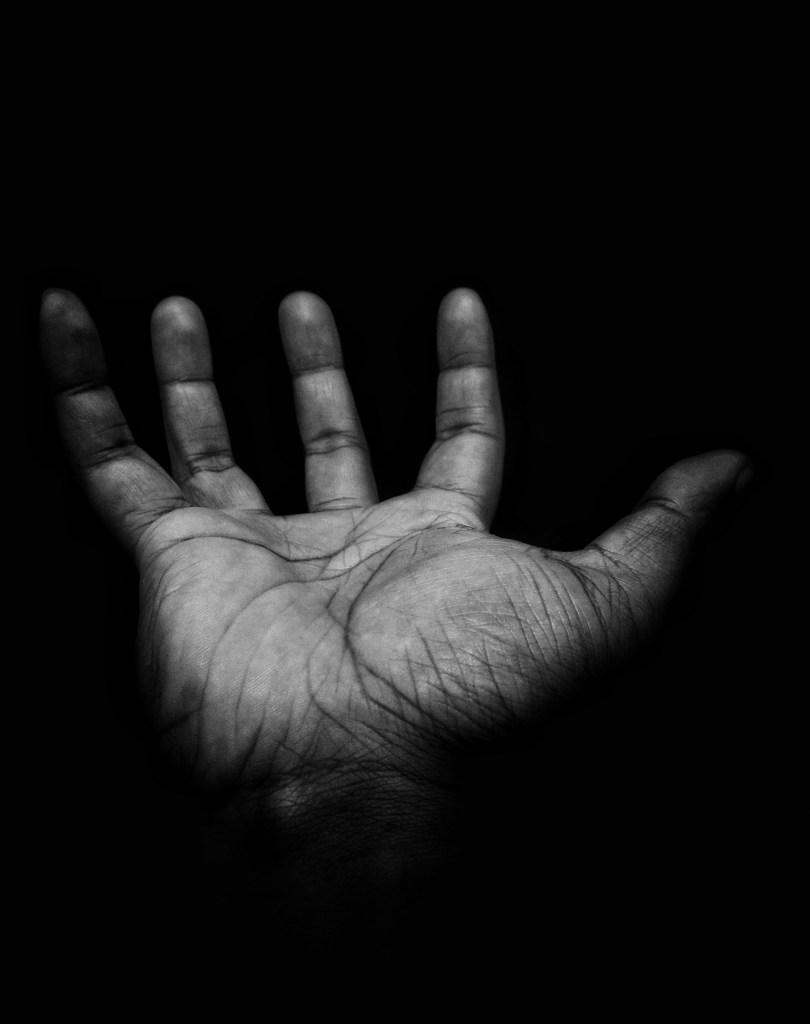
Photo by Lukas Rychvalsky on Unsplash
Author’s Note
Most of my writing looks outward — at culture, systems, leadership, and the broader arcs that shape how we live. This piece, instead, turns inward. It’s more personal, more vulnerable, and more fraught.
It’s about the world I see for men.
That alone will raise eyebrows in some circles, and I understand why. This is not a counter-argument to anyone’s progress. It’s not a manifesto, not a backlash, and not a call to roll back time. It’s simply an attempt to name a quiet reality that many men live, but few talk about.
Let me also say clearly: I know I’m fortunate. I have a partner who sees me not just as a provider or a role, but as a person. A woman who shows concern for the weight I carry, supports my growth even when it doesn’t directly serve her or our household, and offers a kind of partnership that honors us both as whole people. That is not everyone’s experience, and that’s precisely the point.
I also know women face challenges of their own. Real ones. Structural ones. Social ones. This piece doesn’t attempt to deny, diminish, or debate that. It does, however, push back on the idea that acknowledging male struggle must come at the expense of someone else’s.
The perception of a zero-sum game between the sexes is not just flawed, it’s corrosive. It keeps us from seeing clearly. It keeps men from speaking honestly. And it keeps all of us from building something better, together.
The stories here are drawn from what I’ve witnessed, lived, and repeatedly heard echoed by others. They aren’t abstractions or provocations. They’re not the whole story, but they are part of it. Where the words feel sharp, it’s because the truth often is. Where they touch on pain, it’s because pain is part of what’s missing from the conversation.
I’m not asking for agreement. I’m asking for attention. Because behind the data, behind the silence, behind the withdrawal, there are real people navigating roles they didn’t choose and expectations they can’t always meet.
If this piece challenges you, good. Let it. But let that challenge be an invitation. Not to retreat into defensiveness or debate, but to listen, to reflect, and perhaps to see something that hasn’t had enough light.
~Dom
The Weight of Expectation
From an early age, men are taught that worth is measured not by who they are, but by what they produce. Productivity, provision, and strength form the pillars of masculine value, reinforced in schoolyards, locker rooms, workplaces, and even in the quiet corners of family life. The lessons are subtle but relentless: pull your weight, provide for others, protect what matters. To falter in any of these is to invite judgment, not just from society at large, but often from fellow men who were taught the same creed.
The messages arrive wrapped in familiar phrases: “boys don’t cry,” “man up,” “don’t be soft.” Young boys hear, directly or indirectly, that their worth is tied to toughness, that emotions are liabilities, and that showing need will only invite scorn. Sports often become the arena where these lessons are tested, not just in competition but in the expectation to play through pain, to celebrate victory without arrogance, and to absorb loss without tears. Even in family settings, boys learn quickly that a scraped knee is meant to be walked off, not wept over.
Vulnerability, in this landscape, is framed as flaw. Tears are weakness. Doubt is failure. To admit uncertainty is to risk dismissal. And so endurance becomes the default posture. Not classical Stoicism, the philosophy of wisdom and balance, but its cultural echo: silence, suppression, endurance without complaint. The smile that masks exhaustion. The nod that says “I’m fine” when the truth is far more complicated.
The man who aches is expected to carry it quietly, because to stumble publicly is to risk being seen as less. Even in adulthood, expectations harden: a man is to be the one who holds steady when others fall apart, the one who pays the bill even when money is tight, the one who absorbs pressure without flinching. These roles confer dignity in moments of success, but rarely allow the full breadth of humanity to take root.
The result is a kind of carving. Instead of allowing men to be whole people with needs, fears, tenderness, and contradiction, they are chiseled down into roles. Provider. Protector. Producer. Roles that may look noble, but leave little room for rest, softness, or being seen as simply human.
The Double-Bind of Modern Roles
If the first lesson is endurance, the second is competition. Men are raised in a language of rivalry: dog-eat-dog, survival of the fittest, only the strong survive. Life is framed as a ladder to be climbed, a board to be conquered, a scoreboard to be filled. To fall behind is not just to lose position, but to lose identity.
Yet even for those who seem to “win,” the game is often stacked. Success can feel less like victory and more like carrying a burden up a hill that never flattens. In relationships, this paradox sharpens. Men are told to seek equality, to value independence in a partner, yet they are still expected to shoulder the lion’s share of provision. Pay the mortgage, cover the dinner bill, buy the ring… and do it all while presenting as the strong, independent partner who asks for nothing in return.
Many men are raised with a quiet script: be generous, be steady, take the lead, pay the bill. These gestures, once taught as courtesy, have hardened into expectations. Offer them, and you’re meeting the standard. Question them, and you’re accused of bitterness. Ask for reciprocity, and you’re dismissed as entitled. What began as generosity becomes obligation; a one-way performance of care that’s rarely returned in kind.
This double-bind leaves many men playing a game that feels unwinnable. To provide is to fulfill expectation but risk being invisible. To question the rules is to be told the rules were never in their favor to begin with. And so competition, instead of elevating, erodes. It becomes less about striving together and more about survival, a performance demanded endlessly without applause.
The Atmosphere of Suspicion
The last decade has brought undeniable progress in addressing long-silenced abuses. The MeToo movement gave voice to pain that had been buried for too long, and it reshaped cultural conversations in necessary ways. Yet alongside that progress, another reality has taken hold; a climate of suspicion that men quietly navigate every day.
False accusations are statistically rare, but when they do happen, the fallout can be catastrophic. A reputation takes years to build and only moments to undo. Careers are derailed, friendships evaporate, and the shadow of doubt lingers long after the truth emerges. Even an apology, even exoneration, rarely restores what was lost.
And so many men move through workplaces, schools, and social spaces with a new layer of calculation. What was once a friendly gesture now feels like a risk. A closed-door meeting, a casual compliment, even offering mentorship are weighed not only against intent, but against how they might be perceived. The burden is invisible, but heavy: to constantly prove that you are safe, decent, trustworthy.
This double standard isn’t just theoretical — it’s ambient.
Recently, a female friend shared this image in a group chat. It got a few laughs, a heart emoji, and was quickly forgotten:

Flip the genders, and it wouldn’t have been a joke. It would’ve been a screenshot. A tweet. A consequence.
It is not that men wish to escape accountability. Most recognize the importance of the cultural shifts underway, and many actively support it. But living as if one is presumed a threat until proven otherwise carries a cost. It fosters hesitation where there might have been collaboration, silence where there might have been guidance, withdrawal where there might have been trust.
This is the quiet burden: to always be proving decency, not as a matter of character, but as a precondition for being allowed in the room. And while vigilance has its place, suspicion, when it becomes the default lens, wears away the possibility of genuine connection.
Over time, this atmosphere does more than limit speech; it reshapes participation. When every interaction is shadowed by risk, many men begin to weigh silence over engagement, distance over presence. The goal isn’t to disappear, but to reduce the chance of harm to themselves, to others, to reputations that feel increasingly fragile.
What begins as caution slowly becomes retreat. And in that retreat, something essential begins to fray: the willingness to show up fully, to risk being seen.
Desire and Disposability
If suspicion defines one side of modern manhood, desire defines the other. Nowhere is this tension more visible than in the realm of relationships. Dating apps and social media have made the market more transparent than ever, and the patterns are stark. A small percentage of men, those at the very top of perceived attractiveness, receive the majority of attention, while the rest compete for what remains.
The algorithms amplify it, but the culture accepts it as natural.
At the same time, standards applied to men are both explicit and unforgiving. Height becomes a filter, income a prerequisite, job title a shorthand for worth. A man’s desirability is tallied in numbers and possessions: how many inches, how many zeros, how many toys parked in his driveway. Body shaming is tolerated, even joked about, in ways it rarely is for women. Short kings, dad bods, balding heads, these remain easy punchlines in a culture that insists it despises cruelty.
Beyond appearances, men are also expected to demonstrate emotional intelligence… but often only as a service. A good partner is supposed to listen, to understand, to support. Yet when men share their own struggles, they are met with discomfort in friend groups, mocked in group chats, or quietly branded as weak. The expectation is to absorb emotion, not express it. To hold space for others, while rarely being granted the same.
The dissonance is sharp. We are told that equality is the standard, that judgment based on appearance or resources is shallow. Yet men encounter an asymmetry that rarely gets named: what is dismissed as discrimination when directed at women is often excused as preference when directed at men.
The result is not outrage so much as resignation. Many quietly absorb the message: you are desirable only if you clear a bar that keeps moving higher.
This is not to deny the progress made toward genuine equality, nor to claim that women are without burdens of their own. But it is to name a truth often left unspoken: that in the marketplace of desire, men are just as vulnerable to being reduced, measured, and discarded. And when worth is framed as disposable, intimacy becomes harder to trust, and connection harder to believe in.
Withdrawal and Silence
When the weight of expectation, competition, suspicion, and disposability accumulates, many men simply begin to step back. The trend is visible if you look closely: fewer men pursuing relationships, fewer volunteering for mentorship, fewer taking personal or professional risks that might expose them to failure, ridicule, or suspicion. Withdrawal is not always announced. It’s quiet, deliberate, and often misunderstood.
It is important to clarify why this withdrawal happens. It is not an attempt to dominate, to punish, or to reverse the progress others have made. Most men do not step back out of hostility toward women, nor out of a wish to retreat into outdated hierarchies. More often, withdrawal is self‑protection; a way of limiting exposure to situations that feel stacked against them, or of escaping roles where every move feels suspect. It is avoidance rather than aggression.
In place of traditional connection, substitutes rise. Subscription-based companionship fills the gaps of intimacy. Gaming worlds offer immersive narratives where success is possible, rules are clear, and risk feels controllable. Solitude, once a choice for rest, becomes a default mode of survival. These are not always unhealthy in themselves, but they can become shelters that harden into walls.
The numbers paint a sobering picture. Men make up the overwhelming majority of workplace fatalities (91-93%). They account for nearly 80% of suicides worldwide. Education gaps widen as men fall behind in university enrollment and completion, leaving long-term consequences for opportunity and stability.
The statistics are not abstract. They represent fathers, brothers, friends, and colleagues quietly slipping away.
Picture a father who no longer mentors his son’s friends because he worries every word could be misread. A young man who deletes dating apps not out of bitterness but out of exhaustion, tired of being invisible in a marketplace of endless swipes. A colleague who declines after-work drinks, not because he dislikes company, but because the risk of misstep feels heavier than the hope of connection. These are the lived shapes behind the numbers.
Silence, in this context, is both shield and wound. It protects men from risk but isolates them from help. It preserves dignity in the short term but corrodes connection in the long term. And while some celebrate withdrawal as strength—the lone wolf, the stoic survivor—the truth is more complicated.
For many, it is more retreat than liberation, a response to a world where the costs of participation feel too high, and the rewards too uncertain.
The Question of Legacy
Scholarships and initiatives designed to advance women in education and the workplace have opened doors that were unjustly closed for generations. These measures were, and are, historically corrective, an attempt to balance scales that long tilted against women. Yet one consequence, rarely discussed, is that men have become less engaged in higher education. Women now make up the majority of college and graduate students, while many young men quietly opt out.
This opting out is not usually an act of protest. It is not a movement or a manifesto. It is, more often, a quiet refusal. A decision made in bedrooms, basements, and breakrooms, where the effort no longer seems worth the uncertain reward. For some, the cost of education feels insurmountable. For others, the cultural narratives about who education is “for” have shifted enough to make disengagement feel permissible, even inevitable.
The question, then, is not just what happens to the men who step away, but what happens to the society they leave behind. When half of a population begins to retreat from its institutions, from exhaustion more often than anger, what possibilities are lost? What ideas never surface, what contributions never take shape, what futures never take root?
Legacy is not only what we build, but what we neglect. And if participation continues to fade, the absence itself becomes a legacy: a hollowing-out of spaces that once relied on balance.
What gets lost is not just the men themselves, but the richness of what could have been built together, had they remained engaged.
An Invitation, Not a Conclusion
This is not a call to arms, a manifesto, or a demand. I have, quite intentionally, left no calls to action in this piece.
Instead, I offer an attempt to name something that too often remains unspoken: many men are weary of a game that feels rigged, where the costs of participation grow heavier while the rewards diminish or disappear. And so they step back, in quiet fatigue more often than protest. Not with banners raised, but with hands lowered.
The deeper tragedy lies not only in what is abandoned when men withdraw, but in what never has the chance to be. A conversation unsaid. A partnership unformed. A generation of ideas that never make it to the table.
Silence leaves behind a vacancy that statistics can measure in degrees and dollars, but whose real weight is in the futures we’ll never know.
Perhaps the metaphor of the house is fitting. A structure divided against itself can still stand… for a while. But when one half regards the other with suspicion, contempt, or quiet dismissal, the foundation begins to hollow. Not collapse by force, but erosion by neglect. The slow unraveling that happens when people choose absence over risk, solitude over misunderstanding.
Yet there is also another possibility. Withdrawal may be a retreat, but it is not always permanent. Stillness can be a wound, but also a waiting. And what good men long for is not dominance, but dignity: the chance to show up as whole people, without being reduced to roles, performances, or preemptive suspicion.
To be seen not as threats to be managed or providers to be used, but as participants in the shared human project of living. Not eventually. Not conditionally. Now.
That is not ambition. That is not entitlement. That is a rightful claim. Dignity is not a favor to be earned; it is the base note of our humanity. And any culture that denies it to half its people does not liberate the other half. It fractures the whole.
This, perhaps, is where the philosophical weight returns. The (real) Stoics remind us that endurance without purpose hollows into despair. The Taoists remind us that balance is not weakness, but strength that bends without breaking. Kant reminds us that dignity is not granted by society. It is owed, by nature.
I do not offer these reflections to settle a debate or to counterbalance someone else’s ledger of grievances. I offer them because clarity is a kind of respect. And honesty, even when it unsettles, is a form of care.
Whether you see these dynamics as imbalance, inevitability, or simply one perspective among many, this is the world I see for men.
And if you recognize any of it, whether with sympathy, discomfort, or a quiet nod, know this:
You are not alone. And you are not wrong to want more.






Leave a comment