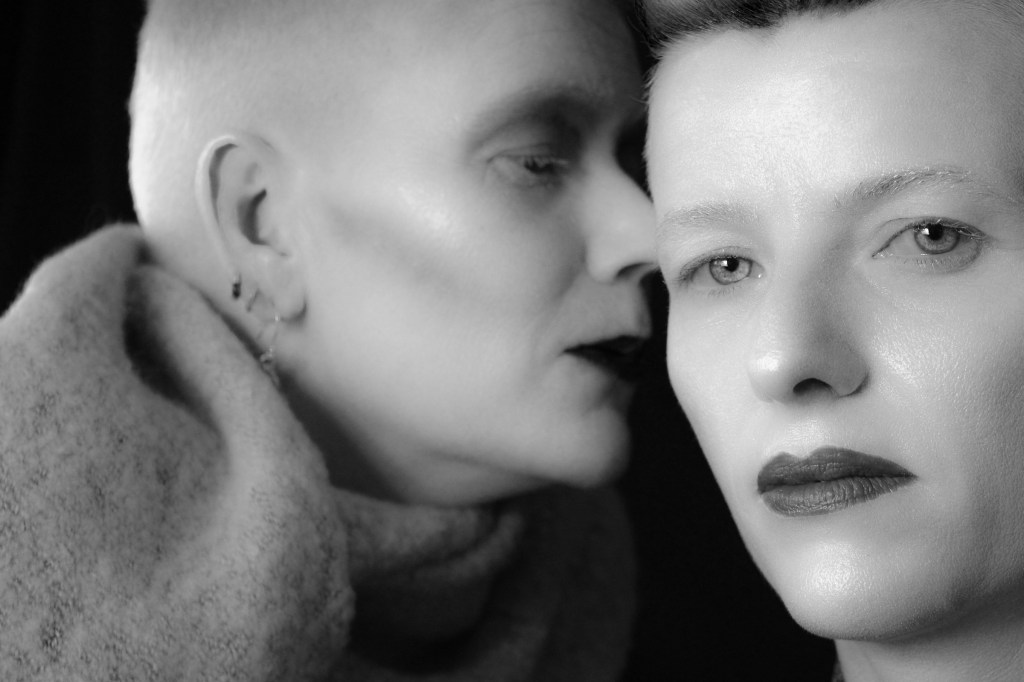
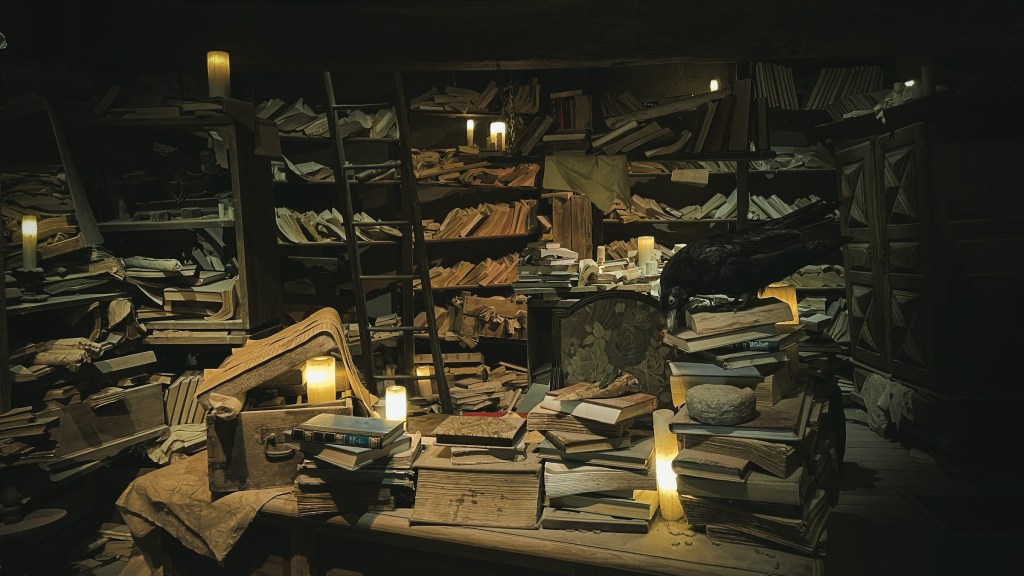
Photo by Christina Langford-Miller on Unsplash
Author’s Note
This isn’t a light read, and it wasn’t a light one to write.
I didn’t set out to write about Plato. I set out to write about the quiet, comfortable lies we live with; socially, culturally, personally. But as I dug deeper, the threads all led back to something older. Something intentionally built.
What follows is part essay, part excavation. It moves through philosophy, politics, family dynamics, and internal psychology, not necessarily to provoke cynicism, but to question what we’ve agreed to call truth. You might not agree with every conclusion. That’s fine. The goal here isn’t to dictate answers, but to raise better questions.
If it challenges you, I hope it does so with clarity. If it comforts you, I hope it’s earned.
And if you recognize something of yourself in it… good. So did I.
~Dom
In Plato’s Republic, a peculiar justification appears; one that unsettles even as it clarifies. Socrates, in sketching his vision of the ideal city, proposes what he calls a “noble lie.” It’s called noble, not for what it achieves—but in spite of the fact that it isn’t true. The truth was sacrificed for social harmony, obedience, and the binding of disparate people into one imagined family.
Why did Socrates determine such a deception was necessary?
Because he believed that human beings, left to their own impulses, would fracture along lines of greed, ambition, and rivalry. Justice, as he envisioned it, required that each person play the role suited to them, not according to whim but according to the order of the whole. To sustain such a structure, rational argument was not enough,. Myth was required. A story powerful enough to seep into the bones of children, to become instinct before it was ever examined. The noble lie was designed to protect the fragile architecture of the city, to safeguard unity against the corrosive forces of envy and insurrection.
The lie, told from birth, would teach each citizen that they are formed of different metals, gold, silver, or bronze, and that their place in society is not arbitrary but ordained by nature itself. Gold for rulers, silver for soldiers, bronze for farmers and craftsmen. By this myth, hierarchy ceases to be oppression and becomes destiny, with dissent transformed into betrayal not just of state but of the cosmic order.
The brilliance, and perhaps the cruelty, of the ‘noble lie’ is that it makes inequality feel natural. It whispers to the low-born that their station is not a punishment or a disservice, but a natural part of the divine fabric. It tells the ambitious that obedience is not capitulation but alignment with the eternal. And it assures the rulers that their dominance is not theft but stewardship, responsibility bestowed by the nature of the universe itself. In a single stroke, fiction secures what force alone cannot: willing compliance.
You might recoil at the cynicism of Plato’s proposal. I certainly did. But history suggests he was not inventing something new, only stating plainly what was already done. Every civilization has its noble lies, stories told not because they are true, but because they hold the center. They soothe the restless, inspire the weary, and stabilize the fragile scaffolding of power. They are not accidents of culture but instruments, refined across generations, wielded as deftly as any weapon.
And so the question is not whether we live under lies, but which ones… and whether we find their comfort tolerable enough to leave them unchallenged.
The Lies That Become Social Currency
If the noble lie secured Plato’s city, its descendants have secured every empire since. Societies normalize their fictions by design more often than accident, because without them, the scaffolding trembles. Lies are not mistakes to be corrected; they are stabilizers that keep the edifice upright.
Politics thrives on this currency. Campaign promises are written less as contracts than as incantations, designed to stir longing rather than deliver reality. “Morning in America.” “Yes We Can.” “Make America Great Again.” Each is less a policy than a spell cast at the podium, a chant that captures imagination and loyalty. They endure not because they make waiting feel purposeful, without regard for truth of intent, or intention to follow through.
Economics runs on parallel myths. We are told that growth is endless, that merit alone decides success, that “the customer is always right.” These slogans soothe anxiety, mask inequities, and sell the illusion that fairness governs the market. Yet each is a carefully crafted fiction – stability borrowed against a debt that reality cannot repay.
Religion, too, refines its own variations. Doctrines promise certainty where experience offers only contradiction. Salvation deferred, paradise guaranteed, suffering transfigured into meaning. I’ve always found this to be more consolation than proof. Still, they bind communities, regulate behavior, and offer answers that silence the raw terror of uncertainty. Faith may contain truth, especially to the individual, but its narratives are often shaped as much by necessity as by revelation or faith.
Here, lies function as structural reinforcement, rather than aberrations. They are the glue that makes hierarchy tolerable, the oil that keeps institutions from seizing under the strain of reality. Societies sanctify their falsehoods because they cannot survive without them. And in that sanctification lies their greatest danger: when illusion becomes indistinguishable from truth, comfort hardens into control.
The Lies That Comfort The Privileged
If lies are currency, then public myths are the banknotes, the bills that circulate so widely they begin to feel like truth itself. Nations and movements depend on them, weaving narratives so persistent they shape not just policy but identity.
“Law and order” is one such myth. It is presented as the bedrock of civilization, the guarantee of safety. Yet too often it masks corruption, excusing violence from those in uniform while condemning it in those who protest. The phrase becomes less about justice and more about preserving a hierarchy where accountability flows downward… but rarely upward.
“Freedom” is another banner raised high, invoked as a universal virtue. But within its folds, exploitation often hides. Freedom for some has too often meant license to dominate others. whether through slavery justified as economic necessity, deregulated markets that strip protections in the name of choice, or the rhetoric of liberty wielded to erode the very conditions that make freedom meaningful.
And then there is the declaration that “equality has been achieved.” This myth, in particular, is as comforting as it is corrosive. It reassures the privileged that the work is done, that history’s debts are settled, that to demand more is to ask too much. Yet systemic inequities remain embedded in law, opportunity, and daily experience. To proclaim equality is achieved is not to celebrate progress but to silence those who testify otherwise.
These public myths endure because they bind societies together. They tell us we are safe, free, and equal whether or not the evidence holds. They allow nations to rally, to avoid fracture, to preserve cohesion. But the cost of that cohesion is truth. And in the shadow of these lies, injustice persists, growing stronger under the cover of slogans that promise the opposite.
The Lies that Bind
If societies require noble lies to survive, families often require smaller, quieter ones. They are rarely written into law or shouted from podiums, but they are no less powerful. These lies whisper through dinner tables, echo in hushed arguments behind closed doors, and harden into mantras passed from parent to child.
“Everything’s fine,” they insist, even when addiction rips through the household or violence leaves marks no one speaks of. The lie is a balm, but it is also a gag. It offers momentary comfort at the expense of acknowledgment, preventing wounds from being named—and therefore from being healed.
“We don’t talk about that,” becomes both survival mechanism and silencing tool. It may shield children from truths too heavy for their age, but it also shields adults from accountability. In the quiet, harm calcifies. Secrets metastasize. Silence masquerades as strength.
And then there are the narratives of pride: “our family is strong,” “we stick together,” “blood is thicker than water.” These phrases bind kin with threads of loyalty, but often at the cost of honesty, equity, and justice. They can conceal neglect, excuse cruelty, and demand endurance where departure would mean survival. Belonging is preserved, but at the expense of so much more.
Family lies endure because they feel protective. They soften jagged edges, create the illusion of stability, and keep fragile bonds from shattering. But like all lies, their comfort is double-edged. They may preserve unity in the moment, yet they often pass harm from one generation to the next, ensuring that what was hidden becomes normal, and is too often repeated. Inherited myths offer shelter, but how often does that shelter becomes a prison?
The Lies We Tell Ourselves
If societies weave myths and families pass down fictions, the self perfects its own; internal lies whispered in the quiet of the mind. They are not always malicious, and few begin that way. Sometimes they are survival tools, fragile scaffolding built to carry us through what might otherwise crush us. But like every other lie, they come at a cost.
“I’m fine.” The words are armor, a mask worn to reassure others and, perhaps more desperately, to reassure ourselves. It allows us to move through the day without collapsing under the weight of what we cannot yet face. But over time, the performance can become the identity, leaving us unable to name what hurts even to ourselves.
“It will be different tomorrow.” This is hope’s close cousin, a future-tense lie that postpones action. It allows us to endure toxic jobs, abusive relationships, or self-destructive habits by promising that change is always just one sunrise away. It soothes in the moment but ensures stagnation, transforming days into years without transformation.
“This is all I deserve.” The cruelest lie of all, internalized through trauma, neglect, or repeated failure. It whispers that suffering is natural, that joy is for others, that dignity is a luxury out of reach. It is the illusion that keeps people bound to chains long after the locks have rusted away.
Self-deception is anesthesia. Sometimes it numbs the pain just long enough for us to survive. Sometimes it ensures we never stop bleeding. The challenge, the razor’s edge, is discerning when illusion shields us from collapse and when it robs us of the very strength we need to change.
To tell the truth to others requires courage. To tell it to ourselves requires something harder: the willingness to dismantle our own shelters, to step out from beneath the roof of comforting fictions and face the weather as it is. That step may wound, but it is the only path toward healing. For a lie may carry us through the night—but only truth can sustain us through the day.
Truth as Discipline, Not Cruelty
If lies are so deeply woven into society, family, and the self, what alternative is left? The answer is not to replace illusion with brutal exposure, stripping away every veil until only wounds remain. That, too, becomes cruelty.
The alternative is discipline; the practice of truth spoken with integrity, honesty, and restraint.
Truth as discipline begins with refusal: refusing to play along with what corrodes, refusing to affirm what is false for the sake of belonging or ease. Integrity demands those refusals, even when they cost us status or comfort. Honesty sharpens them, ensuring that what is spoken cuts through pretense rather than through people. Restraint tempers them, keeping truth from becoming weapon where clarity would suffice.
The practice is simple, but never easy.
It is the steady act of saying, “Here is what is real, and I will not pretend otherwise.” It does not require shouting, nor does it demand that every illusion be shattered at once. It requires consistency, the daily courage to stand in proportion to what is true. In workplaces, it may mean refusing to celebrate empty slogans. In families, it may mean naming the harm that silence has sheltered. In the self, it may mean admitting pain without collapsing into it.
Clarity is heavier than comfort, but it gives us footing. Illusions may shield us from pain, but they also keep us from moving. Truth may sting, but it steadies the ground beneath our feet. It is not a replacement for hope or a denial of kindness; it is the soil from which both can grow without rotting from within.
If lies soothe by keeping us still, truth disciplines by keeping us in motion; toward justice, toward repair, toward lives that do not need illusions to endure.
An Honest Conclusion
Plato’s noble lie was meant as a gift—to preserve order, to bind the city into harmony. But like Pandora’s jar, it came sealed with poison. Was it mercy, soothing the chaos of human desire? Or was it control, obedience masked as destiny? Likely both. Survival and meaning rarely pull in the same direction.
That tension is everywhere. In society, lies are scaffolding—holding institutions upright even as injustice rots their foundation. In families, lies protect fragile bonds while silencing wounds that need to be named. And in ourselves, illusions carry us through the darkest nights—but if held too tightly, they leave us hollow come morning.
Even the phrases we call wisdom betray their roots. “The customer is always right” once ended with “in matters of taste”, a reminder of preference, not power. “Blood is thicker than water” began as “the blood of the covenant is thicker than the water of the womb”, a celebration of chosen loyalty over inherited obligation. Both were shortened into weapons of convenience; rewritten to serve control rather than clarity.
This is what comforting falsehoods do: they mutate. They spread. They strip away complexity to offer something easier to believe. And in doing so, they become harder to question. Soothing becomes sedation. Sedation becomes structure.
But lies, no matter how beautiful, do not hold. They crumble under pressure. They fail when we need them most.
Truth, on the other hand, is heavier. It wounds. But it also grounds us. It rebuilds what illusion only props up. To choose truth is not to abandon comfort; but to abandon comfort that rots us from the inside out.
The noble lie, like every lie we’ve inherited since, leaves us with the same choice:
Will we cling to illusion for the sake of ease, or tell the truth for the sake of becoming whole?
One quiets the moment.
The other carries us through it.








Leave a comment