

If you’re reading this at masqueradeandmadness.com…
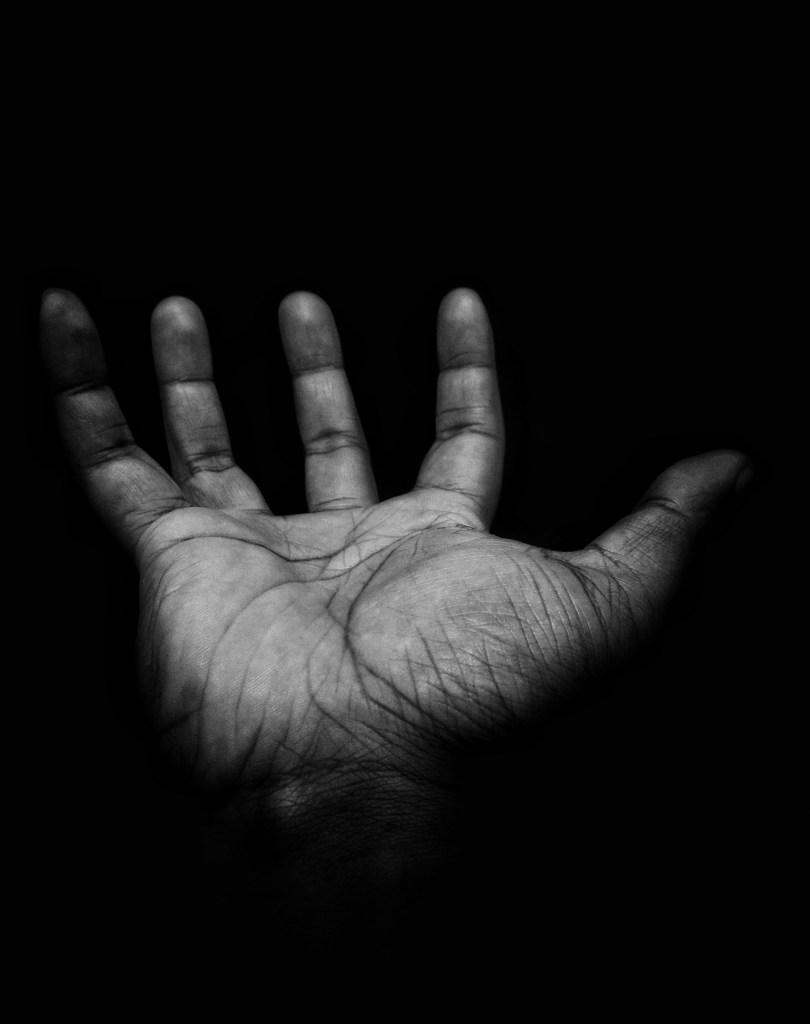
Photo by Marc-Olivier Jodoin on Unsplash
Author’s Note
This piece is not a rejection of hope. It’s a rejection of how it’s been used.
I believe hope matters—deeply—but not as a sedative, not as an excuse, and not as a leash. Hope has value when it is chosen with clear eyes and paired with action. Not because it softens reality, but because it helps us aim beyond it.
True hope is not passive. It doesn’t ask us to wait. It asks us to work. It demands that we name what we want, contrast it with what is, and walk deliberately into the gap between them—knowing full well that the crossing may cost us more than comfort.
This essay is about reclaiming hope from the machinery that’s turned it into a currency of compliance. It’s a reminder that real hope doesn’t numb the pain—it sharpens the clarity of what must change.
If you’ve chosen hope with full knowledge of the weight it carries, then I’m not here to take it from you. I’m here to stand beside you and say: yes, it is heavy—and yes, it is worth it.
But only when it moves us forward.
—Dom
They tell us the story of Pandora’s box as though it is a comfort, but the tale begins not with kindness, but with spite.
The gods, jealous of mortal fire and weary of human defiance, fashioned a trap disguised as a gift. They placed it in her hands—a jar, pithos not box, yet mistranslation has obscured the truth—and whispered that it was filled with wonders. She was told to guard it, to treasure it, but never to open it.
It was not curiosity alone that compelled her, but the weight of divinity’s riddle, the itch of a secret meant to be broken. When at last she loosened the lid, the air itself seemed to tear: disease rushed forth on invisible winds, famine crept into the soil, envy took root in the heart, despair coiled itself around the human mind.
One by one, each affliction slipped into the world, staining everything it touched. Terrified, she slammed the jar shut, but the damage had been done.
And there, rattling softly within the vessel, one thing remained: hope.
A consolation prize, a last mercy, a single light flickering in the dark—or so the story tells us. But what if it was not mercy? What if it was the final cruelty?
Consider the context: the gods wanted humanity weakened, kept low. They sent toil, suffering, strife—all so that mortals might never rise too high. Why then would they leave behind a gift?
Why would the same hands that seeded plague leave behind a balm? Unless that balm was the most poisonous trick of all. Unless hope itself was designed not as freedom, but as tether.
Because hope does not cure hunger. Hope does not heal disease. Hope does not halt the armies marching toward your walls. Hope only whispers: endure a little longer.
And in that whisper lies the secret genius of its design. For a people stripped of everything might still rise in fury. A people with no illusions might rebel. But a people with hope?
They wait.
They believe tomorrow will be kinder, that someone else will intervene, that change will arrive if only they suffer today in silence.
Hope becomes the chain no one sees, the narcotic that soothes without curing, the tether that keeps humanity from tearing the heavens down. In leaving hope behind, the gods ensured their rule. They ensured deference disguised as optimism, submission dressed as faith.
We are told that hope is what keeps us alive. But perhaps it is also what keeps us captive.
Recommended Listening:
The Public Perception of Hope
In the world we inherit from that myth, hope is no longer questioned. It is taught to us as a virtue, polished until it gleams like gold. Hope is the candle in the dark, the fragile flame that must be protected at all costs. To lose everything else is tragedy, but to lose hope is presented as the final death.
Our culture elevates hope as inherently good, as though it were immune to corruption. To hope is to endure, to survive, to rise again when reason fails. The language of hope wraps itself around our stories: in the soldier’s last stand, in the parent’s whispered reassurance, in the survivor’s clenched fists.
Religious sermons thunder with it, declaring that faith without hope is emptiness. Campaign speeches are engineered from it, promising brighter tomorrows in exchange for today’s loyalty. Motivational slogans paste it across billboards and book covers, urging us to keep hope alive, as though its presence alone were salvation.
We are told—again and again—that to hope is to resist despair. Yet this is only half the story.
For when we call hope a virtue, we rarely pause to ask why. We inherit the assumption the way we inherit the language of our ancestors: unconsciously, unquestioned, repeated until it feels like truth. We drape hope across every wound as though it were bandage, never asking whether the wound festers underneath. We teach children to “never give up hope,” even when the thing hoped for is impossible, even when clinging to it will bind them to suffering longer than honesty would.
This is the paradox: hope comforts us not because it changes reality, but because it obscures it. It bends the unbearable into the tolerable by promising that what is endured today will be redeemed tomorrow. We admire those who “keep hope alive” because we mistake endurance for victory, and postponement for salvation. Nietzsche warned that hope prolongs torment, while Kant distinguished duty from mere expectation—yet we collapse them together, sanctifying the very thing that keeps us waiting.
The ancients told us hope was what remained in the jar. Our modern myths tell us it is what remains in us when reason falters. Both assume its presence is always a blessing. Yet if hope is always good, why do we so often find it weaponized? Why does it appear most loudly when institutions wish to quiet unrest? Why is it invoked most forcefully when reality is least likely to change?
This, too, is part of the machinery: the cultural reflex that insists hope is beyond critique. In elevating it to sacred status, we blind ourselves to its shadow. And in that shadow, the story of hope shifts—from virtue to instrument, from light to leash.
The Machinery of Hope
If hope is sacred in private, it is industrialized in public. If the ancients left us hope as a leash, modern powers have refined it into an industry. The machinery of hope is most visible at the level of institutions, where longing is packaged, branded, and sold back to the public as both promise and pacifier.
Politics thrives on hope’s currency. Slogans like “Morning in America,” “Yes We Can,” and “Make America Great Again” are not policies but incantations, designed to distill generations of frustration into a single chant. They are engineered to capture longing more than deliver truth. The crowd leaves the rally with uplifted faces, yet their daily lives remain untouched. The machine does not need to deliver—it only needs to keep belief alive until the next election cycle. History offers no shortage of examples: Rome’s bread and circuses were not about nourishment but about spectacle, ensuring the restless poor hoped for grandeur instead of revolt.
Religion has long perfected the deferred promise. Salvation in another life, paradise beyond the veil, redemption just out of reach: all serve to anchor behavior in the present. Suffer now, obey now, tithe now; hope assures you it will all be made right in eternity. The power of the pulpit is not merely in offering comfort but in ensuring docility, sanctifying submission under the guise of trust in what is to come. Cold War propaganda invoked similar tactics—framing hardship and sacrifice today as the price of a hopeful utopia tomorrow.
Corporations adopt the same grammar. Advertising equates purchases with transformation: buy this and you will be more whole, more beautiful, more free. Hope is rebranded as consumer desire, a cycle where dissatisfaction is stoked precisely so the next product can promise to soothe it. No ad campaign admits its futility; it must always whisper, “This time it will be different.”
Here, hope is less about belief than about deference. It stabilizes, pacifies, and deflects revolt by dangling the image of a better tomorrow just beyond reach. A populace that keeps hoping is a populace that waits. And waiting, after all, is what ensures the machinery continues to run.
Hope in Relationships
Another layer; if institutions refine hope into industry, relationships distill it into intimacy. At this level, hope can be both lifeline and trap. It sustains bonds that should have broken long ago, binding people not to love but to the dream of what love could become.
Hope keeps someone in the orbit of an abuser, whispering that cruelty will soften with time, that rage will fade into tenderness. It tells the neglected partner that indifference will one day turn to attention, that absence will finally transform into presence. Logic might demand departure, but hope insists on suspension—another day, another chance, another promise deferred.
Cultural stories amplify this illusion. Fairy tales insist the beast can become a prince if only someone believes. Romantic comedies build entire narratives on the promise that neglect or failure will bloom into devotion once hope has been tested long enough. These fictions teach us to wait, to endure, to substitute potential for presence.
It is in this context that a dangerous substitution takes place: “I see what you could be” replaces “I see who you are.” The vision of potential eclipses the reality of the present. Hope paints portraits of possibility, and people cling to those portraits even as the living subject betrays them again and again.
Here, hope does not strengthen love; it prolongs its illusion. It becomes the leash that keeps individuals tethered to suffering, mistaking endurance for devotion. What society refines into docility, the individual translates into sacrifice. In both cases, hope functions like Pandora’s jar: containing just enough promise to keep the lid shut on all the afflictions spilling out.
(Sorry, this song fit too well to skip it or choose a lesser option.)
Hope in the Individual
If society and relationships teach us how to wield hope against one another, the individual learns how to wield it against themselves. This is perhaps the cruelest twist: hope becomes self-imposed manipulation.
We whisper to ourselves that we can endure just a little longer because it might get better. The inner voice bargains like a dealer extending endless credit: just one more day, one more sacrifice, one more turn of the wheel. We tell ourselves to tolerate a job that corrodes us, a system that exploits us, a life that shrinks around us, because change might come if only we wait.
Hope feeds us on futures that never arrive, binding us to conditions that would otherwise be intolerable. It is the mirage shimmering on the horizon: always close enough to keep us moving, never close enough to drink. It is the coin tossed into the air that never lands, suspended in the eternal promise of possibility.
Here the psychology deepens into lottery and myth. Survivorship bias convinces us that because someone, somewhere, escaped, we can too—if only we persist. The lottery-ticket logic insists that though the odds are impossible, it could be me next time. In this way, we forge our own chains while convincing ourselves they are keys, shouldering the weight willingly because hope whispers release is just around the corner.
Yes, hope sometimes keeps people alive. It is the ember that carries them through nights of despair. But just as often, it keeps them from changing the conditions that are killing them. It suspends action in the promise of relief, ensuring we survive while forbidding us to truly live. And so the machinery of hope is perfected not just in our institutions and our intimacies, but in our very selves.
The Divergence of Language and Reality
The story we are told is simple: hope is resistance, virtue, faith.
To cling to it is to rise above despair, to prove one’s strength against the world’s cruelties. This is the public language, the myth repeated in pulpits, in classrooms, in campaign ads and corporate slogans alike. It is theater, scripted and costumed, rehearsed until it feels like truth.
But the lived reality tells another story. Hope is often sedation more than salvation, pacification more than power. It lulls rather than liberates, less a flame against the dark and more akin to a gauze over the wound, delaying the necessary cut of truth. Beneath the surface optimism, entire cultures begin to rot. Smiles for the cameras, despair in the shadows; bright banners of progress masking hollow institutions.
Nothing illustrates this better than the ritual of “thoughts and prayers.” In the wake of tragedy, hope is summoned as a substitute for action. Politicians speak the words like incantations, the crowd bows heads, and the machine moves on unchanged. Corporate promises work the same way: climate pledges that never meet their marks, glossy diversity campaigns that soothe audiences while leaving structures untouched. Each is stagecraft, not salvation.
Hope in this sense does not confront suffering; it anesthetizes outrage. It does not catalyze change; it replaces it with performance. Curtains fall, applause rises, and nothing shifts beyond the proscenium arch.
This divergence—the sacred story of hope as virtue, and the profane reality of hope as delay—creates a widening gulf. The larger it grows, the more fragile our societies become. For when people finally notice the dissonance between the hope they are told to cherish and the life they are forced to endure, they see the gears behind the myth, grinding steadily. And by then, the machinery itself is already feeding on what remains.
Closing the Circle
We began with Pandora, and it is to her jar we must return. Imagine her hands trembling, the lid rattling as the last sound of hope echoed within. The tale insists that hope was the final mercy, the ember spared to keep humanity alive. But if hope was the final cruelty—if it truly was the gods’ way of keeping mortals compliant—then the lesson is not to abandon hope altogether, but to see it clearly.
Across society, in our relationships, and within ourselves, we have traced hope’s machinery. It is commodity, leash, and self-imposed survival drug: sold by politicians, sanctified by religion, marketed by corporations, clung to by lovers, whispered into our own ears when no one else is listening.
It is the mechanism that promises tomorrow in exchange for obedience today.
The machinery of hope does not ask you to believe. It asks you to wait. To endure. To purchase. To comply. Not to heal. Not to free. Only to keep you waiting.
And in the end, when you strip away the slogans, the sermons, and the ads, you find the gears beneath—the same old machine, grinding you forward, promising tomorrow while it devours today.
The jar still rattles softly, the ember glows faint and cold, and humanity waits—forever reaching for a dawn that never arrives.






Leave a comment