
If you’re reading this on masqueradeandmadness.com…
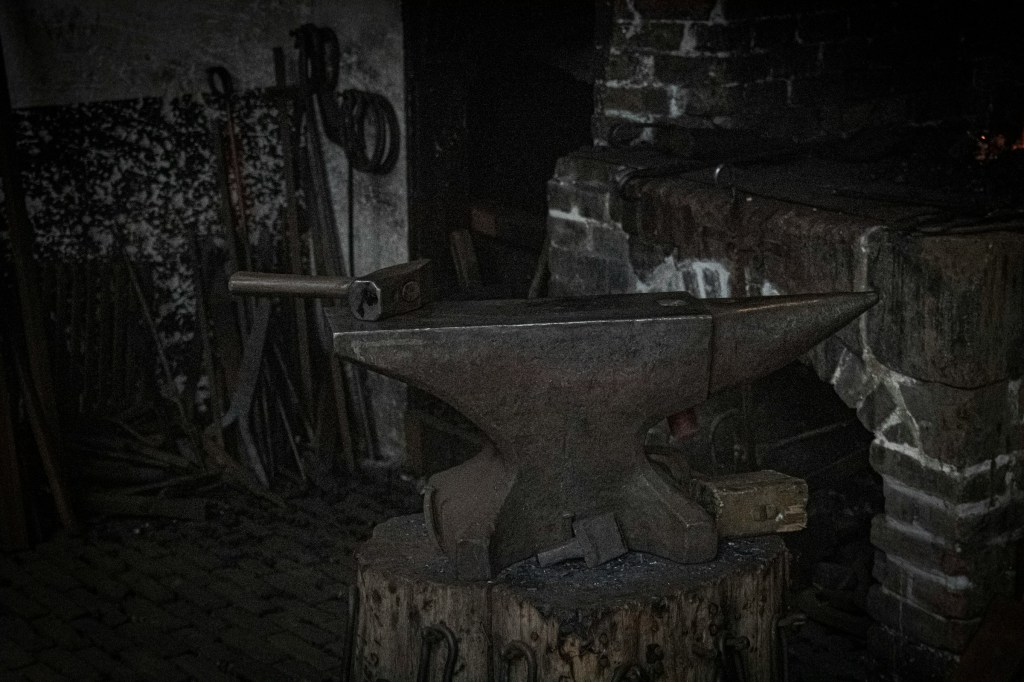
Photo by EVGENIY KONEV on Unsplash
Author’s Note:
This essay closes the Virtues series. The earlier entries named and explored the pillars—integrity, honesty, momentum, stewardship, justice, compassion, restraint, and humility—each treated as a lens for seeing how values are lived against resistance. This final piece does not add another. Instead it reflects on the act of choosing itself: of defining which virtues matter to you, of understanding why, and of returning to them when it would be easier not to.
Virtue is not inherited. It is not handed down whole. It is practiced, failed at, re-chosen, and carried. This essay is less about naming ideals than about facing the reality of their cost. Because in the end, the worth of a virtue is measured not by whether it wins you applause, but by whether you can stand to live with yourself for having held it.
If the earlier essays were meditations on structure, this one is about authorship: the agency to decide, for yourself, what you will stand for, and the fidelity to live with the consequence.
~Dom
We are taught to see virtue as something noble—high, clean, perhaps even unattainable. We imagine it gleaming on a pedestal, bathed in divine light. But that vision does more harm than good. It distances us. It turns the living act of virtue into an artifact, something to admire rather than embody.
Antigone was not chasing admiration. She stood before a throne that spoke with the voice of law, empire, and divine sanction, and she said no.
Her brother’s body lay unburied, condemned by decree, labeled a traitor unworthy of mourning. To follow the law would be to leave him in the dirt, food for birds, his memory erased by official silence. To honor him would be to defy the king, to risk death, to lose what little remained of her shattered family.
And still she chose.
There was no victory in it. No movement to support her. No crowd waiting to applaud her courage. There was only the weight of conscience, a deeper law, older than parchment or crown, and the knowledge that failing to act would fracture something in her that could never be repaired.
She moved alone. Quietly. Ritualistically. A handful of earth, cast with trembling hands. A final act of dignity in a world that had forsaken it. And when they dragged her before the king, she did not weep or plead. She simply named the truth: that there are laws not written in stone, but in soul. And that to violate them is to lose something more permanent than life.
Her defiance was not grand. It was precise. Costly. She was not protected by myth or made invincible by fate. Her choice sealed her tomb. But in choosing, she claimed something no throne could bestow: authorship of her own meaning.
That is the circle.
Not the one etched in stone, but the one drawn in motion—each act returning you to the values you choose, not because they are rewarded, but because they are yours.
Virtue is not the tower you climb to be seen. It is the line you cross, the grave you tend, the consequence you carry because your inner law will not let you do otherwise.
And when you return to that line again—tired, outnumbered, uncertain—what matters most is not who is watching. It is that you still recognize the shape of who you are.
Recommended Listening:
The Practice, Not the Prize
Virtue begins not as revelation, but repetition.
Not as the bolt of divine clarity we wish for, but the slow ache of recommitment. The small, daily decision to try again. The same stance, restated. The same truth, re-walked.
This is the part no one romanticizes or tells fairy tales about. There is no mythic sheen on the fifth time you swallow your anger, or the hundredth time you choose honesty over ease. It is not glamorous. It does not trend. It often does not impress anyone but the version of yourself who knows what it would’ve cost to do otherwise.
Virtue is practice. Not as performance, but as persistence. It is the practiced hand reaching for the same tool, the same words, the same line in the sand—because that’s where you’ve decided to stand.
It is also where you will fail. Repeatedly. You will fall short of your values, and sometimes your failure will be loud. But even failure is folded into the rhythm. Even that is part of the pattern. What matters is the return. What matters is that you know where to return to.
There’s a reason why the virtues that matter most do not come easily. Because they weren’t designed to be efficient—they were designed to be transformational. And transformation, when authentic, is frictional. It is shaped by context and carved by consequence. It blisters. It drags.
You won’t always feel like you’re getting better. Sometimes you’ll feel like you’re just getting tired. But the tiredness is part of it. The exhaustion is proof you are resisting gravity.
If it costs nothing, it wasn’t virtue. If it demands nothing, it won’t change you.
You will never be able to prove your virtue to those who want you to fail. We may as well accept that at the start, but we should also realize that that’s not the point. The point is living in a way you can stand to remember. Because that’s what practice builds: not just consistency, but coherence.
It aligns your inner law with your outer act. It builds a shape you can carry into any room without apology.
And when the storm comes—or the silence, or the reward for betrayal—you will already know who you are.
The Worth We Choose
You are not born into worth. You do not inherit it like a name, or receive it like a medal when your record is clean. Worth is not a trait; it is a consequence.
And like most consequences worth bearing—it begins with choice.
You are not good because others believe you are. You are not righteous because someone told you to be. You are not worthy because your life has been without error. If anything, worth clings more tightly to those who have failed and chosen to rise again—who have fallen, seen what they are capable of at their worst, and chosen not to stay there.
Worth is also not a fixed condition. It is a pattern of choosing what matters most to you—and doing so even when it costs you. And it will always cost you. It must be chosen again in the face of things that try to unmake it.
Because the values you claim in still water mean little when the storm comes. It is when alignment fractures your comfort—when a choice puts your belonging at risk, or your reputation, or your quiet—it is in those moments that worth reveals itself. Not as status. As signature.
You defined your stance. You accepted the weight. You acted in alignment with what you believe to be right—even when the world asked you not to.
Not all virtue is visible. Some will never be seen. Not all virtue is rewarded. Some will cost you the relationships, promotions, or peace you thought you needed. But still—you chose them.
You buried the body. You told the truth. You walked away when it would’ve been easier to stay and smile. And you did it without promise of approval. Without guarantee of success. Without knowing if anyone else would understand.
That is not failure. That is integrity.
Because moral clarity is not consensus—it is coherence. You know where you stand. You know why you chose. And even if the world never affirms you, you remain intact within yourself.
And that’s what makes it real. Not that it worked. Not that it changed the world. But that it shaped the one thing no one else can claim: your soul’s signature.
That is the worth we choose. That is the shape that endures.
Living With Yourself
There is no applause at the end of most days.
No standing ovation for the decision to tell the truth gently. No monument for the time you stepped aside instead of escalating. No journal entry in someone else’s book for the night you sat with your grief instead of numbing it.
Virtue, when it matters most, lives in silence. And it is in that silence—when the noise dies down, when performance ends, when there’s nothing left to earn or prove—that your choices begin to speak back to you.
You carry the echo of every one. The time you intervened when no one else would. The time you didn’t. The path you walked away from because you couldn’t take it in good conscience. The compromise you couldn’t forgive yourself for. You remember them—not as trophies or scars, but as coordinates. Markers on the internal map of who you are becoming.
Because you are becoming. That’s the thing no one tells you when you start this path. You don’t arrive at a fixed state of goodness. You don’t graduate from the work of virtue. You build it in layers. One decision at a time. One resistance at a time. And over years, through friction and fatigue, that structure begins to form something recognizable:
A shape you can live inside. A self you can inhabit with your eyes open.
Living with yourself doesn’t mean liking everything you’ve done. It means being able to hold it, look at it, learn from it, and still stand up the next morning knowing the next act is still yours to write. It means returning to the version of you who remembers why—not just what, or how, but why it mattered enough to choose differently.
You will be misunderstood. You will be mislabeled. You will be told you’re making things harder than they need to be. And sometimes you will doubt yourself, wonder if they’re right, ache for ease.
But then the quiet will come again.
And in that quiet, if you’ve practiced, if you’ve stayed close to what you know is true—you’ll still be able to look yourself in the mirror and recognize what remains.
Not perfection; coherence. Not applause; peace. Not certainty; direction. And that will be enough.
Because in the long arc of becoming, the real reward of virtue isn’t reputation—it’s the ability to live with yourself, unmasked, unguarded, and unashamed.
Completion Is Not the End
Completion is a dangerous word. It tempts us into thinking there is a summit—that once the right choices are made, once the right lines are drawn, the work is done. But virtue does not end. It circulates. It calls you back. What looks like arrival is only interlude.
This is not a conclusion. It is a reckoning. A pause at the threshold to name what has been carried this far: the bruises, the sacrifices, the coherence you have chosen over applause. The recognition that nothing lasting was handed to you—you fought for it, you lost for it, and still you chose it again.
And so, no; this isn’t graduation. This is return.
The path forward will not grow easier. It will test you more, strip you more, and sometimes make you feel foolish for clinging to what cannot be monetized or measured. You will be told you are too rigid, too costly, too slow. And yet, in those accusations is the hidden compliment: they cannot bend you.
Completion is not the reward. The reward is authorship—not of story, but of stance. Not of legacy sculpted by others, but of a self you recognize even when no one else does. That is what endures when imitation frays and when inertia turns movements hollow.
So choose again. Carry it with care. And when it’s heavy—when it cuts—remember: the blade only dulls on the stone you keep returning to. The groove grows deeper, the shape clearer. And when you look back across the distance, you will see not a tower ascended, but a circle walked with fidelity.
The shape of virtue is the groove you’ve worn in the world by dragging it with you. Let it deepen. And then, when the silence comes again, return once more.







Leave a comment