

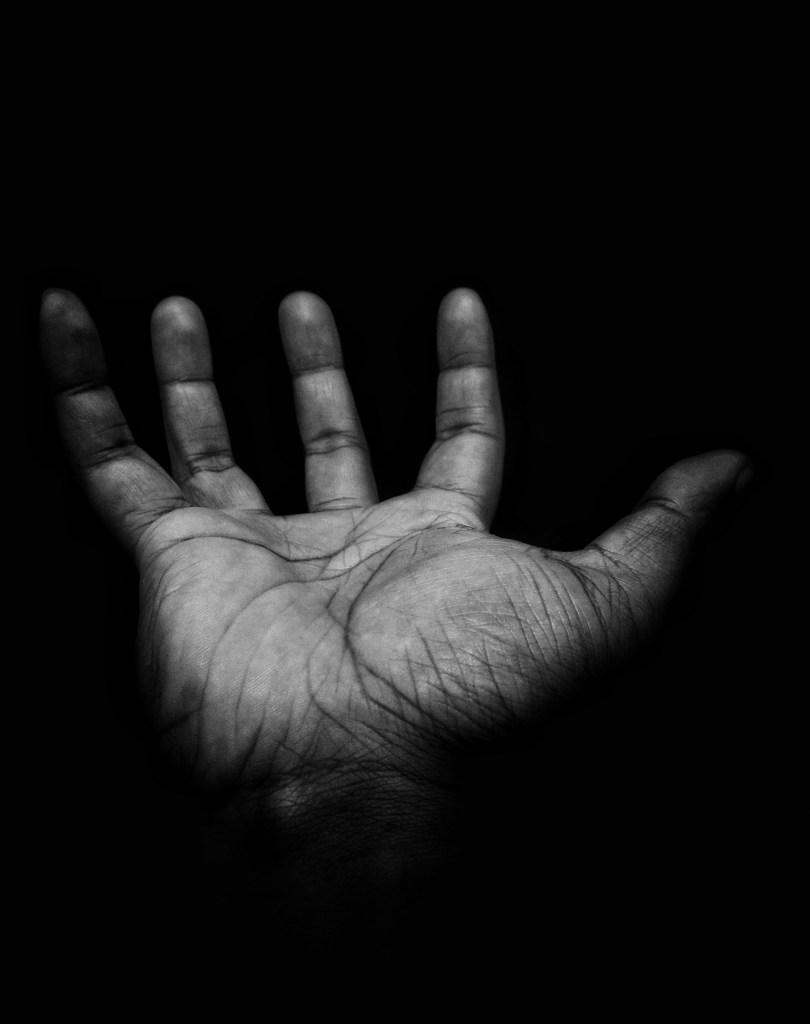
Photo by Randy Rizo on Unsplash
Author’s Note:
If integrity is the spine, and honesty the fire, and momentum the stride—then compassion is the hand that doesn’t let go when everything else does.
But unlike comfort, compassion is rarely soft. It’s not the lullaby. It’s the vigil. The courage to stay when staying won’t save, fix, or even help—except that it refuses to abandon.
This essay continues the Virtues series by reclaiming compassion from sentimentality. It explores how true care is not a reflex but a risk—one that demands discipline, boundaries, and the willingness to stay human in the face of suffering you cannot solve.
It’s not about rescuing the wounded. It’s about learning how to kneel beside them without collapsing.
Welcome to the descent.
~Dom
Before the borders of heaven and earth were drawn, before gods learned the language of judgment, Inanna was already moving.
She was Queen of Heaven and Earth, sovereign of grain and moonlight, of desire and declaration—but none of her titles mattered when she stood before the gates of the Underworld.
She came not to conquer. Not to rescue. She came because her sister, Ereshkigal, wept in the dark. And Inanna heard her.
In most myths, power descends with fanfare—swords drawn, banners raised. Inanna came alone. And at each gate, she was told: strip.
First her crown, then her rod of power, then her beads, her ring, her robes. Seven gates. Seven removals. Until she stood naked in the dark, all symbols gone, before a sister whose grief had twisted into rage.
Ereshkigal did not thank her.
There was no reunion. No soft embrace. Only silence. And then, violence. The Queen of the Underworld struck her down, hung her body on a hook like meat, and left her there—still, suspended between life and death.
The story remembers this as a kind of trial. A power exchange. A passage between realms.
But what if it was compassion?
What if Inanna went not to rule, but to witness? Not to extract her sister from pain, but to enter it? Not to fix, but to feel?
What if the descent itself was the offering—the surrender of ego, agenda, even safety—to simply say: You are not alone in this place.
We talk of compassion as light, but sometimes it is shadow—willingly entered, gently held. It is the virtue that strips us of roles and reveals what we’re willing to touch when there’s no reward, no rescue, and no way back up without scars.
And when the gates reopen—when we rise again, if we do—we carry no trophies. Only the memory of what it means to stay when others flee.
Recommended Listening:
Compassion as a Risk, Not a Reflex
Compassion is often dressed in soft tones and gentler synonyms—kindness, warmth, grace. But real compassion? The kind that changes lives, that breaks cycles, that endures when logic says run—that kind is not soft.
It’s dangerous. Because true compassion requires proximity to pain.
It means walking toward what everyone else walks away from. It means making space for discomfort—not yours, but theirs—and choosing to stay when your presence won’t fix a thing. It’s the hand that reaches for someone who cannot meet you halfway. The seat taken next to someone mid-collapse, when all the chairs around them are empty.
Reflex is pity. Instinct is flight. But compassion is neither automatic nor safe. It is a decision. A risk.
To offer compassion is to make yourself available to grief that has no answer. It is to witness suffering without flinching, and to resist the urge to sanitize it, solve it, or flee from it. It is to know, fully, that you may be blamed, ignored, resented—or simply broken by the weight of what you see—and to show up anyway.
And still, we confuse it with sweetness. Compassion is not sugar. It is salt in the wound that stays to stop the bleeding.
It’s not sentiment. It’s steel in the voice that says, “I won’t leave you here.”
And it is not weakness. It is the hardest form of strength: the strength to stay when there is no role to play, no performance to offer, no outcome to control.
The world trains us to avoid that kind of presence. We are taught to be useful, to solve, to move on. But the deepest wounds do not ask for solutions. They ask not to be faced alone.
And so compassion begins not with action, but with stillness. With choosing not to run.
With the courage to sit down beside the thing we cannot fix—and stay there long enough for someone else to breathe again.
The Physiology of Witnessing
We like to imagine ourselves as rational creatures—thinking first, feeling second. But our bodies tell the truth before our mouths ever catch up. And when we witness pain, that truth is primal.
Heart rate spikes. Muscles tense. The jaw clenches. Breath shortens. Our mirror neurons fire like flares, flashing “danger” in every nervous system thread. This is not sentiment—it’s circuitry. We are built to feel what we see, and in doing so, we become wired to flinch from it.
This is why most people look away. Not because they’re heartless. Because they’re overwhelmed.
Compassion, then, is not the absence of that reaction. It is the discipline to stay with it. To regulate your own breath when another’s is ragged. To widen your window of tolerance enough to hold space for someone whose world is collapsing.
It is not emotionally safe. That’s the point.
The body wants relief. Compassion says: not yet. Let them go first.
In this way, compassion is as physical as it is moral. It requires capacity. It requires grounding. It requires the willingness to feel what is not yours to fix, and not run from the emotional cost of staying regulated in the presence of someone else’s storm.
Empaths burn out because no one taught them this boundary: that to witness does not mean to absorb. To care deeply does not require you to bleed.
And so compassion becomes a practiced stance, not a reflexive one. You learn to sit with grief without swallowing it. You learn to hear pain without internalizing it. You learn to remain open without being undone.
Compassion does not ask you to drown.
It asks you to become a shoreline—steady, present, and capable of withstanding the waves long enough for someone else to come up for air.
Boundaries Are Not Betrayal
The most dangerous myth about compassion is that it demands self-erasure. That to be truly good, you must give until you are gone.
But compassion without boundaries is not virtue. It’s martyrdom. And martyrdom does not heal. It replaces one wound with another.
To remain whole in the presence of suffering is not betrayal. It is how you stay capable of returning.
Boundaries are not walls to keep people out. They are the scaffolding that keeps you upright. They are the wisdom to know when your presence helps and when it harms—when staying is service and when it becomes performance or codependence.
We romanticize the collapse. We praise those who burn out for the cause. But a collapsed witness cannot hold space. A rescuer who loses themselves becomes another casualty.
True compassion is sustainable. It is structured. It is self-aware.
It says: I will sit with you in the dark, but I will not put out my own flame to do it.
It says: I will hear you, but I will not unmake myself to carry what you refuse to set down.
It says: I am here. I am staying. And I will still be here tomorrow, because I have learned how not to vanish inside your storm. The boundary is not the absence of care. It is the presence of discipline. And when we hold that line, compassion stops being a sacrifice.
It becomes a choice we can keep making.
The Return
Inanna did not leave the underworld on her own. She had to be mourned. Remembered. Reached for. And when she rose, it was not with vengeance or triumph. It was with understanding.
She had seen the shape of grief that cannot speak. She had felt the silence that follows pain too deep for language. And she did not forget. That is the final measure of compassion: not how deeply we descend, but whether we return changed.
Compassion is not the descent alone. It is what we carry back.
It is the steadiness in our voice when someone else begins to shake. The pause we offer before correcting, judging, retreating. The choice to see someone not as their wound, but as a whole being surviving it.
It is the memory of the hook, and the will to climb down again—not to suffer, but to stand with.
It is the willingness to return to those seven gates—not to reclaim what was lost, but to face again the disciplines that stripped us of ego, performance, and control. To enter again, knowing what it costs, and choose presence anyway.
We cannot live forever in the underworld. But we can carry its lessons into the daylight. Not all pain can be eased. Not all stories end with reunion.
But compassion says: You will not be left behind. Not while I remember how to find you. Not while I still carry the courage to come back.







Leave a comment