

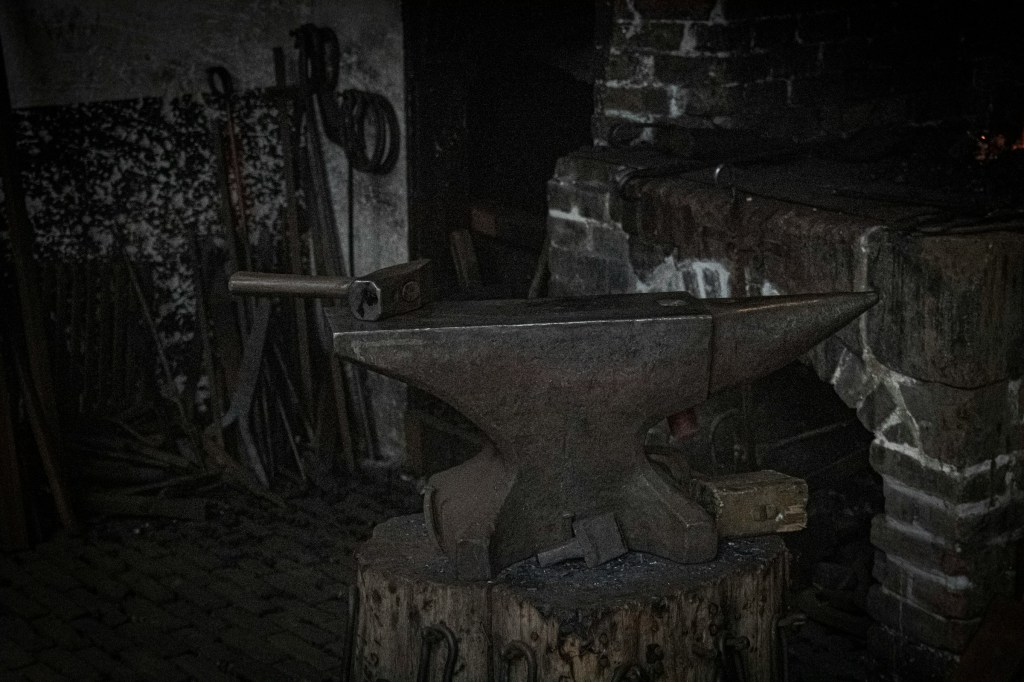
Photo by Colin Lloyd on Unsplash
Author’s Note
This piece wasn’t written with distance. It was written with dirt under the nails and the weight of millennial disillusionment in the bones. I came of age as the 2008 collapse closed in—just in time to be told that resilience meant starting over every few years and pretending it was a plan.
I’ve watched my own generation simmer in justified rage. Now I see Gen Z trying to plant roots in soil that’s already been stripped bare.
This piece is for both—for anyone trying to build something that lasts in a world trained to extract and discard.
It’s not a blueprint. It’s not a eulogy. It’s an honest naming of what we were handed—and a quiet refusal to pass the wound on untouched.
~Dom
In the heart of the old kingdom, there was a ruler whose youth had been spent tending to the land as though it were a living thing—because it was. His touch coaxed life from soil, his voice stilled storms, and the rivers themselves seemed to quicken at his approach. The fields bore heavy grain; the orchards swelled with fruit. In those years, the people spoke of him not only as a king, but as a guardian.
But time, as it always does, pressed forward. A wound came—not from battle, but from pride. In defending the kingdom’s borders, he struck a bargain that cost him more than he knew. The wound never healed. It festered in quiet ways: in nights of restless pacing, in decisions made for their ease rather than their endurance, in the slow narrowing of his sight from the horizon to the moment.
The land felt it first. Crops still grew, but without the vigor of old. Streams muddied. The air lost its crispness. The king ordered more planting, more work, as though yield alone could restore the old vitality. The people complied, not yet speaking of their unease, but they began to look more often toward the hills and wonder.
Visitors came from distant realms, bringing gifts of gold and promises of shared bounty, and the king—tired of the long labor of stewardship—accepted. The gifts came with clauses, the promises with quiet demands. Sacred groves were cut to make room for faster-growing timber; riverbanks were dredged to speed trade. The soil thinned, the waters dulled. Yet from the palace windows, the kingdom still appeared whole.
Only the heir saw the change clearly. They walked the edges of the withering groves, saw the fish vanish from the shallows, felt the brittle snap of roots that once held the riverbanks. They spoke to the king, not as a subject but as a child who had been taught what care means. The king listened, but his gaze slid away. “We must think of the harvest,” he said. “We must keep the coffers full.”
The seasons turned. The wound deepened. And the covenant between ruler and land grew thin.
One morning, the heir stood at the kingdom’s edge, looking back at fields that would not recover and a river that no longer sang. The crown that would one day be theirs felt less like an honor than a shackle. The road beyond the hills promised no riches, no certainty—only the absence of inherited ruin. So they stepped onto it, leaving the castle to its wounded king and his dwindling domain.
Those who saw them go said nothing. Some pitied the king; others pitied the heir. Most simply turned back to their own work, unsure which loss was greater—the departure of the child, or the quiet acceptance that there was nothing left worth inheriting.
In the years that followed, the wound of the king became the wound of the realm. The grain was still milled, the taxes still collected, the halls still lit. But the spirit had gone. No pilgrim sought the court, no songs were sung of the harvest, and the fields yielded only enough to keep hunger at bay. It was not collapse, only diminishment—a kingdom alive in the way embers are alight.
And far beyond its borders, in places the king would never see, the heir built something new—small, perhaps, but alive in a way the old land no longer was. The story would reach the kingdom in whispers, but by then, the king no longer asked to hear it.
Recommended Listening:
A Heritage of Inheritance
Once, the future was something we laid the ground for.
We dug canals for crops we would never harvest. We carved stone for temples we would never finish. We planted trees not for shade, but for memory. Across centuries and continents, the arc of progress was shaped by hands that understood their work was relay, not reward.
It wasn’t faith in permanence that drove them. It was belief in continuity—that the shape of a good life depended on what came next, not just what came now.
In ancient civic codes, in ancestral teachings, in oral stories passed across firelight, there was always a thread: you tend what you will not live to see. Aristotle called it civic virtue. Confucius framed it as a duty to the yet unborn. The Haudenosaunee measured it in seven generations. Whatever the language, the ethic held: legacy was not a monument. It was an investment in lives beyond your own.
But something shifted. Slowly, then structurally. Generational momentum gave way to generational hoarding. Stewardship narrowed into possession. The question became not “what will they need?” but “how long can I keep what’s mine?”
It was not collapse, but inversion—the same mechanisms of progress turned inward. The harvest became a vault. The systems built to raise all ships were reengineered to fortify individual docks. Public good gave way to private gain, and the ladder that lifted one generation was quietly pulled up behind them.
It didn’t happen through fire. It happened through comfort. Accumulation justified by caution. Extraction rationalized as prudence. Each generation taught the next to survive, but not to build—as though the future were a threat, not an heir.
And so the covenant fractured. Not by violence, but by attrition. Not because no one cared, but because too many chose to care only within the edges of their own life.
What remains now is the question: Can inheritance still mean anything, when faith in what comes next has withered?
Maybe. But not if we keep defining it in capital and holdings. Not if we think legacies can be locked in vaults or passed along without attention.
True inheritance begins again where the original covenant was made—in the quiet act of leaving something behind not because it profits us, but because someone else might one day need it.
That is the ethic we must replant.
And the ground is waiting.
The Consequences for Younger Generations
This is what inherited erosion looks like when it passes through flesh instead of policy.
For those who came of age under a sky already dimmed, the promise was never land or legacy—it was debt. Wages flattened while housing rose like smoke from a fire someone else started. The term “starter home” became a cruel euphemism, like offering a parachute to someone who’s never seen a plane. Education was sold as a ladder, but each rung now demands repayment with interest. Public infrastructure creaks beneath the weight of disuse, its upkeep deferred in favor of quarterly optics.
But the bruises aren’t just financial. They calcify in subtler places: in the soft letdown when ambition meets stagnation; in the quiet humiliation of hearing “just work harder” from someone who bought their house for less than your student loan balance. Wisdom inherited becomes folklore—advice from a world that no longer exists.
And so the disengagement begins. Not out of laziness, but lucidity.
Some reject the script altogether. China’s “lying flat” movement, Western van-life minimalism, the rise in anti-ambition subcultures—these aren’t aimless rebellions. They are refusals. Rational responses to a contract rewritten without consent. Why chase prestige when prestige offers burnout and a mortgage application that laughs in your face?
Technology throws gasoline on the fire. Social media compresses every disparity into inches of scrolling contrast: beachfront property next to eviction notices; curated luxury beside crowdfunding for insulin. The gap stops being theoretical. It becomes tactile. And into that cognitive dissonance, mistrust blooms.
Systemic failure and personal fault get spun like dueling myths. Some are told they didn’t try hard enough. Others are told trying was the mistake. Either way, the outcome is the same: fragmentation. Between generations. Between identities. Between expectations and what’s actually on offer.
What disappears isn’t just faith in institutions. It’s the belief that effort leads to outcome. That participation will yield something future-facing. When that faith erodes, the story changes. The traditional arc—learn, work, grow, pass it on—fractures into survival tactics and soft exoduses.
And yet, calling it rebellion misses the point. It is adaptation. Not loud. Not theatrical. But deeply rational in a world where legacy has been replaced with liability.
They aren’t burning bridges. They’re refusing to walk across ones that collapse under their weight.
They were told to inherit the kingdom. They are learning how to grow something from its ashes.
The Machinery Behind the Current Reality
The system wasn’t sabotaged. It was redesigned.
The world younger generations inherited wasn’t born of chaos or accident. It was architected—by decades of deliberate policy, market incentives, and cultural drift that treated the future like a rounding error.
After World War II, the scaffolding of stability went up fast. Roads, schools, utilities, safety nets—poured into place by public investment and high taxation on corporations and top earners. The deal was clear: prosperity for the many, funded by the few. The climb was steep, but the ladder was bolted to the ground.
Then came the slow, quiet rewrite.
Neoliberalism crept in on promises of efficiency and growth. Deregulation, privatization, and tax cuts loosened the bolts. The market was crowned king, and the commons became a liability. Trickle-down theory became doctrine, and in practice, it trickled upward.
Public wealth shrank while private fortunes swelled. Safety nets were threadbare by design. Education pivoted from public service to premium product. Universities became credential factories with endowments bigger than some nations’ GDPs. Tuition skyrocketed. Debt ballooned. A diploma became a down payment on a life you might never afford.
The 2008 financial crisis was not a wake-up call. It was a stress test the system passed by letting the people fail. Banks got bailouts. Families got foreclosure. The architects of collapse rebranded as consultants.
Then COVID-19 came and finished the job.
Essential workers were clapped for, then discarded. Billionaires doubled their net worth. Remote work became a privilege; gig work became survival. Meanwhile, housing transformed into a speculative asset class. Institutional investors bought homes in bulk, flipping necessity into portfolio strategy. Shelter became subscription.
None of these outcomes were spontaneous. They were cumulative. Each decision sharpened the blade. Each policy tilted the scale. Together, they created an ecosystem that consumes stability to feed short-term yield—an economy that metabolizes the future for the sake of the present.
This isn’t just a system with perverse incentives. It’s a system optimized for extraction. One that rewards hoarding over healing, branding over building, control over care.
And it will not correct itself. The machinery isn’t broken. It’s functioning exactly as intended. That’s the problem.
And now, the weight of that design has landed—squarely—on the shoulders of those it was never built to carry. The question is no longer how we got here. It’s what’s left to stand on when the scaffolding has been sold for parts.
Where We Stand Now
We stand at the edge of a burned field, clutching the charred remains of a covenant no one remembers signing. What was once a generational relay has become a tug-of-war with no rope—just clenched fists, empty air, and the aching weight of betrayal.
The economy is tilted toward those who already hold the pieces. Policy serves the architects of stasis. Culture rewards yield over roots. And underneath it all, trust buckles—not from malice, but from overuse and insufficient repair.
The great philosophies saw this coming.
Aristotle warned that a polity obsessed with preservation would rot from within. Confucius taught that harmony must flow in both directions, and when the elder fails to care for the youth, the bond breaks with dignity, not disgrace. Edmund Burke envisioned society as a bridge of obligation linking the dead, the living, and the unborn—a structure now sagging under the weight of self-interest. And the Indigenous models, oldest and wisest of all, still whisper across colonized soil: think seven generations ahead. That measure reveals what we’ve stolen.
But even in a broken cycle, instinct survives. The drive to leave something better. The pull to repair. The aching question: can we still pass on something worthy, even if it’s no longer institutional?
Yes—if we stop looking up the ladder and start looking sideways.
New inheritances emerge at ground level. Mutual aid groups where policy failed. Skill-sharing in the margins of academia. Collective housing where the market shut the door. These are not backup plans. They are blueprints for survival-with-dignity.
They prove that legacy doesn’t require scale. It requires sincerity. And the courage to invest in lives you may never meet.
What we pass on now may be smaller, rougher, less polished. But it can still carry meaning. Still offer shelter. Still plant something that wasn’t there before.
The kingdom may not return. But the ground remembers how to grow.
And so do we.
The Path Forward for Younger Generations
The old covenant cracked in the vaults of power. It will have to be rebuilt in the soil.
Repair won’t begin in sweeping reforms or national reckonings. It starts closer to the ground—in backyards, basements, borrowed spaces. In people choosing to invest in one another without waiting for institutional permission.
Trust, like topsoil, regenerates through care. Through circles small enough to feel, but wide enough to hold weight. That’s where the work begins: among neighbors, collaborators, co-conspirators who believe mutual respect is more than a sentiment—it’s infrastructure.
To navigate this rebuilding, discernment is a survival skill. Learn to name the shape of what surrounds you: what extracts, what trades, what returns. Every relationship, every workplace, every system asks something of you. The question is whether the yield is shared—or siphoned.
Local resilience becomes the new proving ground. Cooperative housing, shared childcare, tool libraries, community gardens—these aren’t lifestyle aesthetics. They’re refusals. Each one says: I won’t wait for the future to be handed down. I’ll build the piece I need now, with whoever shows up willing to carry weight.
At the same time, the fight can’t stop at the edge of the neighborhood. Structural reform still matters. Policy is scaffolding. Without it, the work below bends under burdens it was never meant to carry alone. We need restored taxation, protected labor, demarketized housing, and public education that doesn’t bankrupt the students it serves. These aren’t dreams. They’re overdue maintenance.
And while we fight for change from above, we cultivate change from below.
Stewardship isn’t scale-dependent. You don’t need a mandate to mentor. You don’t need a platform to preserve a ritual. You don’t need permission to tend a place into meaning. Every act of care—small, specific, unmonetized—is a stitch in a fabric that outlasts the trend cycle.
Legacy, in this world, looks like resilience you didn’t hoard. It looks like knowledge passed hand to hand. It looks like a system, however modest, that holds someone else steady because you bothered to build it.
The heir doesn’t return to the kingdom. They plant something different. Something less adorned, maybe—but more alive.
And when the seeds take root, they won’t ask what was lost. They’ll ask who dared to begin again.
Start there.
To Those Who Dare Begin Again
In the old myths, the wounded king remains on his throne, bound to a blighted land. The heir departs—not in defiance of the man, but in defiance of decay. Not to destroy the kingdom, but to survive what the kingdom refused to heal.
We live in that myth now. The Fisher King wears many faces: institutions that limp forward hollowed out, leaders who hoard power beneath banners of tradition, systems that promise inheritance but deliver inertia. The well has run dry. The land reflects the wound.
But the choice remains. We can stay. We can pace the ruins, polish the crown, tell stories about the old abundance while the ground turns to dust.
Or we can walk.
Not in retreat, but in search of fertile ground. Not to abandon responsibility, but to redefine it. The new covenant won’t be built in marble halls. It will be built in motion—hand to hand, seed to soil, choice to consequence.
This isn’t a manifesto. It’s an invocation. A reminder that the future is not received—it is forged, and only by those willing to plant something they may never see bloom.
So when the crown feels like a weight instead of an honor, when the air is too quiet and the soil too thin, remember this: You are not alone in choosing to leave.
And if you do it well—if you carry your care into exile, if you build with others instead of waiting for permission—then the next story begins not with a coronation, but with a sprout.
And one day, far from the old castle, under a different sky, someone will eat fruit from a tree you planted.
That is inheritance. And it will have been enough.





Leave a comment