

Photo by Raph Howald on Unsplash
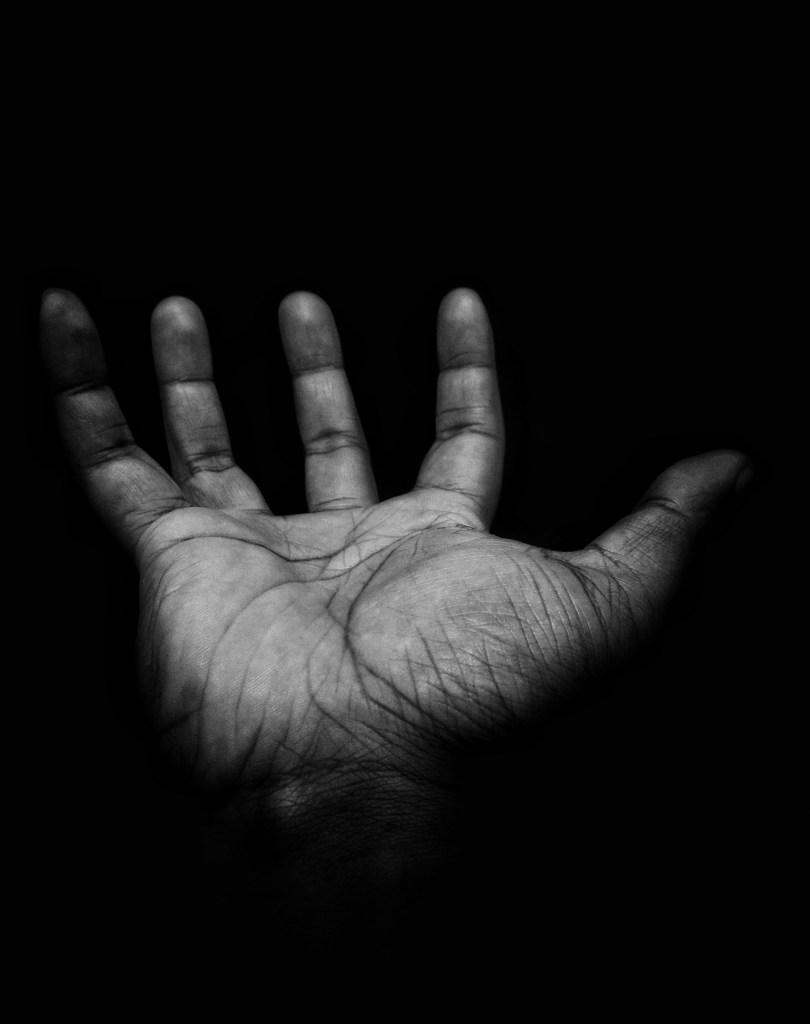
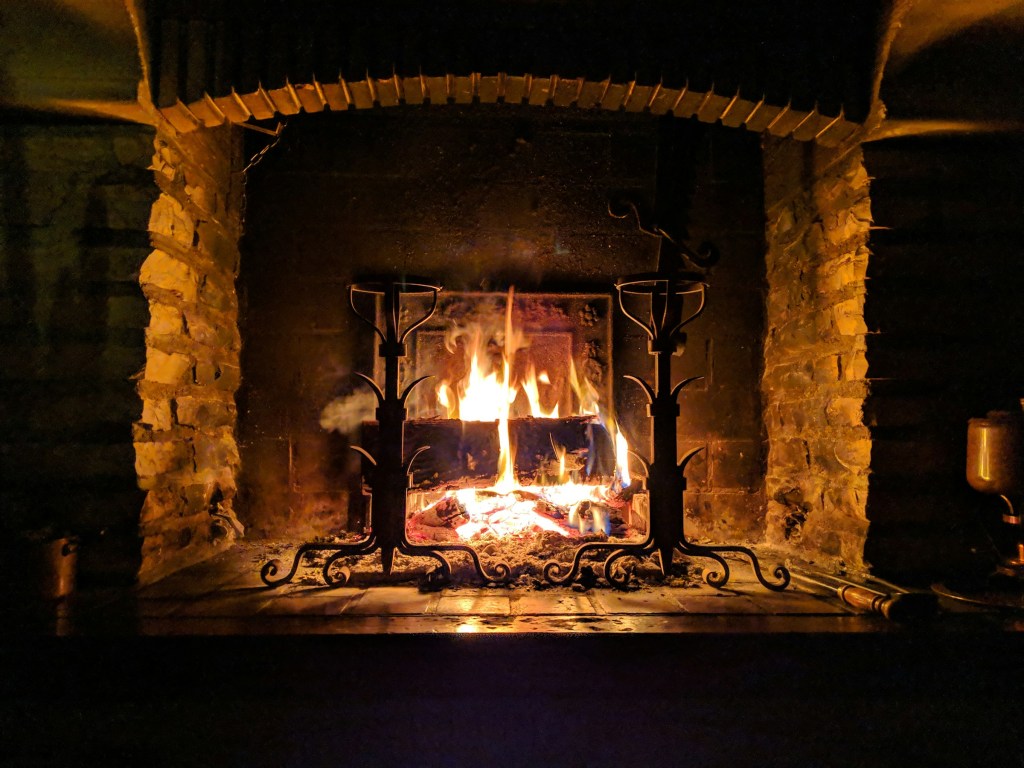
They still whisper his name when the fire burns low.
Not in temples now, but in the thin corridors of skyscrapers and in the sudden hush of boardrooms when the quarterly numbers arrive. Yet the story is older than brick or bronze, older than the first coin pressed beneath a king’s face. It begins before memory, when the world was ruled by a lord of time who feared tomorrow more than he loved today.
They say his throne was cut from the marrow of the earth. He sat upon it watching seasons churn, counting everything that moved—wheat in the fields, coin in the coffers, breaths in the lungs of those who served him. And with each tally he felt the tremor of a prophecy that would not let him sleep: one day a child of his own blood would rise and end his reign.
So, on the night his first son wailed into the mist, he pressed the child to his lips and swallowed him whole. You can almost hear the hush that followed—midwives turning their faces, the mother’s scream trapped behind her teeth, the torches flickering as if the wind itself recoiled. The king wiped his mouth and ordered the cradle burned.
Another birth, another swallow. Gold bands clattered from small ankles as tiny fists vanished past his teeth. The kingdom learned to celebrate in silence and grieve behind closed doors. Farmers bent double in the fields, praying the soil would not remember their complicity. Smiths hammered in time with muffled hearts, forging chains that felt like promises.
Years spilled forward, and the king grew heavier, though no feast was ever served. He carried his children inside him—five small flames smothered in darkness—yet he never felt their warmth. Still the prophecy echoed, tolling like a bell he could not unhear: Someday one will escape. Someday the swallowed will be reckoned.
On the far edge of the realm, beyond the reach of palace walls, there was a cave where old women carded wool and told stories the king could not kill. They spoke of seeds buried so deep that even winter forgot them, only to rise when time itself turned soft. They spoke of tides that appear to retreat, all while gathering the strength to swallow the shore. And in hushed tones they spoke of the youngest child, spirited away in a stone‑wrapped cradle, traded for a bleating lamb before the king could taste his fear.
The lamb was sweet on the tongue, they said, but quieter than a human scream. The king’s stomach never knew the difference. He slept that night believing the future was his.
But futures do not belong to those who hoard them. Seasons changed. The hidden child grew in secret, fed on goat’s milk and stories of brothers who had no graves. He learned to listen to rivers and read the cracks in mountain stone. When he finally descended upon the palace steps, it was not with an army, but with a sickle bright enough to slice the night in two.
What happened next is told a dozen ways. Some say the king was cut and the children poured out like stars, scorching the marble as they landed. Others swear the king split open of his own accord, as if the prophecy were a hand turning him inside out. A few insist he was never killed at all, merely left to rule an empty hall, his shadow long enough to touch every doorway but unable to cross a single threshold.
Yet every version shares one truth: the kingdom, once fed by consumption, found itself suddenly accountable to everything it had eaten. The fields lay fallow; the ledgers went blank; the silence of swallowed voices returned—not as ghosts, but as questions.
And so the story drifts, carried by merchants and minstrels to places where no one recalls the king’s name, only the taste of dread that lingers when wealth is mined from the marrow of those meant to inherit the earth. They tell it in markets when the rent is raised, in classrooms where futures are mortgaged for tuition, in hospitals where the fluorescent lights never dim. They tell it whenever a bright young face disappears behind the closing jaws of opportunity misnamed opportunity.
Listen closely.
You can hear the shape of that ancient prophecy curling in every unpaid internship, every ballooning loan, every startup promising a slice of equity that will never be served.
The story is not finished. Somewhere, a youngest child is still learning the language of rivers. Somewhere, a sickle waits under dust. And somewhere, a throne is trembling under the weight of comfort bought with borrowed tomorrows.
Remember the king who swallowed his children. Remember how time betrayed him. And remember that legends survive because they keep happening—each retelling a warning disguised as memory.
Promises Etched in Stone, Erased in Ledger
Every generation inherits a story. Not a clean one, not whole—but a bundle of expectations dressed up as promises. Work hard, play by the rules, and do better than the ones who came before you. That’s the myth we’re raised on. But when we unwrap it, the fine print is already smudged.
For a while, that myth felt tangible. In the decades after the war, policy and prosperity briefly aligned: affordable education, stable wages, homeownership within reach. Not for everyone—redlining and exclusion ensured that—but the scaffolding of progress was there. A sense that tomorrow could be built on today, not in spite of it.
And then the scaffolding shifted. Slowly. Intentionally. The social contract was reframed, not torn up. Collective responsibility became personal risk. Pensions gave way to 401(k)s. Public universities became pipelines of debt. Safety nets frayed, repackaged as “empowerment.” The language of opportunity stayed the same, but the terms changed—and no one updated the script.
You probably felt it before you could name it. The cost of a degree outpacing the return. The grind that produces more but pays the same. The creeping sense that security is always just out of reach. And through it all, you’re told this is what progress looks like. That the problem isn’t the system—it’s you.
But this isn’t just economic policy. It’s philosophy dressed in profit margins. The old ideal of intergenerational partnership—of the living honoring both the past and the future—was replaced with an extractive model. The dead draw dividends. The unborn inherit droughts. And those alive now are told to hustle, smile, and stay grateful.
Still, we’re not asked to call this betrayal. We’re asked to call it freedom. Freedom to choose your own path, even if all the exits are toll roads. Freedom to climb a ladder that’s no longer anchored to anything. Freedom to perform resilience while balancing the full weight of generational neglect.
This isn’t about nostalgia. It’s about naming the shift. We didn’t fall behind. We were rerouted.
And the path we’re on was paved by people who knew exactly what they were doing.
Next, we’ll step into the machinery behind that path—the gears that keep the extraction running while calling it growth.
Economic Mechanisms of Extraction
The mechanism here isn’t a simple machine – it’s an engine room, thrumming in the background behind the everyday life of billions.
You already know the feeling. Your paycheck clears, then vanishes. The rent climbs. The student loan balance barely budges. Your screen time says 7 hours, but your sense of rest says zero. These aren’t anomalies. They’re outcomes of design—outputs of a system that doesn’t just run on your labor, but on your attention, your time, your sense of obligation. Extraction isn’t a glitch. It’s the architecture.
Look closer and it’s all around you. Education, once a bridge, is now a paywall. A degree opens fewer doors while chaining you to repayment schedules that outlast relationships. The numbers don’t lie—it’s not that people aren’t working hard enough. It’s that the finish line keeps being moved, and the prize keeps shrinking.
The housing market tells the same story. Shelter is supposed to be a right—or at least a baseline. But in practice, homes are bought and sold like poker chips in someone else’s long game. You’re not just competing with other buyers. You’re competing with algorithms, investment firms, zoning laws designed to protect “character” over access. Rent isn’t just high—it’s the monthly subscription fee for not falling behind.
And the work itself? Disconnected. You produce more, but see less. Raises that barely skim inflation. Side gigs that demand full-time energy. Freelance “freedom” that comes with no safety net. Productivity climbs while dignity flattens. We’ve gamified hustle into identity—without ever admitting that the rules were written elsewhere.
Even rest isn’t safe. Your data is monetized while you scroll. Your attention is tracked, nudged, optimized—not for your benefit, but for someone else’s revenue stream. You’re the product and the producer. The platform just collects the toll.
And underneath it all, the planet pays. Short-term profits bought with long-term ruin. Emissions offset with empty promises. The same cycle—consume now, defer the cost—scaled up to a global extinction timeline.
It all adds up. Not just in dollars, but in erosion. These aren’t disconnected policies. They’re connected strategies—quietly refining the art of asking more while offering less.
This isn’t about calling everything a conspiracy. It’s about recognizing a pattern. Systems, like stories, shape how we live—and some are built to run on futures they never intend to honor.
Next, we’ll look at what that extraction feels like from the inside—when the cost isn’t just economic, but psychological.
The Psychological Toll
You can understand the system and still feel like it’s swallowing you.
You can map the causes, cite the policies, point to the metrics—and still wake up with that weight in your chest. Not the panic of a single bad day, but the slow, steady gravity of a life lived under constant tension. It’s not just economic. It’s not just logistical. It’s existential.
We use words like burnout, like anxiety, like fatigue. But those terms don’t really stretch far enough. They reduce the symptoms to individual failure—implying you just need better habits, better sleep, a better planner.
But this isn’t about poor time management. It’s about spiritual erosion. About living in a world where your best isn’t enough—not because you’re broken, but because the system is structured to keep you just barely afloat.
You try to rest, and guilt sets in. You unplug, and feel like you’re falling behind. Even good news comes with an asterisk—an opportunity that pays too little, a promotion that demands too much, a milestone that should feel better than it does.
You start to perform your own stability. You smile more in meetings. You answer “doing well” on autopilot. You withhold the truth—not to lie, but to survive. Because in this system, vulnerability is a liability, and struggle is a branding problem.
And yet, somewhere underneath all of it, a quieter voice speaks. It doesn’t shout. It doesn’t protest. It simply says: this isn’t right.
That voice is easy to ignore. But it’s also the reason you haven’t gone completely numb. It’s what keeps you searching for meaning even after the systems around you have reduced life to deliverables and deadlines.
Mental health isn’t just about resilience. It’s about context. And when the context is one of extraction, the appropriate response isn’t just coping—it’s recognizing the pattern. It’s remembering that exhaustion, under these conditions, is a form of clarity.
You’re not malfunctioning. You’re responding.
And if you still feel the friction—if you still feel the ache—that means something in you hasn’t fully adapted. That’s not a weakness. It’s proof that something human remains.
So hold onto that. That discomfort. That dissonance. That low hum of defiance. It might not look like revolution. But it’s where change begins.
And in the stories we’ve always told, it’s the smallest surviving ember that burns down the old world.
But first, we need to understand the stories that shaped the one we live in now.
Mirrors in Myth & Culture
Stories have always been mirrors. Not just of who we are, but of what we allow.
We began with Saturn, but he’s hardly unique. These ancient tales—of kings who devour their heirs, beasts fed with youth, fires stolen and punished—weren’t written to entertain. They were warnings. And they persist because we keep recreating the conditions that birthed them.
Take the Minotaur. A creature hidden in a maze, sustained by a regular offering of young lives. Not because they were guilty. Because they were convenient. Athens kept sending them, year after year, until one survivor refused. Until someone named the sacrifice for what it was.
Or Prometheus. Not punished for stealing, but for sharing. For giving humanity fire—power, knowledge, potential. For disrupting the hierarchy. He wasn’t just chained to a rock. He was made into a lesson: know your place.
Icarus too, if you see it clearly. It’s not a warning against ambition—it’s a boundary drawn by those who fear it. Fly, but not too high. Aspire, but not beyond what we’ve laid out for you. The failure wasn’t in the wings. It was in the system that set the limits.
And what of now? We live among new myths, but the shape is the same.
Innovation is praised, but only when it can be bought. Youth is celebrated, but only when it can be branded. We tell stories about disruption, but build layers of compliance into every classroom, every company. We sell the idea of individualism while punishing divergence.
Even our fiction reflects it. Superheroes shackled by bureaucracy. Dystopias wrapped in corporate logos. Coming-of-age arcs where no one actually comes of age—just endlessly loops in precarity. We don’t just watch these stories. We feel them. Because they are ours.
This isn’t nostalgia. It’s recognition. These myths keep echoing not because we fail to change, but because we refuse to listen.
But they also contain something else. A crack. A whisper. A way out.
Because every myth of devouring also contains escape. Every system that consumes also creates resistance. The stories persist because someone always survives long enough to tell them differently.
So what story are we in now? And more importantly—who gets to finish it? Let’s imagine, for a moment, what happens if we don’t.
If Nothing Changes
There’s always a moment in these stories—the myths, the warnings, the historical cycles—where the silence sets in. Not because we finally listened. But because the people shouting got tired.
And maybe we’re already in that moment.
Because when nothing changes, the world doesn’t stop. It just continues along the path of least resistance. That path looks a lot like now—just stretched out and thinned down, like overused fabric. The tension doesn’t snap. It frays.
We’re not heading toward collapse in some cinematic way. It’s not fire and ruin—it’s drift. Quiet disconnection. A world where anxiety is just the background noise of being alive. Where people aren’t outraged—they’re numb. Not because they don’t care, but because caring too long without power becomes unbearable.
Institutions lose trust. Communities lose cohesion. Birthrates fall, not from selfishness but from realism. The economy grows, on paper, but life shrinks. More subscriptions, more apps, more productivity—but less meaning, less rest, less real connection. Culture starts to feel like reruns. Even rebellion feels like branding.
Meanwhile, the planet responds. Heatwaves, wildfires, flooded cities—each a punctuation mark we try to ignore. Each year hotter than the last, each summer more dangerous. And still, we measure progress in profits.
The longer this continues, the harder it becomes to remember that it could have been different. Not because we lacked solutions. But because we failed to act on them.
That’s the quiet tragedy of stagnation: it doesn’t look like villainy. It looks like meetings. Like hedged bets. Like wait-and-see. It looks like a generation being told to hold tight just a little longer—while their future is liquidated to stabilize someone else’s present.
But this doesn’t end in revolution. Not like we imagine. It ends in absence.
The next generation doesn’t rise up. They log off. They opt out. They stop believing the story entirely. And when they leave, they don’t write angry letters. They just disappear from the narrative.
The system continues—technically. But hollow. Self-sustaining in the same way a ghost is—present, persistent, but no longer alive.
And that’s the heartbreak. Not that collapse is inevitable. But that it’s avoidable, and we still might choose it by doing nothing. We don’t need perfection. We need participation. We need imagination tethered to courage. We need to stop mistaking momentum for direction.
Because if nothing changes, the best we can offer the next generation is an apology. And they deserve so much more than that.
Toward Stewardship, Not Consumption
So where do we go from here?
We’ve walked through the myth, the history, the machinery, the weight. We’ve seen how a system built to preserve itself ends up devouring its future. But critique without imagination is just mourning. If we’re going to break the pattern, we need to picture what comes next—not just in opposition to what’s broken, but in pursuit of what might heal.
It starts with a shift in posture—from ownership to stewardship. Not everything has to be inherited to be cared for. Not everything has to last forever to be worthy of investment. Stewardship says: I might not live to harvest what I plant, but I plant it anyway. Because someone did that for me. Because someone will need shade after I’m gone.
In practical terms, this looks like structural choices—not vibes, not slogans. It looks like intergenerational wealth built on access, not just accumulation. Public education funded like the future depends on it—because it does. Healthcare designed for prevention, not profit. Housing treated as shelter first, not as a speculative asset. Labor protected not by nostalgia for old unions, but by new models of solidarity that account for freelance, remote, and precarious work.
It means measuring success in years, not quarters. In resilience, not efficiency. It means asking not just “Does this scale?” but also “Does this sustain?” Because scale without stewardship is how we got here.
It also means giving the next generation real authority—not performative “youth engagement,” but seats at the table with decision-making power. You can’t build a future for people you won’t trust to shape it.
And it means rethinking legacy entirely. Not as a monument to what you’ve built, but as the scaffolding others will build on. Legacy as infrastructure. As permission. As an open invitation to surpass us.
This isn’t utopia. It’s just adulthood, properly understood. Maturity isn’t the ability to hold power. It’s the willingness to pass it on.
That’s the inversion: instead of devouring our children, we feed them. Not just with resources, but with belief. Not with the hollow comfort of “it was worse in my day,” but with the radical courage to say, “You deserve more than I had—and I’m willing to help make that real.”
Maybe that’s the final myth to rewrite: that sacrifice always flows downward. That the young must bear the cost of the old. But what if that were reversed? What if wisdom meant not control, but release? What if the true mark of a generation was not how long it stayed in power, but how well it prepared the next?
None of this is easy. That was never the point.
This isn’t a manifesto. It’s a mirror. It’s an ask. It’s the beginning of something better—not because we’ve solved it, but because we’re finally willing to see it.
And from here, we build.




Leave a comment