

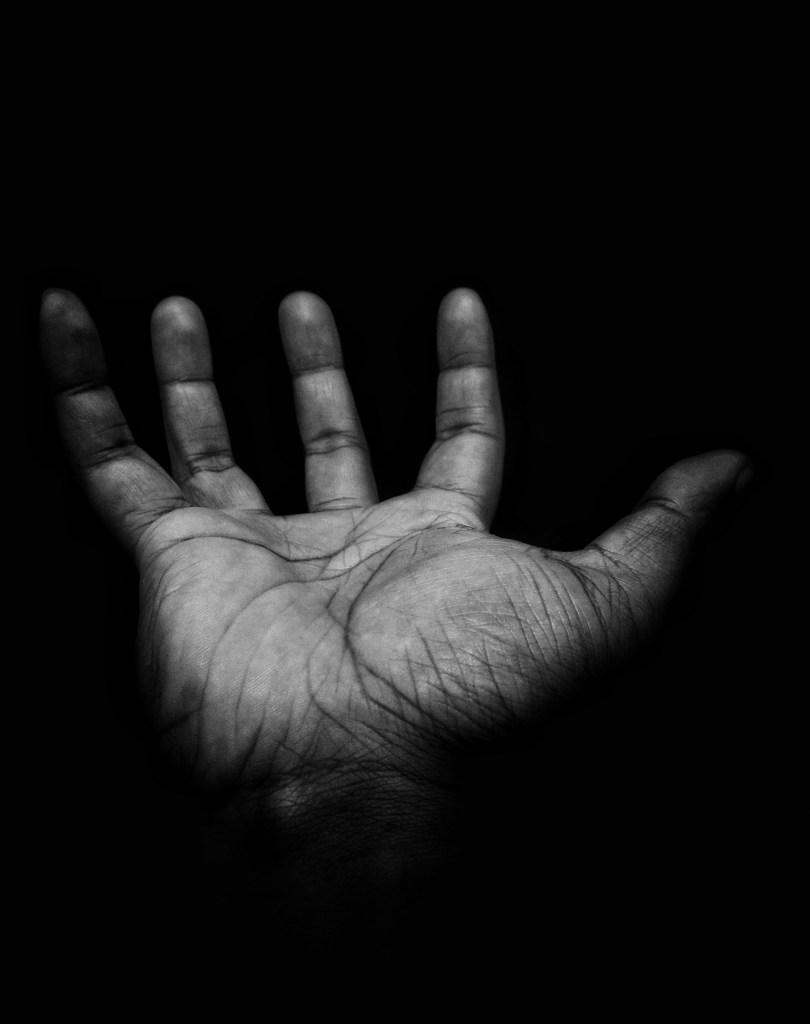
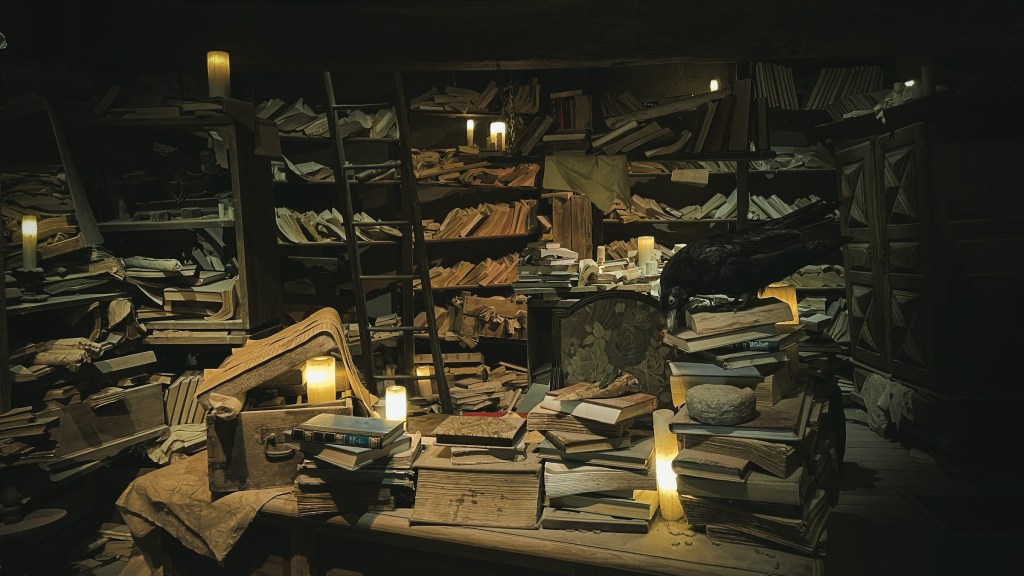
Photo by Colton Duke on Unsplash
Darkness. Not the kind that settles behind closed eyes, but something deeper—a velvet void, unshaped and infinite.
He didn’t remember falling asleep. Or waking. Only the disorienting sensation of un-being, like a breath held too long or a memory half-forgotten.
Where am I?
The thought wasn’t so much spoken as it was felt, blooming silently in the space where identity used to live.
Was there an accident? A surgery? A slow panic curled at the edges of his awareness. No pain. No sound. Just absence.
Then, a ripple—not sight, but certainty. Something else existed here. Not near. Not far. Simply… present.
“You’re dying,” came a voice. Feminine. Not gentle, but not unkind. Like rain on slate.
He turned—though he had no body to turn—and there she was. Or, more precisely, she was known. Her form was neither imagined nor perceived, yet it was irrefutably there. A woman of presence, not shape. A truth cloaked in memory.
“Is this it?” he asked. The words carried no weight, yet echoed into the void.
“Not quite. You’re in the moment between. The folding place. The seam.”
“The afterlife?”
“A word with too many meanings. But yes, if you like.”
She stepped—or simply shifted—and suddenly, he was moving. Falling. Flying. Floating through a corridor that didn’t exist, past doors that weren’t there. Each one opened and he was in it: himself at five, chasing light through summer leaves. Himself at twenty-three, breaking a promise. Himself at thirty-two, laughing with a stranger who would never forget him, though he’d forgotten her name.
Moments surged around him like waves, and he was each of them. Not just the actor, but the acted upon. He felt the sting of every harsh word spoken and the warmth of every kindness—from both sides. A thousand lives within one life, rippling outward.
At times, it passed like a whisper, so quick he questioned if it happened. At others, a single glance lingered for what felt like centuries.
“Why am I seeing this?”
“Because it’s yours. And theirs.”
“Theirs?”
She did not answer, but the answer arrived.
A woman, once a cashier, once tired and unseen, reeling from the indifference he had offered her during a rushed transaction. A friend, grappling with silence after reaching out and hearing nothing. A child, watching him with awe as he knelt to tie his shoe.
His life, refracted. Not judged—but revealed. Not catalogued, but lived again, in all directions.
“This isn’t heaven,” he said.
“No. Nor is it hell. Those are stories. This is memory. Echo. Understanding.”
“Is it punishment?”
“No. Only truth. And truth, sometimes, hurts.”
He moved again—through others, through selves, through moments he never understood until now. The weight of casual cruelties. The resonance of forgotten mercies. Every choice was a seed, and here, in this timeless soil, every bloom was shown.
“What happens after?”
She paused.
“You tell me. When you know who you were—not just in your skin, but in the world—what would justice look like? What would you deserve?”
He didn’t answer.
He wasn’t ready.
But somewhere, deep in the eternal stillness, a new question began to form—not what comes next, but what came from me?
And maybe, just maybe, that was the point.
Recommended Listening:
The Obsession with the After
Humanity has always strained to peer past the veil.
Across centuries, continents, and cultures, we’ve imagined dozens of endings for our story—and just as many beginnings. For some, the afterlife is a mirror; for others, a ladder. Sometimes, it’s a final destination. Sometimes, just another turn in the spiral.
The Abrahamic traditions—Judaism, Christianity, and Islam—often frame life as a single test. Once taken, it cannot be repeated. Paradise or punishment awaits based on adherence to divine law, faith, or deeds, depending on the sect. Christianity speaks of eternal heaven or hell; Islam offers layered heavens and hells, each scaled to a soul’s record; Judaism, more varied, leans toward Sheol, Olam Ha-Ba, or resurrection, depending on interpretation. All tend to pivot on judgment. A score. A verdict.
In Norse mythology, the brave who die in battle ascend to Valhalla, a warrior’s banquet hall, or to Fólkvangr, under the goddess Freyja’s care. Those who do not die with sword in hand might find themselves in Hel—less a place of torture than of cold forgetfulness. Life is honored through valor, and the afterlife rewards—or reflects—that.
Greek and Roman views echo this, dividing the underworld into regions: Elysium for the heroic or virtuous, Tartarus for the wicked, and the Asphodel Meadows for those unremarkable in life. Souls drink from Lethe to forget, or from Mnemosyne to remember, tying memory itself to the moral weight of life.
In Gaelic and Celtic traditions, the afterlife often appears as an Otherworld—a parallel realm of beauty, music, and timelessness. Tír na nÓg is not a place of reward or punishment, but of eternal youth and wonder. Death is a crossing, not a conclusion.
Aztec beliefs separated the dead by how they died, not what they believed. Warriors and women who died in childbirth followed the sun; others passed through nine hells to reach Mictlán, a neutral realm. The journey was arduous, but not punitive—it was simply part of the cycle.
Buddhism and Hinduism share the concept of samsara, the wheel of rebirth. Life is not linear but recursive. Karma—not divine judgment, but cause and effect—determines the conditions of one’s next incarnation. The ultimate goal is mokshaor nirvana: release from the cycle entirely, the return to unity, emptiness, or clarity.
Taoist philosophy doesn’t obsess over the afterlife. It emphasizes harmony with the Tao—the Way—and living in balance. Immortality is sometimes pursued symbolically, through legacy or cultivation of the spirit, but often, death is seen as transformation, not cessation.
In Shinto, ancestral spirits (kami) remain near, honored through ritual. The dead do not leave, exactly—they shift forms, retaining influence in the world. The boundary is porous, and reverence for the dead is a part of daily life.
Indigenous African cosmologies vary by region, but many include ancestral veneration, cyclical existence, and spiritual planes interwoven with earthly life. The afterlife is often seen not as a separate place, but as a deeper layer of the same existence, where ancestors observe and guide.
Each of these reflects human longing—not just to live again, but to mean something. Sometimes the afterlife is justice. Sometimes peace. Sometimes just… more.
But amid all this diversity, few traditions ask a deceptively simple question:
What would a just afterlife actually look like?
Not fair in the sense of balance sheets and punishments. Not a reward for believing the right thing, nor an eternal party for the loyal. Just just—a reckoning not built on obedience, but on truth.
And what if that reckoning wasn’t someone else’s to deliver? What if it was us, made whole enough to finally understand the echo of what we were?
The Problem with Permanence
For all their beauty, terror, and mystery, most afterlife traditions share one troubling trait:
They are fixed. Final. Unyielding.
In the Abrahamic lens, eternity hinges on decisions made in a sliver of time, often without full knowledge or context. One lifetime. One test. One grade. And once the tally is made—heaven, hell, paradise, punishment—there is no appeal. No reevaluation. No growth.
The Norse and Aztec views tie fate to the manner of death, not the fullness of life. Valor is virtue. Sacrifice is salvation. But compassion, transformation, regret—these have little place once the sword is laid down.
Even in systems like Hinduism or Buddhism, where rebirth allows for gradual improvement, the goal is ultimately escape, not reckoning. Samsara is a prison to be transcended, not a classroom to be understood.
And in philosophies like Taoism or Shintoism, the afterlife is either amorphous or beside the point. Death is a wave rejoining the ocean—but the self, the story, dissolves.
What’s missing in nearly all these frames is this:
Accountability without damnation. Reflection without annihilation. Change without erasure.
A truly just afterlife wouldn’t be a verdict. It wouldn’t be reward or punishment for being good or bad by someone else’s rules.
It would be a mirror—and more than that, a process.
It would let you feel the weight of your life—not as pride or shame, but as consequence. It would give you the chance to understand, not simply to be sorted. It would honor context without erasing impact. It would allow regret to bloom into wisdom, and cruelty to become a root of empathy—if you were willing to stay with it long enough to truly feel what you caused.
Justice, in such a frame, is not a judgment delivered. It is a reckoning lived. Not once, but fully.
And that kind of justice cannot be outsourced. It cannot be delegated to gods or scales or scripts. It must be borne, by the only one who can: the self, made whole enough to bear the truth.
Maybe that’s what comes after. Not punishment. Not reward. But the invitation to finally know what it meant to be you—and everything that meant to everyone else.
The Ripple as Reckoning
Imagine, then, an afterlife not of gates or flames, but of mirrors. Not reflections of who you believed yourself to be, but of who you were to others.
This is not punishment—but it may feel like one. It is not reward—but it may be luminous. It is the undistorted echo of your existence, unfolding around and through you, until you are no longer just yourself, but every self you ever touched.
Such a realm needs no god to administer justice. It requires no throne, no courtroom. It asks only that you witness—and survive—the truth of your own wake.
Kant might have seen this as the culmination of his categorical imperative: to treat others never merely as means, but always as ends in themselves. In this space, that principle is not theoretical—it is lived. Your failure to uphold it is not punished—it is revealed, with perfect clarity, from every affected soul’s perspective. Your adherence to it resonates likewise.
There is no moral scoreboard, because there is no one to impress. The good you did returns to you not as a prize, but as a presence. The harm you caused becomes not a sentence, but a shadow you walk through until you understand its shape.
And perhaps, when understanding is complete—when you have wept, and rejoiced, and finally made peace with your impact—the mirror releases you. Not to reward you, but because there is nothing more to learn. Justice has been served not to you, but through you.
In this vision, lived justice becomes not a singular revelation but a kind of spiritual entropy—a universal unraveling. Every action, every word, every neglected kindness or casual cruelty returns, not in vengeance, but in balance. Newton’s law reimagined: for every action, a mirrored understanding of equal magnitude.
You become the vessel for all your ripples. Each smile returns as warmth. Each betrayal as ache. You live as the lover, the stranger, the adversary, and the witness. You are not judged by what you intended, but by what you caused. And the totality of that causality is returned to you—not all at once, but gradually, deliberately, like a tide reclaiming the sand.
In time, the shape of you begins to dissolve—not from punishment, but from completion. The story of your life unspools backward as each thread of impact is understood, felt, and folded back into stillness. Like a loom reversed, every thread returns to silence, every motion to stillness.
When the last echo quiets, and the last reflection fades, what remains is not a soul ascending nor a sinner condemned, but a blank canvas—clear, whole, and empty, seamlessly blending with the impossibly dense nothing that surrounds and is your current existence.
Not erased. Not destroyed. Just… complete. Balanced.
This is not heaven. This is not hell. This is clarity. And clarity, at last, is peace.
The End of Self, and the Justice of Its Absence
What makes this vision more just—at least in my consideration—is not that it rewards the virtuous or punishes the wicked, but that it reveals the truth of our existence, one echo at a time. It makes no assumptions about what is deserved. It simply shows you what was, and what became of the world because of you.
It is not an accounting ledger. It is not karma’s quiet loop. It is not even divine justice. It is moral gravity—inescapable, unhurried, inevitable.
There is something deeply natural in it, something almost ecological. Every action returns to its source, not by force, but by law. No one weighs your heart against a feather. You are the weight, and the feather, and the scale, and the hand that dropped the stone. You become the balance.
This, I believe, is a form of hope. Not because it promises reward, but because it refuses to lie. It neither flatters nor condemns. It offers no heaven to cling to, no hell to fear. It simply offers the possibility that you might understand—and through understanding, find peace.
But that same honesty is what I imagine would terrify many.
Most religions promise permanence. That the soul—the self—will go on, eternally preserved. Whether basking in glory or burning in regret, you will still be you. Your name, your face, your awareness will survive the grave.
This vision does not promise that. It suggests something harder, stranger, and more honest:
That the self may be temporary. That the self was always an intersection—of choices, actions, consequences, and perceptions—and that once those threads are fully seen, fully understood, they are no longer needed.
In this afterlife, you do not live forever. You resolve.
To some, that is horror. The loss of self is the loss of meaning. If nothing persists, why do anything at all?
But to others, myself among them, it is release. It is relief. It is the idea that we are not sentenced to an eternal identity, carved in the stone of one lifetime’s shape. That we can be whole for a time, and then finished, with no more weight to carry.
This kind of justice needs no reward. It is not motivated by fear or dogma. It is lived simply because it is right. Because the clarity that follows is the reward, and the act of living justly becomes its own quiet form of grace.
It is, as Marcus Aurelius once wrote, “to live in accordance with nature.” To act in accordance with what we are. And if what we are is not eternal, then perhaps justice is simply this:
To cause no unnecessary harm. To understand when we do. And to return, in time, to silence—not out of failure, but completion.
What Comes After the After
I don’t claim this is true. I don’t need it to be true.
I know this won’t shake the faith of billions, nor do I want it to. Belief is a deeply personal refuge, and many of the systems we’ve built reflect the best parts of our longing: our hunger for meaning, our fear of oblivion, our aching need to be seen.
But so much of that clinging—so much of that fighting—comes from the certainty that our version is right. That our map is the only one that leads somewhere.
I’m not offering a map. I’m not drawing a line in the sand. I’m simply walking a little farther down the road.
If there is something after this—if there is anything beyond the veil—perhaps there is something beyond even that. A return not just from life, but from identity. Not annihilation, but resolution. A soft unweaving of the soul back into the fabric of what is, no longer burdened by narrative.
In the end, perhaps what matters most is not whether we live forever, but whether the life we lived was worth understanding.
Not because it was perfect. Not because it was grand. But because it meant something—to someone.
And maybe that meaning, once fully known, is all the immortality we ever needed.
I don’t know what comes next. I don’t need to.
But if there is a space between lives—or beyond them—then I hope it looks like this:
Not mercy. Not wrath. Just understanding. And, when that work is done… peace.
Somewhere, the man in the dark still walks. Through memory. Through consequence. Through every soul his life once touched.
He is not looking for heaven. He is not running from hell.
He is walking home.
And when the last echo fades, and the last ripple calms, he will not remain.
But the world will.
And that, perhaps, is enough.






Leave a comment