

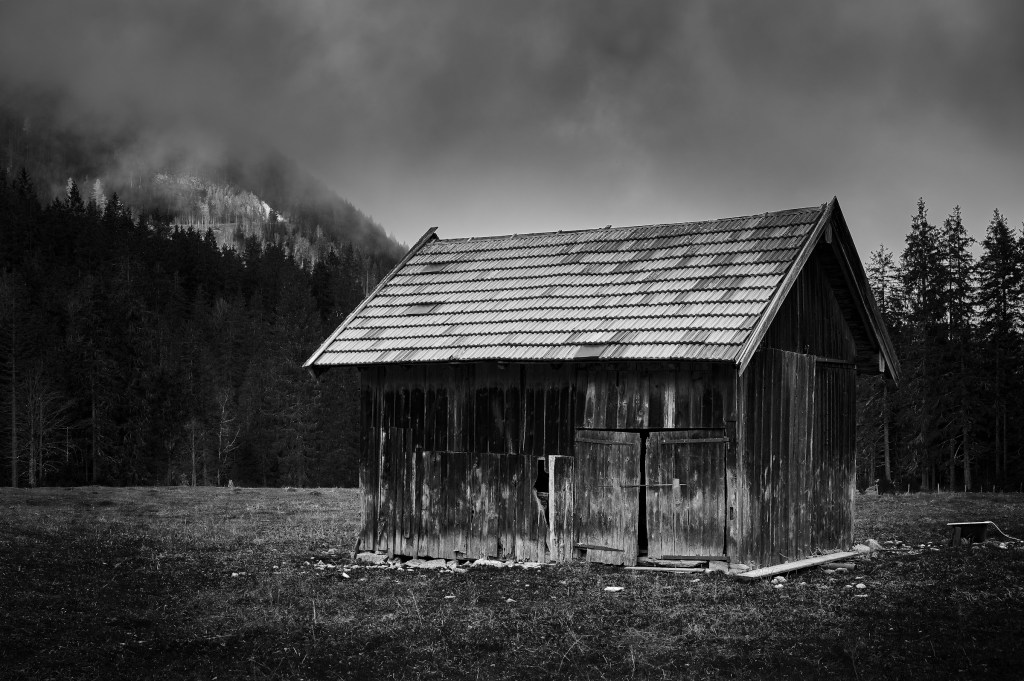
Photo by Sebastian Unrau on Unsplash
Author’s Note
If you’ve read my work here before, you know I tend to explore the long arc—philosophy, ethics, cultural movement. Big ideas framed against mythic metaphor in slow time. This isn’t that.
This is a different piece, written from a more immediate place.
It’s not theory. It’s not abstraction. It’s something closer to exhaustion—a slow bleed of energy that’s made it harder to write the things I usually care about. And because I care about people—individuals, systems, nations, cultures—I had to name what was pulling the thread.
This isn’t a departure from that focus. It’s an extension of it. A narrower lens, maybe, but the same question underneath: what do we build, and what do we leave behind?
I didn’t write this to call anything out. I wrote it because I’m tired. And because there’s not much point in swinging an ax when I can already see the trunk leaning.
~Dom
If you’ve ever asked me about where I come from, you’ve probably heard some version of a story about Georgia—my grandparents’ land, hand-cleared in patches when something other than trees and game trails was needed. We bush-hogged access trails through 80 acres of thick woods, rode horses along paths worn by hooves long before ours, and sat down to dinners where the corn was from the field and the fish was from the pond. There wasn’t a supply chain—just life.
My grandfather never used the word sustainability. That kind of language didn’t belong in the fields or among the trees. But he taught me what it meant to work with the land, to respect it not because someone told you to, but because that’s how you kept it alive. I never heard him talk about property value, but I remember tying off and climbing out onto a pipe 20 feet over a slab of Georgia granite, clearing leaves and debris from the dam’s sluice when the rains didn’t come—because waiting wasn’t an option.
What I do remember vividly—more than I understood at the time—was the look on his face when the neighbor’s wooded parcel was sold and turned into a subdivision. It wasn’t rage. It was something quieter and sharper: disappointment. He eventually stopped looking in that direction altogether. It wasn’t just that the deer trails became sidewalks at the edge of our woods, or that we started finding bottles and trash along the fence line. It was that something irreplaceable had been traded for something easy to measure.
When I entered the professional world, the parallels didn’t synthesize right away. It wasn’t until I became the leader of my old team that the old ropes and pulleys connected—where once we pulled brush to clear trails, now I was scheduling meetings to clear roadblocks for my team. And I began to see: the same patterns that kept the land working with us were keeping the people I relied on working with me, not just for me.
Just like the Georgia woods, there was discomfort. Heat from missed deadlines when accuracy demanded more time. Droughts, too—tight budget seasons, rushed contract cycles, pressure from above to do more with less. But beneath those fluctuations, there were patterns. Always patterns. And most of the ones that worked took the shape of partnership. The land gives when you treat it like something worth giving back to. Teams do, too.
It’s not always obvious. Especially when timelines collapse, when a critical system breaks, or when you realize you don’t have the capability—technical, emotional, temporal—to support your team the way they need. That’s the pivot point. Some people recognize that as a challenge to rise to. They stretch. They learn. They lead. They write the books and get quoted in articles with words like ownership, resilience, trust.
Others don’t. They accept the limitation—not quietly, but strategically. They default to self-preservation. They trade stewardship for self-promotion. And soon, the quarterly numbers rise like new McMansions—shiny, sellable, and utterly disconnected from the withering ground they were built on.
There are enough articles about what good leadership looks like. Enough tales of inspiring teams, heroic turnarounds, and the miracle of collaboration. We don’t need another victory lap.
Today, let’s talk about what happens after the forest is gone.
Recommended Listening:
Symptoms of a Withering System
When you’ve walked a forest long enough, you notice the quiet signs before anyone else does—the shift in birdsong, the algae in the pond, the absence of tracks where they used to be after a storm. The same is true in organizations. Before performance reviews falter or attrition reports spike, there are signs. Whispers. Silences. Hesitations in meetings. Delays that used to be momentum.
People stop offering ideas. Not out of rebellion, but because they’ve learned that effort is credit-neutral—someone else will reap the recognition anyway. Collaboration starts to dry up too, replaced by caution. Instead of “how can we solve this?” it becomes “who owns this?” and “is this my lane?” Innovation slows not because the talent is gone, but because the incentive to take creative risk quietly expired two quarters ago.
The best people begin to withdraw—not loudly, not dramatically, but systematically. They stop volunteering for stretch work. They use PTO with surgical precision. Their Slack replies get shorter, more tactical, less curious. Some go looking for a transfer. Some already have one lined up. Some stay, physically present but psychologically distant, performing just well enough to avoid attention while investing their real energy elsewhere.
And perhaps most telling: when new talent joins, the team stops trying to integrate them. Not out of unkindness, but because they’ve seen too many bright lights fade under the same conditions.
That’s the real tragedy of extractive environments—not just the loss of talent, but the erosion of belief that it’s worth protecting.
How Systems Drift Toward Extraction
Forests don’t die in a single storm. They wither when the roots are slowly starved, season after season, while the canopy still looks green from a distance. Organizations are no different. The outward signals—profitability, delivery, growth—can remain intact long after the culture beneath has begun to hollow out.
Extraction isn’t always the result of bad actors. More often, it’s the result of invisible architecture—incentives, traditions, and cultural norms that quietly reward short-term yield while penalizing long-term investment.
It starts subtly. Budgets tighten, and the first things to go are the slow-return items: community outreach, mentorship programs, tooling improvements, learning time. Performance reviews shift toward visible outputs. Speed becomes synonymous with value. Every delay is scrutinized, while every shortcut is quietly rewarded.
Leaders rise through this system learning to optimize impressions: how to showcase effort, how to be seen near success, how to spin urgency into authority. Over time, credit becomes a game of surface proximity, not substance. Relationships become political capital. Visibility replaces stewardship. And slowly, the organization becomes addicted to velocity—even when it’s running in circles.
What makes this drift so difficult to detect is that the slope is shallow; nothing ever feels broken. Promotions still happen. Projects still launch. Bonuses still land. But underneath, the soil is thinning. Teams become brittle. Knowledge becomes siloed. And the people who used to think ten steps ahead are now just trying to stay out of the blast radius.
The Extractive Manager
Extraction, when it shows up in people, rarely wears a name tag. It doesn’t arrive with malice or bad intentions. In fact, it often looks like competence. A full calendar. A polished update. An ability to stay close to high-visibility projects and ready answers.
Extractive managers aren’t always unpleasant. Some are warm, well-spoken, and skilled at navigating the language of leadership. But there’s a subtle difference in how they move through their teams. Where stewardship builds alongside others, extraction tends to move through people—using their effort as leverage rather than foundation.
You notice it when credit softens—when “she figured it out” becomes “we made it happen.” When a presentation includes the right names on the slide, but not in the room. Over time, it’s not that work isn’t recognized—it’s that recognition feels curated. Filtered. Performed just enough to avoid suspicion, but never enough to build trust.
You notice it in meetings, too. There’s presence without participation. A voice that’s always in the conversation, but often just after the hard parts. They’re visible when things go well, peripheral when things get hard, and strangely absent when accountability finally settles.
You see it in the way relationships shift. The calls that once built trust between team and stakeholder are suddenly rerouted. The direct connections are replaced by summaries, and people find themselves further from the decisions they used to help shape. It doesn’t look like control. It just looks like gravity—slowly pulling visibility upward, while the work stays below.
And you feel it most in the pressure. The sense that nothing can slip, because everything is being watched. Deadlines tighten. Priorities stack. Questions are framed as clarity, but land as warnings. No one is told to hurry. They just stop believing they have time.
This kind of management rarely sets out to cause harm. But it often operates from a belief that protection means control. That results are something you can extract with the right sequence of urgency, oversight, and polish.
It works. Until it doesn’t.
And what it leaves behind is a quiet sort of erosion. Not of output—but of belief. Belief that leadership is a place where credit flows outward. That risk is shared. That effort is safe. The damage isn’t always visible in attrition or performance. Sometimes it just looks like people giving less of themselves—still present, still delivering, but rarely with both hands.
By the time the system recognizes the pattern, it’s already in the roots.
What’s Left Behind
It doesn’t happen all at once. The damage doesn’t announce itself with fanfare or reports titled “Talent Exodus Imminent – 90 days to prepare.” It starts quietly. The way a forest thins out—not with the sound of a single tree falling, but with a silence that replaces birdsong.
When extraction becomes the cultural default, the consequences move slowly but deeply. The team stops feeling like a team. Not because people dislike each other, but because connection takes effort, and effort needs safety. Without safety, people go quiet. Trust stops being the default. Instead of collaboration, you get parallelism. Everyone still delivers—at first—but they do so behind polite silos and invisible caution.
Curiosity is often the first real casualty. Not officially, of course. There are still “innovation goals” and “idea boxes” and internal hackathons. But the appetite to try something bold fades when people know that failed experiments will be remembered longer than their rationale. So people play it safe. They deliver what’s asked, not what’s possible. You can almost feel the creative oxygen leaving the room.
Then you notice something else: the informal scaffolding disappears. The unprompted knowledge-sharing, the mentorship that happened without calendar invites, the random Slack threads that used to spin up new ideas—gone. Not out of spite. Just out of fatigue. When people stop believing that their extra effort leads anywhere meaningful, they don’t rage. They simply recalibrate.
The organization still looks functional. Metrics stay green. Projects still go live. But the resilience fades. The margin of error tightens. The ability to flex, to adapt, to recover—diminishes. What was once an ecosystem becomes more like a machine. And when something breaks, there’s no elasticity to catch the fall. Just the sound of something that used to bend, finally snapping.
At this point, retention isn’t the biggest problem. It’s what kind of retention. The people who stay aren’t necessarily the most capable. They’re the ones most willing to tolerate a system that’s grown allergic to stewardship. They keep the wheels turning, but the spark is gone.
And here’s the thing that gets missed in most postmortems: the cost isn’t just what the organization loses—it’s what it never discovers. The idea that was never suggested. The talent that never fully emerged. The future that never had a chance to take root.
Regeneration Is Not a Perk
The temptation is to treat this as a binary: extractive leadership is bad, regenerative leadership is good. But that oversimplifies what’s really happening. The difference isn’t just in behavior. It’s in philosophy. It’s not just how leaders act. It’s how they see—time, contribution, risk, people.
Regenerative leaders don’t manage like farmers checking yield. They manage like people who know they might inherit the land for longer than expected. And they behave accordingly.
They see time differently. Where extractive leadership races toward the quarter’s end, regenerative leadership works in seasons. They understand that outcomes compound—not in a straight line, but in unpredictable ways—and that the most powerful results often have the quietest beginnings.
They see contribution differently. Credit is distributed openly, precisely, with context and attribution. Praise is granular. Impact is named. Not because it flatters, but because it orients. People know what good looks like, and where their fingerprints live inside it.
They see risk differently. To the extractive leader, risk is something to be deflected. To the regenerative leader, it’s something to be carried with their people. When failure happens—and it does—they don’t perform post-mortem theater. They ask better questions. They widen the lens. They model ownership that invites growth, not blame.
And they see people differently. Not as instruments. Not even as assets. But as co-authors of the organization’s future. That sounds lofty. But in practice, it’s very grounded. It means inviting dissent. It means giving real authority, not symbolic autonomy. It means investing in someone’s development before the job description demands it.
What Regeneration Looks Like
It looks like deliberate slack in project timelines—not because people are lazy, but because space creates insight.
It looks like team meetings where silence is interpreted as a sign to listen longer, not move faster.
It looks like leaders who give away opportunities to present work, and who stay quiet while others shine.
It looks like systems that reward maintenance work as much as heroics—because a resilient system is the greatest productivity hack there is.
It looks like people who leave the org better than they found it—and people who stay, not because they have to, but because they choose to.
Why It Matters
Regenerative leadership isn’t slow. It’s sustainable. It’s not soft. It’s resilient. And it doesn’t just produce better work—it produces more capable people. That distinction matters, because while output can be replaced, capability can’t be faked. It’s what carries teams through pivots, through crises, through change.
Most importantly, regeneration protects something fragile: the belief that doing excellent work is worth it. That showing up with care, thoughtfulness, and long-view thinking won’t be punished by being overlooked or overwritten.
Without that belief, the best people stop showing up fully. With it, they build things no mandate could ever force.
What Remains
Back on that Georgia land, there were places where we never rode. Not because we couldn’t, but because we didn’t need to. Places we left alone out of respect, or patience, or maybe just instinct. The idea was simple: if we cared for the land, the land would care for us. Maybe not today. Maybe not this season. But eventually.
Most modern organizations don’t talk much about legacy. Not in the day-to-day. Not in the meetings where urgency eclipses everything else. But legacy happens anyway. Every quarter. Every hiring decision. Every manager who steps in—or doesn’t. We leave marks. And those marks either become roots or scars.
Extractive leadership will always be tempting. It’s personally safe, efficient. It moves the metrics our leaders and shareholders care about. It looks good until the horizon moves. But its footprint is always deeper than its impact. What it leaves behind is harder to rebuild than anyone ever estimates.
Regenerative leadership isn’t about perfection. It’s about attention. About remembering that what you cultivate today shapes what others inherit tomorrow. Sometimes that’s a field. Sometimes that’s a team. Sometimes that’s a culture.
So ask yourself: when the systems you built are quiet, when the pressure is gone, when no one’s watching—what will remain?
Because eventually, something always does.
… and a bonus, because I’ve rewritten this three times on two platforms, and I’ve earned it.









Leave a comment