
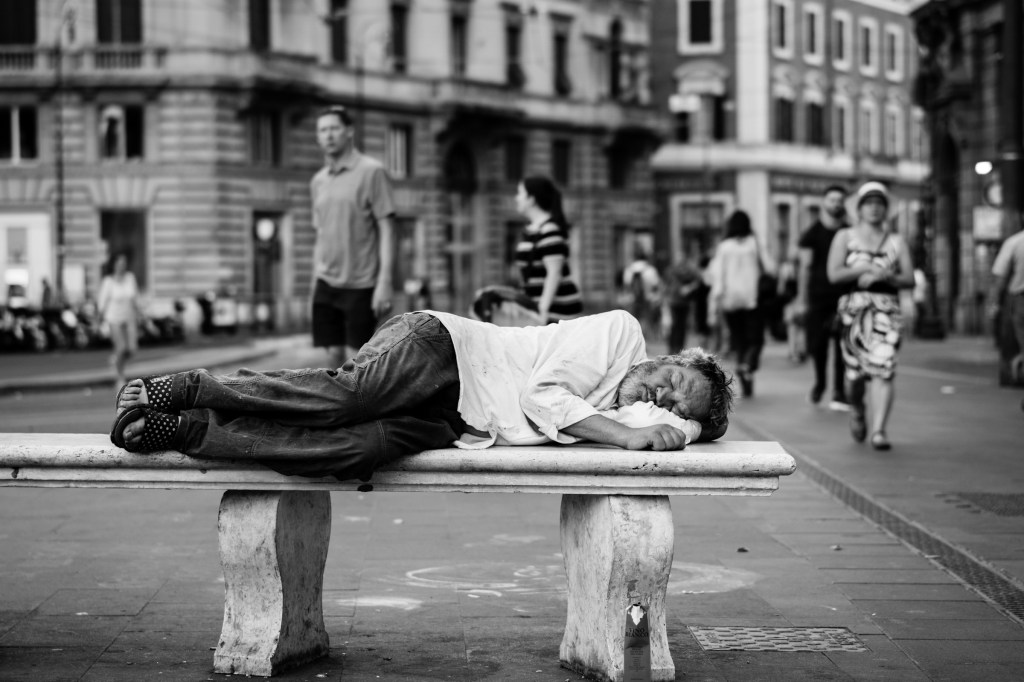
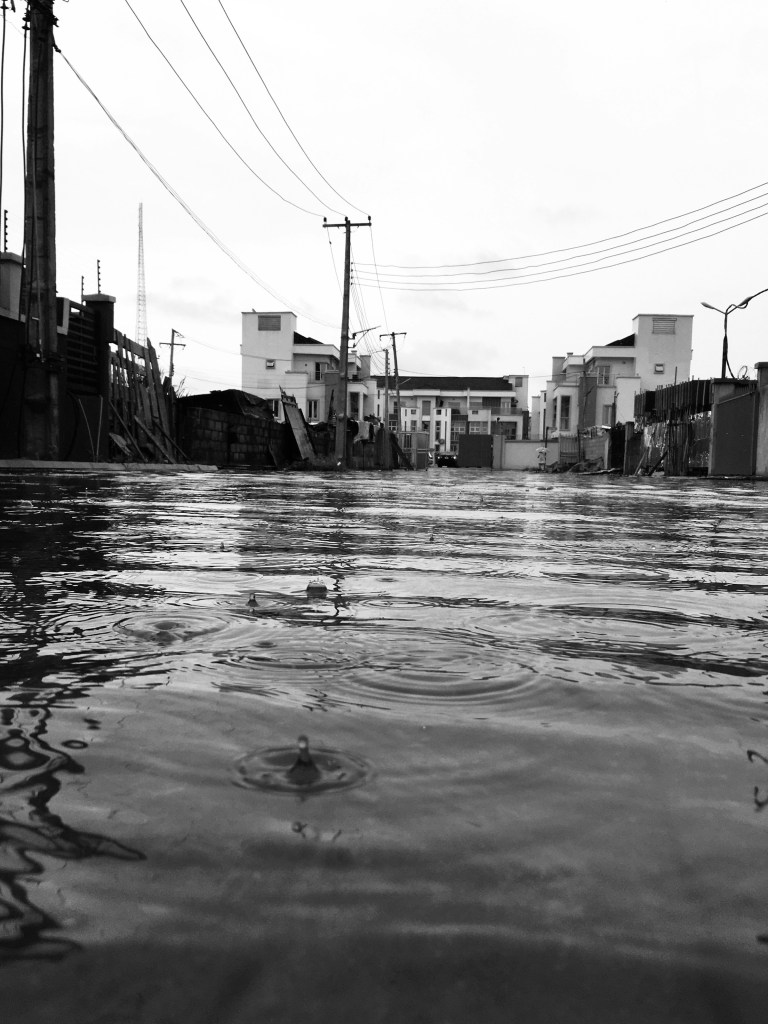
Photo by John Moeses Bauan on Unsplash
I pass the street that smells like fresh bread and jasmine every morning on my way to my workshop. There’s a man — gray hair tied back — kneeling in the median garden, coaxing wildflowers to spill over the sidewalk. He hums to them, low and tuneless, but the flowers seem to listen. He waves at me with soil-dark hands. I nod back, sketchbook tucked under my arm, thumb brushing the paper’s edge like a habit.
A kid wobbles past me on a bike, guitar case bumping his side. He laughs when he sees me watching — carefree, legs pumping steady. No rush to make rent. No panic behind his grin. Just a song waiting to be found.
The café across the street breathes out warm air and cinnamon. Its doors are always open. No register, just a painted sign: “Try what you like, leave what you love.” Inside, a girl with honey on her fingers dabs pastry filling onto fresh dough, head tilted to catch the tune drifting in from the boy outside. A kettle whistles. Someone laughs. There’s a half-finished poem on a napkin by the window.
Further down, the old warehouse blooms with color — murals layered over murals like a living skin. The door’s propped with a battered chair. Inside, teenagers sprawl on the floor, drone parts scattered around them like confetti. One sketches circuits on the wall. Another folds paper wings for fun. They come when they’re curious. They leave when they’re done. Nobody hoards here. Nobody sells desperation back to the desperate.
I keep walking. My workshop waits in an old brick shed by the river. Sunlight spills through mismatched windows onto piles of wood, scraps of canvas, half-finished ideas. Some days I carve shapes from driftwood. Some days I paint stories on broken tiles. Some days I just sit, door wide open, and talk with whoever wanders by. Not for profit. Not for survival. Just because I can — because there’s room enough for beauty when nobody’s guarding the gate.
The Root of the Matter
There’s a common refrain — we’ve all heard it, most of us have repeated it — that names money as the root of all evil. And yet, in the same breath, we raise our glasses to billionaires, envy their yachts, devour shows about their mansions and dramas. There’s an irony in cursing what we worship — but even that irony misses the mark.
I learned the value of money by its absence. I knew its shape by the empty space it left behind — the simple menus, the store brands, the careful math done in aisles and on kitchen counters. I learned to measure bread by its price, to feel the weather of a week in the worry lines of my parents’ faces. Money wasn’t the root of evil — it was a ghost we chased, a gate we rattled, a silence that made needs echo louder.
So, yes — blaming money alone is neat. Convenient.
It festers in the hollows between what we need and what we can’t reach. It blooms when plenty sits behind locked doors while hunger paces the porch. Money is a tool — cold, neutral, obedient. The rot sets in when we hoard it, weaponize it, raise fences to keep it for the few and call the rest lazy for wanting a taste.
We say the love of money corrupts souls, but that’s too simple. What corrupts us is need — unmet and taunted — in the presence of excess that pretends it has nothing to spare. That’s where cruelty is born. Not in the dollar, but in the hands that grip it so tight they’d rather bury it than share it.
Thought Experiments
So let’s test this idea. Let’s ask the question another way: what happens if need disappears? Think of the replicators in science fiction — machines that conjure whatever you want, food or clothes or shelter, molecule by molecule. Imagine someone invents it tomorrow. Handwave the energy, the cost, the distribution. Suppose it just works — no one goes hungry again, no one freezes in the dark. The first instinct is hope. Relief. Of course we’d be better off. But there’s a whisper under that hope, a doubt we can’t quite silence: would we really?
Scale it down. Keep your feet on Earth. Energy costs climb every year, and each summer reminds us how fossil fuels poison the air we breathe. So what if tomorrow, fusion worked — truly worked — scalable, safe, cheap? Imagine limitless clean energy at a fraction of the cost. Would it be rolled out tomorrow? Would the energy poverty crisis in the global south be solved?
Or would the companies who profit from scarcity strangle it before it ever reached your streetlight? Would shareholders accept empty oil wells if it meant dividends shrank?
Neither the replicator nor the fusion reactor is about money, not really. They’re about gates and keys. About who controls what can be had, and who waits in line to beg for it. Money has never been the true root. It’s just the token. A symbol of tomorrow’s dinner, next week’s heat, the chance to live another month unafraid.
And it shows up in small ways, too — like planned obsolescence. The phone that slows down, the appliance with the cheap hinge designed to fail. We nod along. We replace it. The cycle keeps turning, not because the parts can’t last, but because the profit must. Need, created on purpose.
But some gates are crueler. Like the landlord who jacks rent 40% and blames the market while half the units rot from neglect.
Take insulin, perhaps the best example of the deeper rot. It’s cheap to make, simple to refine — yet entire corporations guard it like a dragon’s hoard. We hear about it in America, as a critique of our profiteering healthcare system most often, but the core message is globally true. I’ve known people who ration it, who push meals and sleep schedules around it, who feel terror every time the fridge door rattles and the vial knocks against the shelf. I’ve seen that panic. I’ve read the statistics about the thousands who choose between rent and life.
And yet — I don’t see the average shareholder dumping the stock. I don’t see mobs in the street demanding that no one die for want of a shot that costs pennies to produce. We swallow it. We make excuses for it. We call it the market. But it isn’t the market. It’s need, unmet in the presence of excess — because the gates are profitable, and the keys are counted in quarterly returns.
The Real Roots
As we look closer, what we find isn’t a dollar bill with fangs — it’s an emptiness. It’s the quiet fact that a person with nothing to lose will risk anything to fill that hollow. Studies — like those from the World Bank and criminology journals — show that crime follows poverty like a shadow. Where wages stall and rents rise, desperation blooms. Even military enlistment trends prove the same point: the recruiters know which neighborhoods to target, where college seems impossible and a steady paycheck — any paycheck — looks like rescue.
We’re told to blame the thieves, the desperate, the ones scraping by, but we rarely ask who built the world where scraping by is a full-time job. The root of all evil is need — unmet, flaunted, multiplied by a culture that teaches us to clap when the rich flaunt more than we’ll ever touch.
Zoom out and it becomes clearer still. We’re enamored with the spectacle of plenty. Luxury morning routines fill our feeds. Self-discovery is marketed as a retreat to Bali, Italy, France — a passport stamped with worth. “We need a businessman, not a politician,” some say, as if a billionaire’s skill in hoarding makes him fit to steward the common good.
We don’t ask why the same billionaire funds a new yacht instead of school lunches for children who grow up hungry. We don’t ask why the government prosecutes fiduciary failure yet lets price gouging of life-saving medicine slide without a second glance. We praise the wealthy for their ambition and blame the poor for their hunger. And we support it — if through nothing else, then through our silence, our endless scrolling, our complicity in applause.
The Choice
I’m not separate from it. I’ve streamed the tours of penthouses, lingering on them even while I critique the spectacle I’ll never step inside. I’ve lingered on the luxury feeds, double-tapped the images of lives that glitter while my coffee goes cold. I’ve paid the price of quiet permission. Most of us have.
But it doesn’t have to end there. Not all gates are made of steel and stone. Some are habit, some are policy, some are belief. We can tear at them — piece by piece — when we build gardens on medians, when we feed our neighbors without a receipt, when we share what we know without a meter running.
Mutual aid. Union drives. Community fridges stocked in church basements, or a neighbor’s porch where free bread and eggs appear overnight — small proofs that gates can be opened by ordinary hands. stocked for strangers we’ll never meet. Small cracks that widen with each hand that refuses to keep them shut.
When need is met — truly met — the gates rust from the inside out.
So the question is never just how much you earn or save or hold. Open the gate — or guard it. Whether you’ll nod along and say “that’s just how the world works” — or dream of a world like the utopia of our introduction, and remember the scent of fresh bread and jasmine, and wonder why it can’t be that simple for everyone.
Money isn’t the root… Need — unmet and hoarded — is.




Leave a comment