

I remember the quiet more than the fire.
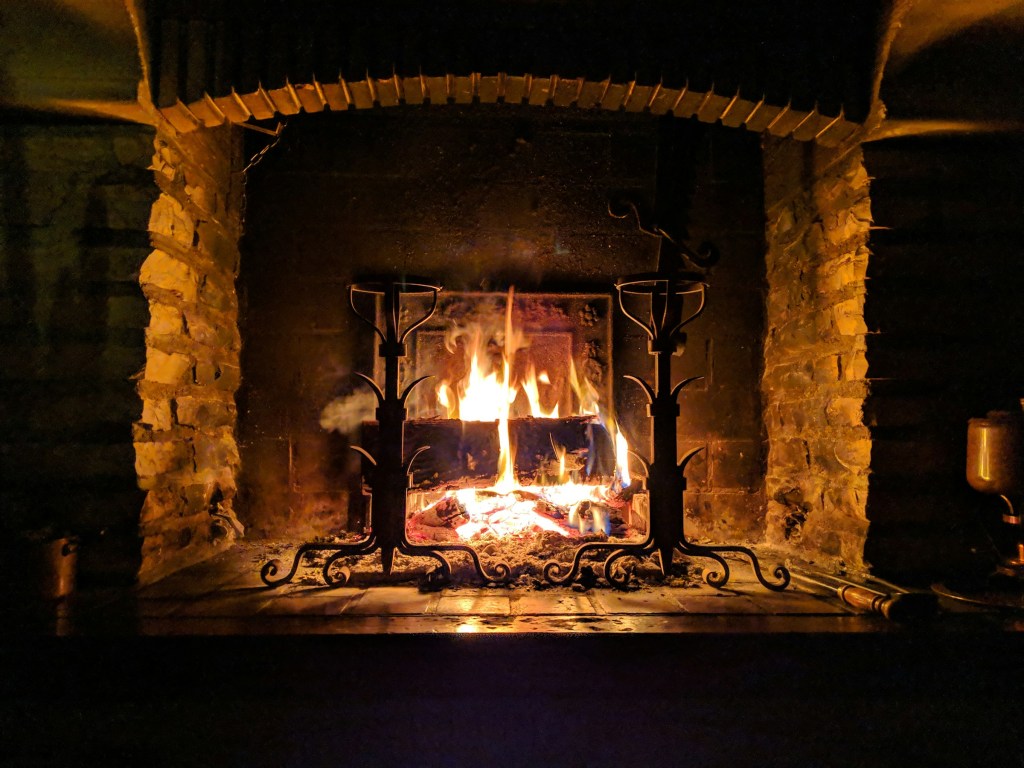
People think burning a city sounds like chaos—like screaming and glass and fury. But Atlanta didn’t scream. It sighed. Like an old man folding into himself, or a house finally letting go of its bones. We moved through the streets like ghosts, laying torch to timber, rail to rail. Some men sang. Some wept. Most just watched the horizon turn the color of blood and dusk.
They said it would shorten the war. Said it would break their back, starve their will, shake the rot loose from their belly. Back then, I didn’t know if that was truth or something we told ourselves to feel less like monsters. I remember a cradle inside one house—empty, but still rocking—and I wondered what kind of man I was, walking past it with a flame in my hand.
The march south from Atlanta was a trail of cinders. Barns, fields, depots—anything the Confederacy could use, we unmade. We salted the earth, and I told myself it was mercy. Every blackened stump, every rail bent like ribbon, every family forced to flee—we did it so fewer bullets would fly. So the killing would end.
It wasn’t until Millen that I believed it.
We reached what had once been a Confederate encampment. Their lines had collapsed. What we found weren’t soldiers, not really. They were boys in rags and mud, chewing bark, holding empty rifles, too proud to run but too hungry to fight. No boots. No powder. Just fever and silence.
That’s when I knew. Not just that we were winning, but why. The fire hadn’t broken them—it had unraveled the lie that fed them. That they could outlast us. That the land would sustain them. That they could hold on long enough for God or Europe or providence to intervene. But fire doesn’t wait for providence. It clears. It ends.
I won’t lie to you. I hated what we did. Still do, some nights. But I came to understand it. Because I saw what happened when we didn’t. The longer the village stood, the longer the war crawled on—bloody and proud and pointless. Some things don’t fall apart on their own. Some things have to be burned.
We didn’t light those fires out of hatred. We lit them because nothing else worked. Because we were done asking nicely. Because if the South wouldn’t let go of its ghosts, we’d leave it nothing to haunt.
This is why we burn the village.
A Broken System’s End
Not every fire is lit with a torch. Some begin as a shrug. Others as a calendar reminder quietly dismissed for the last time.
What Sherman’s march made literal, the modern world makes metaphor. We seldom storm city halls or tear up rail lines now; instead we cut the circuitry of empire by refusing to plug ourselves in. People walk off the job, abandon dating apps, ghost entire family trees, and let grand narratives rot by withholding the single resource those stories cannot survive without: belief.
“The ultimate hidden truth of the world,” David Graeber warns, “is that it is something we make and could just as easily make differently.”
Japan’s collapsing birth-rate, China’s tǎng píng (lie-flat), and the West’s epidemic of “quiet quitting” are framed as laziness. In truth they are acts of exhausted intelligence—a collective turning-away when every promised avenue to stability ends in debt, surveillance, or performative gratitude. Self-preservation, yes, but also silent sabotage.
Yet disengagement is not a clean cut. When millions choose not to build, vacancies multiply—empty classrooms, shuttered maternity wards, collapsing pension funds. Garbage must still be collected, water still pumped. Those with the least freedom—single parents, migrants, caregivers—remain to shoulder the weight of a machine the privileged have walked away from. The village doesn’t simply cool; parts of it freeze.
And nothing guarantees the ashes will foster something kinder. Power abhors a vacuum. A “stronger lie with fresher paint,” as one Hong Kong protest banner warned, can settle before the embers cool. Simone Weil cautioned that “to be rooted is perhaps the most important and least-recognized need of the human soul.”² When roots are scorched, opportunists cultivate new ones—for profit, not for nourishment.
Disengagement, then, is neither heroism nor nihilism. It is the blunt admission that maintenance has become complicity. The match is struck because persuasion failed, but the striker still risks being burned. The decision is surgical; the fallout, indiscriminate.
“The only way to deal with an unfree world,” writes Albert Camus, “is to become so absolutely free that your very existence is an act of rebellion.”
Freedom, however, is heavier than it looks. Once the village crumbles, those who walked away must decide whether to wander—or to build something that cannot be bought with someone else’s ashes.
Modern Marches: The Fire of Disengagement
Most people hear the word disengagement and picture bored office staff clicking through yet another pulse‑survey while plotting an exit. But the modern march is bigger than the conference room: it spills across boulevards, factory floors, and digital town squares.
When belief is withdrawn at scale, it doesn’t always drift away quietly—it sometimes detonates. Between 2020 and 2024 the United States logged more than 280,000 workers on strike each year—the highest level since 1986. France counted over three million demonstrators in a single day of pension protests. Chile rewrote its constitution in the streets; Nigeria’s youths brought cities to a standstill with the #EndSARS uprising. What links them isn’t ideology—it’s exhaustion. Systems that refuse to listen eventually hear glass.
“A riot is the language of the unheard.” — Martin Luther King Jr.
Yet street‑level rage is a double‑edged torch. Storefronts looted in Minneapolis left the very communities protesting police brutality without pharmacies and grocery aisles. Britain’s 2022 rail strikes bought bargaining power—but only by stranding nurses and night‑shift workers who had no alternative route. Each march extracts a toll, and it is rarely paid by architects of the original harm.
Hannah Arendt warned that “the most radical revolutionary will become a conservative the day after the revolution.” Fires of resistance cool into new bureaucracies; leaders of liberation may harden into gatekeepers. Momentum alone cannot guarantee justice—it merely pries the door open.
Still, dismissal is impossible. These marches expose what polite memos hide: that the contract has already failed. People no longer bargain for a bigger slice; they question whether the loaf was ever bread.
Disengagement, then, is not cowardice—it is clarity. But clarity costs. Some protesters leave the square with a vision; others leave with felony records and shattered hometowns. The match lights easily; rebuilding takes generations, and there is no guarantee the new pillars won’t splinter the same way.
The modern march is a warning flare as much as a weapon: repair what can be saved, or watch us remove ourselves—and perhaps you—with fire.
Passive Fires: Choosing to Remain, Choosing Not to Build
There is another kind of protest—one that leaves no scorch marks on asphalt and no hashtags in its wake. It is the decision to keep breathing but stop building; to maintain the bare minimum of life while starving the machine of momentum.
China’s tǎng píng—“lie flat”—and its darker sibling bǎi làn—“let it rot”—began as memes and turned into a demographic tremor. The country’s population shrank for the first time in six decades in 2023, and job‑board data show record numbers of graduates opting for part‑time or informal work. Apartments stay dark; wedding halls go bankrupt. The refusal is bloodless, yet the arteries of growth are clotting.
South Korea’s fertility rate collapsed to 0.72 births per woman in 2024—the lowest ever recorded in modern history. Many women in the 4B movement describe their choice as defense, not defiance: a shield against gendered violence, debt, and overwork. But the economic fallout lands elsewhere—on elder‑care workers, on migrant labor, on government budgets scrambling to fund empty classrooms and overflowing nursing homes.
“To refuse is still to choose,” writes Simone de Beauvoir. The choice here is survival over participation—but survival can be a lonely republic.
Because withdrawal is not without casualties. Loneliness indices in both countries climb with each census. Psychologists warn of “hikikomori 2.0,” an isolation so deep it devours identity. Online forums fill with threads from men and women who left the stage and cannot find the exits back.
Nor is the vacuum benign. Politicians invoke collapsing birth rates to justify surveillance of uteruses and restriction of migration. Corporations market anti‑depressants alongside sleep‑tracking mattresses—profiting from the very exhaustion their models produce. Byung‑Chul Han calls it “self‑exploitation masquerading as freedom.”
The privilege to disengage is unevenly distributed. Rural factory lines still hum; call‑center headsets still buzz. Someone restocks the shelves for the apostles of indifference. If too many step away, the grid flickers—not in symbolic protest, but because no one scheduled the maintenance.
Yet the quiet rebellion persists because, for many, the alternative feels worse. Better a room of one’s own and dwindling savings than a life mortgaged to unreachable rewards. The flame here is inward: a slow scorch of expectation, leaving the outer structures intact but hollow.
“A collapse begins in private,” warns novelist Yoko Tawada, “long before the roof hears the word ‘earthquake.’”
This is disengagement at scale: a village left standing, but emptied of volunteers to fetch water or rear children. And an empty village can be occupied by anyone—or by nothing at all.
The Inheritance We Refuse
Inheritance once meant possession—land, titles, a silver watch passed from wrist to wrist. Today it more often means scripts: graduate, couple‑up, mortgage, procreate, grind, retire. But a growing share of the population is treating that script like a spam call: declining the offer before the first line finishes.
“We live in capitalism. Its power seems inescapable—so did the divine right of kings.” — Ursula K. Le Guin
Young adults in the richest nations carry three times more debt and own half as much housing as their grandparents did at the same age. The ladder is still advertised; the rungs are made of paper. Faced with that math, refusal looks less like laziness and more like lucid accounting.
But walking away is not cost‑free. Family estrangement severs safety nets; opting out of parenthood can mean caring for no one—and being cared for by no one—in old age. Tradition stifles, yet it also stitches a social fabric; pull too many threads and warmth leaks out.
There is also the matter of who gets to refuse. Migrant workers exporting remittances, caregivers nursing two households, communities still fighting for civil rights—many inherit burdens, not options. Privilege writes the resignation letter; poverty delivers the mail.
And what fills the vacuum? History shows abandoned ground attracts new orthodoxy. Silicon‑Valley techno‑utopians pitch “longtermism”; ethno‑nationalists resurrect blood‑and‑soil. Refusal must therefore be paired with imagination, or the empty space will be rented out to predators.
“He who has a why to live can bear almost any how,” wrote Nietzsche. A society that withholds why cannot be shocked when people decline the how.
We are not witnessing an ambition crisis but a meaning crisis. Until new narratives prove sturdier than the ones collapsing, many will choose the certainty of no‑script over the cruelty of a rigged one.
The Cost of Ashes
The fire clears—but it also kills. Some who step back never find a path forward again; others re‑emerge as strangers to the very freedom they sought. In the U.K., 7.1 million adults now describe themselves as “chronically lonely.” Japan’s Ministry of Health links social isolation to an estimated 20,000 “lonely deaths” each year. Flames that free some leave others wandering the charred ground without compass or company.
What rises from the ashes isn’t always better. Post‑Arab‑Spring Libya fractured into warlord fiefdoms; Detroit’s hollowed neighborhoods became playgrounds for predatory speculators. A stronger lie with fresher paint often arrives before the smoke has cleared.
“Fire is a mirror,” writes Rebecca Solnit. “It shows us not only what must burn, but what cannot do without shelter.”
Withdrawal preserves the self, yet erodes the collective scaffolding survival requires. Farmers cannot all resign; trauma nurses cannot all go silent. The privilege to disengage rests on invisible labor—those still harvesting, still repairing turbines, still answering emergency calls. When enough hands let go, the structure doesn’t liberate; it collapses on whoever remained beneath.
And even for those who leave, freedom is heavy. Psychologists call it existential vacuum: the sense that one is “free from” but not yet “free to.” Rates of anxiety and self‑harm spike after mass layoffs and protest crackdowns—not because the fight was futile, but because the morning after offers no map.
“Not everything that is faced can be changed,” James Baldwin warned, “but nothing can be changed until it is faced.” The fire faces the problem; it does not finish it.
For every blaze that clears, another burns without end—Syria’s decade‑long civil ruins, Amazonia’s cyclical infernos, families estranged so long the language of reconciliation dies. The match is fast; the aftermath is geological.
So the cost of ashes is twofold: the collateral lives consumed, and the uncertainty that follows. Unless refusal seeds imagination, the village may stay rubble—or worse, become the staging ground for a cruelty cunning enough to survive the next fire.
A New Terminus
Atlanta used to be called Terminus—the end of the line. Perhaps our hypothetical soldier thought about that every time he remembered the cradle rocking in that empty house, every time he smelled phantom smoke on a cold night. They torched the rail hub so no more bullets could ride its tracks, believing an ending might birth a beginning. They were half‑right: the war staggered, but the South’s ghosts still roamed then, and some still do now.
Endings, it turns out, are rarely terminal.
Today’s fires are quieter—careers abandoned, birth‑rates plunging, city squares swelling, then emptying. But each carries the same question that haunted us on the march from Atlanta: What survives the burn? We have traced disengagement in three contours—riot, withdrawal, and refusal—and measured the cost in lonely apartments, broken supply chains, and children who will never learn the stories their grandparents fled. Flame reveals rot, yet it also consumes the scaffolding we could have climbed.
“We cannot live in the fire,” the chaplain told us after Millen. “But without it, some things will never die.”
Disengagement is the modern fire: a cleansing for some, a suffocation for others, a paradox for us all. It frees the conscripted heart, but it strands the immuno‑compromised soul who still needs working hospitals, the migrant who still depends on remittances, the neighbor who cannot evacuate because the car was repossessed years ago. The village does not disappear when we exit; it erodes—layer by layer—onto the backs of whoever remains.
So a new Terminus waits, not on a map, but in whatever clearing we make. The tracks we break today will decide which cargo can never arrive—and which grief never has to. If we refuse inheritance, we must also invent lineage; if we torch the script, we must write in the margins what comes next. Otherwise the silence we win will echo like a shell, ready for the next tyrant to fill.
I keep the memory of that cradle as both warning and compass. Fire saved lives that bullets would have taken—but it also orphaned stories that will never be told. May every match we strike remember both edges of that truth.
Because the village is already burning, whether by torch or by neglect. Our choice is not if we face the flames, but how—and what we carry through them. If we carry nothing but anger, we will rebuild nothing but ruins. If we carry a seed—an idea of a house that shelters without shackles—then the clearing may yet bloom.
Terminus, then, is not the end. It is the switch track. The rail splitting—one line toward another cycle of ash, the other toward a structure we have never seen but can, at last, imagine.
“We make the road by walking,” wrote Paulo Freire. If we would rather not march by torchlight again, we must walk—together—into the space the fire leaves, carrying more than matches.






Leave a comment