

Author’s Note
This piece continues the Virtues series, but it draws more directly from the undercurrent of work that began with Tending the Roots. If that essay asked how civilizations endure, this one asks a more intimate version of the same question: how do we?
In infrastructure, stewardship looks like rebar no one will see, pipelines someone has to remember to check, or code quietly maintained long after launch. But beneath that technical layer lies a personal ethic—a posture, really—that shows up in far less glamorous places: the family dinner that still happens even when no one wants to cook. The tool handed down with care. The apology that isn’t deserved, but offered anyway.
This essay is about that posture. The one that doesn’t seek credit, but seeks continuity. The one that keeps promises no one else remembers were made. The one that chooses to mend what frays, even when it would be easier to leave.
Stewardship rarely makes headlines. But it’s the reason there’s anything left to inherit.
So if the prior essays in this series honored courage, integrity, and momentum—this one honors the hands that hold the structure upright when the storm passes, and no one’s watching.
~Dom
It would have been easier to leave.
By the time Odysseus returned, Ithaca was half memory and half ruin. The vines had claimed the outer walls. His lands were overrun, not by soldiers, but by suitors fattened on entitlement. Even the sea seemed to sigh with the weight of all he’d seen. Ten years of war. Ten more lost to gods and storms. And yet, this—this quiet wreckage—was the hardest part.
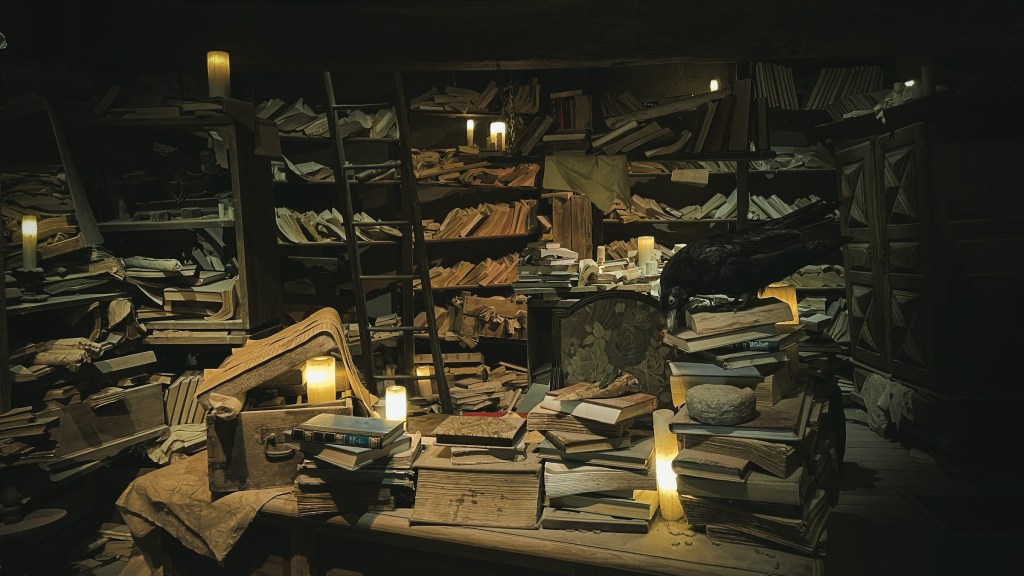
Because it wasn’t a battle. It was a garden choked with neglect. It was the aftermath no one writes songs about: the moment the hero comes home and realizes there’s no throne, only a chair that needs fixing, a roof that leaks, and a hundred little fractures that don’t bleed, but rot.
But the thing is—someone had stayed.
While he drifted between islands, Penelope had anchored. Not just to place, but to promise. She had spun loyalty into thread, day after day, weaving a shroud by daylight and unraveling it by night, keeping suitors at bay with the patience of myth and the silence of strategy. Hers was not the discipline of swords and storms. It was the stewardship of continuity—the defiance of decay through a thousand acts of unnoticed maintenance.
And when he returned, she did not greet him as a legend. She greeted him as a man. A husband. A flawed, weatherworn human who still had something to mend. Something to tend.
It’s easy to see Odysseus as the hero of that story. But the truth is, without Penelope, there would have been nothing left to return to. No home. No legacy. No future. Because surviving a war is not the same as rebuilding a peace.
That work—the clearing of overgrowth, the restoring of balance, the decision to stay and repair instead of flee again—is less glamorous. It has no climax. No chorus. But it matters more than any victory. That is where we begin.
Because all of us return, eventually, to something we once abandoned. A broken belief. A forgotten promise. A house we built too quickly and left to weather. And the question waiting for us isn’t: Can you fight?
It’s: Can you tend?
Can you show up—not to slay dragons—but to sweep floors? To patch old wood? To mend what frayed while you were gone? There’s a kind of courage in that. A kind that doesn’t get sung, but saves everything.
Sometimes, you return to a wreckage. And sometimes, you’re the one who stayed. Both roles demand more than survival. They demand something harder to name, and harder still to live.
They demand stewardship. Not as a word. As a posture. As a quiet refusal to let the things that matter collapse under the weight of neglect.
And if the world offers no reward for that kind of care—if no laurels come for the ones who water roots instead of waving banners—then maybe that’s the clearest sign of all that it’s a virtue worth reclaiming.
Let’s begin there.
Recommended Listening:
Stewardship; When Discipline Alone Isn’t Enough
Discipline gets the spotlight. It’s where the books end, where the slogans start, where your manager nods and asks: Did you follow through? Did you keep going, even when it hurt?
And sure—discipline matters. It’s the scaffolding. But scaffolding isn’t a home. It’s useful, temporary, skeletal. Alone, it holds nothing.
What comes after discipline is quieter, harder to measure, and more essential: stewardship.
Stewardship is not control. It’s care. Not maintenance for its own sake, but the kind that preserves meaning across time. It’s discipline, warmed by purpose. Repetition, guided by love. Vigilance—not for efficiency, but for continuity.
Where discipline asks, What must be done?
Stewardship asks, What must last?
It doesn’t reward you. Often, it costs more than it gives. But its value isn’t in output. It’s in preservation—of principle, of people, of soul.
It’s not performance. It’s posture.
It’s the librarian who catalogs stories no one reads, because truth still matters. The mechanic who explains why, not just how. The mother who sees the silence behind the smile. The leader who pauses to ask, Is anything being lost here?
Stewardship is what discipline grows into when it remembers why it started. It requires presence. Not just repetition, but attention. Not survival, but continuity. Not automation, but care.
If discipline is the virtue of action, stewardship is the virtue of meaning. It turns habit into heritage. Effort into legacy. Order into a future worth inhabiting.
The Shape of the Forgotten Virtue
We didn’t lose stewardship all at once. It slipped—grain by grain—beneath tides of convenience and speed. Efficiency replaced endurance. Growth replaced care. Now we live in a world built to break, and a culture that’s forgotten how to tend.
There was a time when stewardship was everywhere. Not as branding, but as rhythm.
Parents passed on more than genes. They passed on memory—tools, rituals, stories meant to outlive them. Craftspeople made things that lasted, not just because they could, but because they believed the next hands deserved quality. Governance was a form of guardianship, not just strategy—meant to serve a polis beyond the leader’s term.
Even stories—the oldest form of stewardship—were carried mouth to mouth, fire to fire, not to entertain but to orient. To remind. To bind.
Now?
Everything churns. Products break on purpose. Friendships ghost. Truth gets optimized for engagement, not understanding. Repair is a lost art. Replacement is the default. And burnout is inevitable in a system that treats people like devices: use, drain, discard.
In that world, stewardship sounds quaint. Inefficient. Why fix what you can rebuy? Why stay when you can scroll?
But continuity is not an obstacle. It’s how meaning survives. Tending something over time—whether a family, a forest, or a philosophy—is how we say: This still matters.
The shape of stewardship has been blurred. Repackaged into buzzwords. Dismissed as slow, sentimental. But it’s still there—rooted in everything we once considered sacred.
Because when nothing is stewarded, nothing is sacred.
Not the oceans. Not the children. Not the truth.
Stewardship isn’t obsolete. It’s just buried. Like an old tool in the shed, or a story waiting to be told again.
And if we forget it entirely? We become the suitors—feasting on what we didn’t earn, blind to what we’re wasting. Forgetting that someone once kept this alive for us.
And that someone must again.
The Cost of Abandonment
There is a price for every virtue we forget. And the cost of abandoning stewardship is written across the surface of our lives—cracks in the systems, fault lines in the families, fractures in the earth itself. But it is not just the presence of chaos that reveals the loss. It is the absence of anyone willing to claim responsibility for the damage.
When no one tends the garden, weeds are not the only consequence. The soil hardens. The roots dry. And the very memory of how to cultivate fades with time.
This is the world we inhabit now.
We’ve automated responsibility out of our institutions. Delegated it to systems. Abstracted it through bureaucracy. And in the process, we’ve built a culture allergic to ownership and allergic to care. Not care as sentiment—but care as commitment. As continuity. As a refusal to let the important rot simply because no one has been assigned to preserve it.
We see it in governance. Leaders more focused on messaging than maintenance. Elected officials who inherit functioning systems and leave behind fractured ones, having never felt responsible for the connective tissue that made those systems hold. Policy made for the quarter, not the century.
We see it in business. Companies that scale fast and shed workers faster. Products built to break. Cultures optimized for churn. Decisions made not for the future, but for exit strategies. Stewardship has no place in quarterly earnings reports.
We see it in families. Generations raised without the tools their parents once called obvious. The erosion of rituals, meals, conversations. Traditions traded for convenience. Emotional legacies left unprocessed, passed on like debts—unspoken but compounding.
We see it in our planet. Oceans choked with plastic. Forests razed for profit. Climate treated as a partisan issue, not a shared inheritance. The earth itself left without a steward—only shareholders.
And we see it in ourselves.
People burning out in jobs they cannot afford to leave. Friendships that wither because no one knows how to initiate the hard conversations. Bodies neglected. Minds frayed. Hearts numbed not by trauma, but by the slow ache of nothing being truly tended—not even our own lives.
We’ve become so accustomed to the disposable that permanence feels suspicious. So used to starting over that maintenance feels like a waste. So trained to optimize that presence feels inefficient.
But what we lose when we abandon stewardship is not just function—it is meaning. Connection. Belonging.
Because if nothing is carried forward with care, then nothing carries us either. And that’s the quiet truth no one markets:
Without stewardship, there is no future worth inheriting. Only leftovers.
When no one is responsible for what lasts, everything becomes temporary. Including trust. Including us.
The Work of the Keeper
Stewardship doesn’t require sainthood. It doesn’t ask for grand gestures, viral campaigns, or flawless execution. What it asks for is something much harder to commodify: sustained care. Unseen effort. The decision to maintain—not because it’s impressive, but because it’s right.
The keeper is not the builder. The keeper is the one who watches the edges. Who oils the hinges. Who leaves things better than they found them, not with pride, but with quiet dignity.
It’s the father who maintains a tool, not because it’s special, but because one day his daughter will need it, and she deserves to know it works.
It’s the worker who documents a system so others won’t stumble blind through legacy code or half-trained processes. Not because anyone asked—but because someone, someday, will be grateful.
It’s the teacher who stays in the profession—not out of naivety, but out of belief that shaping lives is worth enduring a system that often forgets its own soul.
It’s the citizen who votes like their descendants will live in the consequences.
Stewardship isn’t fast. It isn’t loud. It’s the virtue that lives in rhythm: the daily, deliberate choice to tend. To check in. To clean up. To keep alive what others have let die.
And the truth is, it is work. Emotional work. Intellectual work. Physical and spiritual labor. Often done without thanks. Sometimes done without effect. But still—done.
Because the steward isn’t driven by results. They’re driven by alignment. By the knowledge that to let something fall into ruin simply because no one else was watching is a betrayal of one’s own integrity.
And so they keep. Not because it’s easy. But because someone must.
Because someone did—for them.
And because, without keepers, everything eventually collapses. Not in fire, but in forgetfulness.
The work of the keeper is slow. Intentional. Often invisible.
But it is the only work that ensures anything of value outlives us.
The Shade You’ll Never Sit Beneath
No song was ever written for the one who mended the roof.
No statue raised for the one who swept the floor where the hero bled. No epic for the hand that held the memory when everyone else moved on.
But they’re the reason the story survived.
Penelope’s thread is easy to miss beside Odysseus’s sword, but it held Ithaca together longer than any battle. And in that act—the quiet care, the unbroken rhythm, the refusal to let the world fray without resistance—we see what stewardship really is.
It’s not about preservation for its own sake. It’s about giving forward. Tending to what nourishes even when you know you may never taste the fruit.
The philosopher plants a seed of thought they will never see flower. The elder teaches the child who will one day teach others. The citizen repairs the foundation of a nation they no longer trust, simply so others might have one worth standing on.
That’s the shape of true stewardship. It doesn’t make headlines. It makes shade.
It cools the ground long after the hands that planted it are gone. It becomes the welcome beneath which future generations pause, and breathe, and wonder who came before.
And maybe they won’t know your name.
But they’ll feel the echo of your care in the stability of what holds. In the quiet peace of what no longer breaks. In the root system you nurtured instead of scorched. In the culture you tended instead of sold. In the relationship you mended instead of replaced.
Stewardship does not promise recognition. Only continuity. Only peace. Only a chance.
So plant the tree. Sweep the floor. Tell the story. Keep the vow. Pass the tool. Water the roots.
Not because it will save you. Because it might save someone.
And that is reason enough.






Leave a comment