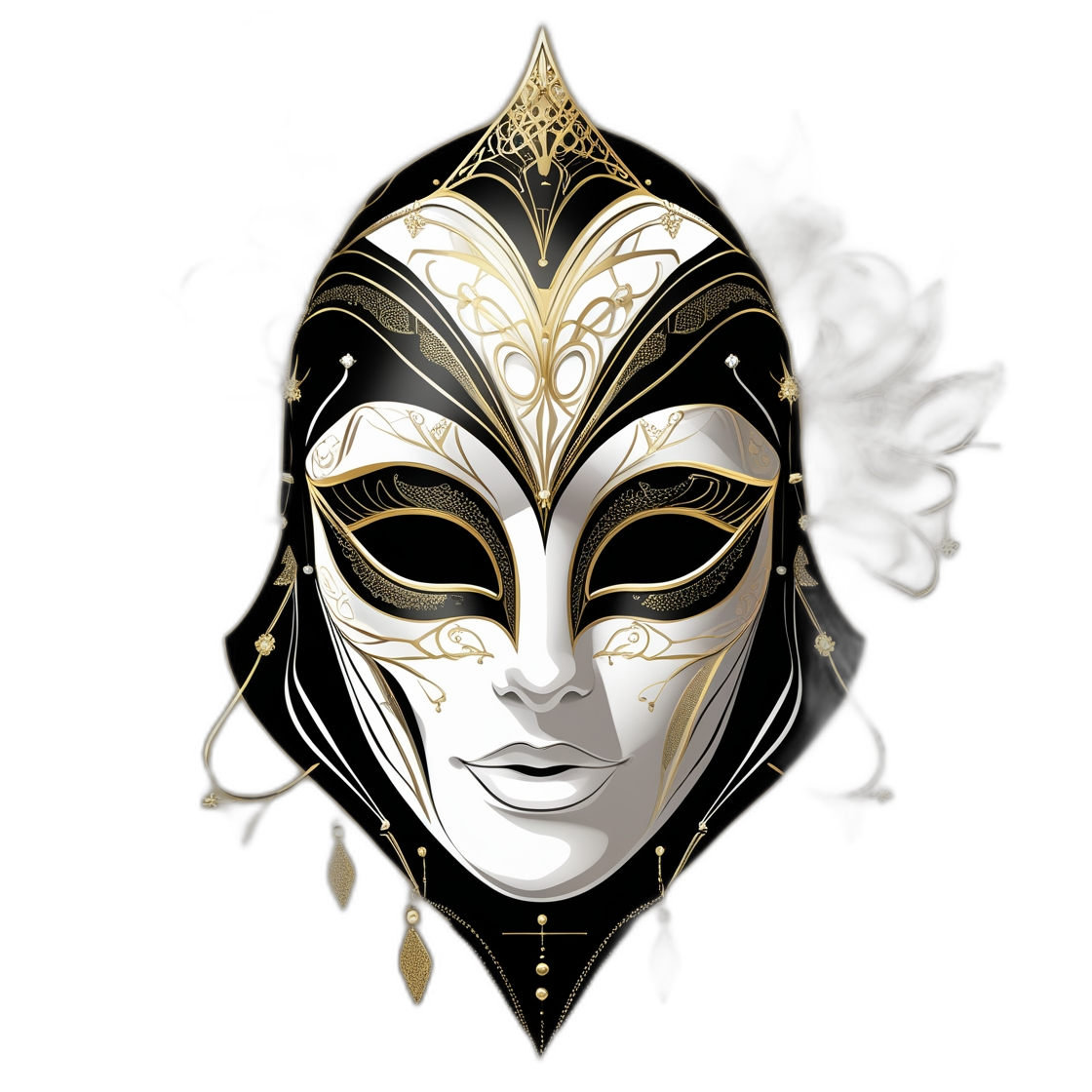

Every cradle is delivered with a silent disclaimer: this story comes with an ending. We know it instinctively—as infants startled by the absence of a parent, as children burying goldfish in shoebox coffins, as adults counting the pulse that drums behind every risk we take—yet we spend most of our waking hours pretending the warranty does not apply. We euphemize, bargain, cloak, and delay. We build skyscrapers and lullabies, seat belts and bucket lists, all in negotiation with the inevitable hush at the sentence’s end.
But the hush is not merely dread. It is also the engine of wonder. The ancient astronomers who etched star‑roads across the sky did so precisely because darkness surrounded their fires. Artists chase moments they know will dissolve; lovers cherish the instant because they cannot freeze it. Death, lurking as both auditor and muse, turns ordinary sunlight into something we photograph and pin to refrigerator doors.
Still, when absence finally walks through the door—stealing the scent of a familiar sweater, erasing a laugh mid‑echo—language falters. We speak in riddles and oblique metaphors: passed on, gone home, called back, laid to rest. Anything to avoid saying the plain word, as if syllables themselves could reopen the tomb. Yet plainness is where clarity lives, and so this essay reaches for it. Not to reduce mystery to mechanics, but to lay a table where grief, awe, philosophy, and myth can all sit without contradicting one another.
We will begin at the bedside, where panic thrashes and peace exhales; wander through Elysian orchards and up the golden steps of Valhalla; follow priests, poets, and physicians as they chart routes for the soul; sift through arguments from Socrates to Camus that instruct us to live sharper, kinder, truer because the clock is ticking; and finally, we will return to the quiet room where memories pile like folded quilts, asking what legacy we stitch into those seams.
If wonder resides anywhere, it resides in this paradox: that the one experience every human will share is the one we can neither rehearse nor review. Yet in its shadow we learn to treasure breath, to carve meaning, to pass torches forward. Let us, then, speak plainly—because plain speech is a form of reverence—and walk the perimeter of the question we can never fully answer.
Recommended Listening:
Between Panic and Peace – Meeting the Threshold
No two departures follow the same choreography, yet patterns do emerge if you linger at enough bedsides. A trauma victim’s grip might claw at the asphalt, as though friction alone could hold him to the world; his pupils widen, his lungs seize, and every prayer he never practiced floods his mouth in a single incoherent torrent. Across town, the octogenarian exhales like a tide retreating, features loosening into a softness you only see when the body finally stops negotiating for one more hour.
Physiology offers part of the score. As oxygen slips, the brain releases waves of endorphins and, some researchers suggest, trace hallucinogens that can paint ceilings with lost faces or open doorways to childhood fields. Heart rhythms stutter into Cheyne–Stokes crescendos; skin cools and blue‑mottles long before the final beat. Hospice nurses speak of terminal lucidity—a brief, bright clearing in which the dying might ask for soup, crack a joke, or stand to straighten the bedsheets. Families read it as recovery, unaware it is often the overture to collapse.
Yet biology alone cannot explain the psychic weather of a deathbed. Panic belongs most often to the surprised—the young driver, the postoperative patient, the parent who promised to be home for dinner. For them, death is a burglar kicking in the door at noon. Peace more often crowns the expected—the stage‑four patient who has rehearsed goodbye, the monk who practices letting go beneath every breath, the elder who has outlived her cohort and feels the tug of reunion. Experience, worldview, and unfinished business all tune the emotional register long before physiology calls the last note.
For the living, witnessing this spectrum becomes an education in humility. The task is not to choreograph a “good death” but to hold space for the death that arrives. Sometimes that means becoming a human anchor: gripping frantic hands, translating the cacophony of monitors into plain words, blessing every unfinished sentence with the grace of completion. Other times it is simpler, almost monastic: matching breathing rhythms, offering touch in place of speech, allowing silence to crown the room without rushing to fill it.
The lesson, if there is one, is that presence is the only universal comfort. Whether we stand sentinel during a storm of terror or bask in a sunset of resignation, our role is not to rescue—that work ended when medicine reached its limit—but to witness, to testify that a life crossed the threshold accompanied, seen, and dignified. In doing so we remind ourselves that someday our own hands will need steadying, our own stories one final audience. The duality of panic and peace prepares us to give and to receive that final gift.
Sacred Pathways – Myth, Trial, and Homecoming
Long before we could measure heartbeats with a monitor, our ancestors measured them against the night sky. They watched the sun die each evening and rise again each dawn and wondered: Will we, too, cross some unseen horizon and return in glory? Out of that wonder grew stories as vast as constellations—maps for the spirit when the body finally failed.
Imagine the Greeks, standing on a cliff above the Aegean, mourning a soldier lost at Troy. They do not picture him locked in Hades’ gray gloom, but strolling a distant shoreline where poplars bend in friendly wind and the sun never scorches. This is Elysium, a meadow of perpetual bloom where effort dissolves into artful ease—a promise that the sweat and blood of mortal striving might flower into eternal afternoon.
Shift north, to a frost‑laced evening where a skald’s voice rises over the crackle of a hearth. He speaks of the Valkyries—storm‑cloaked riders who sweep battlefields for the bravest fallen, lifting them toward a golden hall. In Valhalla, death is not cessation but promotion. Steel sings, horns pour mead, and every dawn the warriors rise unscarred to clash again. The afterlife becomes an arena where meaning is forged by relentless courage, not by rest.
Travel south‑east to the banks of the Nile, where funerary priests recite spells from the Book of the Dead. Here the soul embarks on a night‑long voyage beneath constellations painted on the coffin lid. At journey’s end it stands before Anubis, who weighs the heart against a feather of Ma’at—truth itself. If the heart is light, the soul steps into emerald fields and cool canals mirroring earthly Egypt perfected. If heavy with wrongdoing, it is consumed by Ammit, denied even the mercy of oblivion. Immortality, in this vision, is indistinguishable from justice.
Despite their differing textures—one pastoral, one martial, one judicial—these myths braid three strands: that death is passage, that the traveler is tested, and that the destination reflects the life just lived. They tame cosmic uncertainty with narrative symmetry, assuring the grieving that love and valor and honesty are not wasted energies but currencies accepted on the far shore.
We still crave those assurances. Modern cinema resurrects Valhalla in slow‑motion battles; video games offer Elysian respawns; courtroom dramas echo the Egyptian ledger of deeds. Our fascination endures because each myth reframes loss as transit, not deletion. When a friend dies, part of us still whispers, May their ferry find calm water; may the gate recognize their name.
These sacred pathways do not erase grief, but they stretch a bright line across the dark, inviting us to imagine reunion, reckoning, or release. Whether or not the line is real almost matters less than the courage it lends the living. We march on because somewhere, etched into our cultural DNA, is the belief that endings are also corridors—and that every goodbye might be the first word of a grander story.
Doctrine and Destiny – The Sacred Cartographers
If myths paint the sky, formal religions draw the maps—inked with commandments, parables, and rites that promise to lead a soul safely across the borderland. Stand in a cathedral during a requiem mass and feel the architecture itself directing your gaze upward, toward frescoed heavens where saints hover in perpetual welcome. Step into a mosque at a funeral prayer and hear verses of the Qur’an ripple through the congregation, reminding every listener that the soul is now with Allah, awaiting a justice so perfect it eclipses human courts. Travel to the burning ghats of Varanasi, where the smoke of a pyre swirls into the Ganges and devotees murmur mantras that release the atman toward another turn of the cosmic wheel.
Each faith rehearses the crossing in its own cadence. Tibetan monks chant the Bardo Thödol beside the deceased, reading aloud a guidebook for the disoriented consciousness; Catholic priests offer last rites, anointing senses so they may wake intact on the farther shore; Muslim families turn the body toward Mecca, trusting that orientation even in death aligns the heart with destined mercy. Whether through sacrament, chant, or careful positioning of limbs, religion stages death as a coordinated departure rather than a chaotic exile.
But these orchestrations serve more than comfort. They stake moral territory. Christianity’s heaven‑or‑hell axis locates death inside an ethical economy: forgiveness can cancel debt, but refusal to love accrues interest payable in fire. Islam speaks of scales weighed with deeds and intentions, an exact arithmetic that dignifies even unnoticed kindnesses. Hinduism’s karma and samsara thread every action into future incarnations, making today’s choices seeds of tomorrow’s body. Buddhism shifts the frame entirely, asserting that clinging itself births the cycle; let go, and the wheel stops.
“Death is not extinguishing the light; it is only putting out the lamp because dawn has come.”
~Rabindranath Tagore
Thus doctrine governs the living while consoling the grieving. It whispers that nothing is lost, only judged, recycled, or refined—and that the ledger is open now, not later. At bedside and graveside alike, these teachings lend structure to bewilderment. They let mourners imagine a beloved still in motion—confessing, journeying, transforming—rather than locked behind an impenetrable curtain.
Yet the same structure can tighten into vise. Fear of damnation has driven deathbed conversions and inquisitorial cruelties alike; obsession with ritual precision can eclipse the tenderness it was meant to convey. The map is powerful, but like any map, it is not the terrain; the living must decide whether its lines lead them toward compassion or away from it.
When we step back, what dazzles is not the doctrinal differences but the shared impulse to chart the unseen. Across continents and millennia, humanity has refused to believe that a life’s fullness terminates at a heartbeat’s end. Instead we draft covenants with the infinite, promising loyalty, sacrifice, or simple mindfulness in exchange for passage. Whether those covenants hold beyond the veil remains the oldest unanswered question—but the act of making them has shaped art, law, and conscience itself.
Philosophy – The Mirror at Life’s Edge
Where doctrine offers a promised land, philosophy—perhaps in its most humble acknowledgment of the unknown and unknowable—shines a candle into the present moment and asks what the flicker tells us about living now. The conversations begin in Athens, with Socrates standing before his judges, refusing to renounce the pursuit of truth. “To fear death, gentlemen,” he says in the Apology, “is only to think oneself wise without being so; for it is to think one knows what one does not know.” In other words, the unknown need not terrify; it can liberate us from false certainties.
Centuries later the Stoics pick up that torch. Marcus Aurelius, writing to steady his own heart amid plague and war, reminds himself: “You could leave life right now. Let that determine what you do and say and think.” Epictetus sharpens the idea further: “I cannot escape death, but it has not caught me yet—so this instant is mine to shape.” For the Stoic, mortality is not a doom but a clarifier, revealing which tasks matter and which anxieties dissolve under the horizon’s certainty.
Fast‑forward to the 20th century, when existentialists turn the mirror inward. Martin Heidegger argues that authenticity flowers only when we confront Being‑toward‑death, the inescapable possibility that brackets every other choice. Sartre echoes him from wartime Paris, insisting that freedom becomes visceral precisely because time runs out. And Camus, staring at the absurd, offers perhaps the starkest counsel: “Come to terms with death. Thereafter anything is possible.” In his view, facing the void squarely grants us license to build meaning rather than search for it.
A through‑line emerges: awareness of death is a catalyst. Whether one calls it wisdom, virtue, authenticity, or revolt, the philosophers agree that a finite lifespan sharpens purpose the way a sculptor’s chisel finds form in stone. Immortality, by contrast, dissolves urgency—turns every decision into a shrug of infinite tomorrows.
Philosophy, then, is less a lullaby than a tuning fork. It vibrates with questions that refuse sedation: Am I spending my hours on what outlasts them? Have I loved in a way that can survive my absence? Each thinker answers differently, yet all point us back to the raw, immediate business of living while we can.
A Personal View – Echoes in the Now
To me, death is not a gentle vanishing—it’s a violent rupture. A sudden absence of something we never imagined living without. It tears a jagged hole through the fabric of ordinary hours, slicing open all the unspoken assumptions: the kindnesses we expected on repeat, the laughter we forgot to preserve, the steady voice that quietly held the room together until it didn’t.
Because of that inevitability, I live in the afternoon light—not in hopes of some promised dawn. I don’t invest in cosmic reward systems. I invest in people within reach, in work that might outlast my breath, in words that may shelter someone when I’m gone. If there’s an afterlife, let it know me by the footprints I left in other hearts.
I honor the dead by using their tools. My grandfather didn’t lecture about character; he climbed onto a neighbor’s roof in a thunderstorm and patched it himself. His restraint—when anger or apathy would’ve been easier—became the scaffolding for my personal version of a good man. My grandmother lived her values louder than she ever preached them. Her heirlooms were not objects, but habits—dignity worn like a daily coat, generosity tucked into every meal. When I pick them up, I still feel their hands adjusting my grip.
When Nini passed, the color drained from the world in ways I hadn’t known pigment could fade. Certain shades—blended only by her presence—will never quite return. And yet her fingerprints remain: the books she gave me to read and discuss, the ideas and values she planted, the table that somehow always had space for one more. She carved an absence, but her gifts are still in motion.
Legacy, then, is not marble or metal—it’s momentum. A current of choices, memories, and meaning. My task is to widen that river, to lace it with tensile compassion, so that when I disappear, the wave keeps moving—and the shore already knows my name.
Grief and Ritual – Making Peace With Permanence
Ritual is humanity’s oldest scaffolding for heartbreak, not because it erases loss but because it teaches us how to live in its new gravity. A funeral, a wake, a three‑day sit with casseroles piling on the porch—each is an improvised liturgy that whispers: The world has tilted, but together we will find our balance.
At first the motions feel performative. We fold hands, recite psalms, lower caskets, write click‑through condolences. Yet repetition has a covert alchemy: it translates shock into sequence, sequence into story, story into something we can place beside the rest of our lives without it devouring the page. The neuroscientists call this recontextualization; the poets simply call it finding a language for silence.
Peace does not arrive as surrender; it arrives as integration. The ache becomes a second heartbeat—slower, quieter, but steady. One day you smell coffee and realize it no longer tastes of absence. Another day you hear their favorite song and discover the notes hold warmth, not razors. The permanence of death has not softened, but your spirit has grown around it like tree bark around a childhood carving.
Rituals evolve to mark these quiet milestones. Lighting a yahrzeit candle on the anniversary, running your thumb across a wedding band now looped on a chain, sharing the same corny joke your sibling once told every holiday dinner—each act is a small treaty with eternity: You are gone, and still you shape the air I breathe.
Modern psychology supports what ancient customs intuited: bonds do not sever at death, they transfigure. Continuing‑bonds theory tells us that speaking to a headstone, keeping a photograph on the desk, or finishing a parent’s half‑knit scarf are not signs of pathological denial but healthy dialogue with memory. We are not moving on; we are moving with.
And so making peace with permanence is less about letting go and more about leaning in—accepting that the outline of our days now includes negative space that will never be filled, only honored. If we can bless that emptiness, it becomes a vessel: a hollow that echoes with stories, laughter, and counsel when we most need guidance. In that echo we hear not a haunting, but a harmony, reminding us that love outlives the flesh that first gave it voice.
Leaving Constellations for the Dark
Stand, for a moment, at the far edge of everything you have loved: the taste of rain, the press of a friend’s shoulder, the hum of streetlights outside a childhood window. Imagine turning from that horizon and realizing the only thing you may carry across it is the resonance you have already set in motion. Myth calls that resonance glory; doctrine names it salvation; philosophy whispers it authenticity; grief knows it as the shape of love in mid‑air. Whatever the vocabulary, the truth is simple: nothing you hand the future can be picked up with fingers—only with memory, courage, and story.
Death closes the gate on additional chapters, yet it flings open the covers of the ones we have written. The seeds tucked into gardens, the jokes that migrate through living rooms, the stranger who feels less alone because you once looked up and met their eyes—these become lanterns the living carry when night grows thick. Potential is not extinguished; it is redistributed.
So cultivate your plot of sky while you still command the telescope. Knit ordinary hours into tapestries worth inheriting. Tend your anger until it becomes boundary, not blade; summon your kindness before the eulogies need to mention it. Practice forgiveness early, that it may travel light when you cannot.
When the doorway arrives—whether as a thunderclap or a settling snowfall—step through knowing you have already rehearsed the passage in every generous act. You will leave behind marbled absences, yes, but also a constellation bright enough for others to navigate by.
Live, then, like a cartographer of awe. Map what matters. Let others find their way—not in your footsteps, but in the lines you left behind.
Carry wonder like flint in your pocket and responsibility like water in your hands. Strike sparks. Pour life. The dark ahead is vast, but the light we leave behind grows.





Leave a comment