

Author’s Note
The opening of this essay leans on the voice of a people I cannot fully claim, but whose loss shaped the world I live in. Like many American families, mine carries whispers of Cherokee ancestry—echoes without a clear lineage, fragments without full context. You wouldn’t see that history in our photo albums. It’s a shadow claim, complicated by time, silence, and the way colonization erases not just bodies, but memory.
What I offer here is not a claim of identity—that chance was discarded by my own ancestors long ago—but an act of reverence. The introduction draws from a cultural inheritance that was severed before it could be fully understood—even by those of us who suspect it once ran through our own bloodlines. I’ve tried to write with care, with respect, and with a bone-deep acknowledgment of the violence that made such care necessary in the first place. If I’ve misrepresented or overstepped, I welcome correction. The spirit of this work is one of tribute, not appropriation. I hope something old and true recognizes itself here.
Having recently concluded a series on personal tools—boundaries, value, survival—this essay turns the lens outward. Toward the systems we move through. The myths we inherit. The hierarchies we normalize. And toward the idea most often offered as proof of progress: fairness.
Let’s begin anew there—with the stories we tell ourselves about justice, and the ones we refuse to hear.
—Dom
They say the sickness came from the breath of white men. It clung to their skin, their cloth, their metal, and spread without sound—like a shadow passing through the smoke-hole when no one was watching. We called it ghost wind at first. It made the children burn like they’d been touched by the sun too long, and the elders tremble as if winter had crawled into their bones.
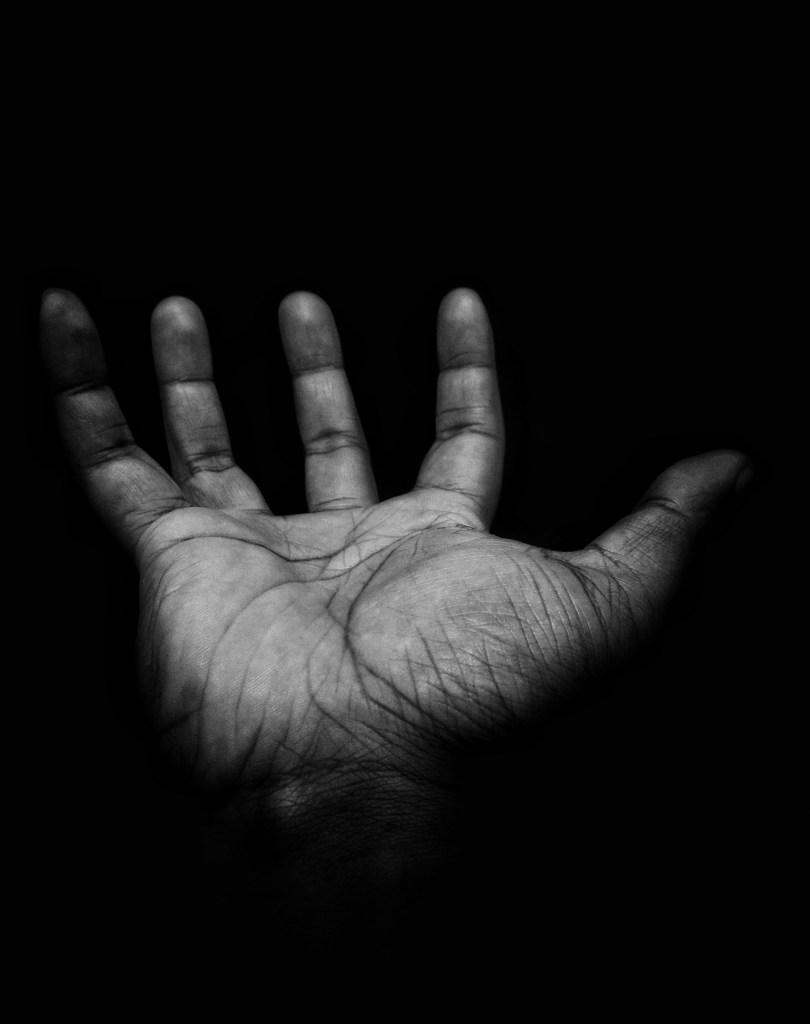
The ones who carried the oldest stories were the first to fall, and with them went the songs that told the stars where to stand. Their voices, once full of memory, faded to whispers, then to silence. I held my grandmother’s hand as she died, and she tried to say the name of the mountain where the sky first touched our people. But the breath left her before the word did.
We burned the dead with cedar and sweetgrass, though the smoke no longer smelled like peace. We sang their journey songs, but fewer voices joined the chorus each day. The circle breaks faster than it can be mended.
Now we walk westward, beyond the mountains. Not toward hope—just away from death. The sun rises behind us, slow and distant, like it, too, is afraid. The chief’s son walks ahead, tall but unsteady, his father’s bow slung across his back like a mantle too heavy for his shoulders. He is brave, yes. Brave like a boy standing between the river and the storm, thinking arms alone can stop the flood. I do not tell him this. He needs belief more than truth.
The land is not silent, even now. The trees still speak when the wind moves through them, though they sound more like mourners than elders. The birds fly low and quiet. Even the rivers run thin, as if grieving. We passed a fox three mornings ago—it did not run. Just watched us with yellow eyes and a torn ear, and I wondered if it saw what we were becoming.
I have no sons left. My daughter’s breath was taken in the third week of the sickness, her hair matted to her skull from sweat and prayer. My wife followed a moon later. I buried them beneath a birch that bends toward the west—toward home. I placed her woven belt in the ground with them. I carry only her comb and a pouch of cedar ash now.
I do not dream the way I used to. The spirits are quiet. Or maybe it is I who cannot hear them.
Still, I rise before the others. I greet the dawn with a whisper of thanks, even when my body aches and my voice catches. I do not ask the world for fairness anymore. I ask it only to remember us. That the ground might recall the feel of our feet. That the rivers might hum our names. That the wind might carry a single story eastward—farther than we can walk.
Our faith was never in fairness. Fairness is a white man’s word. We believed in balance. In honoring what gives life and in mourning what takes it. But this—this is not balance. This is theft, quiet and constant. A taking that never ends.
And yet, I walk. Not for me. Not even for the chief’s son. I walk so that one voice may outlive the fire. One memory may survive the forgetting. One song may find a place to land. That the ghost wind might one day carry more than death.
Recommended Listening:
The Beautiful Lie: “All Men Are Created Equal”
“We hold these truths to be self-evident…”
The sentence sounds like scripture. But who, exactly, was in the congregation on July 4, 1776?
The ink dried on that parchment while human beings were owned as wealth, sold as capital, worked as chattel. Outside Independence Hall, two Americas were already arranged: one made of promise, the other of purchase.
Property That Could Bleed
In Virginia and the Carolinas, tobacco profits were tallied next to names—Sukey, Jupiter, Rose—recorded not as citizens, but as assets. A woman sold after childbirth lost both baby and body in the same line item. Kant would later insist that no person should ever be used merely as a means. The plantation economy was a rebuttal written in flesh.
Indenture Disguised as Choice
Across the ocean, failed harvests and colonial policies funneled the Irish into ships headed west. The papers said “indenture,” but the reality blurred toward bondage: seven years of labor to pay a debt that ballooned with every spoon of porridge. Many died before their contracts ended. In utilitarian shorthand: acceptable loss. A dead worker cost less than an unplanted field.
Nations Inside a Nation
On the frontier, Haudenosaunee diplomats carried wampum belts to Congress, reminding the founders that this was not unclaimed wilderness—it was treaty land. Agreements were signed at dawn, broken by dusk, their language overwritten by survey lines. Article I, Section 8 called it “commerce with Indian tribes.” What it meant was conquest, marketed as management.
A Constitution of Exceptions
When the states convened again in 1787, equality had already been marked with an asterisk. The Three-Fifths Compromise reduced Black lives to fractions. Voting was restricted to landowning men. Maryland taxed Jews for existing until 1826. The Constitution was a brilliant framework—balanced, enduring, visionary. But it was also built on pilings driven through other people’s graves.
The contradiction wasn’t a flaw. It was the formula.
The myth of equality soothed the conscience of a nation built on exclusion. It allowed men to believe themselves just while profiting from injustice. Kantian ethics were preached, utilitarian calculus was practiced—and the receipts were paid in human lives.
What did that look like? A child sold downriver to clear a planter’s debt. An Irish girl coughing blood in a Delaware brickyard—medical care not included in her contract. A Cherokee farmer watching white stakes sprout in his bean field, planted there by a man quoting “manifest destiny.”
Fairness was not the foundation. It was the mural—painted high on the ceiling so those bent over in labor might admire it, without ever reaching it.
Learning the Hierarchy: Difference and Danger
Walk into any classroom and you can feel the machinery humming beneath the posters about curiosity and growth. The desks are lined up like tooling on a factory floor, bells slice the day into productivity blocks, and the first lesson every child absorbs is how to keep their questions quiet enough to survive the schedule. We start by praising wonder—finger-paint suns, “Why is the sky blue?”—and by middle school we punish it with the label disruptive. Show us a child who corrects a mistake on the board, and we’ll show you a child advised to “stop showing off.” A culture that claims to worship innovation still tapes “kick me” to the back of the kid who actually innovates.
The sorting goes deeper. A diagnosis meant to unlock support becomes a scarlet letter that shunts a student down a narrower hallway. Budgets are balanced on whether a line item is “cost-effective,” as though dignity were a software feature that can be toggled off. Special-needs referrals, gifted pull-outs, disciplinary transfers—they all announce the same message in different dialects: difference is danger, conformity is safety.
And so the pyramid forms. One child’s cafeteria joke buys them a seat at the loud table; another child’s silence pays the bill. Homecoming royalty rehearse corporate hierarchy years before the first résumé, teaching everyone exactly how much deference popular comfort demands. None of this is new. The one-room schoolhouse punished left-handed writing; the Progressive Era ranked immigrant kids by “moral capacity”; the Cold-War classroom drilled duck-and-cover instead of critical civics. Only the décor changes. The blueprint—eyes down, stay in line—has never needed revision.
Listen to the echoes decades later: the adult who still apologizes before speaking, the veteran teacher who files referrals knowing half will be denied, the gifted kid who learned to hide straight A’s behind strategic indifference. These are not anecdotes; they are data points. School doesn’t merely contain a hierarchy; school is the hierarchy—finishing each lesson when a child finally lowers their gaze.
Admiring the Chosen: Success Framed by Power
College was supposed to be the escape hatch, but the showcase starts the moment you step on campus. Banners in the student union feature full-ride sprinters and dorm-room coders who sold an app before sophomore year. The subliminal syllabus is simple: worth equals visibility. The nursing major juggling two jobs to stay enrolled never makes the brochure; she’s revenue, not narrative.
Saturday football confirms the lesson. Unpaid athletes collide for television contracts measured in billions, subsidizing chemistry labs, climbing walls, and vice-provost salaries. Kant whispers that people must be ends in themselves, yet under stadium lights the utilitarian scoreboard wins: every torn ACL is an acceptable loss if ratings hold.
Entrepreneurship seminars carry the sermon forward. Slides extol “grit” and “disruption” but skip the seed capital wired from family trusts, the health insurance tethered to a parent’s plan, the bailout cousin in venture capital. Externalities—driver exhaustion, data breaches, gig-worker precarity—are footnoted, then forgotten.
Graduation doesn’t break the spell; it scales it. Career fairs sift seniors into prestige bins before the gowns ship. Wall Street skims the top GPA tranche, Teach For America harvests the idealists, everyone else queues for unpaid “experience.” Starting salaries trace the same demographic contour lines as childhood ZIP codes, proving the meritocratic myth with surgical precision.
There are casualties, of course. A linebacker trades youth for a settlement that buys a decade of quiet before early dementia. A coder sells his start-up, burns out by twenty-eight, and discovers investors still own his own surname as a trademark. The nursing major slips into loan forbearance while the university posts record endowment growth. Success stories require sacrifices; we just don’t interview the sacrifices.
The script is clear: applaud whoever vaults off springboards we’re discouraged from noticing. Ask where the springboard came from, and you’re bitter; question the idol, and you’re unpatriotic. Admiration works like anesthesia—numbing critique, turning systemic luck into personal morality. If they did it, why can’t you? Because the pyramid is already built, and it never planned a stairwell for everyone else.
Erasure by Design: What We’re Told Not to See
Pause the scroll for a moment and let me ask you a simple question: which headlines do you refuse to open? The poisoned water report from a zip code you have never visited? The eviction map with colors that darken across the same neighborhoods every year? Or maybe it’s smaller—another social‑media campaign for a stranger’s medical bills that you double‑tap with a heart before muting. Those evasions are not private quirks; they are scheduled stops on a route laid out generations ago.
We like to think problems hide in the shadows. In truth, the shadows are placed in front of our eyes. Urban planners knew which blocks would flood because of the sewers they did not install. Investors knew which towns would rust because of the factories they wrote off as “obsolete” while patents still paid dividends. Legislators knew which districts would have the least power because the lines were drawn that way over coffee and chessboards. Nothing about any of this is accidental. In utilitarian shorthand it is called cost efficiency. In Kantian language it is the transformation of human beings into budget variables.
But the cleverest part is the invitation we receive to look away. A subtle social contract: you may keep your morning calm if you accept a little selective blindness. Walk past the tent city outside the baseball stadium—focus on the pennants, not the plywood signs about rent hikes. Order groceries delivered by someone whose hourly wage you could fix with a larger tip—tell yourself the algorithm ensures fairness. We whisper a private amen to the myth of merit and keep moving. Every step is perfectly ordinary, and perfectly complicit.
Our Complicity: The Cost of Comfort
Let’s be honest with each other: the system does not require our cruelty, only our consent. Consent is granted in micro‑transactions of comfort—an express lane, a cheaper package, a phone upgrade built in a factory we pretend not to imagine. We are paid in convenience so we don’t ask how the convenience is produced.
Consider the credit‑card points you accrue. They exist because merchants pay a hidden fee that gets baked into every price tag, raising costs most sharply for people who cannot qualify for credit at all. Your free flight is funded, in part, by someone who takes the bus. Once you notice this, Kant’s imperative taps on your shoulder: If this practice became universal, would dignity increase or collapse? The answer is uneasy, so we duck back into utilitarian safe talk—”everyone benefits in aggregate.” Aggregates have no faces, which is why they are so comforting.
The same bargain appears in politics. A tax cut promises fifty extra dollars in your paycheck; meanwhile, a school three miles away cuts its music program. You know the trade is unfair, but the harm is distant and the gain is immediate. The ledger in your mind tilts toward self‑interest. That tilt is exactly what the architects counted on.
We flatter ourselves that complicity ends when we tweet outrage, yet the machine tallies only actions. Hashtags are ballast. Redistribution is work. Work is uncomfortable. The system is designed to make sure comfort wins.
It Was Never Fair. It Wasn’t Meant To Be.
Here is the core truth, stripped of all patriotic varnish: the economy, the law, even the cultural myths were engineered by people who wanted to win, not share. The blueprint remains unchanged because it works exactly as intended. Poverty is not a glitch; it is an input. Excess is not a reward; it is the proof of extraction.
So when we ask, “Why isn’t life fair?” the honest answer is that fairness was never poured into the foundation. We can renovate the wallpaper—a subsidy here, a scholarship there—but the load‑bearing walls still channel wealth toward the already wealthy and shield power from accountability.
If we are serious about balance—about the moral universe that Kant dreamed could be willed universal—we must start with demolition. Stone by stone, policy by policy, belief by belief. Then we rebuild with blueprints that treat humans as ends, never as means, and measure progress by the one metric that has always mattered: who is still suffering, and why.
More Than Ghost Wind: Walking Toward a Different World
The survivor’s journey did not end when his village emptied; it continues in every headline we ignore and every comfort we accept. Ghost wind still moves through our cities—no longer as smallpox, but as hunger, as eviction, as algorithmic bias. It spreads with the same quiet certainty, carried on hands that swear they are clean.
But remember what the story taught us: balance can be broken, yet footsteps can outlast fire. Every time we choose to see—really see—the poisoned well, the under‑funded school, the contract that treats lungs or rivers as expendable, we plant a marker against forgetting. Memory is the first demolition tool.
So we walk. Away from the myth that fairness is automatic, and toward the work of making balance deliberate. We walk past the point where charity feels generous and into the terrain where justice feels mandatory. We walk until the map of comfort we inherited is replaced by one we can answer for.
And as we walk, we carry names. The grandmother who could not finish the mountain’s word. The child whose lunch debt became a disciplinary notice. The veteran whose cardboard sign bore more honesty than any campaign slogan. Their stories sharpen our compass.
Let the wind carry them farther than we can travel. Let the ground recall the feel of their feet. Let the chorus rebuild, voice by rescued voice, until the song of balance drowns out the machinery of extraction.
Fairness will not remember us—but balance might. If we choose it, name it, and refuse to look away.




Leave a comment