

Author’s Note
After we clear the debris and raise new beams, we’re left with something quieter—but no less demanding: the question of how to keep from building the same cage again.
Learning isn’t a light you turn on. It’s heat. Pressure. It’s the sting of error and the slow recognition of patterns—some inherited, some chosen, some burned into you over time. And it’s what comes after that recognition that defines whether we become more than survivors.
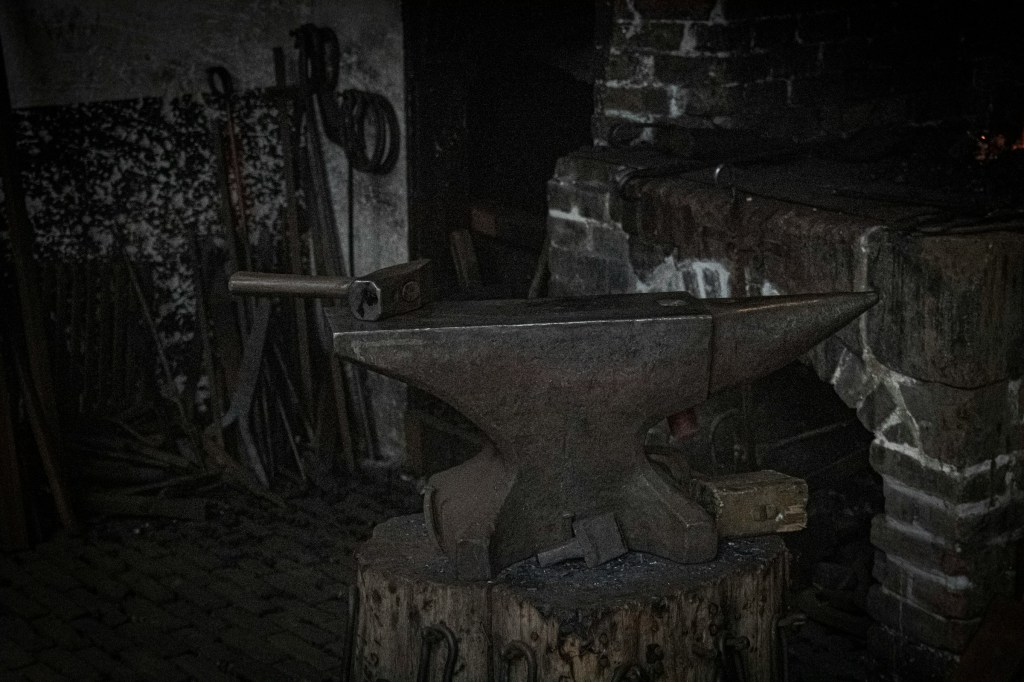
This piece is about tools of growth. Of learning not just from books or experts, but from what happens when your needs go unmet. Hunger teaches you what matters. Loneliness teaches you what connection actually feels like. Injustice shows you where the rules serve power, not people.
These experiences are brutal instructors—but the knowledge they offer is elemental. It doesn’t arrive as comfort. It arrives with clarity. And once you see it, you can’t unsee it—even if you want to.
~Dom
We’re taught that education is supposed to make us smart. But more often than not, it makes us compliant. The facts we’re asked to memorize are seldom tied to meaning. We learn to score well on tests, not to synthesize. We’re trained to recall, not to reason.
We grow to dislike learning for this reason. It starts to feel like acquiring knowledge without need—hoarding ideas with no discernible purpose. It becomes performance, not progress. Busywork disguised as wisdom.
But something shifts when you begin to recognize patterns. Instead of trudging through a lesson and hoping it makes sense someday, you start with the puzzle already half-assembled. You can see the outline, the tension, the gaps in understanding—and so you seek knowledge not to pass a test, but to bridge the missing link between what was and what is.
It’s the difference between being handed a formula and being handed a map.
Take mathematics. Most kids hate it. Most adults accept that as an unavoidable truth. But how much of that hate comes from never being shown the why behind it? How often did math feel like training a dog to jump through hoops—without ever telling it what the hoops were for?
Remember your first house? First credit card? Wouldn’t amortization have been more useful to understand than algebra proofs about trains leaving Chicago?
Wouldn’t it have helped to spot selfishness sooner—to recognize in advance the friends who would disappear the moment you stopped footing the bill?
Wouldn’t it have been life-saving to see manipulation as it unfolded, instead of letting trust bleed out in slow-motion before realization became whiplash in hindsight?
So much pain isn’t accidental. It’s patterned. Predictable. But we’re rarely taught to spot it. We’re taught that learning must have a goal first—that you only study something when you know why it matters. Tragically, by the time it matters, it’s often too late. You learn through autopsy, rather than prevention.
We confuse urgency with value. We wait for a crisis to justify a lesson, instead of building understanding to avoid the crisis altogether.
We don’t hate learning. We hate uselessness. And once learning reveals itself as a tool—not a task—it becomes something else entirely.
Recommended Listening:
The Pain That Instructs
Most of the lessons we truly absorb, we don’t learn from textbooks. We learn them the hard way—through exposure, through proximity, through repetition until recognition. The military understands this intimately.
The Navy has Battle Stations—where flooding compartments and fire-filled corridors challenge recruits to choose discipline over panic. Fear walks with you, but so does your team. When dawn breaks on the final day and the “Recruit” hat comes off, it’s not just about survival. It’s about knowing the drill worked.
The Marines have the Crucible—a grueling 54-hour rite of hunger, exhaustion, and unity, where the only way forward is together. It’s not a test of strength. It’s a test of character.
The SEALs have Hell Week—five days of chaos, surf torture, and sleep deprivation, where bodies break and limits evaporate, and what’s left standing isn’t just a soldier—it’s resolve, forged under pressure.
But civilians know this too, even if they don’t ritualize it. The trials are less structured, but no less formative. Family conflict. A friend’s betrayal. The inhuman calculus of a job you hate. From abandonment. From being blamed for someone else’s fire.
I never studied psychology, technology, or philosophy when I was young. I didn’t seek those fields out in curiosity. I was driven toward them in my teenage years like a man learning to swim after already falling overboard. What I learned came first as sensation—discomfort, confusion, dissonance. Only later did I learn to name it.
A mother’s manipulation was the eventual explanation for the unease that came from watching her play victim in every story—yet somehow always getting what she wanted. A father’s anger taught nothing because it was never meant to—it wasn’t guidance, it was overflow. The result of impotent rage blended with a deep, quiet despair that needed somewhere to land. And the reckless, spiraling behavior of a cousin eventually mapped back to a boy who’d been made to feel like a walking reminder of betrayal—his existence echoing the unspoken infidelity buried in his mother’s eyes.
These weren’t lessons taught. They were lessons survived. They etched themselves into my worldview through repetition. I didn’t understand the shape of them until much later—but their outlines were burned into me long before I had words to name them.
Pain teaches the “why”. But almost never the “how”.
Hurt calls out. Suffering is what happens when no one listens.
From Reaction to Recognition
It happens to all of us. The first time, you flinch. The second, you freeze. The third—you either lash out or shut down completely. This is reaction: the body and mind doing whatever they must to survive a pattern they recognize, but don’t yet understand.
But survival isn’t understanding. And endurance isn’t growth.
The real shift—the one that changes the trajectory of a life—comes when you recognize not just the pain, but the pattern behind it. You stop asking “why is this happening to me?” and start asking “why does this keep happening like this?” That single shift turns chaos into data.
That kind of clarity doesn’t always come gently. Sometimes it crawls in long after the damage is done, when you finally see how every outburst followed the same script, how every apology came paired with control, how every silence you kept was interpreted not as peace, but permission.
Epictetus wrote, “People are not disturbed by things, but by the view they take of them.”
Learning to recognize patterns—especially emotional or relational ones—lets you step back far enough to draw a map. Not just of danger, but of causality. What triggers the escalation? What reinforces it? Who benefits from your silence?
Only then can you begin to build frameworks. Internal tools that help you distinguish between discomfort that’s productive—like the stretch of growth—and discomfort that signals exploitation, repression, or decay.
These tools are personal. Sometimes they’re conscious rules. Other times, they’re quiet, unshakable truths:
- “If I can’t say no, it’s not a real yes.”
Consent is an active willing choice, not the absence of options. - “Apologies without change are just manipulation.”
Reparation only comes with an honest effort to end and repair the harm that has been done. It demands accountability, not absolution. - “The version of me that makes them most comfortable isn’t necessarily the most whole.”
Real connections are made without masks. If they only love you when you perform the role they set for you, they love the act, not the actor. Conditional acceptance is not acceptance, it’s conditioning.
Reaction keeps you alive. But recognition is what lets you start living on purpose.
Unmet Needs and the Map of Meaning
We like to think of needs as boxes to be checked—food, water, shelter, safety. But unmet needs don’t just vanish. They distort. They echo. They teach, but not in ways we always understand.
Imagine Maslow’s hierarchy—but tipped on its head. What do we learn not when our needs are met, but when they’re denied?
When safety is absent, we learn to flinch. We learn vigilance. We become masterful at anticipating the mood in the room, scanning for danger, rehearsing our apologies before we’ve even done anything wrong. Safety denied teaches compliance disguised as kindness.
When love is withheld or given conditionally, we learn to mold. To please. To perform. Affection becomes a currency, and our worth is negotiated in the reactions of others. We learn to trade authenticity for acceptance, over and over again.
When we lack autonomy, we forget we’re allowed to choose. We internalize obligation. We equate peace with silence. Our will doesn’t erode all at once—it starves. And in that hunger, we forget that preference is not selfishness.
These absences shape us. They don’t disappear. They adapt: not for joy, but for survival. But if we can learn to see what each absence taught us, we can begin to ask: what was I taught to need less of to be acceptable? What did I give up to avoid conflict? What part of myself did I exile to earn love?
Each unmet need is a signal. Each unmet need is a clue. And if you trace the line from what you lacked to who you became, you might find something precious: the ability to not just repair—but to advocate. To spot the fracture in someone else before it breaks them. To hold space for a kind of growth that isn’t just personal, but communal.
You are not just the product of what you received. You are the result of what you survived without.
Tools for Learning
By the time we recognize the patterns, by the time we name the needs—we’re often standing in the rubble of what they cost us. But recognition isn’t the end. It’s the invitation. What we do next determines whether the lesson becomes a landmark… or a loop.
This is where the tools come in—not the kind handed down from institutions, but the kind you assemble yourself. Hard-won. Personally weighted. Customized for the terrain of your own life.
Journaling isn’t about keeping a diary. It’s about forensic clarity. Seeing the thoughts that live in your head laid out plainly on the page—so you can trace cause and effect, identify distortion, and notice which parts of your story keep repeating.
Pattern-mapping is less of a science, more of a survival tactic. Who do you become in crisis? What kind of people do you keep falling into orbit with? What excuses do you make for others that you never allow yourself? It’s not paranoia. It’s cartography.
Reframing isn’t pretending things are fine. It’s recontextualizing pain in a way that reveals possibility. As Viktor Frankl wrote, “When we are no longer able to change a situation, we are challenged to change ourselves.”
Mentorship isn’t just guidance. It’s bearing witness. It’s seeing your struggle reflected back to you in someone else’s past—proof that the climb can be made.
Introspection is the compass. But without action, even the best internal maps lead nowhere.
These tools aren’t glamorous. They’re slow, imperfect, and often invisible to anyone but you. But they change everything. Because once you start using them, the pain doesn’t just happen to you anymore. It starts to pass through you—and that difference is everything.
The goal isn’t to become untouchable. It’s to become unshakable in your awareness. To know the shape of your own mind, the weight of your own story, and the value of making sense of both.
Learning to Elevate
Growth isn’t just about avoiding harm—it’s about constructing something more resilient, more precise, and more aligned with who you’re becoming. It’s not about leaving the past behind; it’s about integrating it—layer by layer—into a foundation that can actually hold your weight.
Some of us develop analytical minds not out of interest, but out of injury. For me, it wasn’t curiosity that led me to analysis—it was ambiguity. And it hurt. Because contradiction wounded me. Because dishonesty—especially the kind that dresses up as care—shattered parts of me I didn’t even know were fragile. So I began to look closer. I began to learn.
Not from textbooks. Not from mentors. From wounds. From watching. From finding the same fracture again and again in different relationships, different systems, different beliefs. And somewhere in the silence that followed those breakages, I realized that learning didn’t mean memorizing facts. It meant seeing clearly. It meant decoding what had once confused me so deeply I thought the fault was mine.
I devoured psychology because I needed language for what I’d lived through. I pursued philosophy because I needed to know how to live with what I now understood. I studied technology not for fascination, but because I needed to build something different—something better, more honest, more human.
And in doing so, I discovered that synthesis isn’t just for academics. It’s for survivors. For the people who take the shattered glass of their past and learn how to cut lenses. To see farther. Sharper. Truer.
To elevate is not to forget what brought you low. It’s to understand it so completely that you no longer fear it. So that when you see someone else floundering in that same undertow, you know exactly what to say. Or when to say nothing, and simply hold steady.
Because growth isn’t a race. It’s a resonance. And once you’ve tuned your frequency to truth—not performance, not peacekeeping, not survival—you begin to draw others who are learning to do the same.
Some lessons burn. Others root. The best ones do both.
And once they do, we stop building cages—and start building something worth surviving for. Something rooted. Something fire-tested. Something that holds.






Leave a comment