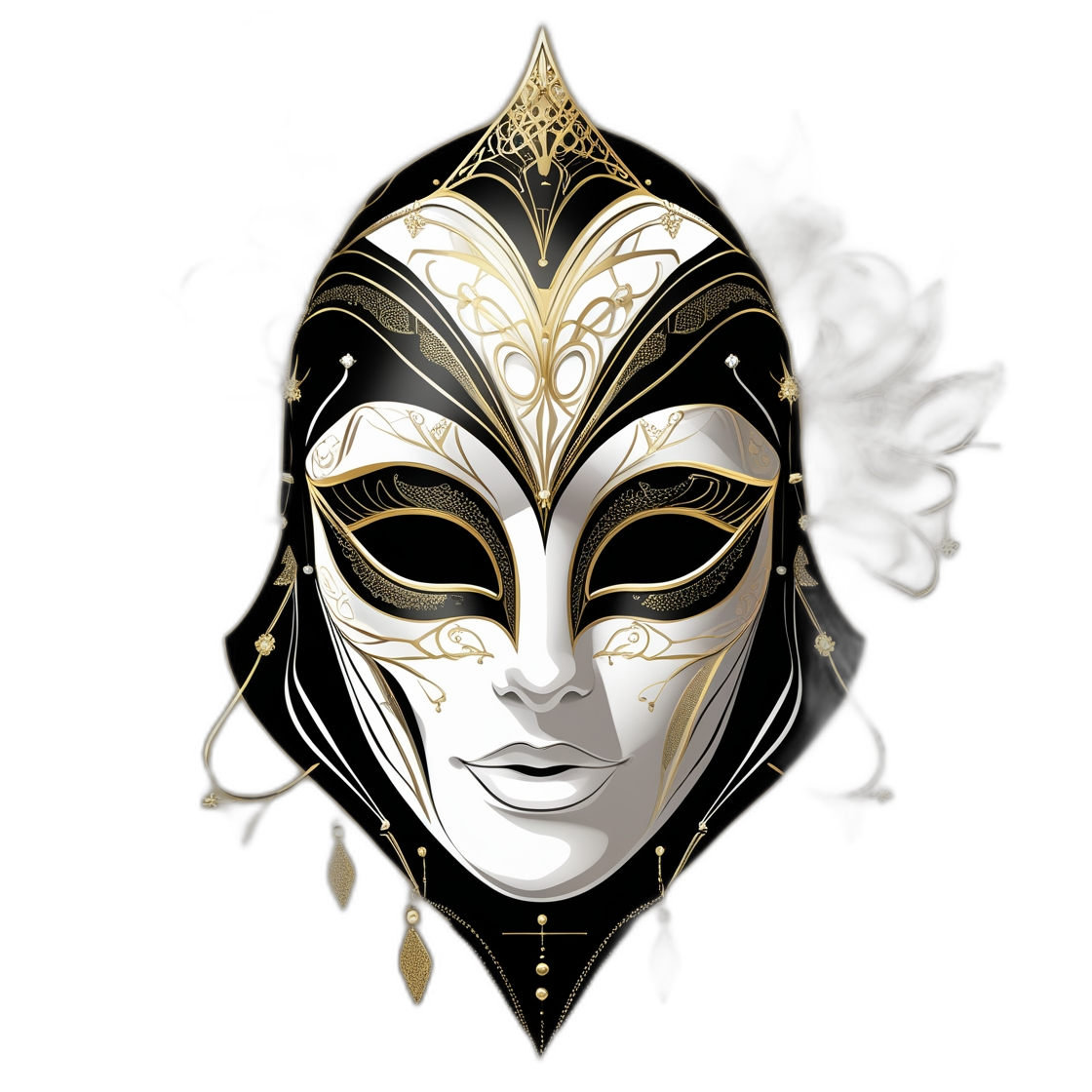

There’s an old movie I used to love. It told the story of a forgotten man locked in a dungeon, his identity stolen, his face hidden from the world by force. In the flickering shadows of a stone prison, he is pinned down by faceless guards as an iron mask is placed over his head, welded shut so it may never be removed. It is a moment of horror disguised as duty—a punishment carried out not in rage but in cold, institutional necessity. By this point, you likely recognize the story as The Man in the Iron Mask.
Yet I wonder how many of us have realized that we are complicit in spiritual reenactments of that same torture every day. Our masks aren’t made of iron, of course. They’re more subtle, more socially palatable. Constructed not of metal but of expectations, of tidy boxes we’re meant to check, of forced smiles and forced definitions. And the guards? They look like friends. Parents. Partners. Teachers. Employers. They rarely see themselves as cruel—they believe they are protecting us, shaping us, or simply maintaining the order of the world they understand.
It’s frightening to think of oppression lurking beneath such everyday interactions. We watch fictional characters suffer when literal metal is forced onto their faces, but we shrug off the emotional and spiritual pain experienced by real people when society demands they fit into neat, rigid shapes. The tragedy runs deeper than mere physical confinement—it’s an existential imprisonment, a slow erosion of authenticity.
To confront this unseen agony, we must first acknowledge that it exists: the quiet cruelty of insisting that a person label themselves for the sake of others’ comfort. Too often, we learn to weld these masks shut ourselves, believing there is no other way to be seen, accepted, or loved.
Recommended Listening:
The Societal Forge: How Masks Are Made
A blacksmith’s forge is a place of intense heat and pressure. Metal is bent and hammered until it takes a shape someone else desires. Society operates in a similar way, molding us from early childhood. The tools it uses are countless, but they share a common purpose: to keep everyone in their respective lanes, labeled and predictable.
- Cultural narratives: We grow up hearing stories that valorize certain traits while condemning others, rarely stopping to ask who decided these traits were universally good or bad. “You must be ambitious,” “You must be calm,” “You must be gracious”—the specifics may vary by culture or subculture, but the message is the same: You must define yourself in terms we recognize.
- Institutional frameworks: Schools test us for aptitude in particular areas, slotting us into categories like “gifted,” “average,” or “underachiever.” Jobs list a series of bullet points in job descriptions, expecting applicants to mold themselves into that outline if they want a place in the workforce. Religious or community organizations sometimes offer belonging—but only if you affirm a doctrinal stance or a particular code of conduct.
- Peer pressure and family expectations: This might be the strongest forge of all. Parents want children to settle into stable, recognizable identities; peers can be quick to ostracize anyone who doesn’t match their group’s norms. We learn early that straying from a label—be it “nerd,” “popular kid,” “artist,” “athlete”—can mean being left out.
The result is that we become experts at self-policing. We hammer our own edges down to fit the templates laid out for us. Over time, these constraints become so familiar that we barely notice them, much like the prisoner who learns to live with the weight of an iron mask. Yet the tension never fully disappears. The soul underneath still stirs, longing for more space, more movement, more authenticity.
The Unrelenting Tension: Forced to Choose a Label
For many, labels serve a practical purpose: they create a sense of belonging and clarity. Yet this convenience can mutate into oppression when we cannot function without them—or when we force others to cling to a single identity for our own comfort. The cruelty lies in the demand that a person’s entire being must be so easily encapsulated.
Some people wear these labels willingly because it’s safer. When you live in a world where straying from a label—any label—means risking ridicule or isolation, picking one can feel like a necessary form of armor. Even in spaces that celebrate diversity, there’s often a hidden caveat: Yes, you can be different, but define how. Choose a box, any box, so we know where to put you. There must be a word, a title, a bullet point on a form that renders your truth legible to everyone else.
What if you don’t fit any label neatly? Or what if what you thought defined you last year no longer applies? What if you’re still discovering, still unfolding in ways no ready-made label can account for? Society doesn’t handle ongoing ambiguity well; it demands resolution, a final answer. It’s a dissonance we rarely discuss, yet it shapes countless lives: Pick a mask, name it, and wear it so the rest of us can relax.
This tension can be crushing, because once a label is chosen, you might feel compelled to cling to it even if it starts to feel like a false fit. Changing labels—or refusing to label yourself at all—opens you up to questions, suspicions, or accusations of being inconsistent or disingenuous. The truth is, it might be the most genuine act in the world: to admit that we are all ongoing stories, not static definitions.
Masks as Survival: The Dual Lives We Lead
A friend of mine lives a dual life. In private, they breathe more freely, exploring interests and aspirations that friends and family wouldn’t recognize. In public, they perform a persona that checks the correct boxes—reliable, conventional, respectable. They’re not hiding out of shame, but because experience has taught them that visibility often invites judgment or misunderstanding.
For them, the real agony doesn’t lie merely in the act of wearing the mask but in feeling compelled to accept it as their own. To live under the tacit threat that if they ever dare remove it, they’ll lose everything from employment opportunities to cherished relationships. Their personal hopes and quirks remain locked away, shared only in solitude or with an extremely trusted few.
Many of us carry a similar burden—maybe it’s an artistic passion we never reveal, a belief system we fear will push loved ones away, or a personality trait we’ve squelched to succeed in our career. The world around us often praises the disciplined effort it takes to wear these masks in public, calling it “adaptability” or “professionalism,” without acknowledging the slow corrosion of self that may be happening underneath.
Over time, the line between who you are and who you pretend to be can blur. You begin to wonder if the original self still exists, or if you’ve become the mask. This fragmentation is more than an abstract dilemma; it can manifest in stress, anxiety, or chronic loneliness. Yet, the alternative—showing the world what’s really under the iron—is sometimes painted as unthinkably dangerous. For countless people, masking becomes the only perceived path to acceptance or, at least, to mere survival.
The Cost of Forced Certainty
We often pride ourselves on living in advanced, open-minded societies. But even in our self-congratulation, we cling to a deep-seated fear of ambiguity. People want clarity, not honesty. They want the comfort of definite answers, not the unsettling possibility that a person’s identity might be in flux or not neatly definable at all.
This demand for certainty extracts a heavy toll on those who simply aren’t reducible to a checklist. Some feel compelled to cut away vital parts of themselves, to distort or compartmentalize their experiences until they appear coherent. It can be a brutal, invisible form of self-mutilation—scraping away at your own complexities until what remains is label-ready.
And why do we do this to each other? At its core, the push for labels arises partly from our need to organize the world. If I can define you, then I know how to talk to you, how to categorize my expectations, and how to preserve my mental map of reality. It’s not necessarily malevolent—just shortsighted. We rush to label because it’s easier than wrestling with the inherent complexity of who each person is.
Scar of Oppression: The False Promise of Acceptance
One of the most insidious aspects of this dynamic is the false promise that if you find the “right” label, you’ll be accepted and loved. It’s an alluring lie for anyone who has ever felt alien or invisible. You think: If only I can figure out the perfect descriptor—be it my career, my lifestyle, my worldview—then I’ll finally belong somewhere.
But belonging built on a forced label can turn into yet another cage. If acceptance hinges on fulfilling a certain silhouette, you live in constant fear of stepping beyond that outline. Any sign of internal evolution threatens the security of the group that demanded—and perhaps initially provided—acceptance. Before you know it, you’re policing your own boundaries more harshly than any external critic, afraid that deviation or growth will mean losing the place you’ve fought so hard to claim.
Over time, this dynamic carves into a person’s spirit, leaving a scar: the memory of contorting yourself to match a label in hopes of inclusion. It is a silent wound that many carry, a daily reminder that their acceptance—maybe even their sense of worth—feels conditional.
The Myth of a Single, Static Self
To break free from this crushing cycle, we must question the myth that a single, static self is the ideal. Our identities are not like business cards, neatly printed and final. They’re more akin to diaries—growing, changing volumes in which each day’s scribbles might reshape the story. We’re molded by new experiences, shifting perspectives, and unforeseen revelations about who we are or who we might yet become.
Embracing this fluidity does not mean dismissing all labels. Sometimes labels can be empowering, offering language for aspects of ourselves we never knew how to articulate. But no label should ever feel like a prison—an expectation we can’t deviate from without dire consequences.
Imagine identity as a spectrum of colors rather than fixed lines. Different shades can blend and shift over time; sometimes we lean into one shade more heavily, sometimes another. The problem arises when society demands we pick one color and stick to it, ignoring the full range of hues at our disposal.
Unlearning Cruelty: Seeing Beyond the Masks
So how do we begin unlearning the cruelty of welded smiles and rigid labels? It starts by recognizing that we do not need absolute certainty from others to offer them respect or care. If someone you know seems unsettled or unclear about their future, their passions, or their place in the world, you don’t have to nudge them toward a convenient label. Instead, ask them what they need, and really listen to the answer.
- Cultivate open curiosity: When someone struggles to describe where they belong or who they are, approach the conversation with openness rather than interrogation. Ask thoughtful, open-ended questions: How does that feel? What’s unfolding for you right now? Avoid pouncing on the first definition they give or dismissing them if they can’t find the words.
- Offer true acceptance, not conditional approval: It’s natural to seek mental shortcuts, but try to pause. Remind yourself that you can accept someone’s evolving self without needing them to fit a final label. If they never arrive at a neat resolution, that doesn’t diminish their worth.
- Reflect on your own biases: Notice times when you instinctively yearn to categorize a person—maybe it’s a coworker, a partner, or even yourself. Ask: Why do I need them (or me) to be so easily defined? Sometimes, we uncover deep-seated fears about unpredictability or a need for control.
- Respect silence and ambiguity: Not everyone is ready or able to share every part of themselves. We must learn to be comfortable with partial truths, incomplete narratives. True empathy means granting people the time and space to reveal or discover more of themselves—if they choose to at all.
By adopting these practices, we begin to dismantle the underlying apparatus of forced labeling. We create openings for genuine connection, unclouded by the tension of “Tell me exactly what you are so I can decide how to treat you.”
Bearing Witness to Unmasked Pain and Possibility
Each time someone attempts to remove their mask—whether it’s revealing a new goal, changing their beliefs, or sharing a piece of themselves they’ve kept hidden—they take a risk. Society often responds with discomfort, skepticism, or outright hostility. Real empathy demands that we bear witness to this vulnerability instead of turning away.
Imagine that prisoner in The Man in the Iron Mask finally being freed. The iron is removed, and there, beneath, is a face marked by scars—a testament to years of forced confinement. In real life, those scars may not be physical, but the emotional imprint runs just as deep. Too often, we pretend not to see them or try to cover them up again, offering well-meaning but shallow statements like “Don’t worry, everything will be fine” rather than truly confronting the pain that shaped those scars.
Bearing witness is about more than passive acceptance. It’s an active stance of solidarity that says: I see your wounds, and I’m not going to demand you hide them just to make me more comfortable. When enough of us practice that kind of solidarity, the old machinery that enforces masks and labels begins to rust and fail. We shift the culture from one of forced certainty to one of shared exploration.
Unmasking the Soul
We pretend that identity is a destination, a static answer to a question we must hurry up and finish. But some questions are better lived than solved. Some truths are better allowed to dance and transform over time rather than pinned down like a specimen on a lab bench. Demanding solidity from everyone—in the form of neat labels—is a way of denying them the most vital human capacity of all: change.
What if we learned to celebrate that change? What if we recognized that each person around us is an unfolding story—just as we are? By dropping our insistence on iron masks, we don’t lose our sense of self; we gain the freedom to grow. We stop seeing each other as a series of bullet points and start seeing the complicated humanity that lies beneath.
Of course, this requires a collective unlearning of cruelty. It involves allowing those who want labels to claim them as long as they wish—and letting those who despise labels remain unlabeled, free to explore. It means daring to see someone not by the mask, but by the soul behind it, with all its shifting contours and contradictions.
If we can do that—if we can face the uncertainty of being unmasked—we might find that in letting others breathe freely, we also free ourselves. The iron mask is not our destiny. It never was. It was only ever an illusion—one we are free, at any moment, to discard. And in the shared realization that none of us must be welded to a single identity, perhaps we will discover a kind of acceptance far deeper than anything a mere label could ever provide.
Author’s Note
I write this not as someone who has lived the most marginalized or dangerous forms of this masking, but as someone who has worn a version of it—and, more importantly, as someone who has stood beside those whose very survival has depended on theirs. As a white, cisgendered, married man, I recognize the profound privilege I carry. I am aware that my ability to speak publicly about these ideas without risking my safety is, in itself, a kind of freedom that many are denied.
And yet, I hesitated to include this note. Because sometimes, naming our distance can also reinforce it. Sometimes, by labeling ourselves as allies rather than fellow travelers, we risk placing ourselves outside the very struggle we seek to illuminate. We speak about rather than with.
So let this note be both an acknowledgment and a refusal: an acknowledgment of my vantage point, and a refusal to use it as an excuse to stand apart. I do not speak for those who suffer more deeply—I simply hope to speak alongside them, to use the space I have to help dismantle a world where they still must hide their faces.
If you see yourself somewhere in this post—masked, in-between, or still finding the words—know that you do not owe anyone your certainty. You deserve the space to become. And I, and others like me, will stand with you as you do.








Leave a comment