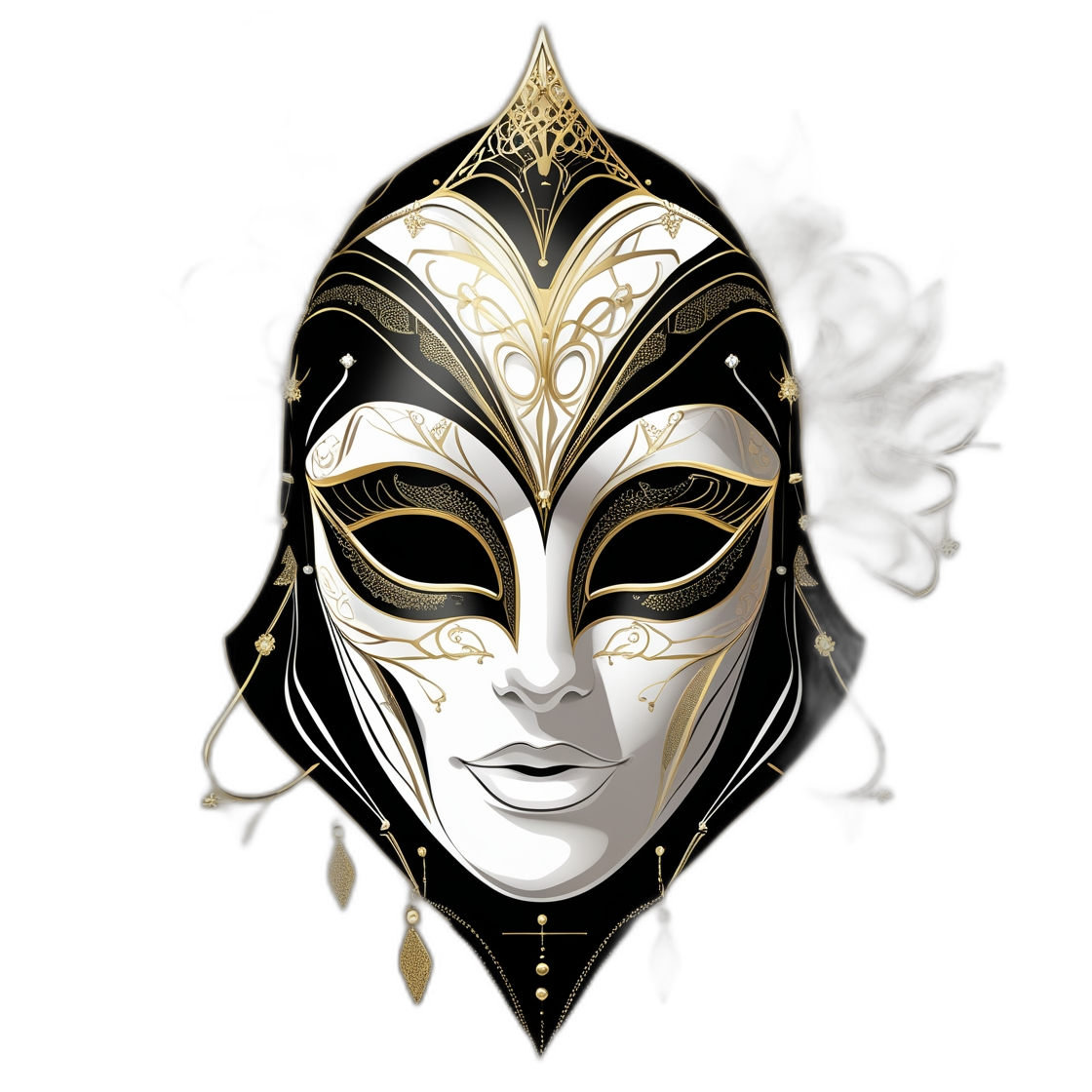

You meet someone for the first time. A glance, a handshake, a polite exchange of names. Before either of you utters a meaningful sentence, subtle cues and silent judgments have already set the stage. A luxury watch, the cut of a suit, the careful choice of a dining venue: these small details speak loudly, often before we have a chance to present our true selves. In so many ways, the physical world hands us our masks—items and impressions we never wholly chose—dictated by wealth, upbringing, social status, or simple happenstance.
Yet what if there was another stage, one where these constraints weren’t so heavy? Imagine a neon-lit lounge floating in cyberspace, or a wind-swept mesa shaped from collective imagination. Here you might arrive as a towering warrior or a sly kitsune, while across the room, you find a ghostly, robed figure or a cartoonish silhouette in a hoodie. Names are fluid, avatars are limited only by technology and creativity, and the “acceptable” ways to present yourself expand beyond anything we’ve known in the real world.
Is this virtual persona more genuine, or just another layer of artifice? The answer, it seems, might lie somewhere in the tension between two very different approaches to self-expression.
Recommended Listening:
My Virtual Journey
I’ve wrestled with these questions for years, beginning when I wandered through Second Life and later found myself in the wild and whimsical social spheres of VRChat. Sometimes these thoughts arose spontaneously—like when I’d chat with a fellow user sporting a hyper-realistic avatar next to someone whose body appeared as a floating neon orb. Other times, they bubbled up in personal conversations, or in the occasional think-piece about how online spaces shape identity.
Yet I often pushed these reflections aside. Real life was busy enough, and it felt simpler to treat the digital world as just an escape—a “secondary” place, a place to unwind. But the more time I spent inside these virtual realms, the more I realized that the concept of masks was never truly secondary. It was always there, nudging my perceptions about who I could be and influencing how I interacted with others. No matter how free we think we are, we’re still guided by paths someone else paved—whether that “someone” is a game developer coding avatar options or a clothing brand shaping physical fashion trends.
At times, I’d wonder, “Are these digital choices any more authentic than real-world ones?” The short answer is: they can be. But the longer answer is far more nuanced—one that merges our personal histories, our current social contexts, and even the subtle constraints hidden in technology itself.
The Tension of Appearances: Real vs. Virtual
In the physical world, first impressions hold immense power. So much of our effort goes toward curating these micro-moments. We choose clothes and hairstyles, we practice posture, we select venues to convey the right tone for a date, a meeting, or an interview. Meanwhile, we’re also limited by wealth, location, and social norms that often dictate what is “acceptable.” Even how we get from point A to point B—be it a luxury car, public transportation, or an aging bicycle—feeds into how people perceive us.
In contrast, the digital realm, especially spaces like VRChat, seems to offer a radical openness: you can be a humanoid, an alien, a creature of myth, or a gender expression that transcends typical categories. This range of possibilities can feel exhilarating. But it also begs the question: if the horizon of acceptable options is infinitely broader, might we be closer to expressing our truest selves?
A particularly curious phenomenon is how technology itself can steer our choices. In VRChat, for instance, I personally prefer avatars that boast advanced face and eye tracking, because I value real-time emotional nuance in conversation. Ironically, this technical requirement often leads me to adopt a “semi-conservative” female avatar—simply because those models often feature the best rigging for natural expressions. It’s not that I consciously woke up one day and decided I wanted to be a pretty girl in a digital space; it’s just that, for now, female or furry avatars offer superior expressiveness, and I’d rather be human than anthropomorphic.
Yet in an odd way, wearing that avatar might lead to a more genuine connection with others: they see my eyes light up when I’m amused, notice subtle changes in my facial expressions when I’m concerned, and it bridges the emotional gap that often plagues online interaction. So here I am in a female form, not for a typical reason of self-discovery, but because I want to communicate more truthfully. It’s a vivid reminder that the line between “authentic” and “artificial” is anything but clear-cut.
Identity and Philosophy
If we step back, we realize that these questions of “masks” and “true selves” aren’t new. The ancient Greeks were already grappling with them. Plato imagined an unchanging essence, a soul untainted by society’s illusions, while Aristotle viewed identity as the sum of our actions, suggesting that what we do shapes who we are. Fast-forward a couple millennia to existentialist thinkers like Jean-Paul Sartre, who posited that we are “condemned to be free,” meaning we are responsible for defining ourselves through every choice we make.
This dance between freedom and structure is reflected in the digital realm. On one hand, there’s an exhilarating sense of possibility—an environment where you can “be” virtually anyone. On the other, we’re still influenced by technology, cultural narratives, and subtle unspoken rules within online communities. Indeed, it’s not uncommon for VRChat or Second Life players to self-segregate into subcultures, each with its own norms and aesthetic codes that can be just as constraining as the real world’s formal dress codes.
Meanwhile, concepts like the Japanese honne and tatemae—the idea of one’s genuine feelings versus the face presented to society—become more pronounced in virtual spaces. Is the digital avatar our hidden honne, or is it yet another tatemae? The sheer range of available forms might grant us the freedom to showcase aspects of ourselves that we’d otherwise conceal. But equally, the creative potential can tempt us into a perpetual performance, losing track of which version of our identity reflects deeper truth.
Light and Shadows in the Digital Realm
No exploration of virtual masks would be complete without addressing anonymity’s darker side. The same freedom that liberates us from narrow expectations can also dissolve accountability. Trolling, harassment, and the nastiest edges of internet behavior often flourish behind cartoon profile pictures or exotic avatars, where real-world consequences feel distant.
Yet darkness exists in the physical world, too—it just hides more carefully. Anonymity in the digital realm can reveal the sharp edges of human nature that polite society restrains. This is why community guidelines, moderators, and user self-policing are so crucial in online spaces: as soon as you strip away the real-life risk of social or legal repercussions, the rawest impulses can emerge.
Conversely, anonymity can also foster extraordinary compassion. I’ve come across communities in VRChat where strangers offer genuine mental health support, a listening ear for the lonely, and a sense of belonging for those who feel marginalized or misunderstood. Sometimes, the best connections form when we aren’t shackled to face and name, but are free to communicate heart-to-heart. Here, the mask becomes a bridge—enabling us to share our vulnerabilities without fear of judgment based on physical traits or social standing.
Where Do We Go From Here?
As technology continues to surge forward, virtual spaces will only grow more sophisticated. Talk of “the metaverse” hints at online worlds where we might live, work, and socialize in persistent digital environments. With that, the masks—our avatars, curated feeds, or stylized personal brands—will evolve, and the question of authenticity will loom larger.
But rather than viewing these developments with cynicism or fear, I see them as opportunities. If we understand the subtle interplay of real and digital identities, we can use these platforms to explore ourselves more fully. The best virtual communities might help us embrace facets of our personality that everyday life stifles, or discover deeper empathy by literally stepping into someone else’s shoes—especially in a place where “shoes” might be hooves or mechanical rollerblades.
On the flip side, learning to navigate broader acceptance online might embolden us to be more sincere in real life. If we’ve spent countless hours with digital avatars that better reflect our passions or personal styles, we might decide to push against real-world constraints—wearing clothes that truly resonate with our sense of self, or questioning the social circles that pigeonhole us. The tension between uniformity and individual expression has existed forever, but online worlds offer fresh ways to challenge that tension.
Finding Ourselves in the Masks
Ultimately, the masks we wear—be they physical or digital—reveal as much about us as they conceal. Is the avatar we inhabit any less “real” than the face we show at a nine-to-five office job? In both cases, we’re living out some version of ourselves, shaped by personal tastes, social rules, and outside influences. Sometimes, being a virtual warrior or a charming female avatar in a sci-fi city is what grants us the emotional space to speak honestly. Other times, showing up in an immaculate suit is the best way to navigate an important interview.
So which self is genuine? Perhaps the question misses the point. Both are facets of who we are, and each scenario—boardroom or VRChat lounge—amplifies different traits. Over time, every choice we make, from a handshake in a conference room to the selection of our next avatar, contributes to the evolving tapestry of our identity. Far from diminishing our “authenticity,” these shifting masks can help us grow, providing new angles to reflect on our wants, our boundaries, and our capacity for connection.
Looking back, I realize that my seemingly arbitrary decision to use a female avatar for better face tracking was just another step toward deeper honesty: I wanted people to see me, not as a female – wearing a female avatar is the lesser of two compromises; it was either that or a furry – but as a person with real emotions. And for all the illusions technology can create, there’s real magic in bridging that emotional gap. Perhaps that’s where our true selves reside—in the earnest desire to be seen and understood, regardless of which mask we happen to be wearing.









Leave a comment