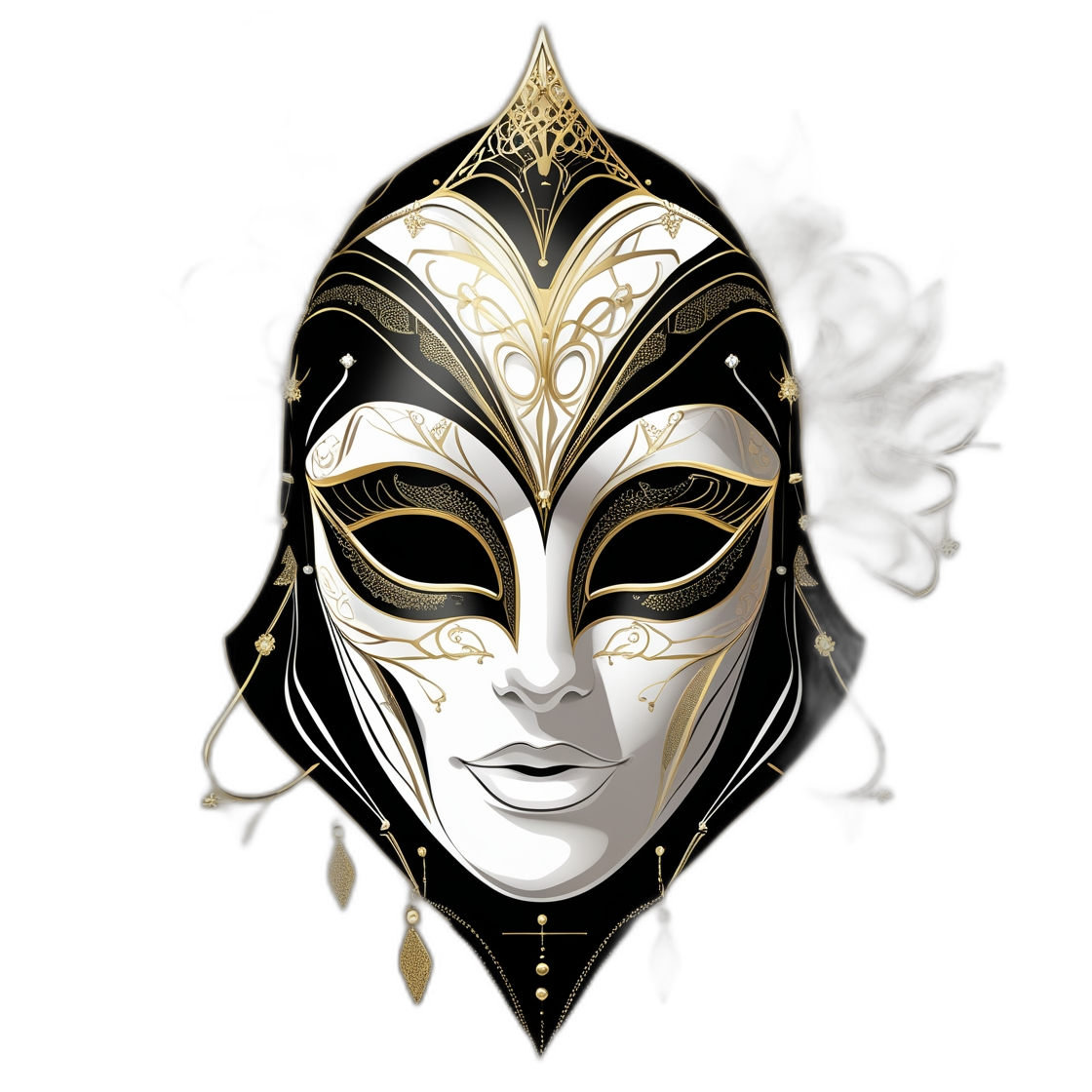
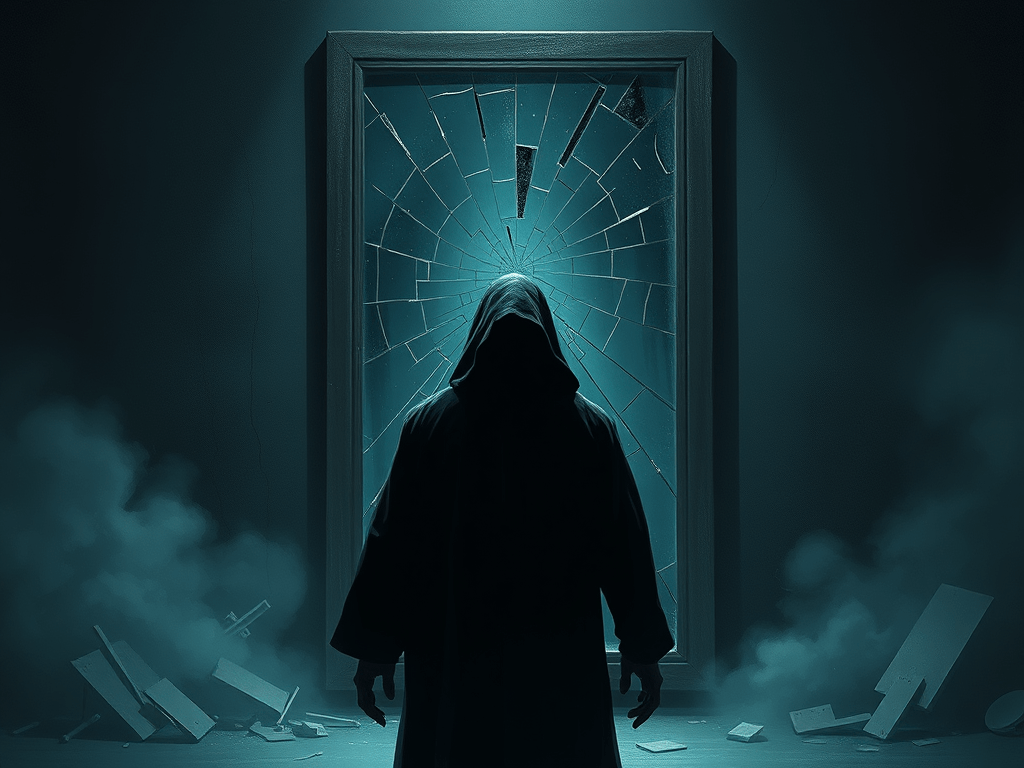
The trope is everywhere—monsters lurk under the bed, intruders stalk the hallways, wronged lovers seek vengeance, and anti-heroes “just want to watch the world burn.” We know these stories. We’ve seen them play out in books, in films, in the quiet unease of a news report detailing another act of human atrocity. Yet, for all the abominations we have conjured in fiction, the most terrifying monsters are the ones with a familiar face.
I find it fascinating that when we, as a culture, seek to create true horror, we rarely turn to the supernatural. We don’t need Lovecraftian entities beyond comprehension or creatures spawned from the darkest depths of hell. No, when we want to tell a story that truly unsettles—one that lingers in the mind and leaves us shifting uneasily in our seats—we turn to the reflection in the mirror.
A history of brutal abuse can shape a monster along the same path as some of the worst serial killers in history. Love, when twisted into obsession, writes the prologue to a crime of passion. Societal failures—the indifference, the neglect, the broken systems—lay the foundation for the Joker’s smile.
Again and again, we see that our deepest fears take human form, not because we lack imagination, but because the most terrifying truths are the ones we already know.
Perhaps that is the most damning part of it. These monsters were not born from nothing. They were shaped, molded, and in many ways, made inevitable by the world around them. We tell ourselves they are aberrations, outliers—exceptions to the rule of human decency. But if that were true, why are they so easy to create? How often do we, as a society, build the conditions for another tragedy, another horror story, another “monster” we will later claim we never saw coming?
I understand why our darkest fears carry a face we recognize. And perhaps, I believe we deserve it. After all, these are monsters we created.
Recommended Listening:
Origins of Monstrosity
What compels a human being to commit acts that most of us would deem unthinkable? We consume stories of serial killers like Ted Bundy or Jeffrey Dahmer—figures so reviled, so horrifying, that they occupy a space between human and evil incarnate. We obsess over the details of their crimes, almost as though we’re peering into a dark mirror. Yet time and again, if we choose to look deeper, we find layers of abuse, neglect, and trauma that predate their violent acts.
This is not to absolve people of responsibility for heinous deeds. Instead, it’s a stark reminder that no one is born with a roadmap to horror. We come into this world with fragilities, needs, and capacities for both compassion and cruelty. It is in the interplay of environment, personal psychology, and a fractured moral compass that a potential “monster” can take shape. When the conditions—extreme isolation, repeated violence, an absence of empathy—are set, the results are often tragic, but they are rarely surprising.
The Allure of the Human Monster
We have an insatiable appetite for stories about human corruption and darkness. Take the success of modern true-crime documentaries and dramatic retellings—podcasts dissect unsolved murders, streaming services pour resources into docu-series about cult leaders and con artists. Ironically, it’s the realism that hooks us. The knowledge that these nightmare scenarios could be (and often are) real pierces our comfort zones. We find ourselves binge-watching not because we revel in violence, but because there’s a morbid fascination: “Could that ever be me?” or “Is someone like that living next door?”
Therein lies the uncomfortable truth: if these horrifying figures were purely evil manifestations without human context, we wouldn’t be as deeply rattled. A vampire or a ghost could unsettle us in a fictional sense, but a neighbor—someone who waves hello each morning before committing atrocious acts behind closed doors—can terrify us in ways no supernatural entity ever could. Familiarity is a powerful catalyst for dread. It reminds us that the potential for cruelty might lurk under a veneer of normalcy.
Society’s Hand in Shaping Monsters
Too often, when faced with the aftermath of an unspeakable crime, people scramble to label the culprit as a deranged individual, beyond the pale of civilized understanding. We assume they are “just wired that way,” a glitch in humanity that cannot be fixed. But one has to wonder: is it truly a coincidence that so many of these tragic figures share stories of neglect, poverty, abuse, or systemic failures?
Consider the notorious case of Aileen Wuornos, often cited as one of the most infamous female serial killers in the United States. She endured profound instability and abuse, turning to sex work at a young age to survive. Her crimes were horrific, but her background illuminated a pattern of exploitation and consistent dehumanization, raising challenging questions about how society treats its most vulnerable individuals. Wuornos wasn’t plucked from a serene environment and simply decided to become a killer. She was molded by relentless adversity until what emerged was someone all too ready to lash out at a world that had repeatedly failed her.
These stories remind us that the line between “functional society” and “horror story” is thinner than many are comfortable admitting. When we reduce people to faceless statistics, overlook mental health crises, or perpetuate a cycle of poverty and abuse, we sow the seeds for future tragedies. In essence, the “monster” becomes an embodiment of our collective apathy, as if screaming, “Why didn’t you stop this?”
Personal Aside:
My ethical compass tells me that while each of us must answer for our choices, the lure of darkness is undeniable. I’ve always taken pride in striving for the moral high road, aiming to weigh each decision by its broader impact. And yet, I’d be lying if I claimed I never felt the tug of violence or vengeance.
I have known violence intimately; though I value dialogue, there have been moments when the raw simplicity of force seemed more honest than the fragile dance of civility. I have navigated manipulative, abusive relationships, and I’d be lying again if I said I never considered stepping aside—letting those who wronged me face their own ruin without intervention. In more subtle arenas, I’ve felt the quiet thrill of holding a truth that could topple reputations, relationships, entire careers, simply by letting it come to light.
I know the seductive call of vengeance, the whispered what if? that hovers at the edges of restraint. Yet for now, I choose a different path—one where empathy and compassion stand a chance, even when they feel like losing bets. Until that changes, the darkness I carry serves not as a weapon, but as a reminder: we are all capable of becoming something monstrous.
The difference lies in how we wield that knowledge.
The Fictional Parallel
Popular culture mirrors real life’s worst tendencies, amplifying them into cautionary tales. Consider the Joker in the Batman universe: in many interpretations, he isn’t just a lunatic born bad. He’s broken by a society that discards him. The Killing Joke graphic novel, for instance, portrays him as a struggling comedian, undone by a single day of catastrophic events. The Joker becomes a symbol of what can happen when someone already standing at the edge of desperation is pushed too far.
In Frankenstein, Mary Shelley’s creature experiences humanity’s cruelty firsthand. Shunned for his appearance, he is beaten, reviled, and driven to isolation. While the creature’s violence is inexcusable, Shelley’s narrative makes a poignant point: if you treat someone like a monster long enough, you shouldn’t be surprised when they begin to act like one.
These fictional narratives strike a chord precisely because they revolve around the human capacity to create horror. They are cautionary tales revealing how empathy and compassion, if withheld for too long, can transform mere desperation into dangerous fury. Fiction, therefore, becomes a distillation of our darkest truths, reminding us that every external “monster” is intrinsically linked to an internal failing in human relationships.
The Role of Twisted Love and Obsession
What happens when love, the emotion most often lauded as a redemptive force, becomes corrupted? Crimes of passion—those fueled by jealousy, betrayal, or obsessive love—are alarmingly frequent in news headlines. A story of stalking, for instance, might begin as intense admiration but morph into something dangerously possessive. In such situations, the “monster” is born not from societal neglect alone, but from an internal breakdown in boundaries, empathy, and respect.
One example is the phenomenon of intimate partner violence. When love sours into control and fear, the very person who was once a devoted partner can become a predator. Victims often recount moments when things seemed “off,” but they couldn’t pinpoint the transition from protective to controlling, from caring to manipulative. That slow erosion of trust and sanity reflects a fundamental truth: love is potent, and when distorted, it may unleash monstrous behavior as chilling as any fictional villain.
Collective Responsibility
It’s tempting to say, “That’s not my problem,” or, “I would never do something like that,” when confronted with stories of brutal violence or psychological torment. Yet every time we look away from those red flags—whether in our personal relationships or in our wider communities—we contribute to the conditions that allow future monstrosities to unfold.
- Schools that fail to address bullying can create environments where marginalized children grow resentful or traumatized.
- Workplaces that ignore mental health struggles or toxic power dynamics can push people to extremes.
- Neighborhoods that refuse to intervene or report domestic violence effectively tell both victim and abuser that the cycle may continue unchecked.
When horrifying events eventually shatter the illusion of normalcy, society often feigns shock. But if we dig beneath the surface, we usually find that signs were present, warnings went unheeded, and small acts of cruelty were tacitly allowed to accumulate. Each ignored moment helped mold a “monster” until it was too late to stop the inevitable explosion of violence.
Peering into the Abyss
Why do we keep telling these stories—both real and fictional—about ordinary individuals who descend into terror? Perhaps it’s a way to remind ourselves that we are not entirely helpless. As overwhelming as the darkness can appear, recognizing our part in creating or enabling monstrosity also points to our power to prevent it.
Acknowledging that a person isn’t merely “born bad” can be frightening because it means the roots of cruelty can flourish anywhere—even in environments we consider decent. But it also reveals places where intervention is possible. A caring adult in a child’s life, a mental health resource at a critical juncture, or a friend who pays attention to warning signs can be the factor that redirects a path from tragedy to healing.
Challenging Our Narrative
It would be easier—safer, even—to believe that monsters are alien beings, wholly separate from us. We like to think there’s a clear boundary between “good people” and “bad people,” a moral demarcation that we will never cross. But life is rarely that binary. Each of us has the capacity for acts of profound kindness and unspeakable harm. Which side of that capacity we nurture depends on our emotional health, social support systems, and, crucially, the empathy we receive from others.
Every time we read about a crime that shocks and horrifies, we might ask ourselves: what if someone had intervened sooner? What if society had provided better mental health care? What if a teacher had recognized the early signs of abuse? What if a social circle had not normalized dangerous or prejudiced behavior?
Such questions can be uncomfortable because they place responsibility on us—individually and collectively. Yet discomfort can be a catalyst for growth. It can prompt communities to hold themselves accountable, to become vigilant about the warning signs, and to re-examine the moral narratives we tell ourselves about monsters and heroes.
Conclusion: The Mirror Stares Back
The most frightening specter isn’t a demon from another realm; it’s our own capacity for negligence and cruelty, reflected back at us. When we spin tales of the “monster who walks among us,” what we’re truly grappling with is our collective power to nurture or neglect, to champion empathy or avert our gaze, to heal or to harm. The monsters we create are not anomalies, and they don’t spring forth in a vacuum. They are molded, piece by piece, by a network of broken systems, oppressive cycles, and overlooked red flags.
While this perspective may seem bleak, it holds a glimmer of hope. If our actions can contribute to the rise of these figures, then our actions can also make a difference in preventing them. Recognizing our role in creating monsters allows us, for the first time, to imagine a different outcome. Perhaps, with a little more awareness, empathy, and collective responsibility, we can stop turning a blind eye to the warning signs. Perhaps we can begin to intervene more effectively before a tragedy unfolds. The mirror doesn’t have to reflect horror alone; it can also reveal the better angels of our nature, if we choose to see—and act upon—them.
In the end, the question is not why these monsters keep emerging. The question is: What are we going to do about it? After all, they are the monsters we created—and in some ways, that makes us their creators, as well as the ones with the power to stand against the darkness before it is too late.





Leave a comment