
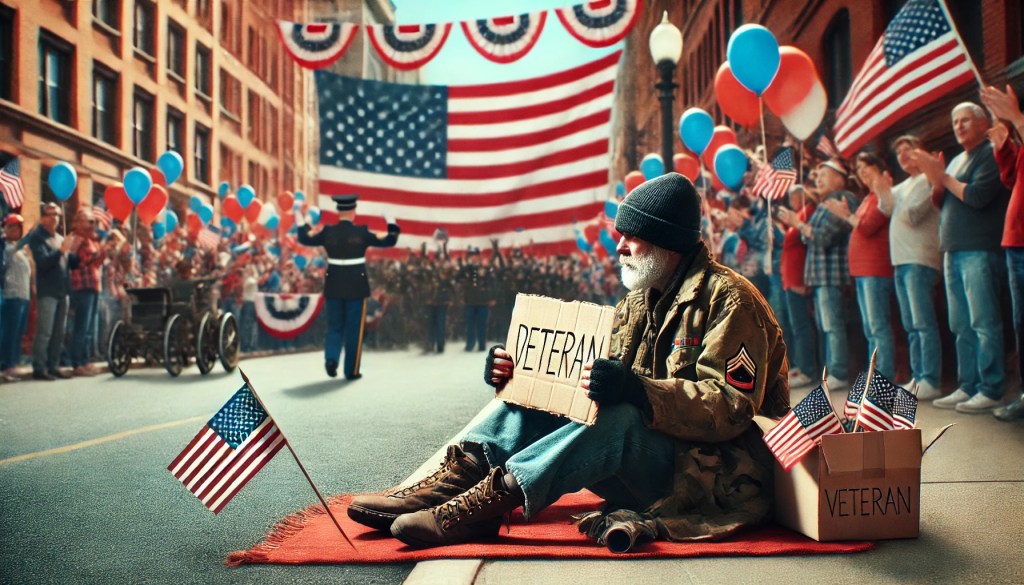
We stand at parades, hands over hearts, as the national anthem swells. We light fireworks and drape our porches in stars and stripes. Politicians take to podiums, invoking heartfelt promises to support our troops and honor their sacrifices. Entire industries profit from patriotic merchandise, while social media floods with tear-jerking videos of soldiers returning home.
The pageantry is unending: solemn ceremonies at the Tomb of the Unknown Soldier, wreaths laid in silence, and holidays that promise remembrance but often serve as mere excuses for barbecues and sales. We hail these men and women as national heroes, yet too few pause to consider the weight of their sacrifices. Families shattered by deployments, marriages strained to breaking, children growing up with empty chairs at every holiday table. The oaths of enlistment, sworn with pride, demand not only physical courage but the surrender of normalcy, stability, and sometimes life itself.
And what awaits them on the other side of service? For all the glittering ceremonies and patriotic speeches, the reality is chillingly indifferent. Many veterans, burdened with invisible scars, return to a country that offers little more than lip service. The cold reception is as unyielding as the streets where so many are forced to sleep. Beyond the fleeting warmth of holidays and parades lies a public that too often moves on, unwilling to confront the stark realities of broken systems and neglected promises. The statistics are damning: tens of thousands of veterans homeless on any given night, over 6,000 suicides annually, and countless more struggling in silence.
The country that proudly celebrates its military too often abandons those who served it when the cameras stop rolling.
Recommended Listening:
The Making of a Service Member
America’s armed forces draw their ranks from a wide array of backgrounds, but patterns often emerge among those who choose to serve. Many enlistees come from lower-income families, where opportunities for upward mobility are limited. For some, the promise of steady income, education benefits, and a path to a better future make the military an appealing escape from economic hardship. Others are driven by a deep sense of patriotism, a desire to follow in familial footsteps, or a longing for purpose and structure in their lives.
The journey begins with enlistment, a choice often made in the crucible of financial strain or youthful idealism. Recruiters highlight the benefits—college tuition, health care, job training—and paint a vision of honor and camaraderie. But the reality of joining the service is far from romantic. Basic training, the crucible through which all recruits must pass, is designed to break individuals down and rebuild them as soldiers. The loss of self is not a byproduct; it is the goal. Individuality is stripped away in favor of uniformity, obedience, and a relentless focus on the mission.
Yet, for all its harshness, basic training forges bonds unlike any other. Within the ranks, recruits find a sense of community and belonging that often eludes them in civilian life. Shared struggles, from grueling physical tests to moments of vulnerability, create a brotherhood and sisterhood that can feel like a surrogate family. For many, their company becomes a lifeline, a source of strength and identity as they transition into active service.
This transformation, however, comes with consequences. The stark differences between military and civilian life become glaringly apparent. Service members are conditioned to value efficiency, calculation, and immediate action over the deliberation and fluidity often found in civilian life. They develop a mindset tailored for survival and mission success, one that prioritizes practicality over sentimentality. When they return home on leave or liberty, they often find themselves alienated from the lives they left behind. Family and friends, rooted in the comparative comfort of civilian routines, struggle to understand the changes in their loved one.
Likewise, service members may view the civilian world with confusion or frustration. The petty concerns of everyday life, like minor workplace dramas or trivial complaints, can seem incomprehensible when measured against the life-and-death stakes they have faced. They are often judged for their newfound pragmatism or their reluctance to engage in speculative or idealistic discussions, further deepening the rift between who they were and who they have become. Over time, this divide grows, leaving many service members to feel like strangers in the homes and communities they once called their own.
Life in the Military
Life in the military offers unique opportunities that many find deeply rewarding. The chance to experience different parts of the world, engage in novel and meaningful missions, and acquire specialized skills can be transformative. Service members often report immense personal growth, gaining discipline, resilience, and leadership abilities that serve them throughout their lives.
Perhaps most significant is the camaraderie forged through shared experience. The bonds formed in the military are unparalleled, born from mutual reliance in high-stakes environments. For many, the friendships made within their units become lifelong connections, offering a sense of belonging and understanding that is difficult to replicate in civilian life. These positives, while not universal, highlight the duality of military service—a life that challenges and scars, but also enriches and unites in ways few other paths can.
However, life in the military is also a crucible that tests the resilience of every individual who serves. Adaptation is both a necessity and a struggle, as service members must conform to a rigid hierarchy and a demanding lifestyle. For many, the challenges begin immediately: adapting to long separations from loved ones, enduring the intense physical and mental strains of service, and reconciling the profound responsibilities placed on their shoulders.
These pressures often strain personal relationships to the breaking point. Marriages falter under the weight of extended deployments and the emotional toll of a partner’s absence. Communication becomes fragmented, and the shared burdens that sustain civilian relationships are replaced with a solitary endurance that leaves both partners feeling isolated. Children grow up with parents who are often absent during formative years, compounding the emotional cost of service.
In the darkest of cases, the trauma of military responsibilities leaves lasting scars. Witnessing or participating in acts of war, bearing the weight of command decisions, or losing comrades in battle can leave service members with a burden that’s difficult to articulate and even harder to heal. Post-traumatic stress disorder (PTSD) is pervasive, yet it remains stigmatized within military culture, leading many to suffer in silence rather than seek help. This tendency to suppress vulnerability is a double-edged sword; while it fosters resilience in combat, it also creates a barrier to recovery.
Beyond the external challenges, the military is not immune to internal failings. Issues like sexual violence and abuse are pervasive, yet the institution often prioritizes protecting its image over addressing these problems. Reports of misconduct are frequently mishandled, with victims discouraged from coming forward or finding their allegations buried in bureaucratic inertia. This culture of silence perpetuates harm and erodes trust within the ranks, leaving countless service members to feel betrayed by the very institution they swore to serve.
The Homecoming Disconnect
The transition from military to civilian life is a jarring and often abrupt experience. After years of rigorous discipline and communal living, many veterans expect a hero’s welcome when they finally return home. But the reality is far less celebratory. The admiration they anticipated is often fleeting, replaced by a civilian world that struggles to understand their sacrifices and challenges. This disconnect leaves many feeling isolated and disillusioned.
Veterans often find that the support systems they were promised are inadequate at best. VA hospitals are frequently understaffed and underfunded, leading to long wait times for critical care. Mental health resources, though desperately needed, are in short supply. The bureaucracy surrounding veterans’ benefits can be a labyrinth, frustrating those who seek assistance and driving others to give up entirely. These systems, designed to provide a safety net, often feel more like obstacles.
Compounding these struggles is the constant political threat to veterans’ benefits. Programs meant to support those who served are often placed on the chopping block during budget debates. Recent controversies, such as a Trump-era discussion among the “DOGE group” that proposed cutting veterans’ benefits, highlight the precarious nature of these programs. The very resources that veterans rely on are treated as expendable, further eroding trust and leaving many to wonder if their service was truly valued.
The statistics paint a grim picture. Over 30,000 veterans are homeless on any given night, while more than 240,000 are unemployed. The VA estimates that 22 veterans commit suicide each day, a sobering reminder of the mental health crisis that plagues this community. Of the roughly 18.5 million veterans in the United States, 14.87 million live with some form of disability—a staggering 80% of the veteran population. Approximately 11% of veterans who visit a VA medical facility for the first time are diagnosed with a substance use disorder (SUD), with binge drinking being one of the most common struggles. Moreover, veterans experience the highest divorce rates of any career field, a testament to the strain that military life places on personal relationships.
In summary, for many veterans, returning home is not the joyous reunion they envisioned but a harsh confrontation with indifference, lack of understanding, and systemic failure. The rift between military and civilian life grows wider as veterans navigate a world that seems unwilling to honor the promises made to them. They are left to reconcile the pride of service with the pain of abandonment, a struggle that far too many face alone.
Bridging the Divide
The divide between the realities of veterans’ struggles and the public’s understanding cannot be closed overnight, but every step counts. This isn’t a call for pity or performative patriotism—it’s a call to action. For veterans to thrive, society must shift from passive admiration to active engagement.
Humanizing the Struggle: It begins with seeing veterans as people, not just symbols. Beyond their uniforms and service, they are parents, partners, workers, and community members. Reaching out and truly listening can be a powerful bridge to understanding. Small acts of connection—like checking in, inviting veterans into social or professional spaces, or volunteering with veteran-focused organizations—can foster meaningful change.
Community Investment: Communities should support local veteran initiatives, including reintegration programs, counseling services, and housing solutions. Community centers, businesses, and schools can play a key role in recognizing and addressing veterans’ unique challenges. Local job fairs, skill-building workshops, and mental health resources tailored for veterans should be commonplace.
Advocacy for Systemic Change: Policy and resource allocation must align with the reality of veterans’ needs. Advocacy efforts should focus on improving access to timely, quality care through the VA, increasing housing support, and investing in mental health and substance abuse programs. Policymakers must feel the weight of public pressure to honor promises made to veterans.
Cultural Accountability: Society’s treatment of veterans reflects its values. It’s time to move beyond performative patriotism. Acknowledge the real sacrifices veterans make and the failings they endure. The narrative should not shy away from the uncomfortable truths but instead empower people to act in ways that truly honor those who have served.
A Home Worth Returning To
The story of America’s veterans is one of paradox—of immense courage and crushing neglect, of steadfast camaraderie and isolating disconnection. It is easy to celebrate the image of a soldier, but far harder to confront the truths of their reality. For many veterans, the battlefield does not end with deployment; it continues in the fight for dignity, support, and understanding at home.
Change will not come swiftly, nor will it come easily. But each small effort, each conversation, each policy shift, and each act of kindness pushes us closer to a society that truly honors its promises. Veterans do not ask for perfection, only for the chance to rebuild their lives with the same determination they brought to their service.
The task is daunting, but not impossible. In the tired eyes of those who have served, there is still hope—a hope that their sacrifices will not be in vain, that the country they fought for can become a home worth returning to.
And it is up to all of us to ensure that hope endures.







Leave a comment